Support WBUR
Boston's Morning Newsletter
Downtown Boston's future relies on more than return-to-work orders, says new report
Editor's Note: This is an excerpt from WBUR's daily morning newsletter, WBUR Today. If you like what you read and want it in your inbox, sign up here.
How should the city spend $2 million? Ahead of Saturday’s voting deadline, today’s episode of The Common runs through the details of Boston’s first-ever participatory budgeting process. (Scroll through all 14 project options — and cast your vote — here.)
Now, to the news:
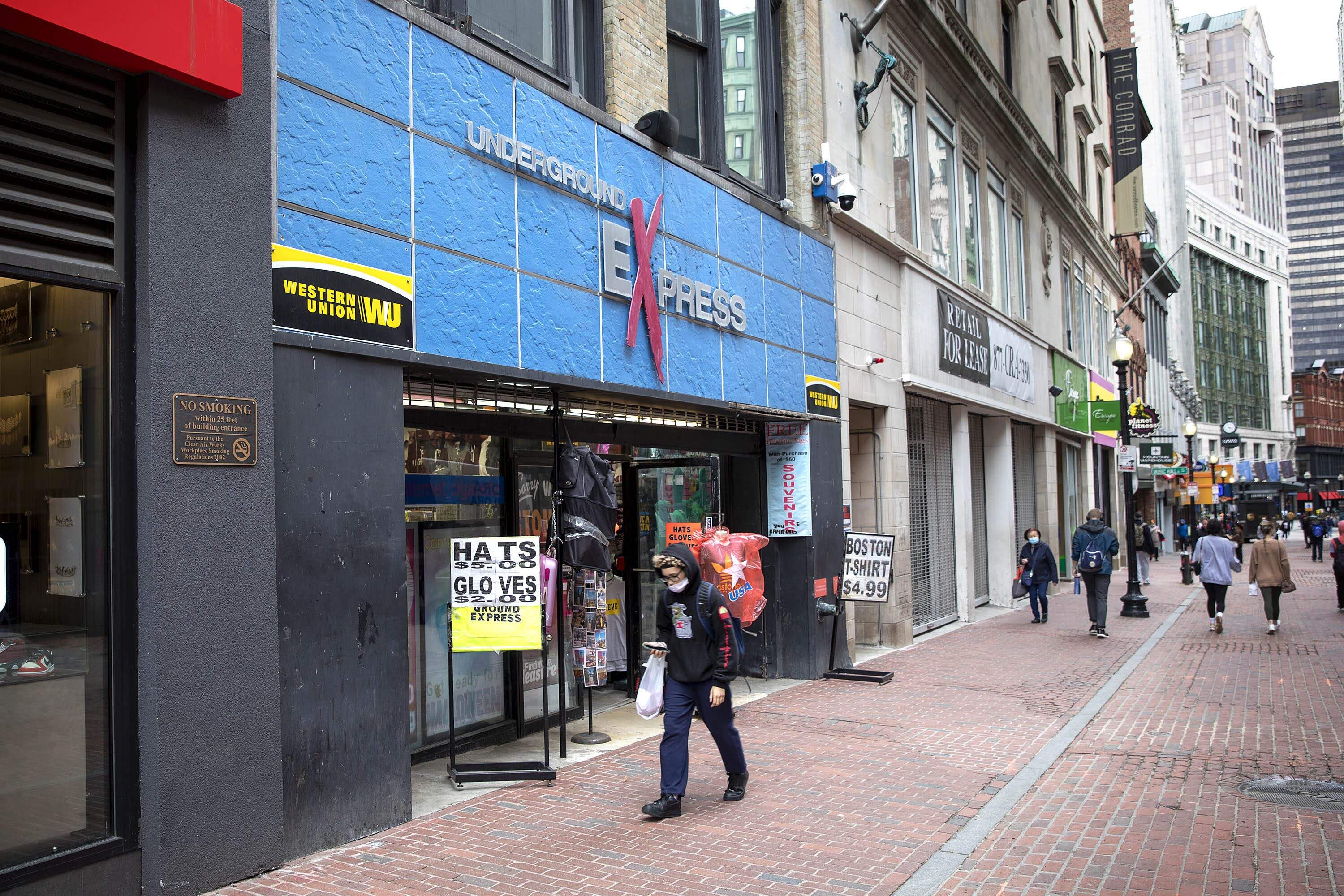
Downtown dilemma: According to a new report, downtown Boston sees between 80,000 and 125,000 fewer daily worker visits than it did before the pandemic. The district’s future relies on bringing at least some people back. But does it have to be to offices? Not entirely. The report, released by the Massachusetts Taxpayers Foundation today, says it depends on whether we can make commuting and living downtown easier. “What we wanted to do here is single out transportation and housing as two areas that are clearly, directly consequential to our goals to make sure we have a vitalized downtown Boston,” MTF President Doug Howgate told WBUR’s Dan Guzman.
- Zoom out: Despite recent headlines about big companies (and the feds) ordering employees back to their offices full time, Howgate says remote work levels have pretty much stabilized in the wake of the COVID pandemic. Since the start of 2022, the percentage of days worked from home nationally have hovered just under 30%. That’s roughly quadruple the 2019 status quo. (Between 1965 and 2019, remote work rates had been inching up slowly, from 0.4% to 7.2%, according to the report.)
- Zoom in: Why is this shift to remote work such a problem for downtown Boston? One reason, according to the report, is that the industries with the most jobs downtown — professional services, finance, insurance, health care, government — also have above-average remote work rates. “Downtown Boston is much more heavily concentrated with commercial buildings than other downtowns in the rest of the world,” Howgate said. Another compounding factor is that remote workers in the Boston area tend to live farther away from their offices. “We know that transportation into downtown Boston and other areas like that can be a challenge,” Howgate said.
- What should elected officials do? Howgate said it’s more important than ever for the state to continue investing in the MBTA and other transportation infrastructure. He also called for specific policies to spur more housing downtown — from zoning changes to office-to-residential conversion incentives.
Third time’s a charm? Mayor Michelle Wu’s property tax shift proposal is headed back to the State House. The Boston City Council voted 12-1 yesterday to pass Wu’s updated plan, which includes potential rebates for Boston homeowners. WBUR’s Amanda Beland has more here on the at-times tense, multi-hour council meeting.
- What’s next: As a home rule petition, the plan — rebates and all — still needs sign-off from state lawmakers. Wu’s most recent proposal stalled out in the Senate. And so far, there’s been no indication state senators have changed their minds on the issue.
Meanwhile on Beacon Hill: A bill to fund the state’s emergency family shelter system is heading back to the House for reconciliation. After hours of debate, the Senate passed their version of the $425 million shelter reform plan late last night by a vote of 33-6.
- The two bills are almost identical on the major points, but there are some differences that need to be ironed out before a final bill is sent to Gov. Maura Healey’s desk. Dive into the details here.
Say goodbye to the Boylston Street bus lane in Boston’s Back Bay. Wu announced yesterday the city will remove the bus lane, as part of a larger review of street changes across the city during the last 15 years. In a letter to neighborhood leaders, Wu said the lane is often blocked by parked cars and drivers trying to get around traffic, which obstructs access to businesses and the Boston Public Library.
- The dedicated bus lane — not to be confused with the relatively new Boylston Street bike lane — was first installed to help shuttle buses get around during the 2022 Orange Line shutdown. It was made permanent last summer when the bike lane was installed.
P.S.— Are you a renter? Or a landlord? We want to hear your thoughts about who should be responsible for broker’s fees as state lawmakers eye action on the topic. Just reply to this email or fill out this form to get in touch!