Support WBUR
What to know about the federal freeze on environmental grants in Mass.
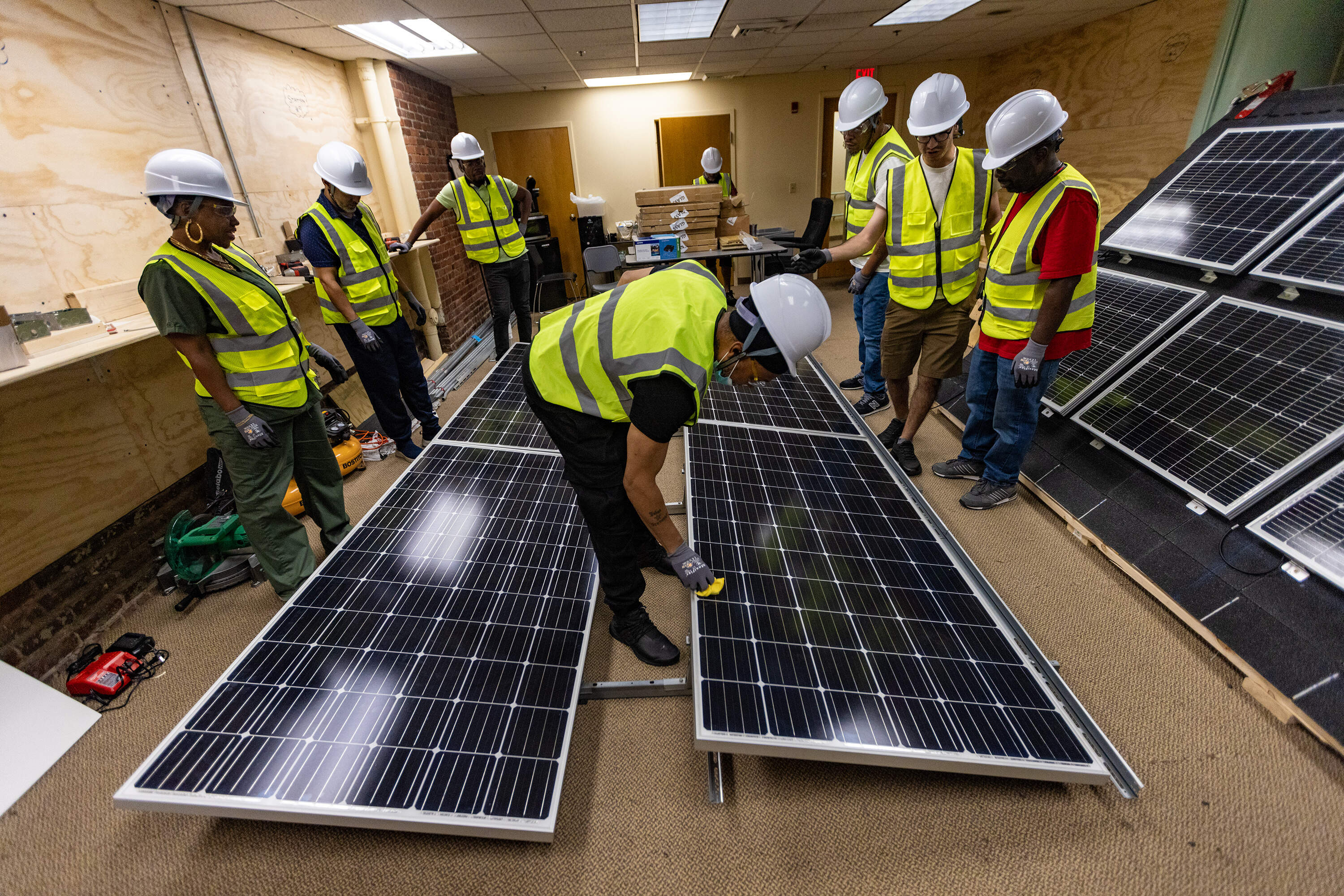
As a new administration attempts to redirect federal agencies to match President Trump’s priorities, a wide array of environmental initiatives in Massachusetts have stalled because of ongoing uncertainty around federal funding.
Grants that Massachusetts and local nonprofits planned on have been frozen, unfrozen then frozen again. Complicating matters, the Trump administration has not been forthcoming about the scope of its actions, and many environmental leaders are fearful — or unable — to talk because of ongoing litigation.
The chaos threatens to derail billions of dollars worth of climate, environmental and infrastructure projects across the country.
Here’s what we know about what’s happening in Massachusetts:
Which grants to the state are frozen?
As of Feb. 14, state officials report seven grants from the U.S. Environmental Protection Agency — worth over $168 million — have been suspended, as well as a grant from the U.S. Fish and Wildlife service. They include:
- Solar For All — $156,000,000
- State Energy Program — $7,699,040
- Ambient Air Monitoring in Massachusetts Disadvantaged Communities — $1,170,472
- Massachusetts Air Sensor Program: Air Monitoring Grant — $21,925
- State Clean Diesel Grant — $845,889
- Diesel Emissions Reduction Act Program — $1,075,211
- Clean Diesel Grant — $1,298,637
- Aquatic Invasive Species Grant — $251,000
Here are some details about those grants:
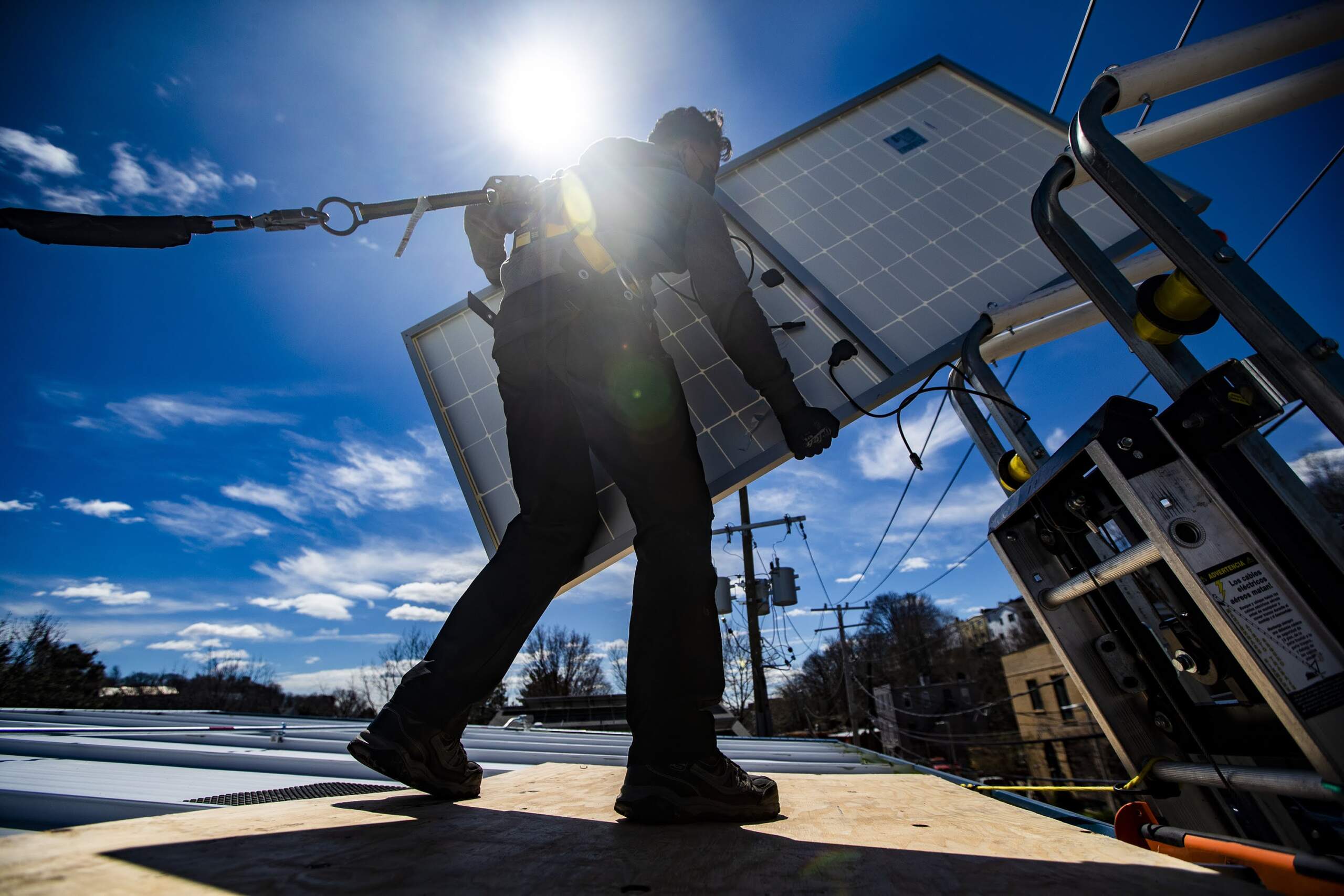
The largest award, the $156 million Solar For All grant, was part of a $7 billion program, funded by the Inflation Reduction Act passed during the Biden administration. In Massachusetts, officials planned to use the money to slash energy costs for low-income residents by installing solar panels on tens of thousands of homes.
The State Energy Program grant, provided through the Bipartisan Infrastructure Law, was supposed to fund energy efficiency and other emissions-reducing programs at the Massachusetts Department of Energy Resources.
The other grants were intended to support air quality monitoring in disadvantaged communities,replace polluting diesel vehicles with cleaner options, and manage the spread of an invasive aquatic plant.
State officials told WBUR they haven't paused work on these programs, but are reviewing federal orders and guidance, and closely monitoring lawsuits filed over the funding pause.
Are frozen grants affecting any other state programs?
That's unclear.
Several additional grant programs are in the crosshairs of the Trump administration, and their funding status remains uncertain.
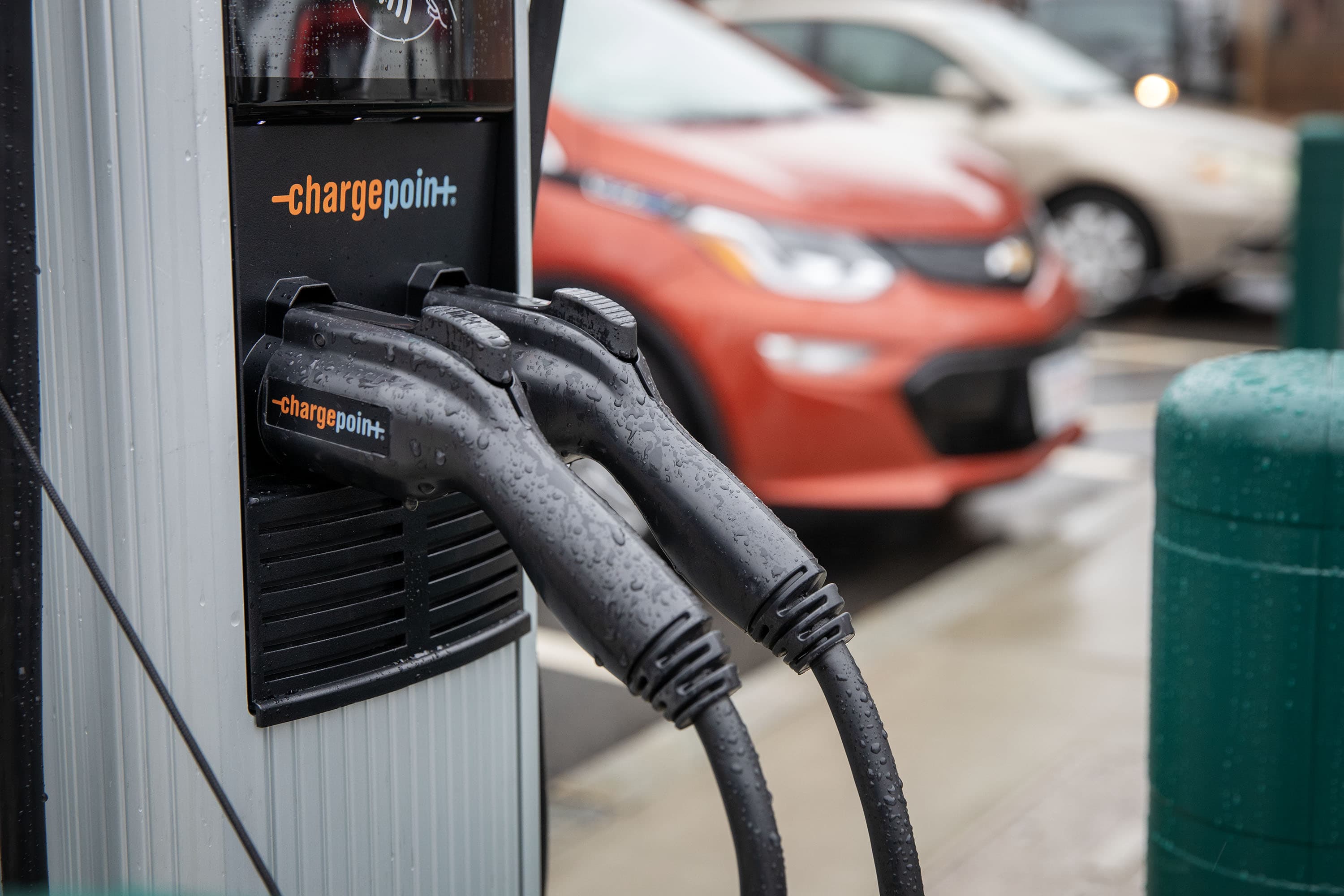
One example is a $63 million grant to the Massachusetts Department of Transportation to build electric vehicle chargers. The Trump administration issued a memo last week suspending previously approved plans for the money, but left some ambiguity about whether states would get funds they were already awarded.
State officials are trying to figure out what this means for the state’s grant, according to a spokesperson from Gov. Maura Healey’s office. Massachusetts has already signed $50 million worth of contracts with companies based on the expectation it would receive these funds, she said, and was preparing to break ground on projects this year.
“We secured these funds through agreements with federal agencies, and those agreements should be honored by the new administration,” a spokesperson for the Executive Office of Energy and Environmental Affairs wrote in an email.
New Hampshire received $17 million from the same program for expanding EV chargers. State officials there have suspended all activities related to the program.
What about grants to nonprofits, cities and towns?
Before Trump took office, the feds awarded many other grants to Massachusetts communities and nonprofits through the EPA and other federal agencies, including the Department of Energy, the National Oceanic and Atmospheric Administration, the Forest Service, Fish and Wildlife and the Department of Agriculture.
WBUR’s reporting found money from some of these grants have been released, but funding for others remain suspended. A public database shows more than $371 million in frozen grant money to Massachusetts state agencies, cities and nonprofits. Zealan Hoover, a former senior advisor at the EPA under the Biden administration, created the database and said in a press briefing that he’s adding to it every day as he learns of more suspended grants.
With a federal funding picture that seems to change by the day, many nonprofit and municipal leaders are reluctant to move forward with projects. That’s because most of these grants don’t come in a single big check for the recipient’s bank account. Instead, the recipient spends money, then asks the federal government for reimbursement through an online portal.
Leaders of these groups have said they don’t want to end up with bills they can’t pay — or worse, having to return federal money they have already received and spent.
Some recipients WBUR spoke with said they aren’t sure if they have access to their grants, and may not know the answer until they request reimbursement.
Why are funds still frozen despite court rulings?
Trump administration officials initially said they were pausing federal spending to ensure it aligns with the president's priorities and doesn't waste taxpayer funds. But after two judges told the administration to unfreeze the money, at least temporarily, the EPA has adopted a new explanation for the hold up: a more narrow “review for compliance” involving several programs, according to E&E News and the New York Times.
Some of the grants include those intended to “help state and local agencies monitor air quality in low-income areas, reduce pollution at ports, and aid marginalized neighborhoods burdened by pollution,” according to E&E News. All funding associated with the EPA's Greenhouse Gas Reduction Fund — a $27 billion program created by the Inflation Reduction Act — is also being reviewed.
In a video posted on X this week, EPA administrator Lee Zeldin accused the Biden administration of wasting taxpayer money by rushing to get billions of dollars “out the door before inauguration day.” In particular, he cited $20 billion “parked at [an] outside financial institution” and said he would work to get the money back.
“The days of irresponsibly shoveling boat loads of cash to far-left, activist groups in the name of environmental justice and climate equity are over,” Zeldin said in the video.
He's likely referring to two programs under the the Greenhouse Gas Reduction Fund. As part of those programs, EPA tasked Citibank with administering $20 billion for nonprofit “Green Banks,” which offer financing for clean energy projects.
Hoover, the former EPA advisor, called any implication the programs violated the law or federal policy “patently untrue.”
He said the arrangement with Citibank is fairly common for certain types of federal grants and “preserves the same levels and authorities of oversight that EPA has across all of its grants.” He added the process was developed over the course of a year and was “incredibly rigorous and robust.”
A spokesperson for Citi declined to comment.
How's this playing out in court?
Two federal lawsuits are ongoing, so the situation continues to play out in court.
One, filed in Rhode Island federal court, was filed by attorneys general from 22 states, including Massachusetts. The other federal lawsuit was filed in Washington, D.C. by a coalition of nonprofit organizations.
On Feb. 13, the attorneys general filed an updated complaint describing the EPA’s new rationale for withholding funds.
"The ongoing federal funding disruptions and constantly shifting explanations by the administration have been challenging to keep up with,” a spokesperson for Massachusetts Attorney General Andrea Campbell wrote in an email. “Our amended complaint names new defendants whose unlawful actions have come to light since the original complaint was filed, and includes the new ways in which the administration's illegal funding freeze has emerged and harmed our states and our residents in recent days and weeks."
The next hearing in the states’ case is scheduled on Feb. 21.
When did this all start?
Trump got the fund-freezing ball rolling on his first day back in office. To help you keep track of this head-spinning drama, we made a timeline:
Jan. 20
Trump signed several executive orders targeting key campaign promises such as ending diversity and equity programs, and stopping federal support for climate change initiatives. One order, called “Unleashing American Energy,” told all federal agencies to “immediately pause the disbursement of funds” appropriated through the Inflation Reduction Act and the Bipartisan Infrastructure Law.
These two Biden-era laws authorized the government to spend trillions of dollars on environmental, clean energy, climate and other initiatives. (Here’s a searchable map to see where some of the money from those grants went.)
Jan. 27
The Office of Management and Budget issued a memo that told all federal agencies to “temporarily pause” and review all payments that could involve “financial assistance for foreign aid, nongovernmental organizations, [diversity, equity and inclusion initiatives], woke gender ideology, and the green new deal.” (The Green New Deal is not an actual law or program. Trump often uses this term to refer to climate, environment or energy programs.)
Jan. 28
Shortly after the OMB memo went out, state officials and nonprofits in Massachusetts said millions of dollars in grant money were no longer accessible in the federal portal. The following day, a coalition of nonprofits and a group of attorneys general, including Campbell, asked federal judges to issue temporary restraining orders to stop the funding freeze.
Jan. 29
OMB rescinded the memo calling for a pause on payments for federal grants and other programs. But the administration said only the original memo had been rescinded — not its effort to review federal spending.
Jan. 31
By this date, two federal judges had issued temporary restraining orders, effectively demanding the Trump administration unfreeze federal funds. However, many funds, including at least $230 million awarded to Massachusetts state agencies, remained inaccessible.
Feb. 7
The attorneys general filed another motion in federal court, asking the judge to enforce the temporary restraining order and get the funds flowing again to states.
Feb. 10
Judge John J. McConnell, Jr. reiterated his order that the Trump administration release federal funding, writing that the broad freeze is "likely unconstitutional and has caused and continues to cause irreparable harm to a vast portion of this country."
Following this order, Massachusetts officials said their $230 million in EPA grants had been restored.
A few hours later, however, two air monitoring grants were refrozen.
Feb. 11
By the following morning, the state’s Solar For All grant was frozen again, too. According to NPR, several states across the country began to notice EPA grants re-freezing, despite the court’s order
A spokesperson for the EPA said in an email that the agency was complying with the judge’s order and had released all funds. However, he continued, “separate from any Presidential [executive order] or OMB guidance, EPA personnel have identified certain grants programs as having potential inconsistencies with necessary financial and oversight procedural requirements or grant conditions of awards or programs.”
The spokesperson declined to explain further and suggested media contact the Department of Justice. The Department of Justice declined to comment.