Support WBUR
Fears of ICE raids are hurting businesses in several Mass. immigrant communities
A row of televisions lines the wall at Casa Lempira in New Bedford — one screen shows President Trump and a segment about deportations. At 12:30 p.m. on a Wednesday, when there’s normally a lunchtime rush, not a single patron is there to eat.
Owner Marelin Pineda said rumors of immigration enforcement have people scared to leave their homes. She’s getting more delivery orders, she said, but sales are down by half since Trump returned to the White House.
The latest rumor was that ICE agents were conducting a raid at her restaurant. She said people started calling to see if it was true.
“ I even posted it online — I said, 'There's no ICE here in Casa Lempira, we're OK,' ” she said. In fact, no one was around. “The streets were empty, literally," she said. "It was a ghost town.”
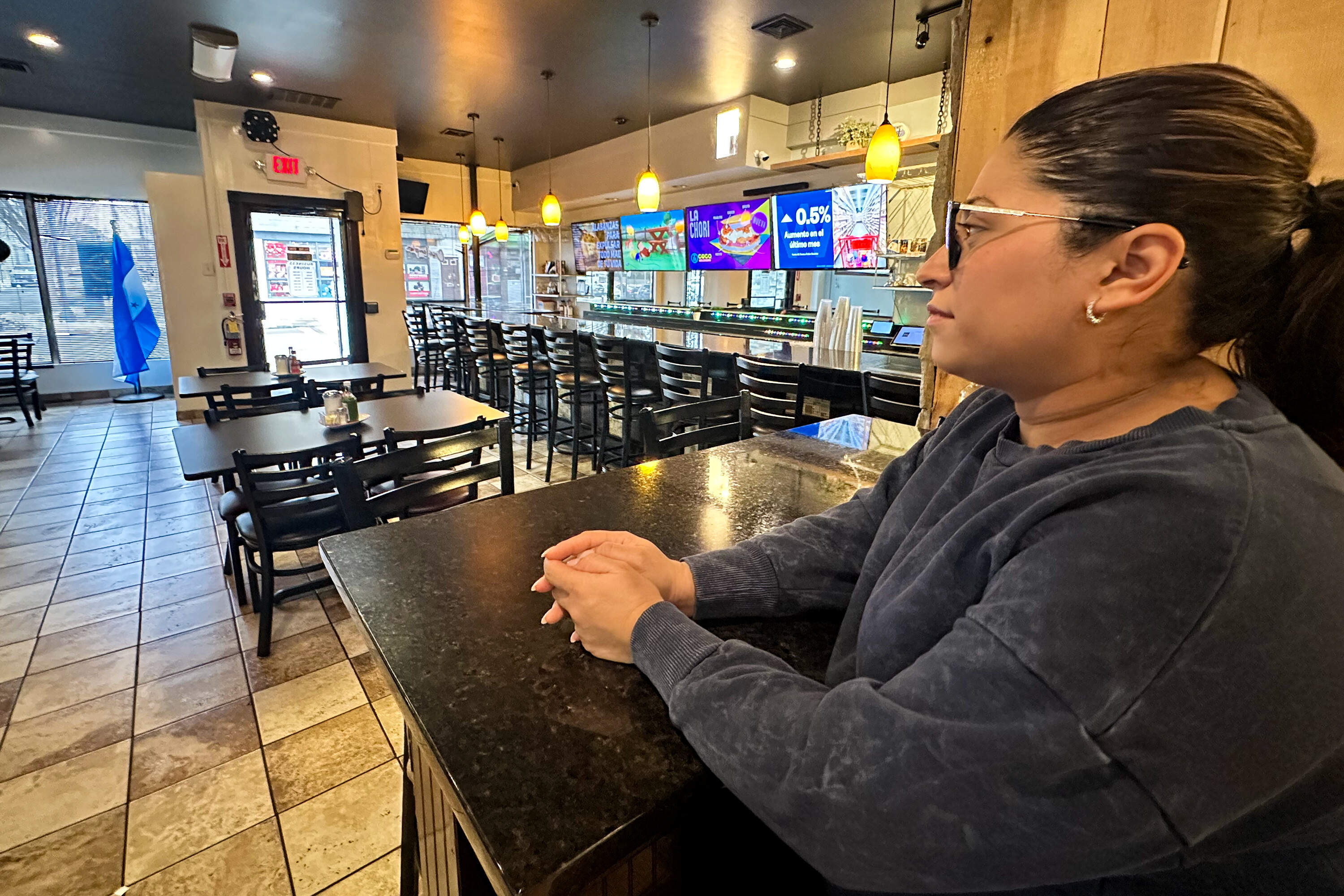
Fear is running rampant in many immigrant communities in Massachusetts, and it’s hurting small businesses, according to shop owners, advocates and political leaders. Trump has promised an unprecedented crackdown on people in the country illegally, empowering ICE agents to raid even churches and schools. The abrupt change of policy strikes deeply in places like New Bedford.
Pineda opened her Honduran restaurant on Acushnet Avenue with her mother three years ago. Recently, they’ve had to cut staff hours, and if things don’t improve soon, they might close on Wednesdays. Pineda hopes business will improve, especially as the cold weather eases.
“Hopefully around March, April, it starts to pick up more,” she said. “We're hoping and praying that that's what's going to happen.”
The Ave.
The Acushnet Avenue neighborhood is dotted with Latino businesses. Once dominated by Portuguese shops and restaurants, the area now has many Central American store owners, as more recent immigrants become rooted in New Bedford.
Walking through the neighborhood on a recent weekday, Corinn Williams visited businesses for a vibe check. She runs the Community Economic Development Center of Southeastern Massachusetts, and has been advocating for this business district — known locally as "the Ave." — for decades.
She checked in with a Mexican restaurant, a Guatemalan bakery, a Puerto Rican barber shop. At each stop, owners reported that sales are down dramatically.
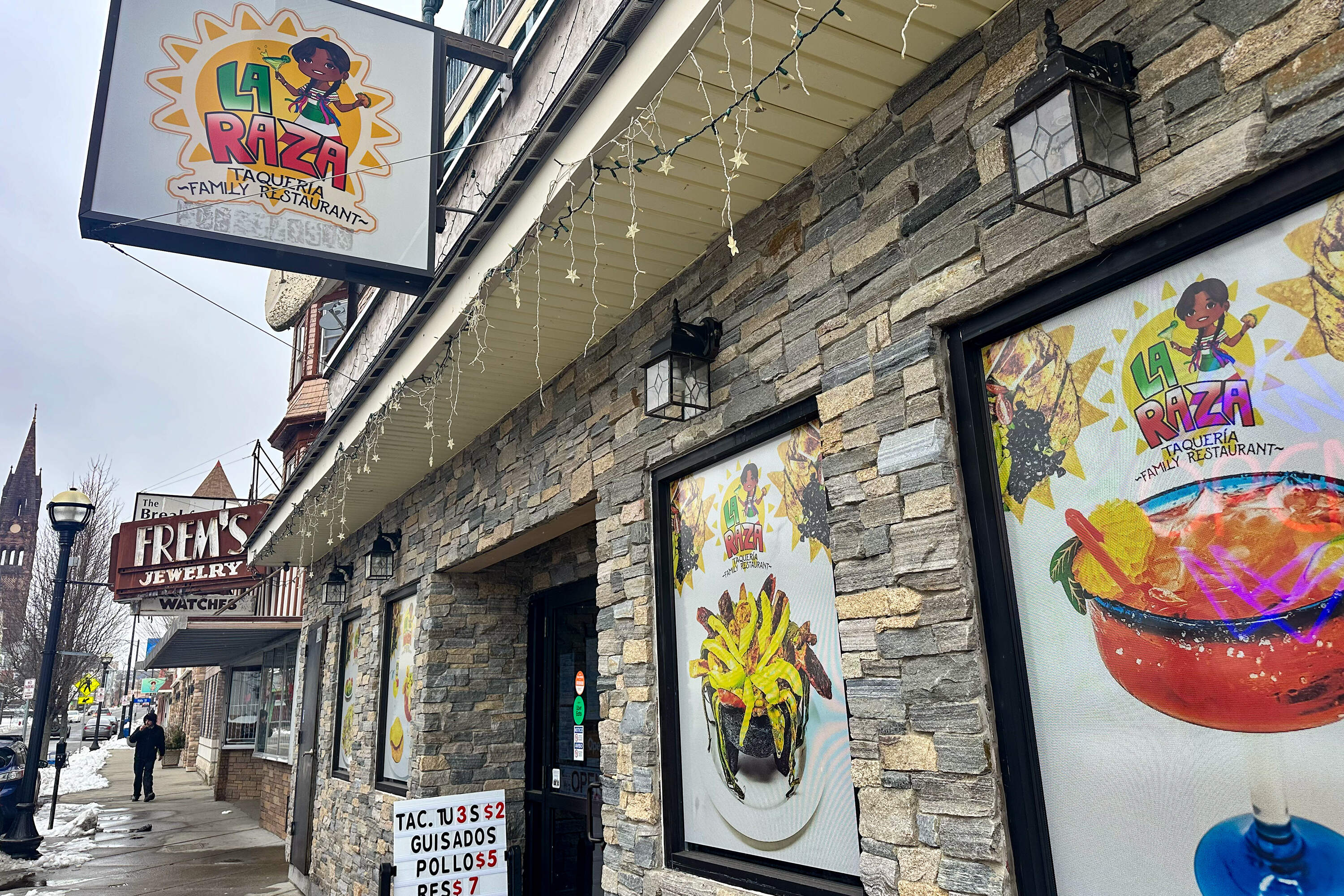
Tony Cabrera owns Taquería La Raza. He recently upsized, buying a building and evolving from a grab-and-go taco spot to a sit-down Mexican restaurant.
“The Hispanic community is no longer going out,” he said in Spanish. “Business is down a lot, like 70% or 75%. Some days we do OK, other times we’re just scraping by.”
Williams said the neighborhood has made big strides in recent years, but the struggles businesses are seeing now shows how vulnerable it is.
“It's the community themselves that are putting in the investment … really making a difference to create new value and jobs and economic vitality,” she said. “To see that being impacted is really pretty tragic.”
WBUR asked New Bedford Mayor Jon Mitchell for reaction to the business woes on Acushnet Avenue. In a statement, his office said the Trump administration’s rhetoric about mass deportations has caused anxiety in immigrant communities across the country.
“As the rhetoric runs up against the reality that roundups of everyone without valid immigration status is logistically impossible, perhaps then the administration and Congress at last can advance real immigration reform that ensures a secure border and establishes clearer pathways to citizenship,” Mitchell said in the statement.
Other leaders in New Bedford are calling on immigrants to overcome their fears. Adrián Ventura, head of the Centro Comunitario de Trabajadores, a worker center in the city, said, "We should not be afraid."
Ventura said people should remember they have rights — whether or not they have legal status — and as long as they’re working and paying taxes, they shouldn’t be afraid.
But he knows the worries about enforcement aren’t just based on rumors. Two weeks ago, ICE agents descended on a local clothing business, two storefronts down from Ventura’s office. He said the shop had been the focus of ICE actions in the past — under the Biden administration — because the owner was selling fake IDs.
Ventura said he’s not surprised the agents returned. After getting wind of the more recent ICE action, he said he saw eight agents there, asking for legal documents from four people. One person was arrested, Ventura said.
Now Ventura’s group is calling on that business to move somewhere else, to stop attracting ICE to the neighborhood.
Meanwhile, the Massachusetts Latino Restaurant Association is trying to turn down the temperature in an industry that employs many immigrants.
“We're trying not to perpetuate the fear,” said the group’s president, Sergio Espinoza. “There have always been situations where a business is being scrutinized for having illegal workers.”
Talk of ICE raids, he said, could come down to agents targeting one person, rather than an entire staff.
“Our part is really to be supportive, talk to people about what their rights are, and also help them continue their business,” Espinoza said.
But similar emotional and economic stress is playing out in cities throughout the region, including in Lawrence, Lynn, Everett and Chelsea.
In East Boston, state Rep. Adrian Madaro said, “When folks are not showing up to work out of fear, when folks are not frequenting these businesses out of fear, of course the impact on the local economy can be devastating.”
Madaro said some business owners in Eastie are concerned they may have to shut down if things don’t improve. Officials are considering ways to help struggling businesses, he said, but there’s no playbook for what he calls an unprecedented situation.
Community organizer Enilda Lovo said she's worried about East Boston’s economy collapsing. She and other volunteers have visited 90 different neighborhood businesses — including bodegas, salons and restaurants — to advise them on what to do if ICE shows up.
Lovo said employees should have a private area to convene in the case of a visit by ICE — and owners should put up signs saying “private property,” making it clear that even bathrooms are off limits.
And Lovo warned against answering questions posed by agents: “If they ask if you’re a citizen, say ‘I have the right to remain silent.’ If they ask whether you have documents, say ‘I have the right to remain silent. I request the presence of a lawyer.’ ”
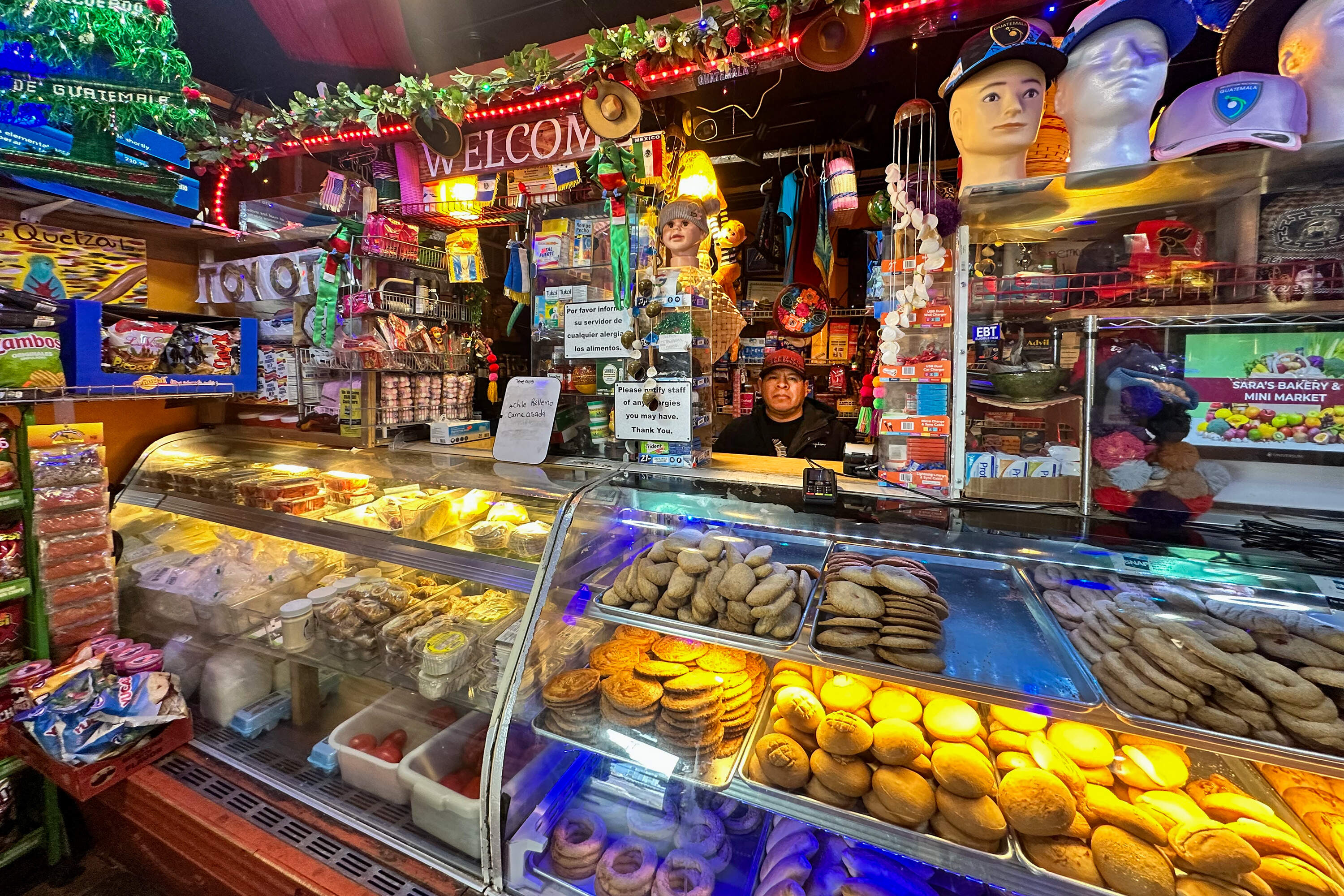
Back on Acushnet Avenue in New Bedford, baker Benedicto Ixchop stands behind a display case of treats. He said business also dropped during the first Trump administration, but it wasn't this bad.
Speaking in Spanish, he said he hopes people's fear will subside. And like many immigrants, he'd welcome a return to "normalcy."
This article was originally published on February 21, 2025.
This segment aired on February 21, 2025.