Support WBUR
Canceled meetings and confusion: NIH grant funding in limbo despite court injunction
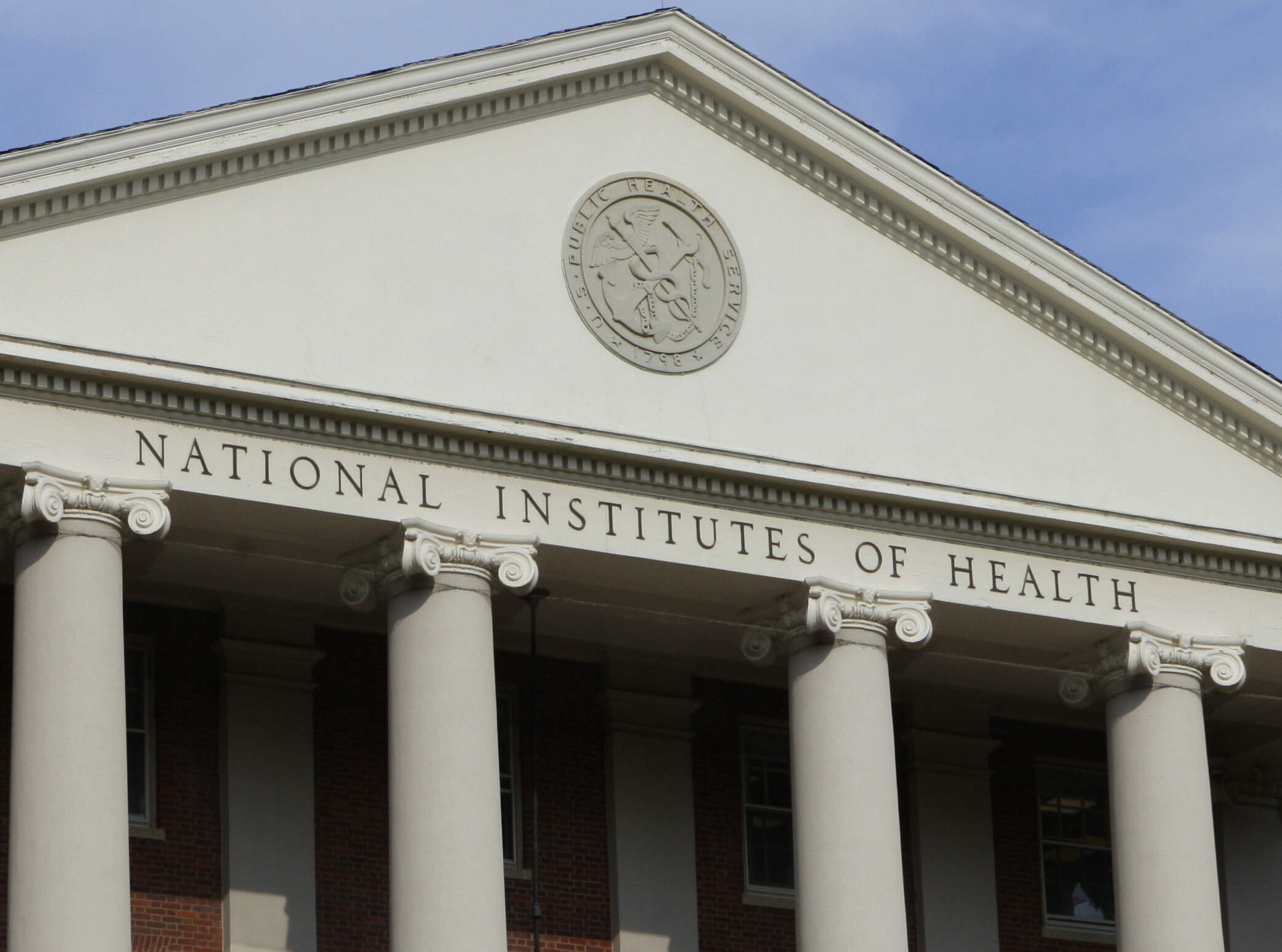
Researchers awaiting National Institutes of Health funding say their grant meetings are being canceled, despite a court order blocking the Trump administration from freezing federal funds.
Study sessions and council meetings are where review groups decide whether scientists will get the NIH money they’ve applied for. And last-minute cancellations are leaving scientists in a precarious limbo.
Gina Turrigiano, a neuroscience professor at Brandeis University in Waltham, said she knows of at least 10 grants held up at her university. One of those is for Eve Marder, an award-winning neuroscientist studying animals in Boston Harbor and their resilience to climate change.
Marder said she has received funding from NIH for many years through a series of grants. She relies on this money to fund her lab and train the next generation of scientists.
One of her grants was scheduled for a council meeting on Wednesday, Feb. 12. But the day before that, on Feb. 11, Marder learned the meeting had been canceled. She said she has no idea when it will be rescheduled and is worried the clock will run out.
“If everything turns on three weeks from now, nothing will be irreversible,” said Marder. “But if it goes on for nine months or a year, basically all of my people will be gone.”
Marder said she has held meetings with her staff and hates not having answers for them.
“The ambiguity and lack of clarity in what's going to happen is incredibly demoralizing to them,” she said. “I can't protect them from the irrationality of what may or may not happen.”
The confusion over federal health programs began on President Trump's second day in office. The administration ordered federal health agencies to stop external communications.
According to an internal NIH email sent out on Jan. 21 reviewed by WBUR, the ongoing communications blackout mandates that documents posted to the Federal Register — including notice of these grant-related meetings — must first be approved by a presidential appointee.
The Federal Advisory Committee Act, enacted in 1972, states that meetings must be posted to the Federal Register 15 days in advance. In effect, the Trump administration is blocking grant meetings by not allowing public postings of the meetings, which are now being canceled on a daily basis.
“What I believe happened is that the administration realized that this was an incredibly useful thing,” said Jeremy Berg, a former NIH institute director who has been posting about the agency's struggles on the social media site Bluesky. He said the move “seems like an administrative work-around,” to stop NIH funding.
The delays are particularly disruptive for scientists in the midst of research. Long-term grants operate on a renewal basis, where each year a progress report must be submitted to receive another year of funding.
Scientists interviewed by WBUR say only grant meetings that were scheduled in the Federal Register before Jan. 21 have occurred in recent days.
Anita Devineni, an assistant professor of biology at Emory University in Georgia, said one of her students had a meeting scheduled before inauguration day. The student's application was reviewed on on Feb. 11, marking a step toward receiving a grant called a study section.
If applications receive a strong enough score, they then go to a council meeting, which decides on grant awards. “She got an amazing score,” Devineni said of her student, whose council meeting is scheduled for May.
“Any other time I would tell her it would get funded, but because this is not a normal year, we don’t know,” Devineni said.
The lack of normal information flow can be jarring. Brian Stevenson, who researches Lyme disease at the University of Kentucky’s College of Medicine, had two study sections canceled last week. He found out while drinking his morning coffee and scrolling on Bluesky — where he spotted a post about the cancellation.
Stevenson hopes his work changes the drug treatment for Lyme disease. He has two grants that will get him through April 2026, he said, and has been writing new proposals to extend that deadline.
“If these proposals never get reviewed, or if council meets too late, I won't have any money, and I’ll have to let people go,” he said. “It’s very frustrating and very depressing.”
Some states, including Massachusetts, are battling the new administration’s control of the country’s medical research agency. A federal judge in Boston has extended a temporary restraining order on the Trump administration’s attempt to slash NIH funding of indirect costs, which cover items from office expenses to janitorial staff. The judge has yet to make a final ruling on a longer-term injunction.
Alongside indirect costs, researchers hope the broader grant funding freeze will go back to the courts.
“If they’re not awarding grants, it doesn’t matter what the indirect costs are, because nobody’s getting any money,” Stevenson said.
This story is part of a partnership between WBUR and the Boston University Department of Journalism.