Support WBUR
At the Folk Americana Roots Hall of Fame, Joan Baez takes center stage
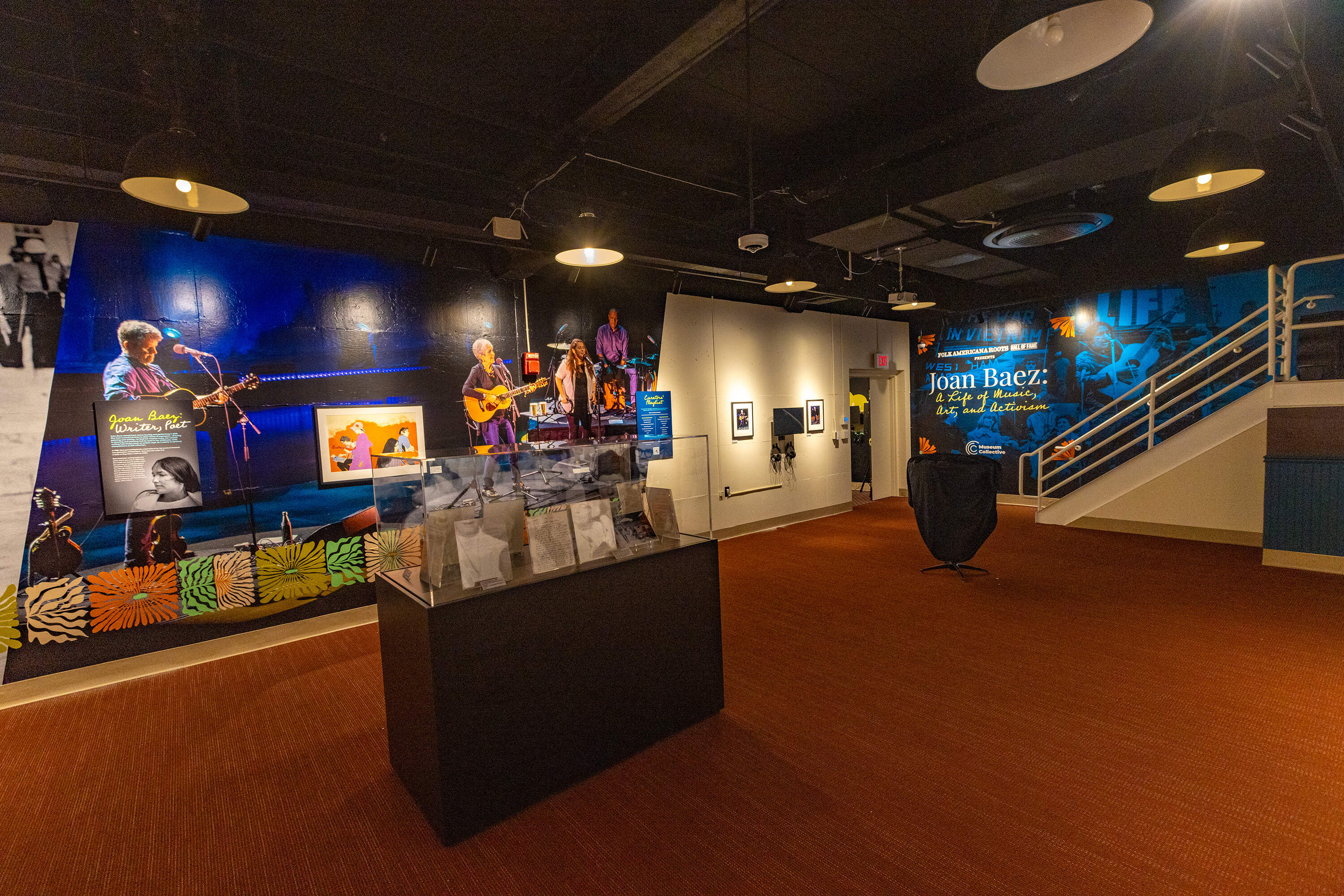
Joan Baez’s body of work is so massive that even she’s surprised by it at times.
Scanning a list of items on display at "Joan Baez: A Life of Music, Art, and Activism" at the Folk Americana Roots Hall of Fame, the legendary folk artist and activist becomes excited when she sees a collection of her poems, including “Star,” “Farmhouse” and “Colleen.”
“Oh, these are poems I’d forgotten about,” Baez, now 84, remarks. She fixates on one in particular — “I Saw The Pogues Sing” from 1996 — and adds with a chuckle, “I'd like to see that, because I forget it.”
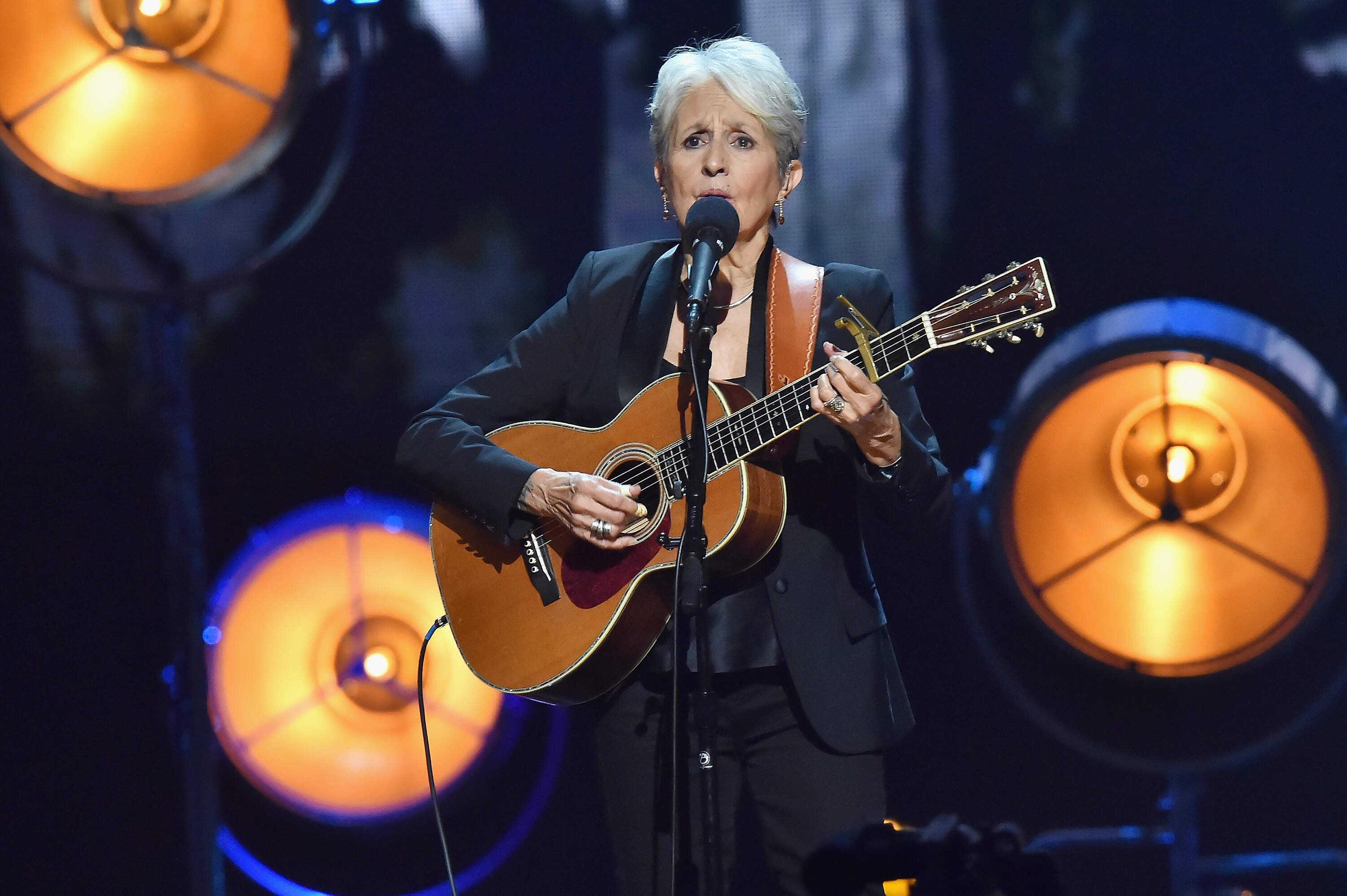
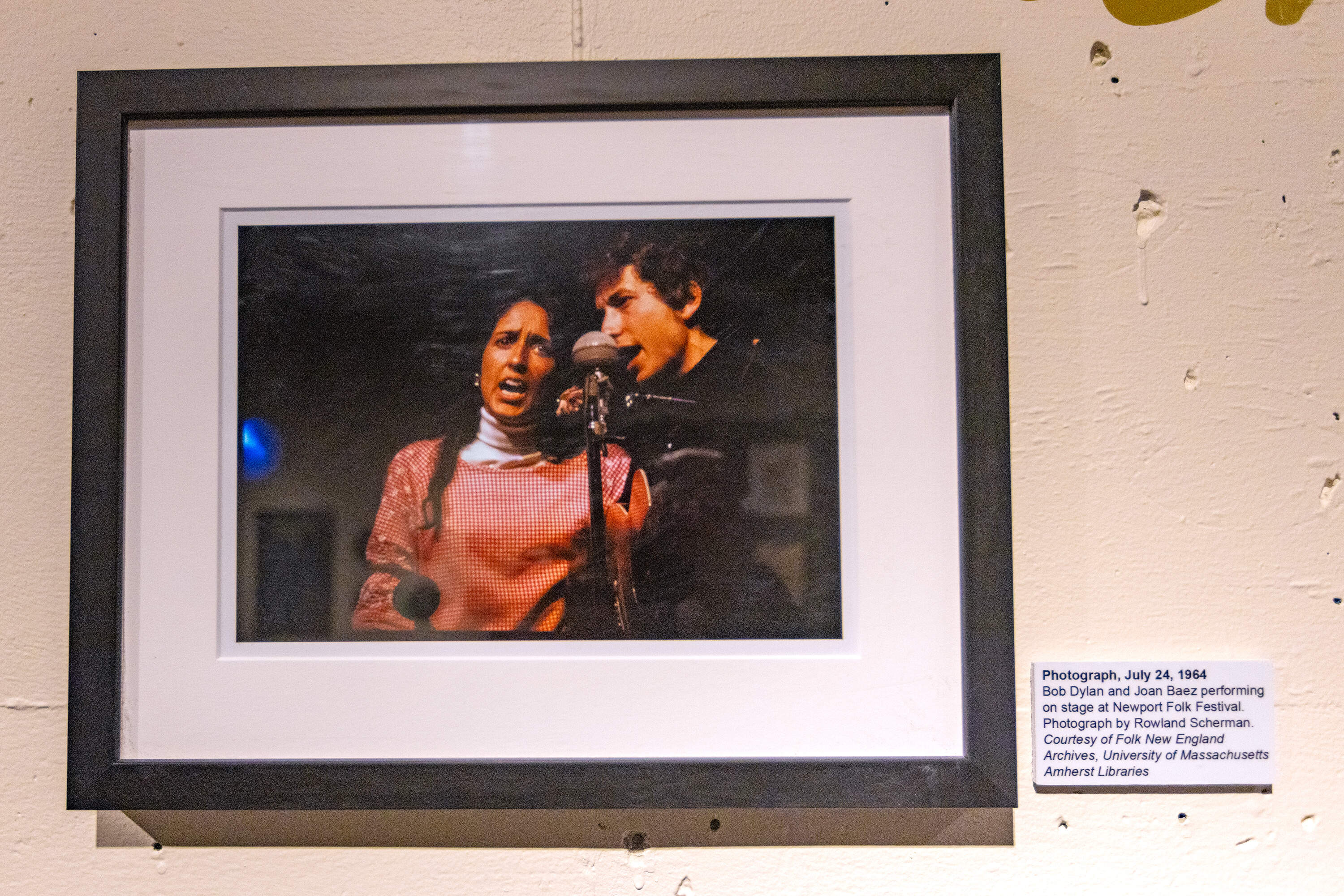
These verses represent a sliver of Baez’s career, best described as a gutsy, 67-year scrapbook of enmeshing folk music and calls for social change. Many summaries of Baez’s life place her at center stage during two major moments in U.S. history: performing “We Shall Overcome” at the March on Washington in 1963, and closing the first day of Woodstock in 1969. At the Hall of Fame’s new exhibit, those well-documented moments of fearlessness factor into Baez’s story just as much as her paintings and poems created in solitude.
“One of the revelations in the exhibit is how multitalented and multi-creative Joan is — it's not just about singing and strumming a guitar,” says exhibit curator Bob Santelli. “There's a lot more to Joan Baez as a creative person than meets the eye.”
The new exhibit runs through July 27 at the Hall of Fame, located within the Boch Center.
Santelli and co-curator Deana McCloud began assembling the exhibit last spring, using a smaller Baez exhibit by Martin Guitars as a “starting point” for their collection, McCloud says. While Baez was not involved in curating the exhibit, the majority of the items on display are from her archives.
“Joan and her team really opened their closets, so to speak, and allowed us to pick the kind of artifacts that tell a great story,” Santelli notes.
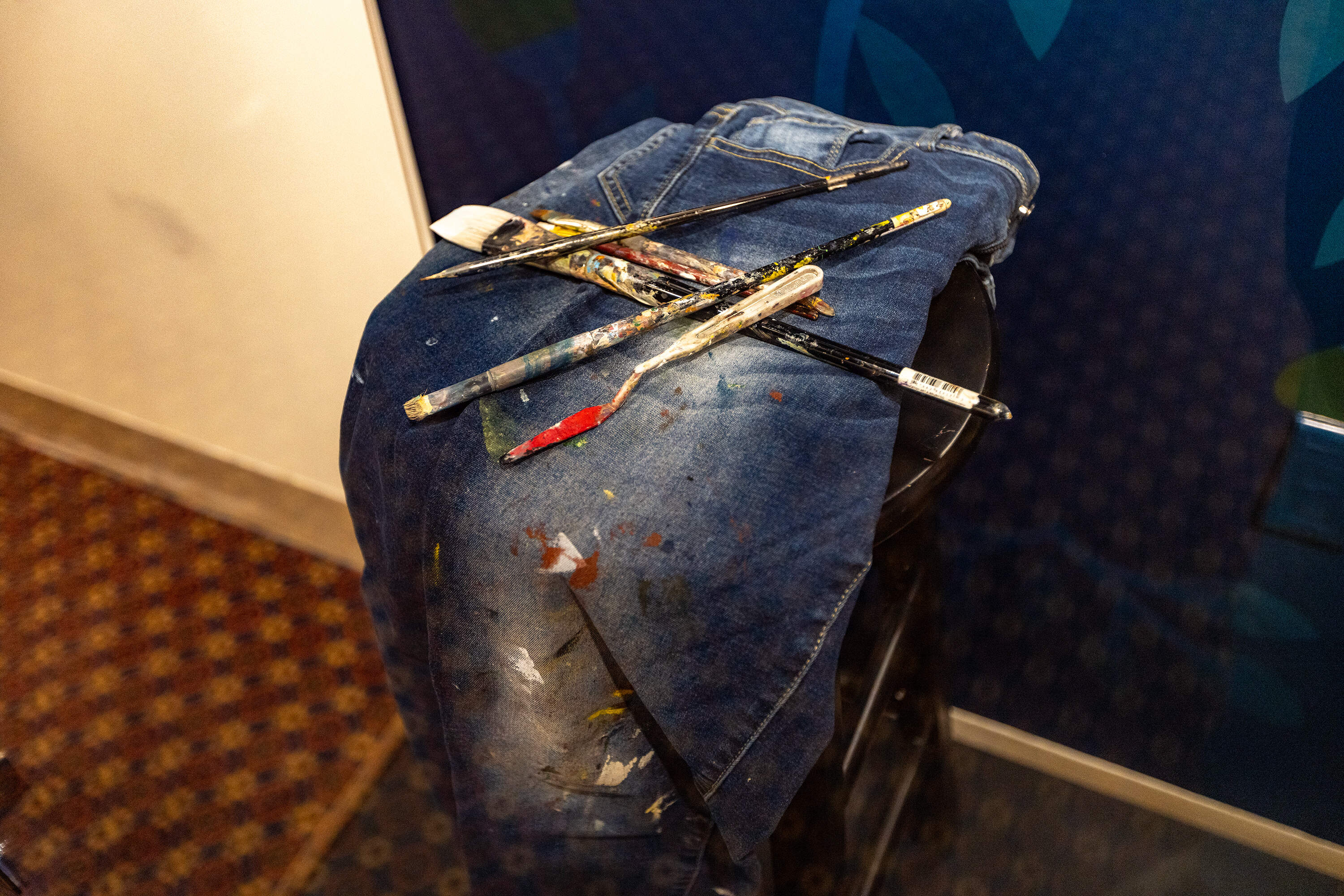
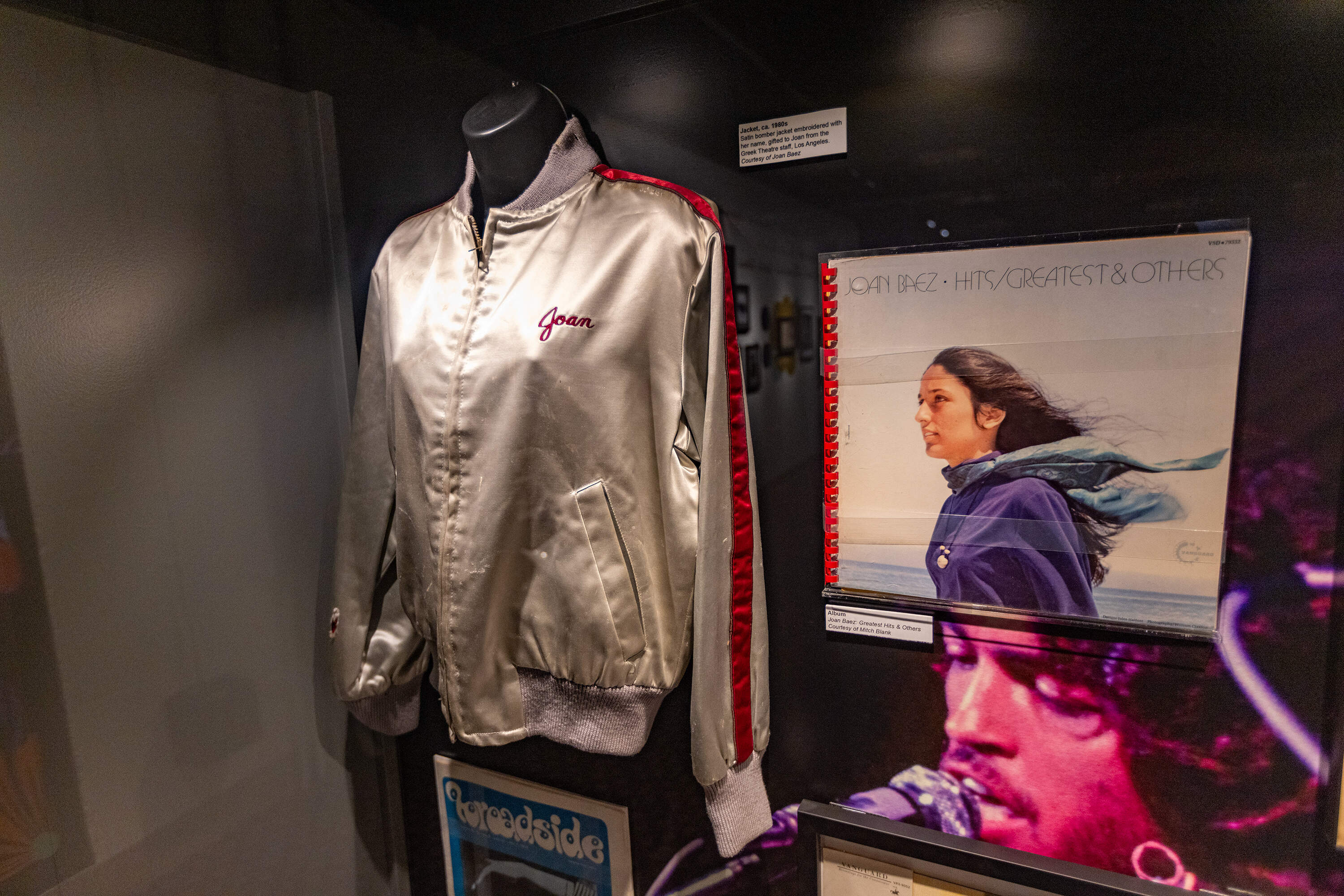
“Closets” is an appropriate word here; among the trove of archival photos, handwritten lyric sheets, and show posters on display are Baez’s paint-splattered jeans and an embroidered satin bomber jacket, gifted to her by the staff at Los Angeles’ Greek Theatre. The dress and jewelry that she wore for the cover of her 1975 album “Diamonds and Rust” are also on view, on loan from the Rock & Roll Hall of Fame.
Discussing the exhibit’s collection over the phone, Baez’s more private moments and creative processes come alive. A 1958 snapshot of her performing at Club 47 — now known as Club Passim — captures Cambridge’s role as a “landing place” for her early career. The Harvard Square venue boasts the honor of hosting Baez’s first professional (albeit sparsely attended) show.
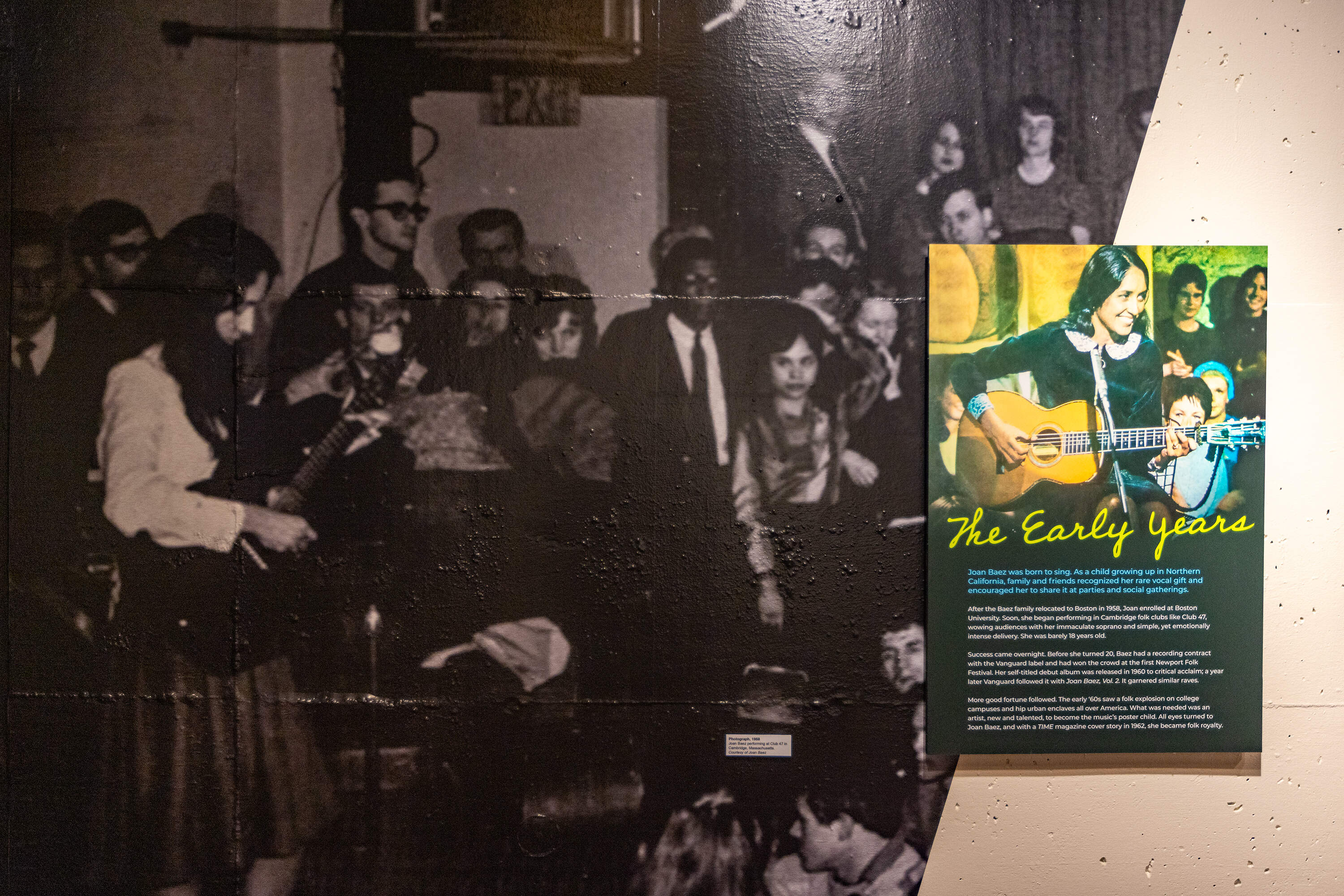
“I think I was nervous as a cat,” Baez recalls of the set. “Only my family showed up . . . so I sang my whole repertoire facing just my family. That'd be four people and maybe one or two [others]. My boyfriend was walking back and forth outside — he was worried about losing his girlfriend to commerciality and he didn't want anything to do with this club.”
Baez would go on to become a regular performer at the venue, as well as a major player in the area’s folk scene, although she wasn’t aware of the music history she was setting in motion at the time: “I was too busy having stage fright.” (Years of therapy would help Baez gradually “obliterate” that fear with tools like self-hypnosis and guided imagery.)
Reviewing her visual art in the exhibit, which ranges from pencil drawings to glazed pottery, Baez highlights a 1997 sketch called “Military Man with Angel Child.” She explains that she crafted the piece on the wall of a Paris cafe with food and makeup, mashing broccoli for a green tint and using materials like chocolate and lipstick as paint.
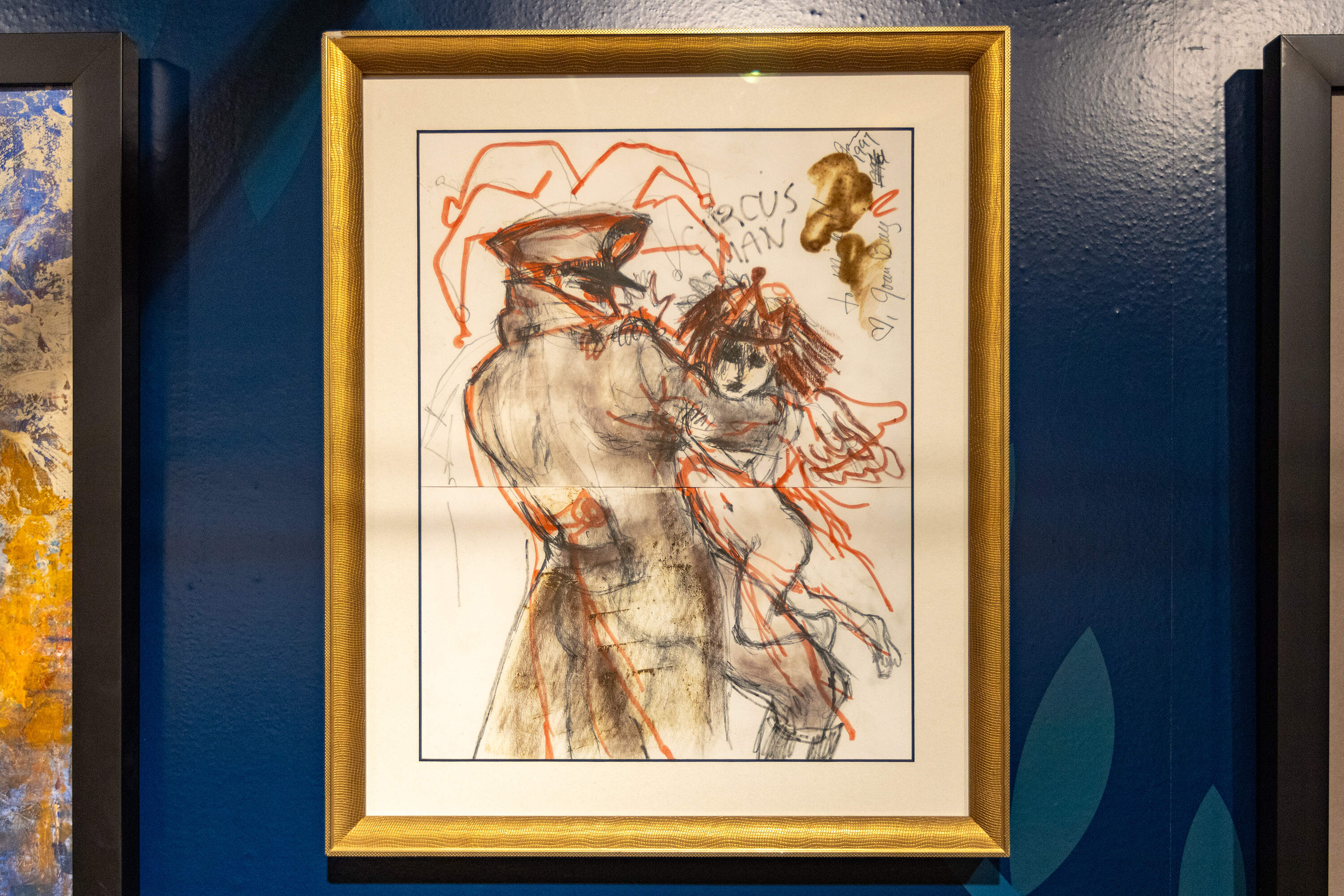
Another Baez technique: when working at home, Baez says she sometimes would dunk her paintings in a pool to reinvent them if she was feeling “stuck” or “finicky.” The solitary aspect of the art form, she adds, is reflective of how she approaches her music.
“Bonnie [Raitt] and Linda Ronstadt and Emmylou [Harris] — they've worked so much with other artists and I really haven't, for whatever the reasons were,” Baez says. “I see that now, and then I also see how solitary the painting is. . . I love that time and that space.”
Baez considers the Civil Rights Movement to be the most meaningful element of the exhibit, which features black and white photos of her at the March on Washington, as well as the 1929 acoustic guitar that she used to perform “We Shall Overcome.”
“It's a little education process, always,” Baez says, recalling a child’s reaction to stories about discrimination she had shared during a performance.
“I talked about Dr. King and the movement, and police turning fire hoses on children, setting dogs on children,” Baez says. “Apparently, some kid asked his mom after they left, ‘Was she just telling stories? Was that real, or was she making up stories?’ Because they don't know. They haven't been exposed enough. So I realized that I can't take things for granted.”
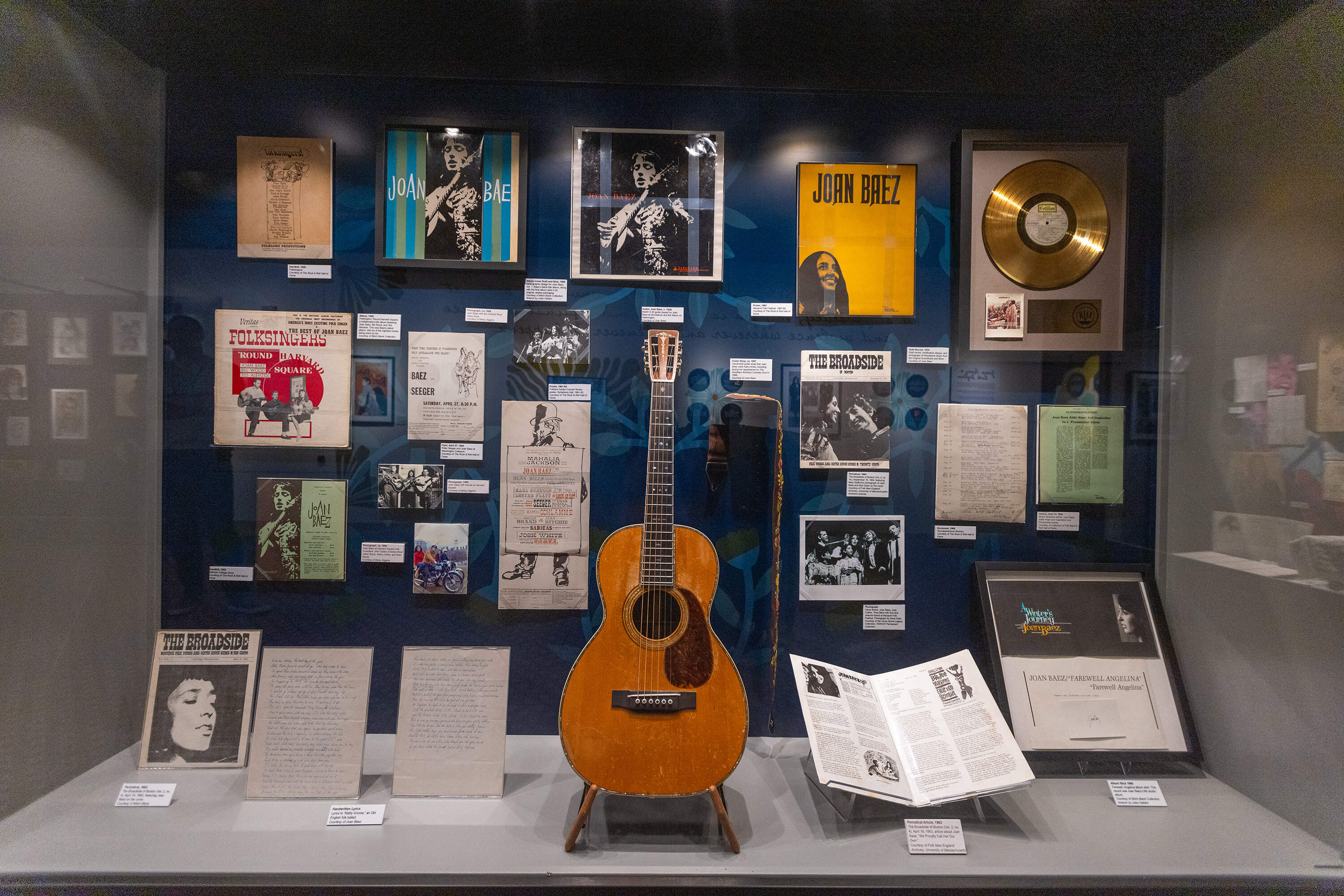
Adds Santelli, “It's so important to let other musicians, as well as fans, know that music can act as an agent for social, political change in this country, and Joan is the poster child for this.”
Touchscreen kiosks in the exhibit display over a dozen interviews with artists like Tom Morello (Rage Against The Machine), Margo Price and Judy Collins, each reflecting on Baez’s impact on their careers. The conversations bridge the gap between generations of performers — and hopefully empower the next generation to step up to the plate, the same way 22-year-old Baez stepped up to a podium to sing “We Shall Overcome” in 1963.
“We want to make sure that influence that Joan has had on artists and activists has a spotlight, because her work isn't done,” explains McCloud. “Now more than ever, we probably need to have that example of what a nonviolent, peaceful approach [to protesting] can do.”