Support WBUR
25 Mass. workers part of U.S. Department of Education's massive downsizing
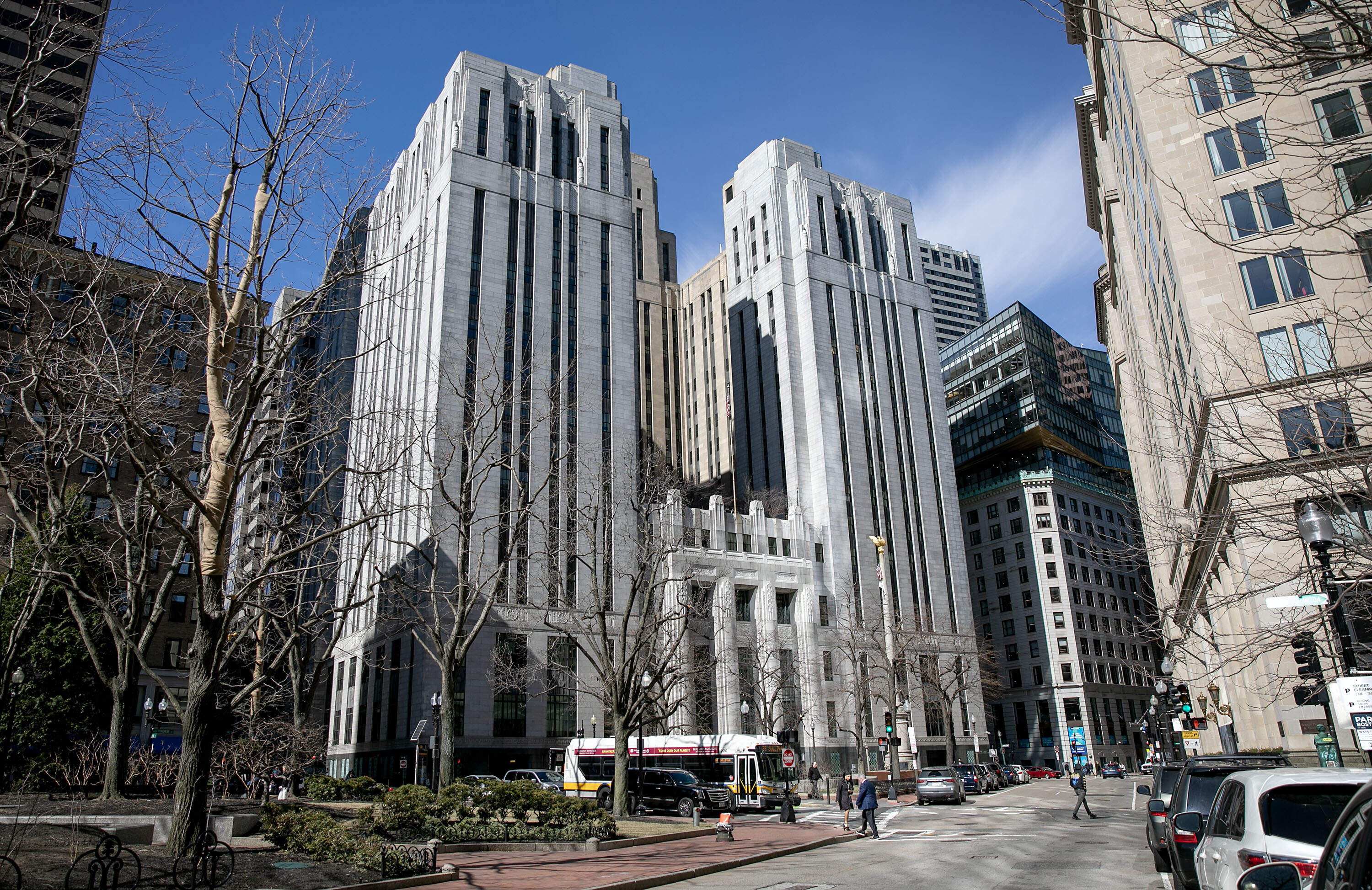
At least a couple dozen Massachusetts-based staff will go on administrative leave as part of the federal Department of Education's massive workforce cuts announced by the Trump administration Tuesday.
The department is eliminating roughly 1,300 positions, slashing the agency in half and effectively eliminating entire units, according to a press release sent by the agency Tuesday evening. Those cuts come after roughly 600 education department staff already took a voluntary resignation offer in recent weeks.
"All divisions within the Department are impacted by the reduction, with some divisions requiring significant reorganization to better serve students, parents, educators, and taxpayers," U.S. Education Secretary Linda McMahon said in the Tuesday release. The statement said the department would continue to "deliver on all statutory programs" in its charge such as Pell grants, student loans, and funding for special needs students.
Cuts in the Boston office — one of 10 regional offices around the country — include staff who worked in the Office for Civil Rights and Federal Student Aid, according to a spreadsheet of affected positions shared by the American Federation of Government Employees Local 252, the union that represents agency staff.
That spreadsheet shows 25 workers based in Massachusetts plus a handful more from around New England. The department said all impacted staff will be placed on administrative leave starting next Friday, March 21.
The Office for Civil Rights — which investigates cases involving students' rights — and Federal Student Aid are the largest divisions within the agency and employ many workers around the country, AFGE Local 252 President Sheria Smith said in a media call Wednesday afternoon.
"What this administration has done is eliminate oversight. So you have eliminated protection of American students from K all the way to higher education," she said.
Smith said that the agency's planned cuts will eliminate nearly "wholesale" the Institute of Education Sciences, the arm of the education department that does research, data and statistics and analysis of things like student test scores.
"What this administration is doing is eliminating the only entity that would ever analyze what the test scores are. So no one will know whether the test scores are good or bad moving forward," Smith said. "No one could actually comment or criticize, or there's no accountability for what this administration is trying to do."
Trump has pledged to dismantle the Department of Education, which was established in 1979. Only Congress could authorize such a move and many federal education initiatives, including funding for Title 1 programs and special education services, have received bipartisan support over the years.
"There have been a lot of rumors out there that [an executive order from Trump] was going to happen last week or a few days ago, but it has not happened," said Brown University's Kenneth Wong, a professor of education policy. "In part, it could be because of the fact that there are a lot of bipartisan concerns in completely dismantling some of these initiatives."
Charlestown resident Carolyn Grim is a 15-year department employee who worked for the agency’s National Center for Education Statistics, which administers the NAEP test, or Nation’s Report Card, every two years. Those results provide researchers and policy-makers with a state-by-state comparison of student progress.
Grim said the NCES, which operates much like the data-research arm of the department, once included about 90 staff. That number whittled down to about 50 workers a week ago, with some staffers retiring before Trump’s inauguration — "because they knew things weren't going to be good."
By the time of the layoff notices late Tuesday, it appeared as if nearly the entire division was cut.
"I kept hoping I would be spared," Grim, 71, said. "I had no intention of leaving, the only reason was if someone made me leave. I really like my work."
Grim cited the removal of veteran NCES commissioner Peggy Carr late last month as especially troubling.
“This is a person who has [been with the agency] 33 years, who is a major figure in NCEs and they treated her like dirt," she said. "People were so upset.”
“The more I think about it, the more upset I am as time goes on,” Grim said in a phone interview Wednesday. “I just am so worried about the really valuable research that’s going to be destroyed by this administration and where they’re headed with their plans to undermine fact-based decision making.”
While she believes Massachusetts, with its state and local commitment to education spending, will fare OK, she worries about low-income students and children with disabilities.
“I’m really worried about the kids in poorer states who really benefit from our research," she said.