Support WBUR
The Weekender: Boston's Saturday Morning Newsletter
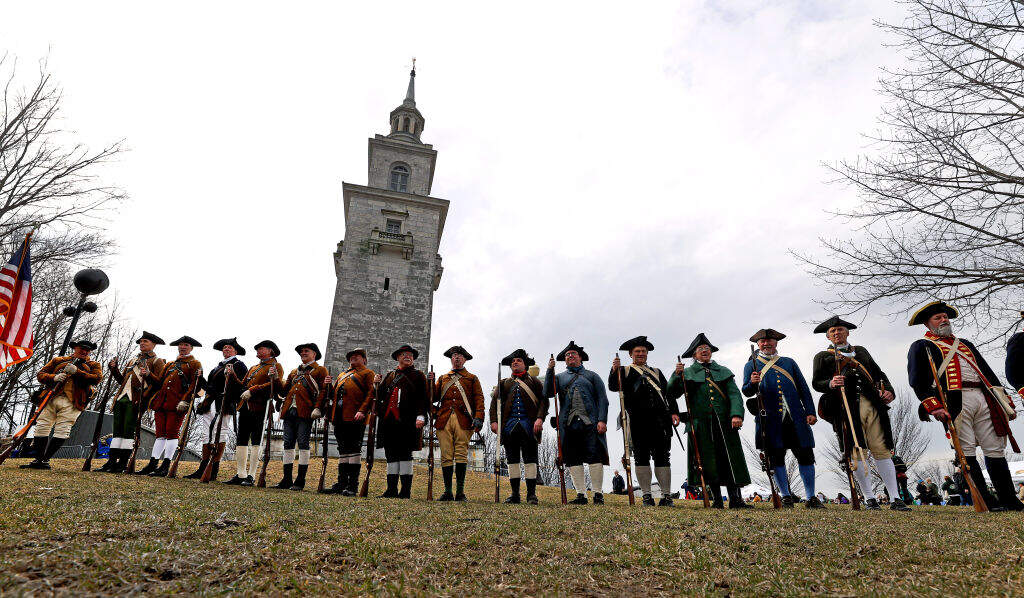
The story behind Evacuation Day, the holiday Boston officially recognizes on March 17
Editor's Note: This is an excerpt from WBUR's Saturday morning newsletter, The Weekender. If you like what you read and want it in your inbox, sign up here.
A wave of green is cresting over the city for St. Patrick’s Day celebrations this weekend. But did you know that isn’t the holiday Boston actually recognizes Monday?
March 17 is, officially, observed as Evacuation Day in Boston (plus the three other communities that make up Massachusetts’ Suffolk County: Chelsea, Revere and Winthrop). Even though St. Patrick’s Day falls on the same date, it isn’t the holiday you’ll find on city calendars.
Evacuation Day commemorates the day in 1776 that British General William Howe and his troops evacuated Boston, following the first battles of the Revolutionary War.
The annual Sunday parade in South Boston — though more popularly associated with St. Paddy’s — has honored both holidays since 1901. Up until about 15 years ago, government offices across Suffolk County closed for the holiday; Boston Public Schools even got the day off through 2016. And parking meters in Boston remain free on March 17.
So, what’s Evacuation Day all about?
In the spirit of Massachusetts’ 250th anniversary, I spoke to Peter Drummey, the chief historian at the Massachusetts Historical Society, about this pivotal day in state (and American) history.
What happened on Evacuation Day
You may have learned in history class that the United States declared its independence on July 4, 1776, and that the Revolutionary War went on until the Treaty of Paris was signed in September 1783.
However, Evacuation Day marked a major accomplishment in the war’s early stages.
Colonial militias in Boston had already come to blows with the British army a few notable times. The Battles of Lexington and Concord — commemorated with their own respective local holiday — nearly a year prior added heat to the conflict, although “there wasn’t an idea yet that this was the start of a war,” said Drummey.
The 11-month period between those first skirmishes and Evacuation Day was called the “Siege of Boston.” It included the legendary battle of Bunker Hill, a month after which General George Washington arrived in Boston to lead the newly formed Continental Army. His goal? Drive the British army out. How they would manage this, however, was still in the works.
British forces were concentrated on the peninsula that was downtown Boston. Washington considered waiting until Back Bay froze over to cross over the ice and attack. But according to Drummey, there wasn’t enough cold weather at the end of 1775 to make such a plan feasible.
Enter Dorchester Heights.
Remember, much of Boston is infilled land. But a ridge of hills called Dorchester Heights in what is now South Boston rose above the water.
“It had a position more than 150 feet high, overlooking Boston and overlooking where ships came in and anchored in Boston Harbor,” Drummey said, noting that the British left the ridge unfortified since they didn’t want hold a position miles away from their Boston base.
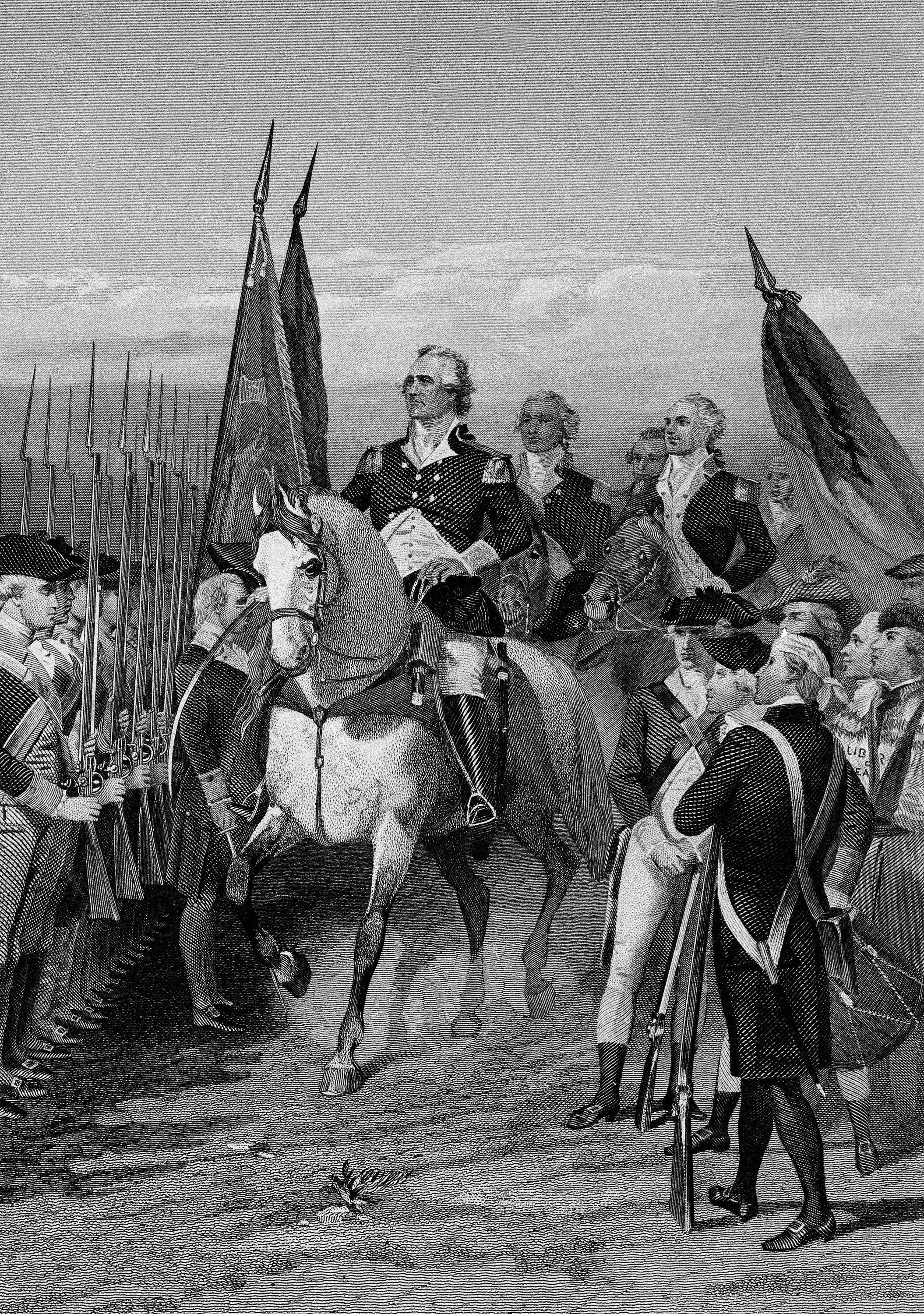
In January 1776, Washington received word that Henry Knox — a 25-year-old Boston bookseller-turned-artillery colonel — had returned from a six-week mission to Fort Ticonderoga in New York. Knox brought back more than 119,000 pounds of firearms and ammunition, including 59 cannons. He and his men transported the load over 300 miles, through the snowy Berkshires, on 42 sleds pulled by 160 oxen.
With Knox and his haul back in town, Washington set his sights on fortifying Dorchester Heights. On March 4, the Continental Army quietly moved all the artillery from Roxbury to the ridge overnight. Drummey says they brought barrels filled with gravel and sand as “portable fortifications.”
On the morning of March 5, “the British in Boston woke up to see this looming fort on a hill,” he said. “So, they were faced with a choice.”
Howe decided to evacuate to Nova Scotia. In total, approximately 120 ships carrying more than 11,000 people — British soldiers, their dependents and loyalists — left the city on ships on March 17.
“It was the first large-scale, clear American victory in the war,” Drummey said.
A dual holiday from the start
It wasn’t until 1941 that March 17 became a legal holiday in Boston — a recognition that has been conspicuously tied to St. Patrick’s Day from the start. The original law mentioned neither holiday by name; press reports at the time referred to it as the “St. Patrick’s holiday bill.” And as WBUR later reported, it was signed by then-Gov. Leverett Saltonstall in green ink.
“I believe it is quite appropriate to use the favorite color of our mutual ancestry,” state Sen. Joseph Murphy, who sent Saltonstall the ink, wrote to the governor, according to The Boston Globe.
For decades, school kids in Suffolk County knew the holiday was called Evacuation Day because it meant they got to stay home. But it wasn’t until 2010 that the law was changed to officially give March 17 its Revolution Era moniker.
Drummey says the Continental Army even embraced the coincidence at the time. (After all, Boston had started celebrating St. Patrick’s Day as early as 1737.)
“Armies at that time required a password and a countersign,” he said. “On Evacuation Day, the Continental Army’s password was ‘Boston’ and the countersign was ‘St. Patrick.’ People were aware of it, but they could not imagine how major American cities would evolve the holiday over time.”
P.S.— Some local politicians want South Boston’s annual parade to focus more on Evacuation Day as a way to tame the recent rowdiness. Read more on the changes to this year’s festivities here.