Support WBUR
Empty restored frames highlight Gardner Museum heist 35 years later
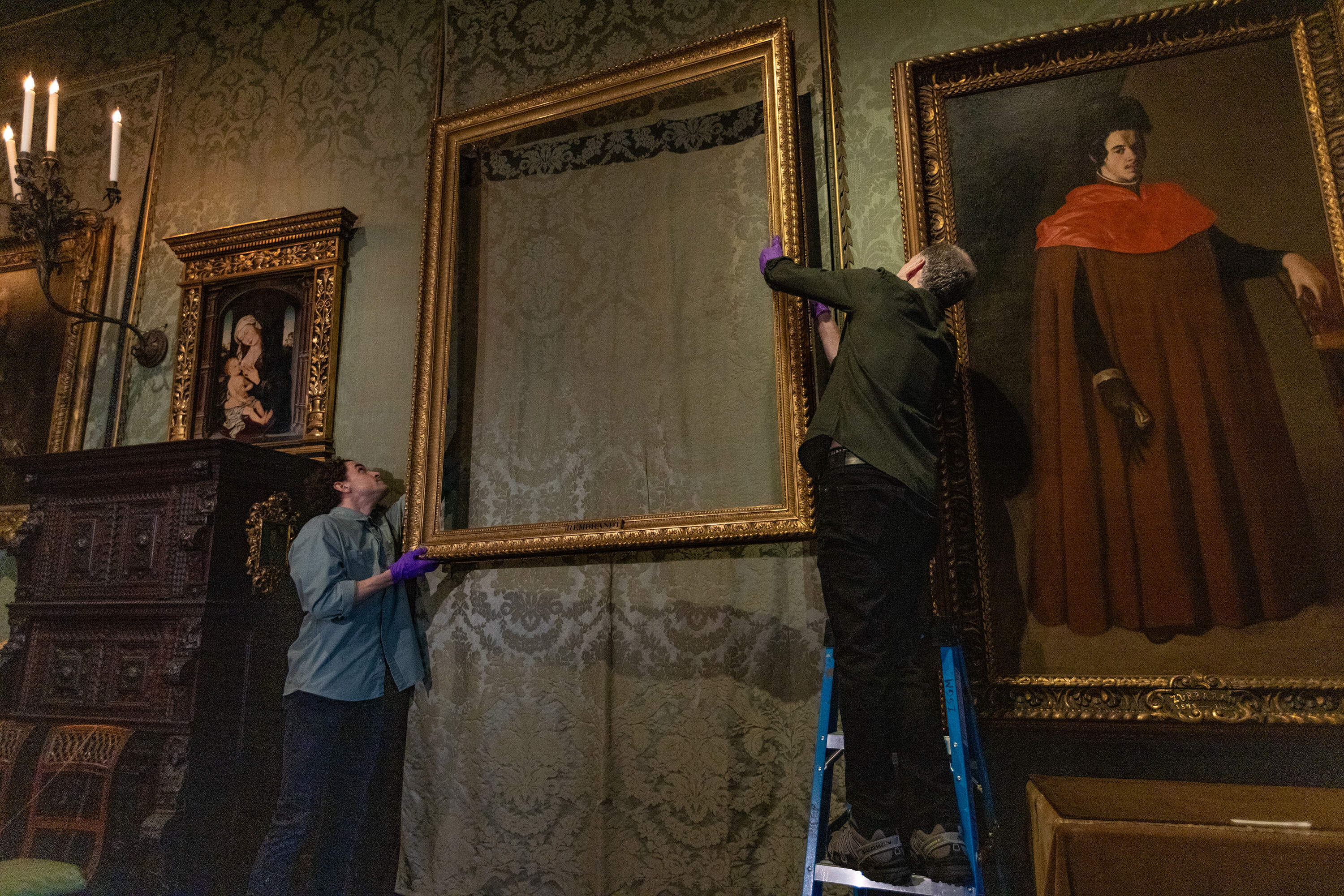
Thirty-five years ago on March 18, thieves disguised as police men stole 13 precious artworks from the Isabella Stewart Gardner Museum. During the robbery they swiftly sliced five out of their frames in the Dutch Room.
Those empty frames have remained in the gallery as stark reminders of the notorious art heist. Now, as part of the Dutch Room’s ongoing restoration — the gallery that once held Rembrandt’s only known seascape — has been refreshed and rehung in time for the theft’s anniversary.
Paintings, not frames, are usually the stars in museums. But the gilded rectangle that once held “Christ in the Storm on the Sea of Galilee” is one of the most famous in the world.
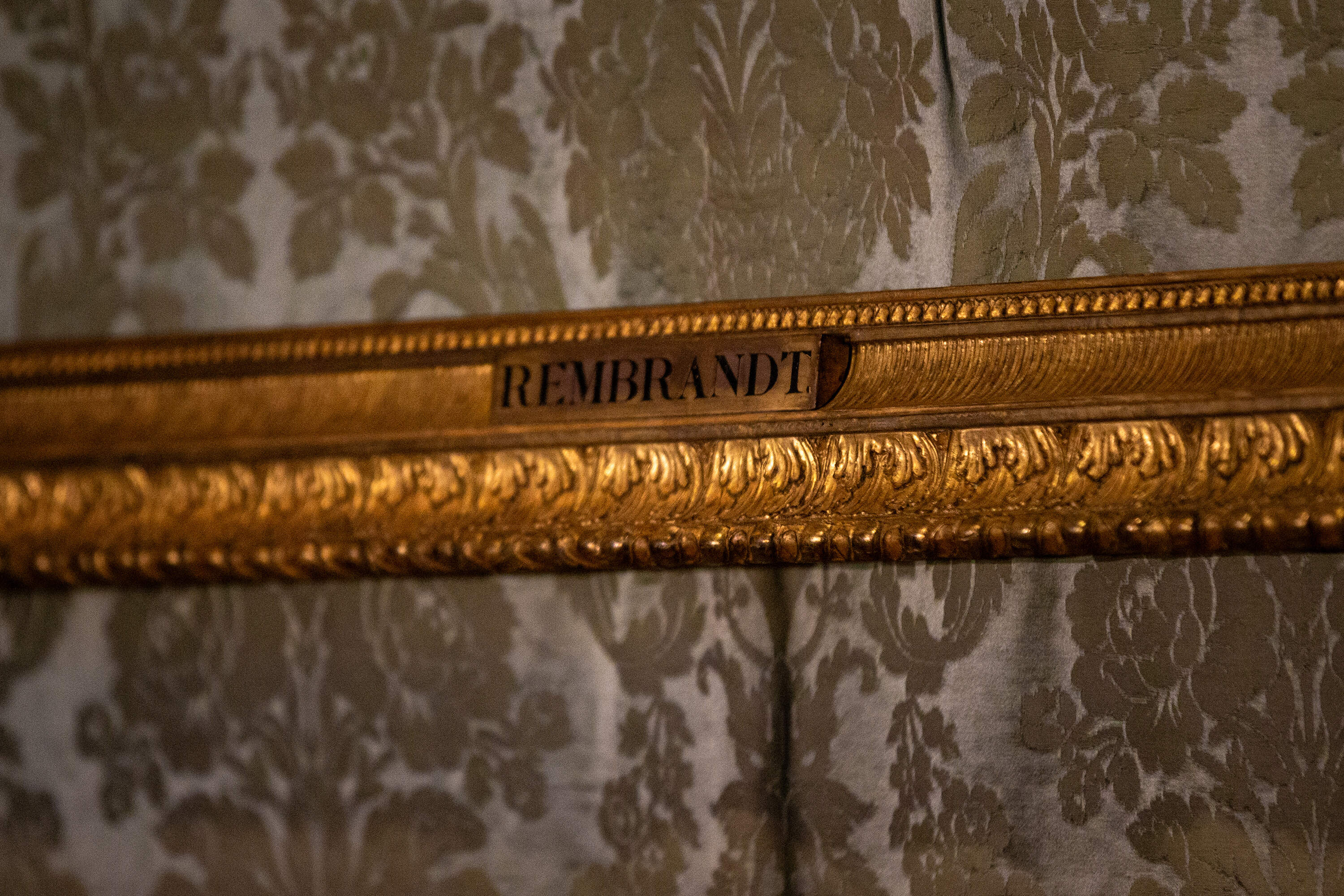
“This is a bit of a celebrity frame,” Andy Haines said standing in the Dutch Room. He’s an independent frame conservator and self-described frame nerd. “It's always a little shocking when you come into a room that has empty frames hanging in it,” he said.
Haines was hired to repair and clean the five antique “theft frames,” as he called them, for the Dutch Room’s floor-to-ceiling renovation. He remembers when Rembrandt’s 1633 depiction of Jesus Christ with his disciples — onboard a ship in a tumultuous sea — was still in the building.
“I'm a painter myself, and it was a wonderful composition of figures all stacked up in this boat, and there's a Rembrandt self-portrait within the painting,” Haines said. “It'd be a nice painting to have back and to be able to contemplate once again.”
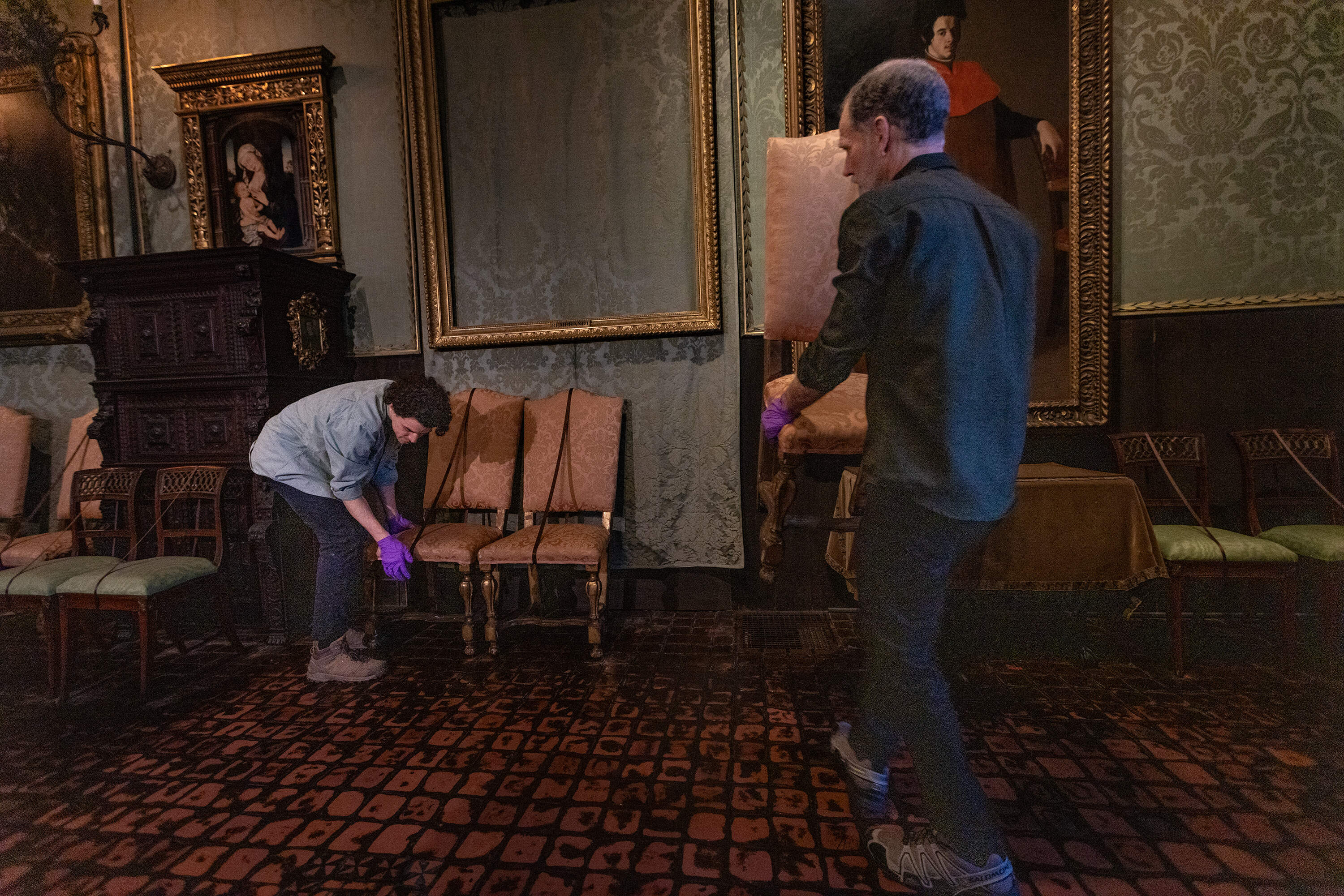
Nothing compares to looking at this — or any painting — in person Haines said. And their frames connect them to the galleries that hold them. The museum’s director of conservation Holly Salmon said that’s especially true in the Isabella Stewart Gardner’s meticulously curated displays. The museum’s founder forged aesthetic relationships between every element in her Dutch Room.
“Having these large components missing means that we're not seeing those individual works of art — but we're also not seeing them in the context that Gardner wanted us to see them in,” Salmon said.
Salmon is overseeing the Dutch Room’s floor-to-ceiling restoration which is scheduled for completion in 2026. “But it truly won’t be complete until the six works of art that were stolen from this room are brought back,” she said.
Salmon is moved by the empty frames' restoration because they’re symbols of hope. But up on the wall, the barren box of Rembrandt's seascape is also a gash-like reminder of what’s been lost.
“It is one of the most famous and notorious frames in the world for being an empty one,” she said. "It’s not one of the most complex and interesting frames that we have in our collection — I’ll be perfectly honest about that. But it is iconic in its own right because of what it doesn't hold.”

It’s painful for museum director of security Anthony Amore to look at the vacant frames. “The conservation department has done a wonderful job restoring all of the frames, but I've always likened it to a homicide detective seeing that chalk outline of a body on the floor.”
They constantly remind Amore of his 20-year effort to recover the missing masterpieces. “And that's what I talk to the FBI about every day,” he said. “What is important is putting the paintings back in the frames.”
According to Amore, masterpieces have a higher recovery rate than other art works, so he holds on to hope. “'The Storm on the Sea of Galilee,’ from gospel of Mark, is about faith. When you take the totality of the painting — this dramatic wave, and the action you see amongst the apostles, plus Rembrandt on the ship, and Christ just waking.”
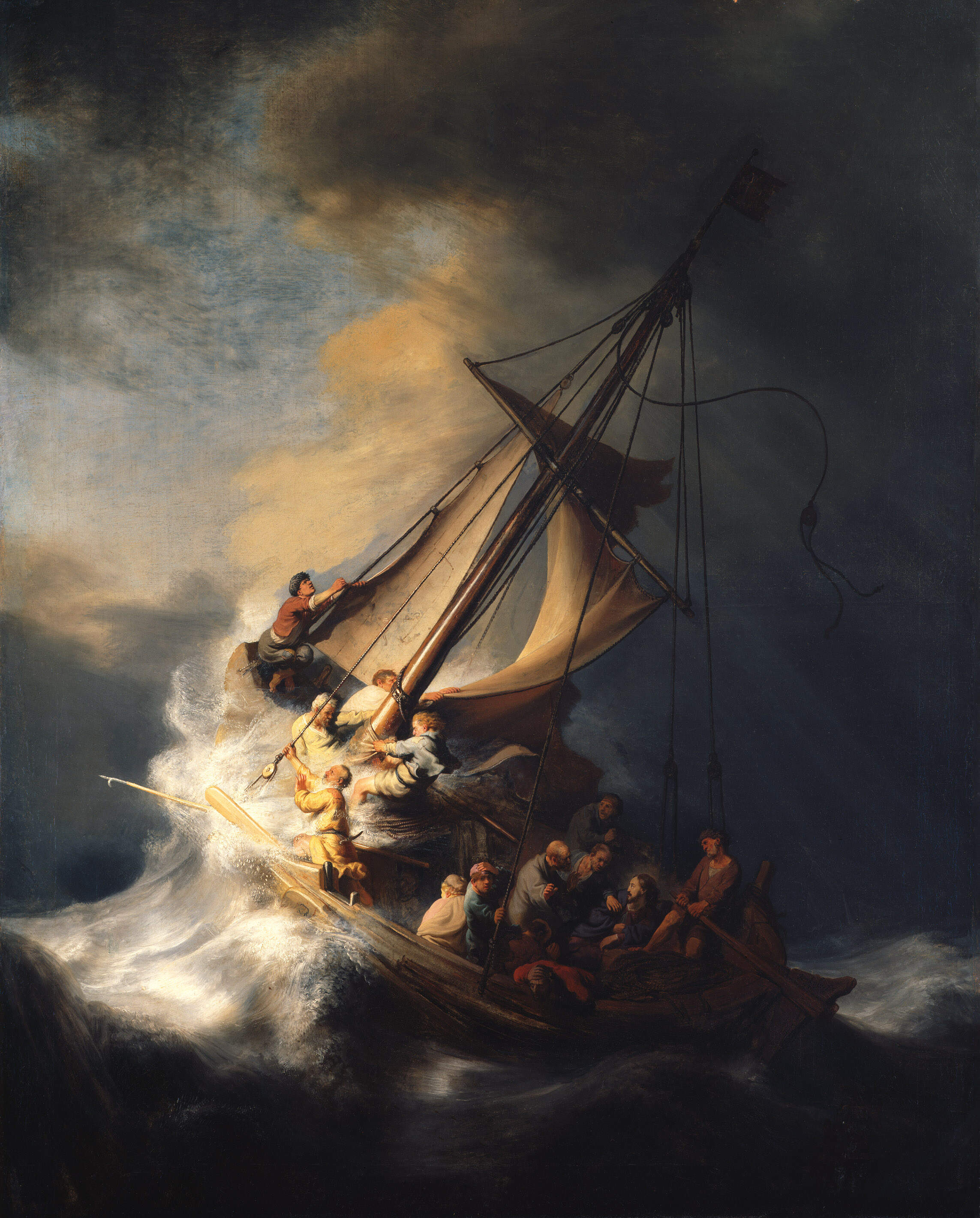
Inspiration struck local artist Skooby Laposky as he began pondering Rembrandt's seascape. He’s a member of the Gardner’s Luminary Salon for neighborhood creatives.
“My first relationship to this painting that's not there — or the frame itself — was knowing about this really big loss,” he said, . “And I started thinking about if there was a way to kind of bring back the painting — or sort of fill that frame — with a different sense.”
Laposky set out to craft an immersive activation for the theft’s 35th anniversary that would recreate the Rembrandt’s stormy scene through audio.
“So I started gathering all the sounds that I wanted to use — crashing waves, creaking boats, flapping sails and then the disciples the ship's crew, what they sounded like when the storm was happening,” he said.
Laposky, a sound designer, mixed the audio elements together into a layered, two-minute narrative that moves from the calm before the storm to its apex and aftermath. Visitors are invited to imagine the missing work as the sound piece flows into their ears.
“So when you approach the empty frame, it triggers the storm, and then for a few minutes you experience the painting through sound,” he said.
Museum guest can commune with Laposky’s sound piece titled “The Storm Remembered/Reactivated” in the Dutch Room on Wednesday.
The museum continues to offer a $10 million dollar reward for the works stolen in the world’s largest property theft in history.
This segment aired on March 18, 2025.