Support WBUR
Learning about 'nutritional literacy' with Boston Public Library's chef-in-residence
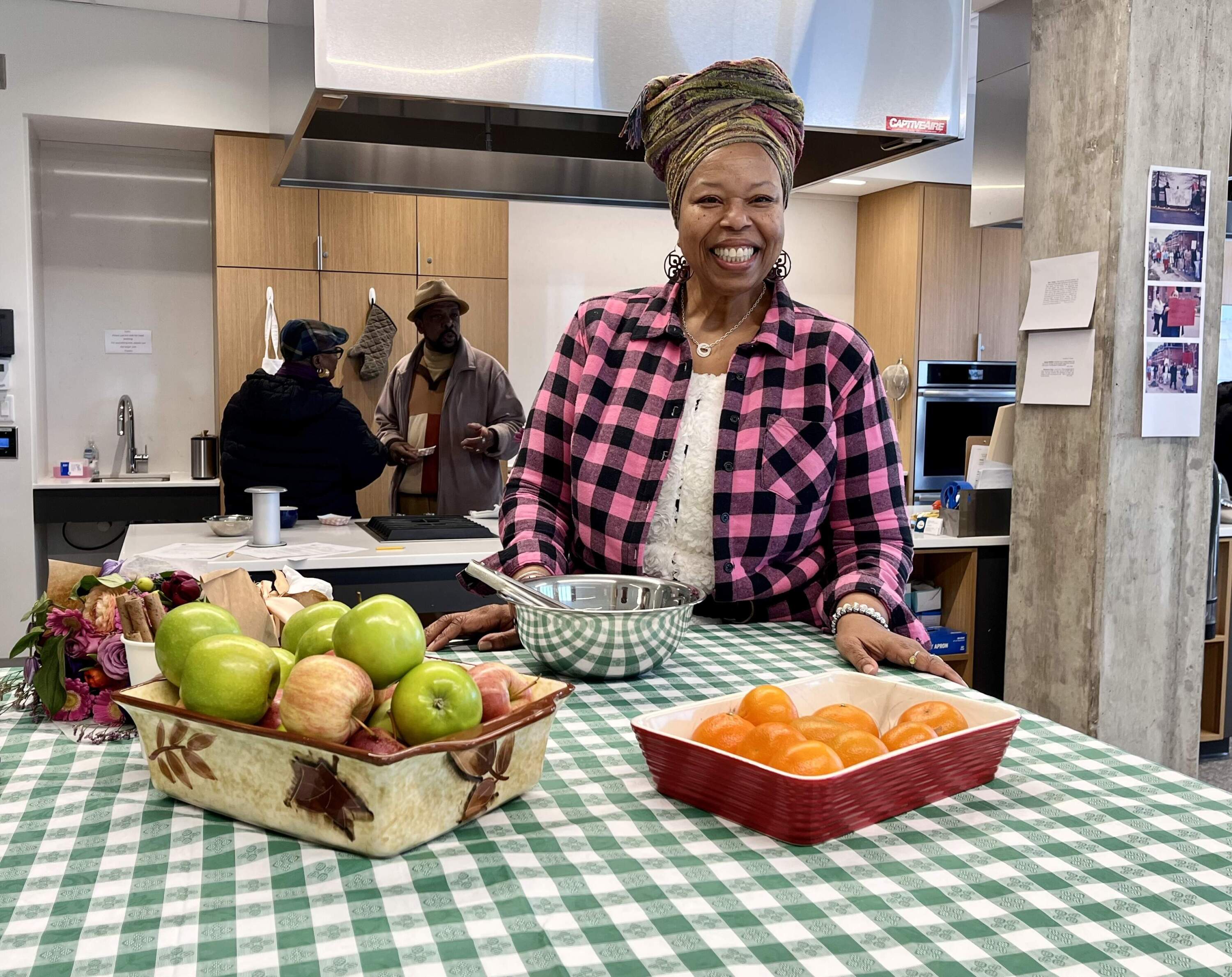
Libraries do a lot more than loan books and help people with research. Nowadays, they enrich people's lives through many kinds of learning, events and experiences. One of those is the Boston Public Library's chef-in-residence program, which just wrapped up its first year.
The program's inaugural chef, Glorya Fernandez, recently ended her residency with an open house at the library system's Nutrition Lab. It’s a big, bright kitchen at the library's Roxbury branch, where Fernandez taught classes to help people improve their "nutritional literacy" and knowledge of food history.
She said she previously couldn't have imagined a job like this would exist.
"So when I tell you this was exciting and a blessing and just an opportunity — it was just incredible," she said.
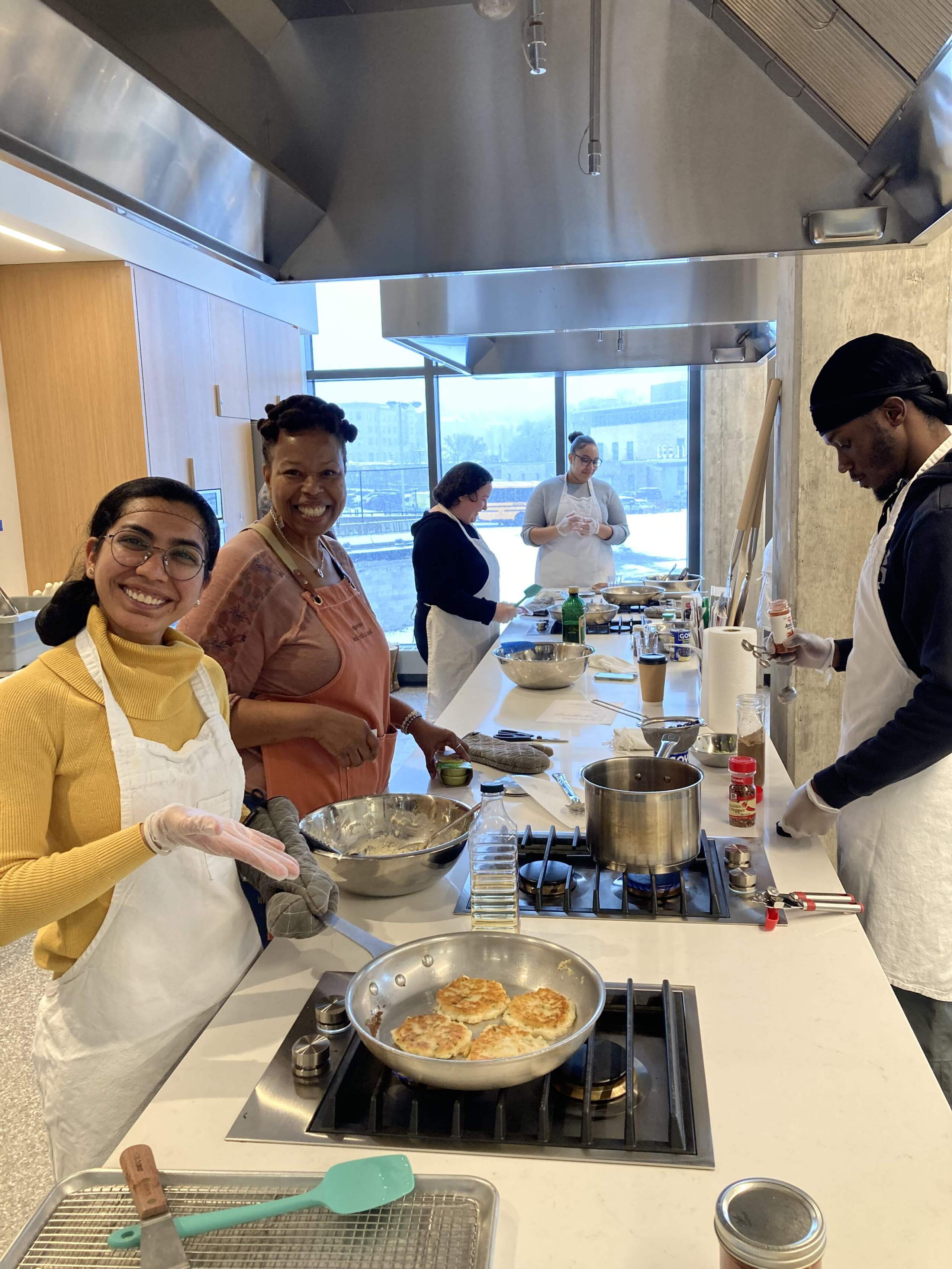
Her series of workshops had varied themes, including, "Collard Greens: From Old School to New Groove" and "Irish Colcannon Croquettes, Recreated." She taught local residents about the health benefits of certain foods and the back stories of dishes from different cultures represented in the city.
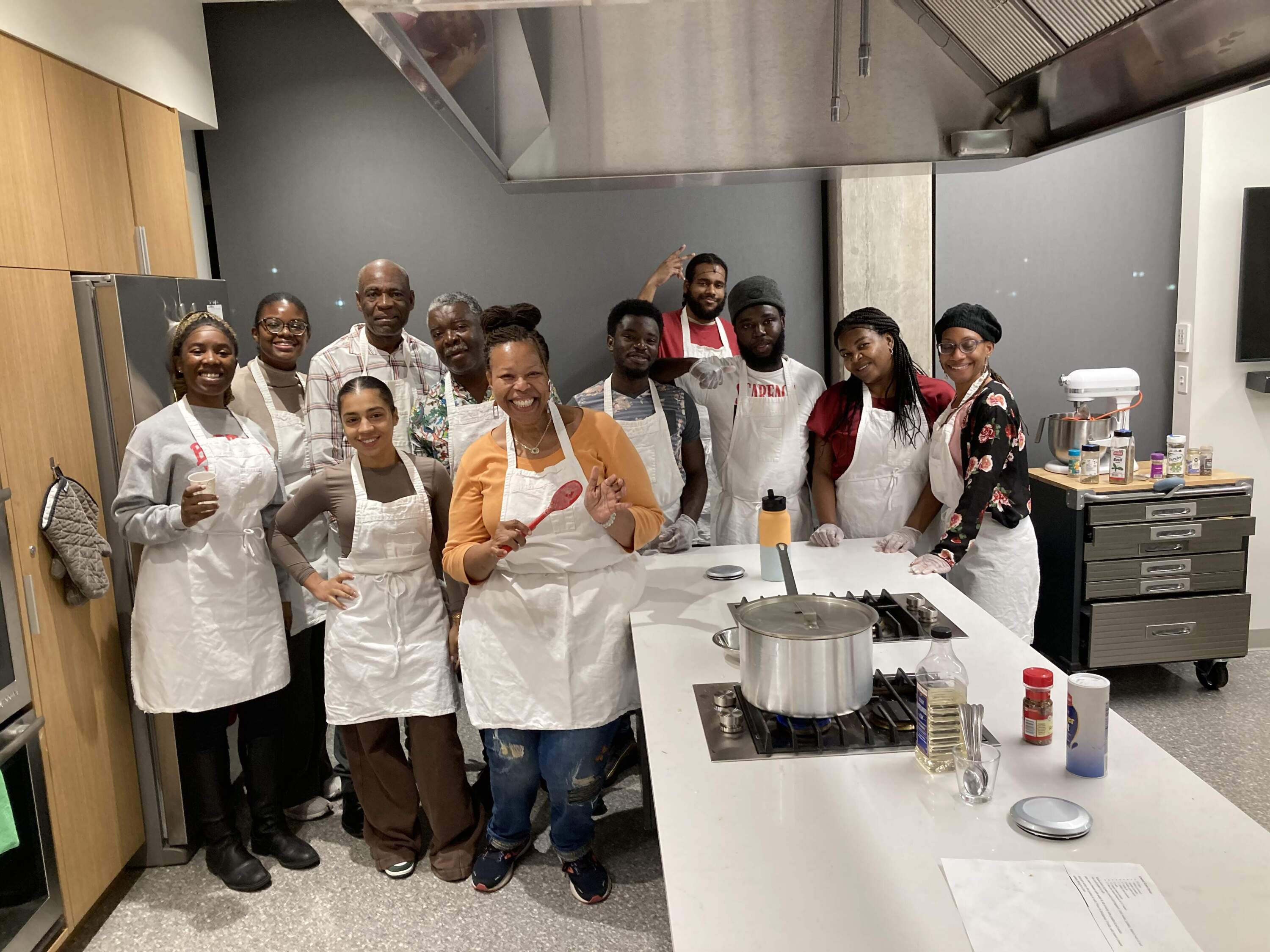
"We did, like, [a class with] all cabbages, we did all plantains," Fernandez said. "We had a group of five or six Haitian gentlemen from their twenties to their fifties. They came to multiple classes, and we had so much fun with them … We did a mangu to celebrate the Dominican influence in Roxbury."
She also brought in guest chefs. In one class, a guest instructor taught about the history and different uses of pickling.
Fernandez loves helping people find alternatives to fast and processed foods, which she said dominate the U.S. and have clouded our approach to cooking and eating.
"If I came from another planet, I would think all we ate here was Dunkin Donuts and chicken and burgers," she said. "There's not a commercial on TV that would incite me to eat something green. But I'm thinking that if I came from somewhere else, I would definitely have to go to my doctor and talk to him about what kind of drugs I think I need, because that's what every commercial tells me."
She encouraged participants in her classes to think of food as something to help them be well.
"Every single thing that is planted that's considered a whole food has some kind of benefit to us," she said.
Valerie Smith of Roxbury said some of her favorite classes with Fernandez made her feel like a bit more of a pro in the kitchen.
"We had the taco — the Irish taco — made out of potatoes. We had the salads made out of the cabbage, and that was a delightful dish," Smith said. "It's a rewarding opportunity — learning how to use a knife, learning how to cut up different kinds of foods and learning how to season them and put them together.”
The library is looking for its next chef-in-residence, said Nutrition Literacy Coordinator Stephanie Chace. The second year of the program will focus partly on indigenous foods of New England. The program is funded by a grant by anonymous donors to the Boston Public Library Fund.
Many libraries around the country now offer food and nutrition-related programs, according to Chace.
"Culinary literacy, nutritional literacy is just another form of literacy," she said. "We've all got to eat. And so, we feel like it's a good idea for people to have the information. And, you know, it doesn't have to be supersonic skills on cooking — but have an understanding of how to eat, and fortify oneself and fortify someone else."
That includes helping people know what to look for in nutrition labels on food products, Fernandez said.
Her relationship with food started on an unhealthy track, she said. Her family taught her to be grateful for the very full plates of food they served her and said she'd have to finish everything if she wanted dessert — which she often did. She saw relatives fall ill from diabetes, strokes and cancer. Her mother put her on Weight Watchers at the age of 11 or 12.
And, Fernandez pointed out, she grew up alongside the burgeoning processed food industry she’s so concerned about now.
"We craved frozen dinners. And if you remember them, that Salisbury steak, it took about 20 minutes to chew," Fernandez said. "So that's how I think a lot of us now are dealing with a lot of the illness, because if a bag of Doritos can be placed in a gasoline station in Texas and two years later you can crack it open and it still has a crunch. It's something to think about, right? If something has shelf life, you have to really consider belly life — the effects that it has on our systems, on our guts."
As she got older, Fernandez explored food's connection to health. She started a company that does cooking and nutrition programs for community groups, hospitals and other organizations.
She tells her students we all have "foolishness" — times we indulge in junk food.
"I know I've got a bag of chips somewhere sitting in my arteries. I know I do," she said with a laugh, adding that she's currently avoiding her "boyfriends," Ben and Jerry, of ice cream fame.
Her message on how to cook and eat healthy is to just start simply.
"So I tell folks, trying to eat a whole food might be a challenge, but get a blender," she said, adding that they're great for making smoothies and soups. "That's one of the easiest things you can have in your home … I keep, like, frozen bananas in my freezer, frozen cherries ... frozen blueberries, because I think about brain health. I try to keep walnuts. So even if I do have some foolishness ... try to get the good stuff in first."
This segment aired on March 24, 2025.