Support WBUR
Review
A lost piece of film history screens at the Brattle
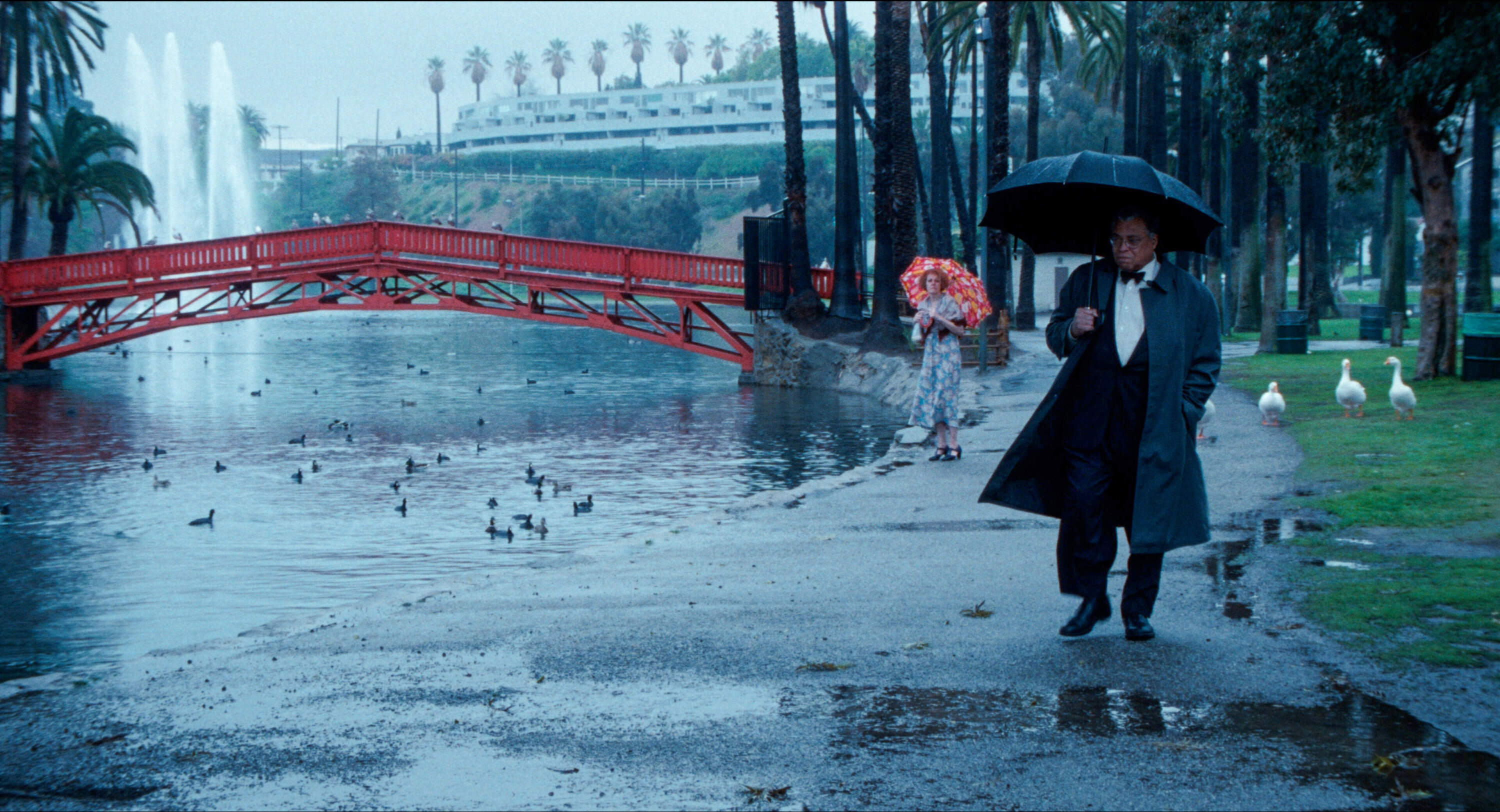
A lost little piece of film history is about to unspool at the Brattle Theatre. Never released in theaters nor on any home video formats, director Charles Burnett’s 1999 “The Annihilation of Fish” was long thought gone for good — a casualty of cruel critics, fickle distributors and the precarious indie film ecosystem. But thanks to the valiant rescue efforts of the good folks at Milestone Film and Video, a new 4K restoration of this quirky little charmer is finally seeing the light of a projector some 26 years behind schedule and, sadly, almost seven months after the death of its star James Earl Jones. The titan of stage and screen gives one of his sweetest, most endearing performances as Obediah “Fish” Johnson, a lovestruck Jamaican immigrant recently released from a mental institution and literally wrestling with his demons.
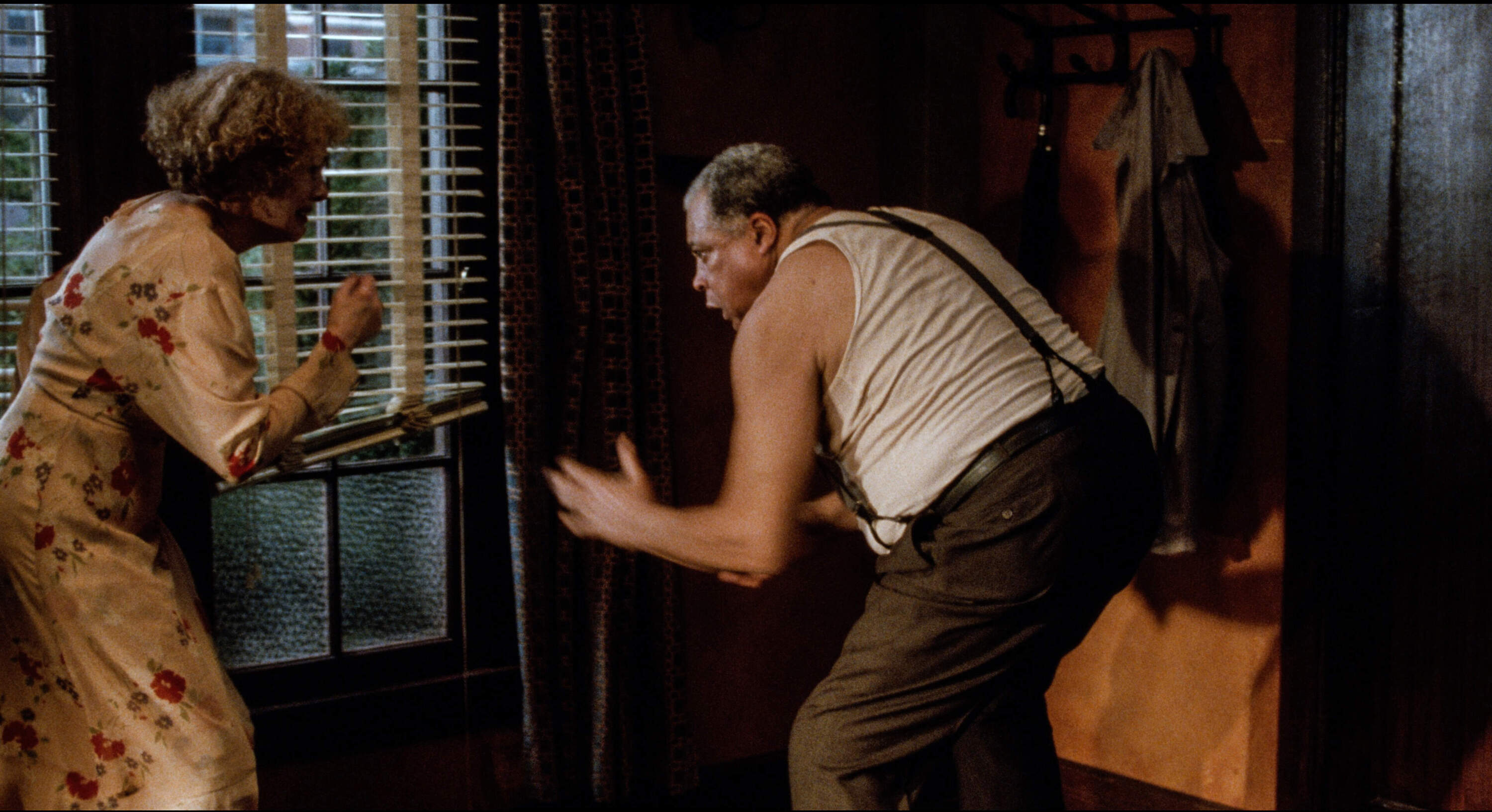
Adapted by writer Anthony C. Winkler from his 1975 short story, Burnett’s whimsical romance places Fish in a boarding house across the hall from Lynn Redgrave’s Flower “Poinsettia” Cummings, a boozy spinster who believes she’s dating the ghost of Giacomo Puccini. She brings the dead composer to restaurants around town but runs into trouble when even the chintziest wedding chapels refuse to marry her to a man who obviously isn’t there. Their breakup is a rough one for old Poinsettia, and she finds her attention drawn to Fish, who often interrupts their conversations to roll around on the floor “wrasslin’” a demon as invisible as her Italian ex-lover.
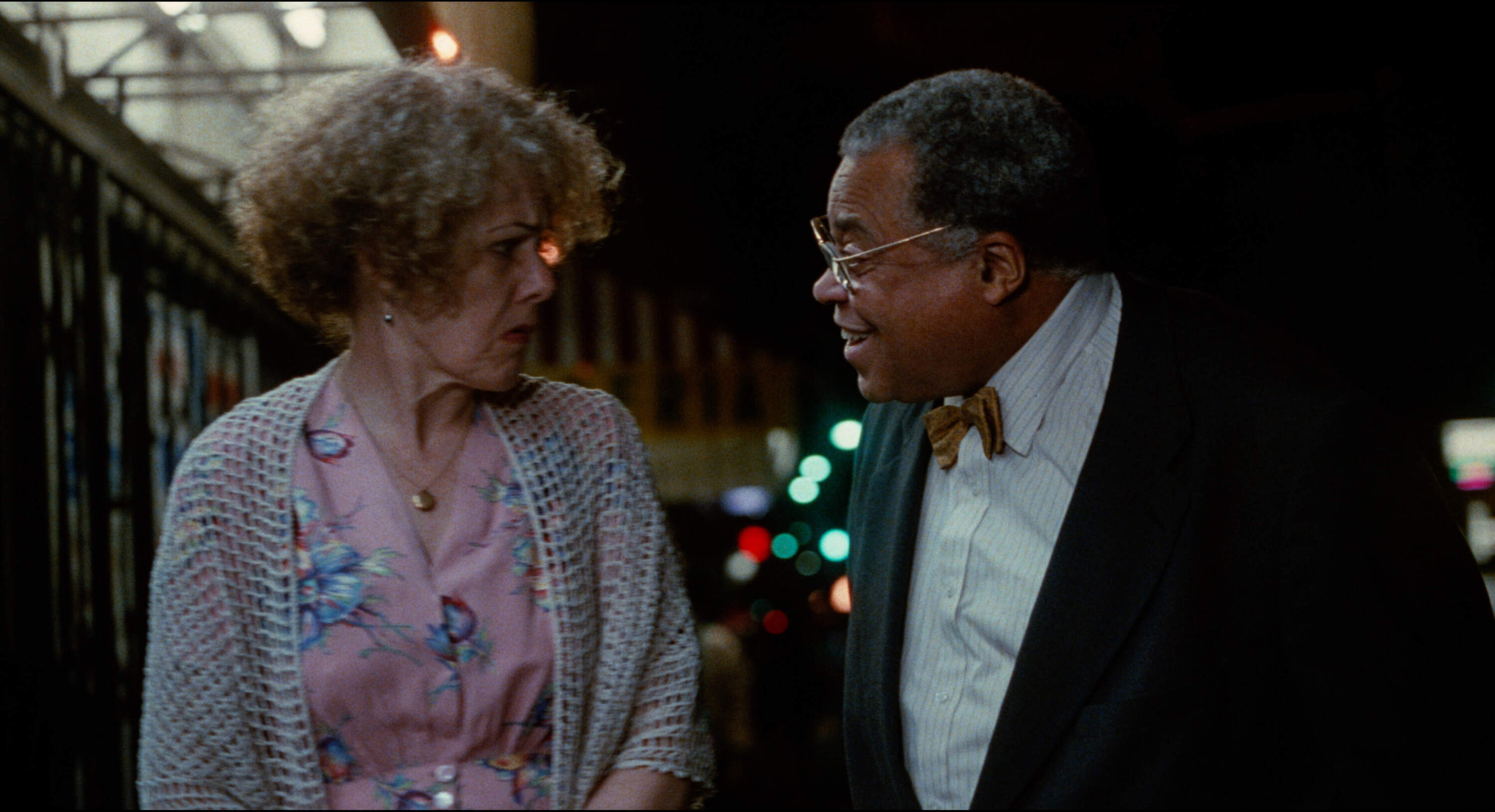
Obviously, both of these people are insane. She’s a delusional alcoholic and the only reason Fish is even walking around outside is because of budget cuts. His shrink jokes that by closing so many mental hospitals, the president of the United States has done what dozens of psychiatrists could not: he deinstitutionalized Fish. Yet the movie argues — not unpersuasively — that deep down we’re all pretty nuts and if we’re lucky we might find the right person out there who complements our crazy. It’s worth pointing out that this is a dangerous and irresponsible idea in real life, but a delightful one for a romantic comedy.
The rooming house is presided over by a loopy landlady played with serene comic aplomb by Margot Kidder. Her Mrs. Muldroone is a displaced Southern belle with more than a few secrets and the lion’s share of the movie’s one-liners. It’s her generous, accepting spirit that the film itself adopts, and Kidder’s steady presence brings balance to a picture that by design swings around rather wildly. These are big performances, and the film can indeed be a bit much, especially in the early going.
Such was the sentiment of Variety film critic Todd McCarthy, whose splenetic pan of “The Annihilation of Fish” following a Toronto Film Festival screening scuttled any chance of the movie finding a distributor. Calling it “a drear moment in the careers of all concerned,” he claimed that “theatrical release other than via self-distribution is out of the question, with the odd TV date repping the only imaginable market.”
Director Burnett has always attributed the review’s viciousness to the Variety critic’s close friendship with a French producer he’d tussled with while editing his previous picture, 1994’s “The Glass Shield.” Without leveling any accusations myself, let’s just say it’s unusual to see his hyperbolic level of rancor leveled at such an unassuming little low-budget indie. The review feels personal.
Or it could just be that “The Annihilation of Fish” was then, as it is now, a deeply strange and unfashionable movie. A pioneering poet of the Black American experience, Burnett has always had a tough time getting his films in front of audiences. His staggering 1978 debut “Killer of Sheep” is one of the most important and influential films of our era. Halfway between a documentary and a dream, the portrait of rural poverty wasn’t able to be widely seen until 2007, when film fan and patron of the arts Steven Soderbergh kicked in $75,000 of his own money to help finally clear the music rights for a commercial release. Like a tragic number of independent movies from the 1990s, “The Annihilation of Fish” was made under so many byzantine and broken agreements that the tangled production history and Milestone’s attempts to secure a release take up a full 21 pages of the press kit.
Originally slated to star Sidney Poitier and Shirley MacLaine back in the 1980s, “The Annihilation of Fish” long struggled to find financing for a film about characters who are a little too odd and much too old for a youth-obsessed marketplace. Indeed, McCarthy’s review demonstrates a visceral disgust for the movie’s late-in-life romance, insisting it “will go over big with everyone who ever craved seeing a bed scene with James Earl Jones and Lynn Redgrave, but everyone else will surely steer clear.” It’s actually quite a touching little scene, gracefully played as the characters bare their insecurities, not their bodies. It’s also when Fish reminds Poinsettia (and us) that when he was growing up in Jamaica, their affair would have been illegal.

Charming as the leads are, my favorite performance in the film comes from Kidder, whose fast-talking, screwball Lois Lane in the original “Superman” movies was a formative crush for this baby critic. A larger-than-life party goddess from the heyday of New Hollywood, Kidder struggled mightily with bipolar disorder and substance abuse issues before being cast aside by a cruel industry. (I still get steamed every time I see that clip of Christopher Reeve on the set of “Superman IV: The Quest for Peace,” blithely explaining how they had to hire Mariel Hemingway because Kidder looked too old to still be Superman’s girlfriend. True to form, McCarthy’s “Annihilation of Fish” review describes her as “startlingly aged.”)
Any remotely realistic version of this story would be harrowing. With two mentally ill people slipping through the social safety net and clinging to each other for dear life, “The Annihilation of Fish” is a few degrees and about 14 packs of cigarettes away from being a John Cassavetes movie. Yet Burnett shoots the film with the same gentle spirit of indulgence with which Kidder’s Mrs. Muldroone greets her tenants. There’s whimsy in the way a nearby tree gives a playful little shake whenever Fish tosses aside his invisible demon, as if agreeing that we can all help each other out with our harmless delusions.
”The Annihilation of Fish” screens at the Brattle Theatre from Friday, March 28 through Sunday, March 30.