Support WBUR
The Weekender: Boston's Saturday Morning Newsletter
What to know about the perseverant piping plover, as they return to Mass. beaches this spring
Editor's Note: This is an excerpt from WBUR's Saturday morning newsletter, The Weekender. If you like what you read and want it in your inbox, sign up here.
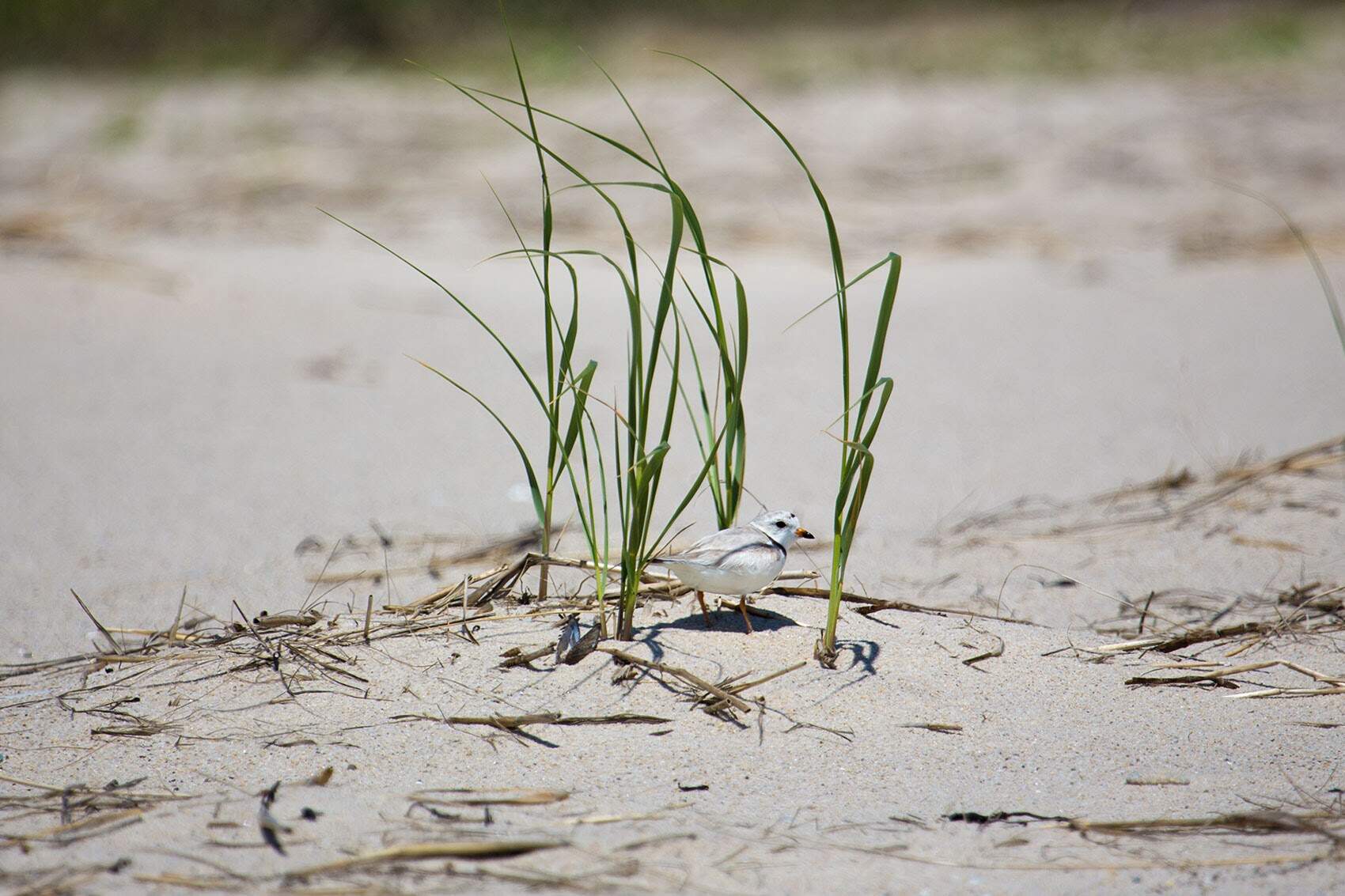
Beach season in New England may still be several months away. But for our most steadfast beachgoers, the piping plover, now's the perfect time to hit the coast.
Each year, the small, sandy-colored shorebirds return to Massachusetts to nest in the dunes of the state's beaches between late March and early April to breed.
It's a sign of the season much anticipated by local birders. In fact, nowhere else on the Atlantic coast hosts as many plovers as we do. State estimates put the population at nearly 1,200 pairs of piping plovers. (Say that three times fast!)
Longtime locals may recall a time not so long ago where this shorebird was endangered in Massachusetts. Piping plovers are still considered threatened on the state and federal level, but their current population numbers are nearly 10 times that of what they used to be in the 1980s. That's thanks to efforts by not only conservationists and wildlife biologists, but also everyday residents, says Lyra Brennan, the director of the coastal waterbird program at Mass Audubon.
In anticipation of the piping plovers' seasonal arrival, I recently spoke with Brennan about what makes these plucky little shorebirds so popular with locals, and how you can help the piping plovers thrive on the beach.
Editor's note: This interview has been edited for length and clarity.
Hanna Ali: How did the piping plover win so many locals' hearts? What is it about them?
Lyra Brennan: "They're really charismatic species! They spend a lot of time on the ground, so they’re highly visible. And we also get to see them when we're in a place that a lot of us love, which is the beach.
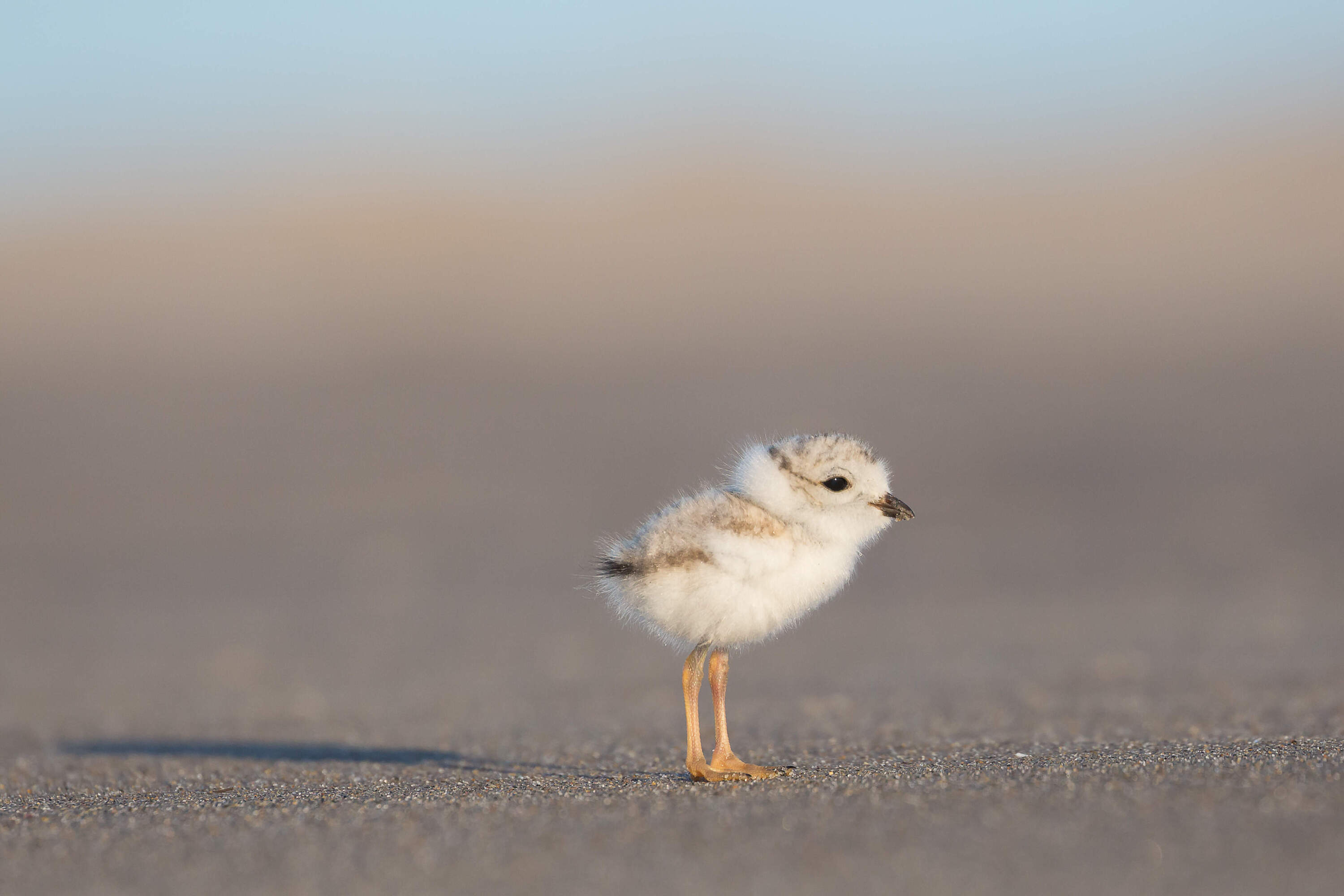
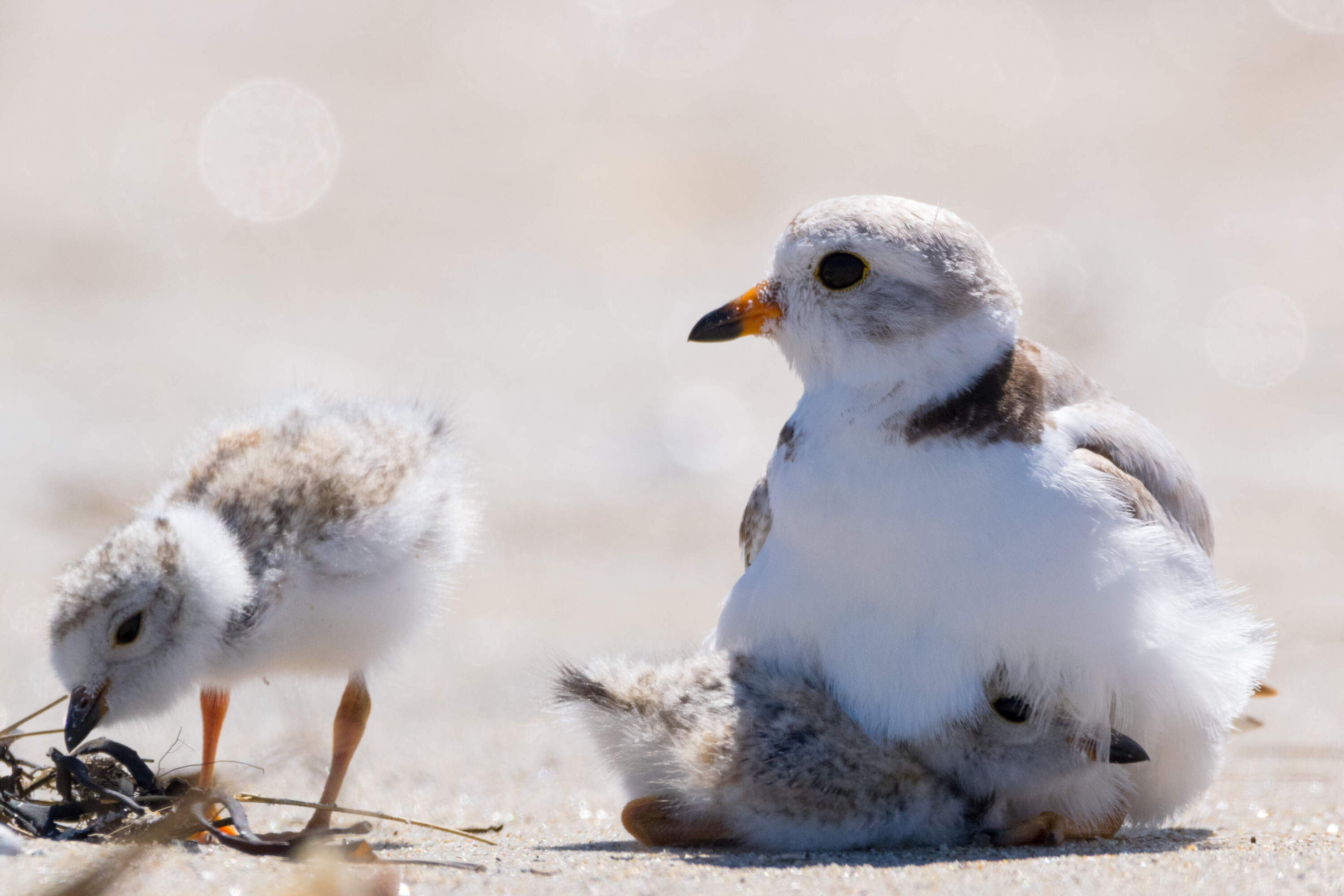
"They also have, arguably, the world's most adorable chicks. They look like cotton balls on toothpicks that are running around constantly."
HA: Like you said, piping plovers can be spotted along Massachusetts beaches in the summer. Do they live in the state full time?
LB: "They don't. I jokingly say they're very smart, because they leave when it gets cold. Most of the birds that are breeding in Massachusetts during the spring and summer head to the Bahamas for the winter. So, highly intelligent birds."
HA: Why do these little birds seem to cling to the coastline?
LB: "These are shorebirds. They rely on these dynamic, coastal ecosystems. And Massachusetts has a huge amount of coastline.
"A question we get a lot is ‘Why don't they go someplace where it's just less crowded?’ They can’t. They’ve evolved to live in these coastal areas and they thrive there. The food they need is there, so they wanna nest right on the sand.
"Another thing: When we see piping plovers, it means that we have a healthy beach ecosystem. It means that there's lots of invertebrates, which is what they're pulling out of the sand to eat. It means it's a place where there's wildlife, dunes and dune vegetation, so they're really a part of that healthy beach ecosystem."
HA: What risks do they face by nesting on the beach?
LB: "These birds face an unbelievable amount of risks on the beach.
"Every predator, from coyotes to crows to raptors, pose a serious threat to piping plover adults, chicks and eggs. We all love our dogs, but unfortunately, even really well-behaved great dogs can accidentally scare piping plovers into abandoning their nests or accidentally injure or kill a piping plover. And living in these wild beach ecosystems, things like big storms, sea level rise, high tides and high winds can also wash out the nest.
"So it's not an easy life out on the beach. But piping plovers are some of the most determined parents you're gonna find in the animal kingdom."
HA: They were largely endangered in Massachusetts for a while, too. What have biologists and conservationists done to bring the piping plovers’ population numbers back up?
LB: "Yeah, we were down to about 135 [mating] pairs in the state when piping plovers were listed in the mid-’80s, and the story is one of really an unbelievable conservation effort that happened in partnership with state agencies, federal wildlife agencies, NGOs like Mass Audubon, town beach managers and even beachgoers.
"Once it was evident that piping plovers needed more help, driving on the beach, for example, changed drastically. That was a really common thing, and it was a big deal to say, 'We need to actually regulate driving in some places,' because vehicles are running over birds. We learned that with united collaboration, and with education, we can create a place where these birds can really thrive."
HA: Would you say that the species’ “determination” also helped them bounce back?
LB: "I'd like to think so. These are tiny little birds that will face off a large predator just to try and protect their eggs and chicks. They do something called broken winging, which is a strategy to lead predators away from their nest and from their young. They'll act like they have a broken wing, sort of saying, 'Take me, pay attention to me, leave my babies alone.'
"If a nest fails, piping plovers will try up to five, even six times to re-lay a nest and incubate it again for almost a month to raise those chicks. And so it's inspiring to all of us doing the [conservation] work because they're giving it their all. And from a protection perspective, we really wanna be doing the same thing."
HA: What can locals do to help the conservation efforts for these birds?
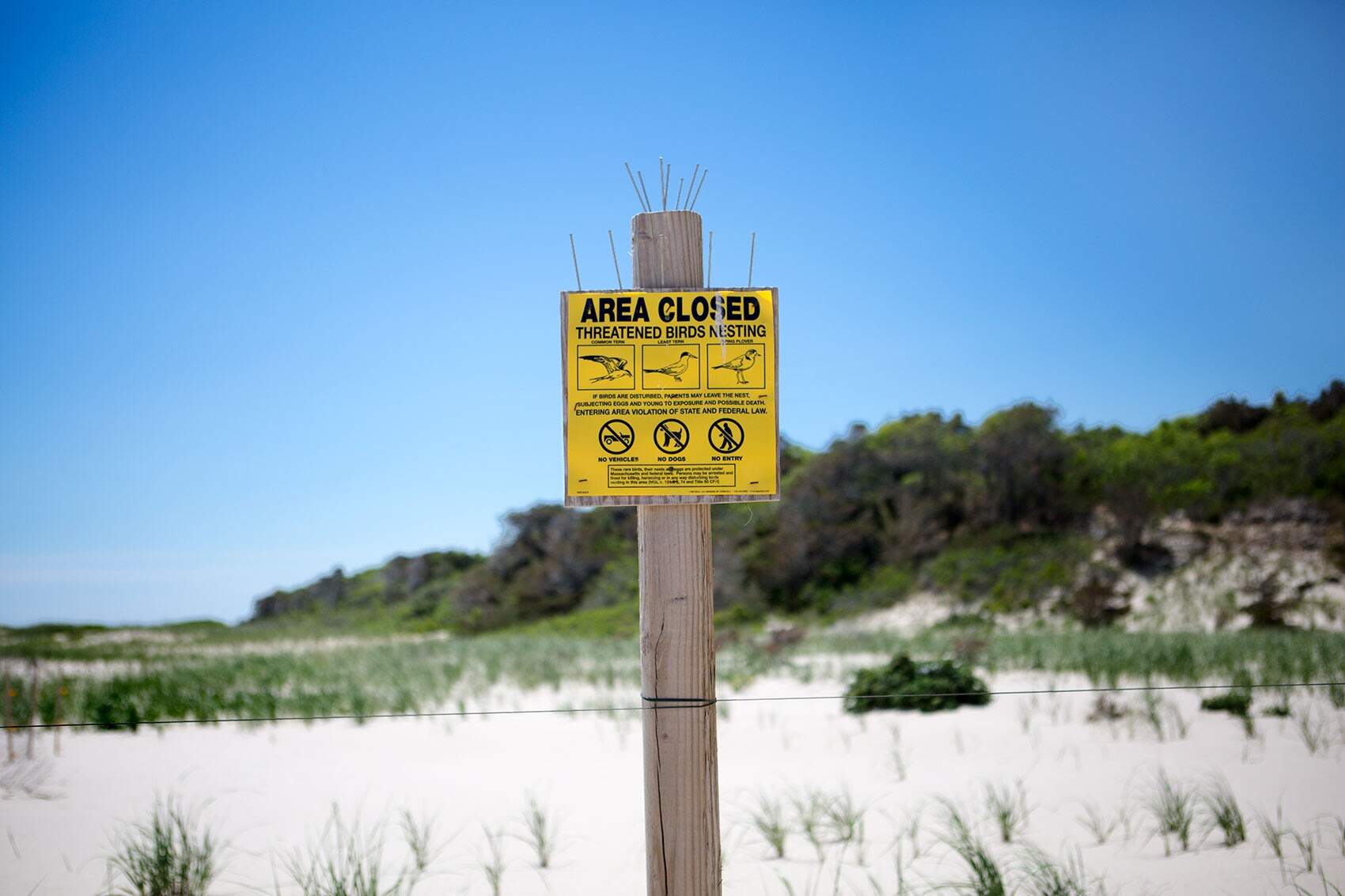
LB: "It is quite simple, really: Pay attention to the rules of whatever beach you’re going to, [like] the dog dates and rules for carrying in and carrying out trash. The reason that signage is there is to make sure that the birds can thrive.
"Give the birds lots of space. They're just here for a couple months and it's an intense time period. For folks who are really jazzed and wanna take awesome photos, make sure, again, that we’re giving all that space. The goal is that these birds can engage in their natural behaviors and not be interrupted. Following whatever the town or the local beach is asking you to do is a sure way to support the plovers."
P.S. — Before you start planning a piping plover-peeping trip, check out our guide to day trips in Massachusetts. It's got recommendations for fun things to do (and tasty food to eat) from the North Shore to Cape Cod after you've finished bird watching.
Correction: An earlier version of this article incorrectly stated the time frame when talking about current population numbers of plovers compared to now. We regret the error.