Support WBUR
60 years ago, my grandfather joined Martin Luther King's Boston march
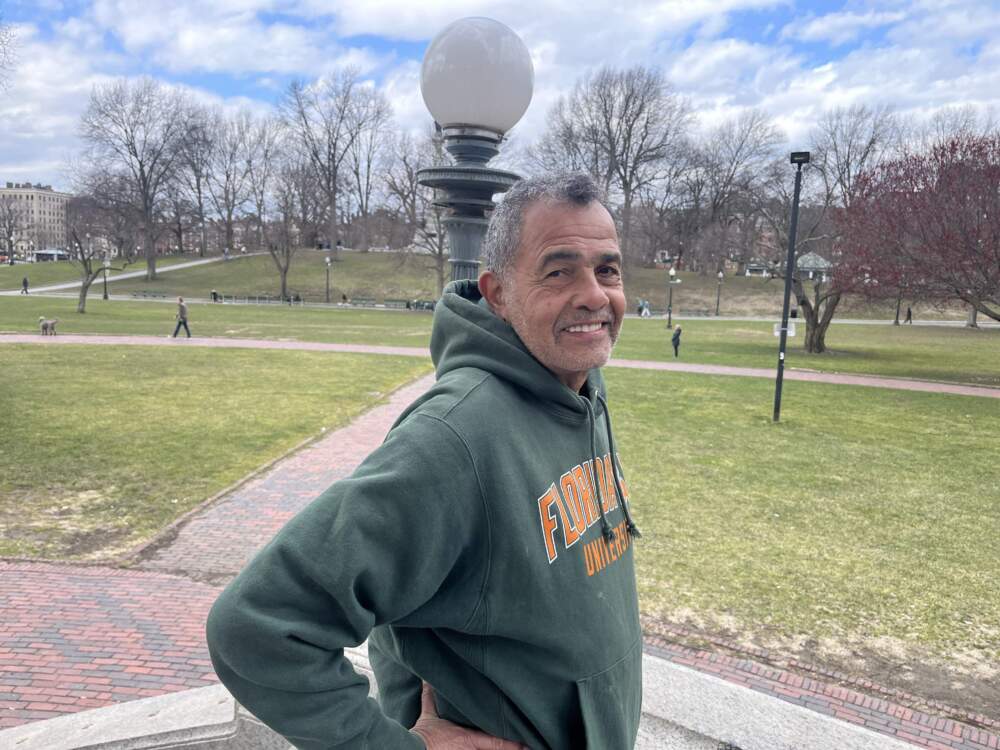
My grandfather, Wayne Lucas, is a proud native Bostonian. He grew up predominantly in foster homes in Roxbury and Dorchester and spent a good chunk of his youth in a house on Pasadena Road, right off of Blue Hill Avenue. As a teenager, he was a regular participant in Freedom House's programs for youth — the longtime Roxbury/Dorchester organization that focuses on community uplift and the development of Black and brown children.
It was through Freedom House that he learned Martin Luther King, Jr. was coming to town in April of 1965. As a bright 15-year-old, he'd heard of King and his push for racial equality. However, King wasn't just coming back to the city where he'd lived as a Boston University doctoral student for a simple visit — he was coming to lead a massive march and rally.
That event became known as the Freedom March and Rally. Many students at the time, like my grandfather, got involved with the march through places like Freedom House.
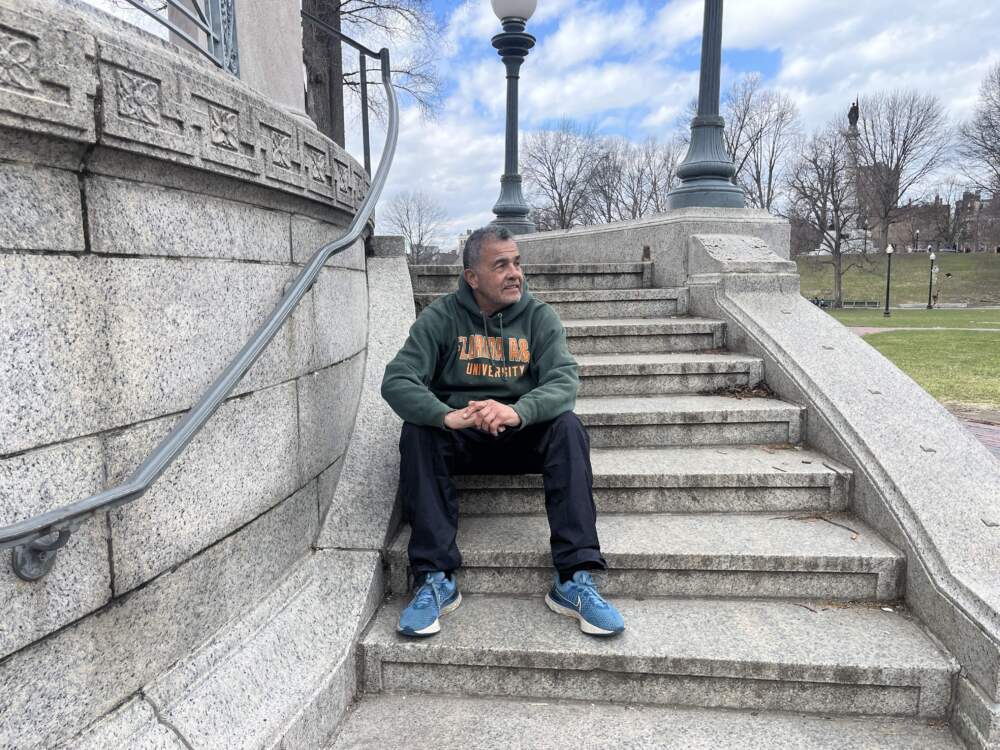
"The Civil Rights movement was in full force," my grandfather recalls. "It filtered down to the younger people. In our area, in the schools... we didn't have all the proper books. We probably didn't have the best teachers. The facilities weren't that great. It was affecting the Black children in Boston."
At the time, Boston residents in areas like Roxbury and Dorchester were protesting segregation in public schools, lack of affordable housing and income inequality. Louise Day Hicks, then the chair of the Boston School Committee, had declared Boston's schools were not segregated, although findings by the Advisory Committee on Racial Imbalance and Education (appointed by the Massachusetts Board of Education) concluded that they were. So-called "urban renewal" programs that allowed the city to purchase private property for the sake of "revitalization," were in full swing but the outcome was the displacement of low-income residents. Community members pushed city officials to include lower income Bostonians in anti-poverty planning.
The day of the rally, my grandfather walked for about 10 minutes from his junior high school to Freedom House, where he met up with many other students. They'd had a full day of school. The day was cold and dreary but that didn't keep them from feeling energized for the march and rally.
"You've got to realize back then most everybody wore shoes, not sneakers," he says. The potential of an uncomfortable long walk didn't deter him or his friends. "When you're 14, 15, 16 years old, it doesn't make a difference. We were just excited for what was happening."
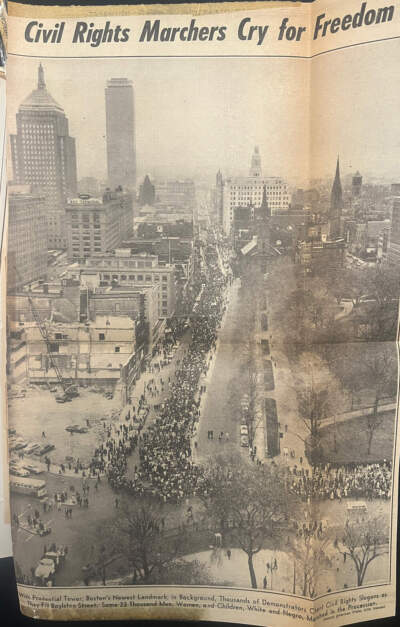
Carter Playground in Roxbury was the major meeting point for those participating in the march and rally. My grandfather doesn't remember if they walked to the playground or took one of the many buses provided, but he does remember marching down Columbus Avenue. " Some people had signs, we probably did some rally chants," he says. "If I remember, I think there were maybe 15,000 people marching down to the Common."
Martin Luther King Jr. speaks
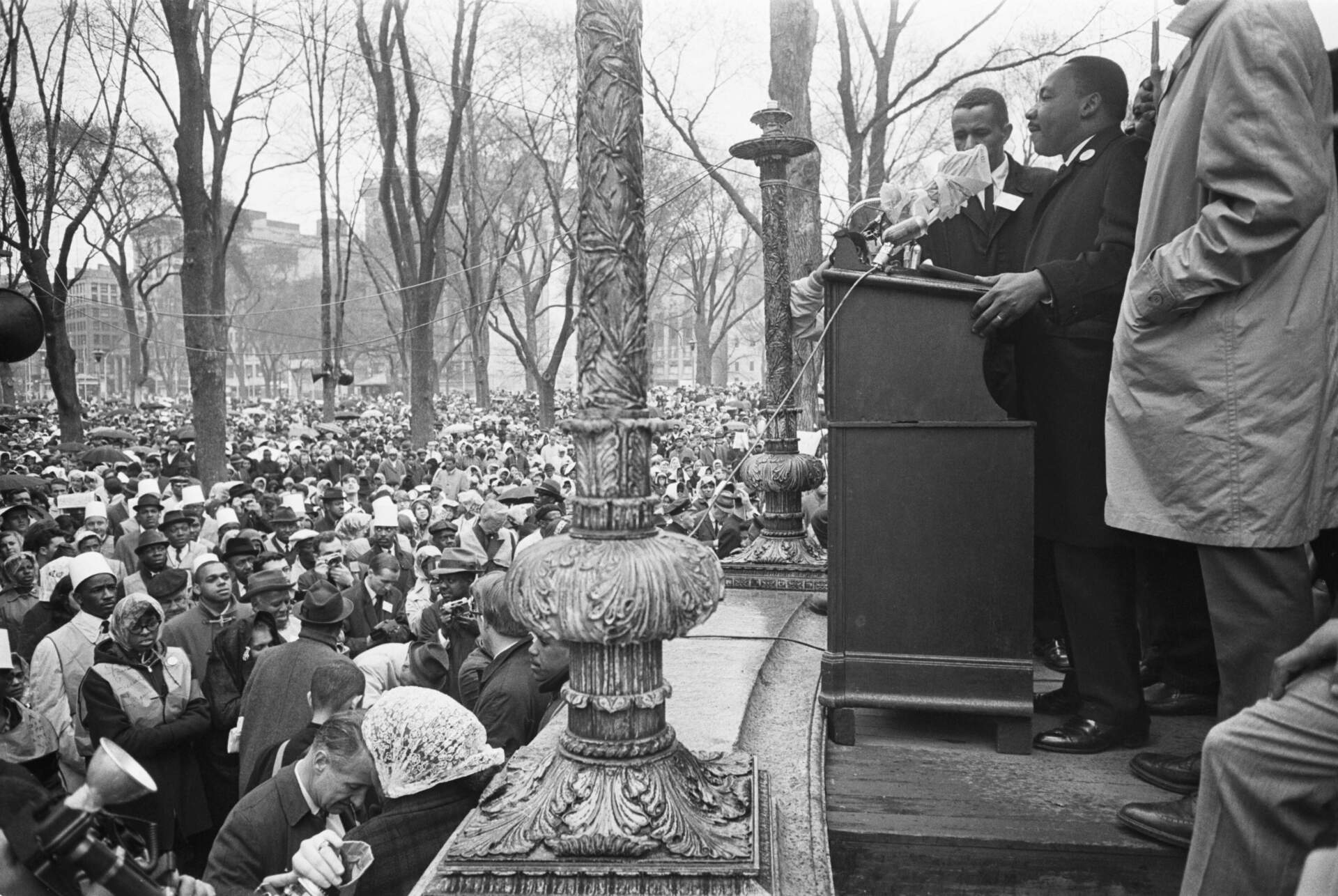
Local leaders like Ruth Batson from the Massachusetts Commission Against Discrimination and Alan Gartner of the Boston Congress for Racial Equity addressed the crowd of thousands at the Parkman Bandstand at the Boston Common. Then, King took the stage. My grandfather watched everything unfold from the hillside.
"The enthusiasm was very high to hear and to see Martin Luther King," he says. "Not too many people, I'm sure even my generation, could say they've seen Dr. King.”
King acknowledged the differences between northern and southern racism when he addressed the crowd. "It would be demagogic and dishonest for me to say that Boston is a Birmingham or to equate Massachusetts with Mississippi," he said.
Although racism operated differently, it was still rampant in Boston in ways that negatively impacted people of color.
" It would be morally irresponsible," King continued, "were I to remain blind to the threat to liberty, the denial of opportunity and the crippling poverty that we face in some sections of this community."
There was a prevailing national misperception that northern cities like Boston were more "progressive" than other parts of the country. Locals knew that the reality was different.
King and other speakers emphasized several major problems in Boston that included segregation in public schools, the impact of "urban renewal" on affordable housing and income inequality and poverty. "I'm here to join with you in reminding the cradle of liberty that America has never fulfilled the Democratic vision," said King.
The aftermath of the Freedom March and Rally
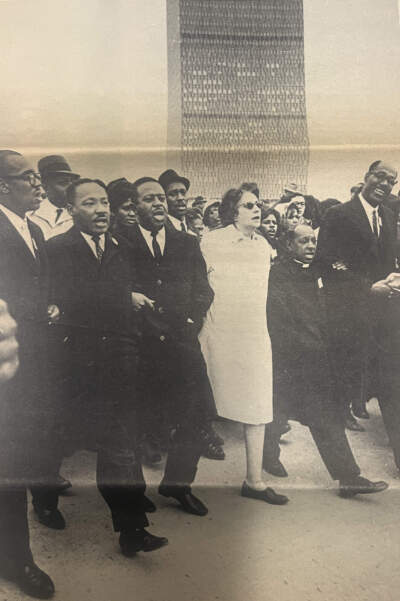
My grandfather mentioned that several of his friends weren't allowed to attend the march and rally because of the fear of potential violence. But the rally remained peaceful and once it was over, my grandfather returned home on the MBTA, surrounded by others who were also in attendance. " We all were talking that, you know, maybe this is going to be the beginning of something new in Boston," my grandfather recalls.
As a teenager, it was hard for him tell if there were the makings of something "new in Boston." But he does recall running a race in South Boston a few months after the march and rally. He was a track star and in this particular race, he was winning. "But along the course of the race, I was being called the 'n word'," my grandfather remembers. "People were saying 'What's that 'n word' doing at the front of the race?'"
Boston, no doubt, still had its issues. About a decade after the 1965 march, the Boston bussing crisis broke out. Gentrification continued to sweep neighborhoods like the South End and Jamaica Plain and relations between the Boston Police Department and communities of color worsened, particularly in the 1980s and 1990s.
Change takes time, says Imari Paris Jeffries, president and CEO of Embrace Boston, the organization behind the King memorial in the Boston Common.
"We, as people of color, as Black folks in this city have had to fight for things. We've been nervous and not trusting around systems, from Charles Stuart to redlining. To build that trust is going to take some time." But the optimism is still there. " The opportunity for placemaking for people of color has changed. We've seen some improvements under the last four or five years," he says.
On April 26, Embrace Boston is leading a commemoration of the 60th anniversary of the 1965 rally that includes a mini-march and rally. "It is an activation that is relevant in the moment in honor of those ancestors who started this work," says Jeffries. "It's an intersection of celebrating the Freedom Rally and ensuring that Boston, as a city of firsts, also commemorates this rally."
With the event, the organization intends to bring some of the issues still impacting Boston to the forefront while providing resources for residents to get civically involved. Jeffries hopes to inspire youth who, like my grandfather was in 1965, are looking for a way to make a difference in the world they live in.
"I feel a sense of pride and satisfaction to have participated in that rally," my grandfather says. " That was the beginning of my political awareness. We have to change the system, the current system. We can all take a part in it."
This segment aired on April 23, 2025.