Support WBUR
New Hampshire lawmakers debate a book ban that could punish teachers, librarians
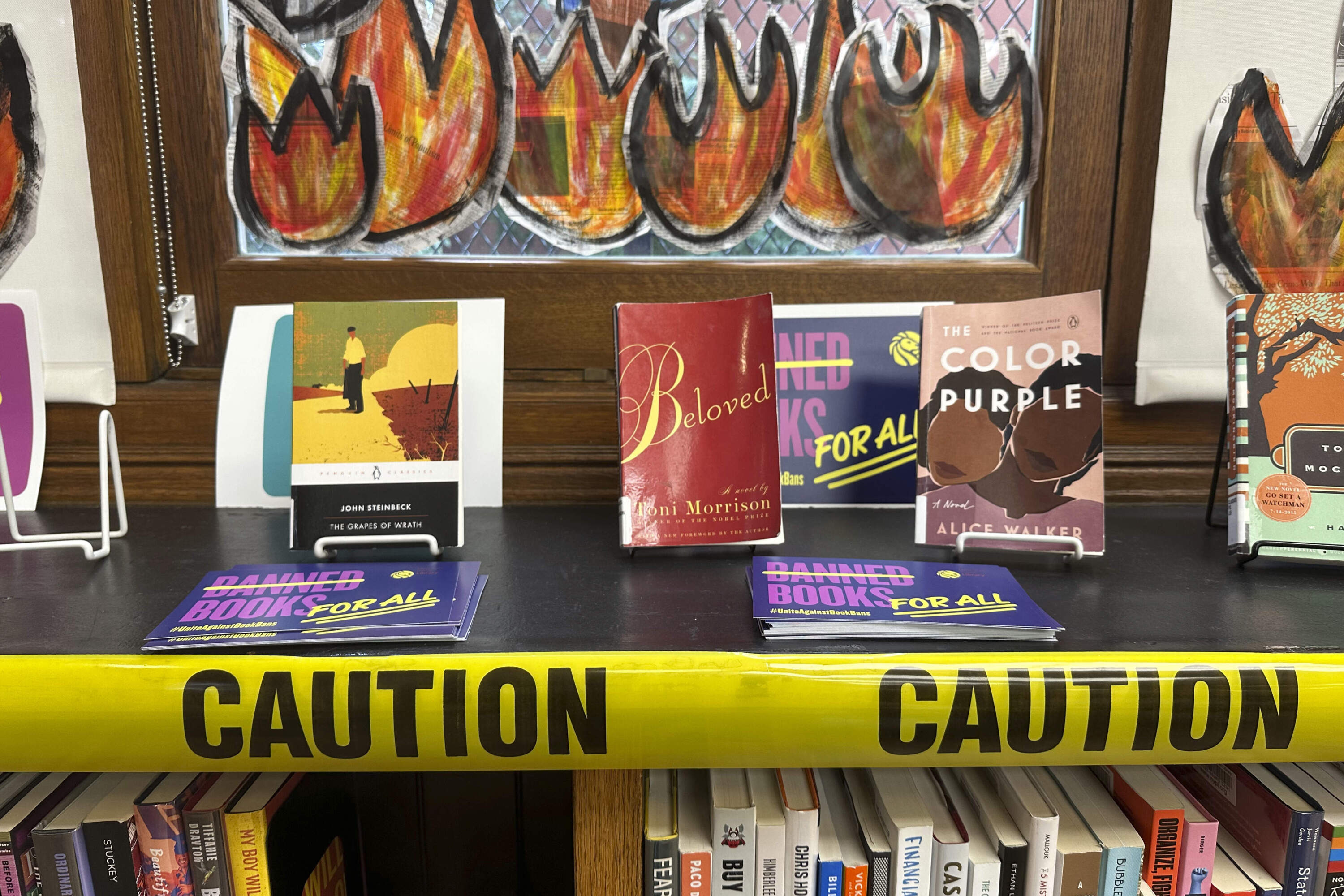
CONCORD, N.H. — On a recent afternoon, Betsy Harrington used her laptop to scroll through pages of a book available in her teenage kids' online school library. It's a copy of "This Book Is Gay," and she did not like what she saw.
A popular book by author Juno Dawson, it offers guidance to LGBTQ young adults on everything from coming out to dealing with homophobia. And it isn't shy about discussing gay sex.
"What is this?" the Dearing mother of two high schoolers said, perusing a passage about sex toys, strap-ons, role-playing and the sexual appetites of young gay men. "This should not be in a public school library."
"This Book Is Gay" is one of the books most frequently targeted by conservatives across the nation. Harrington said she has no problem with the title, but feels much of the book is inappropriate for minors, including a section that provides a link to a dating app.
"This is just not for kids," Harrington said. "You're now combining a sexual book with maybe a sexual person, and it's becoming dangerous."
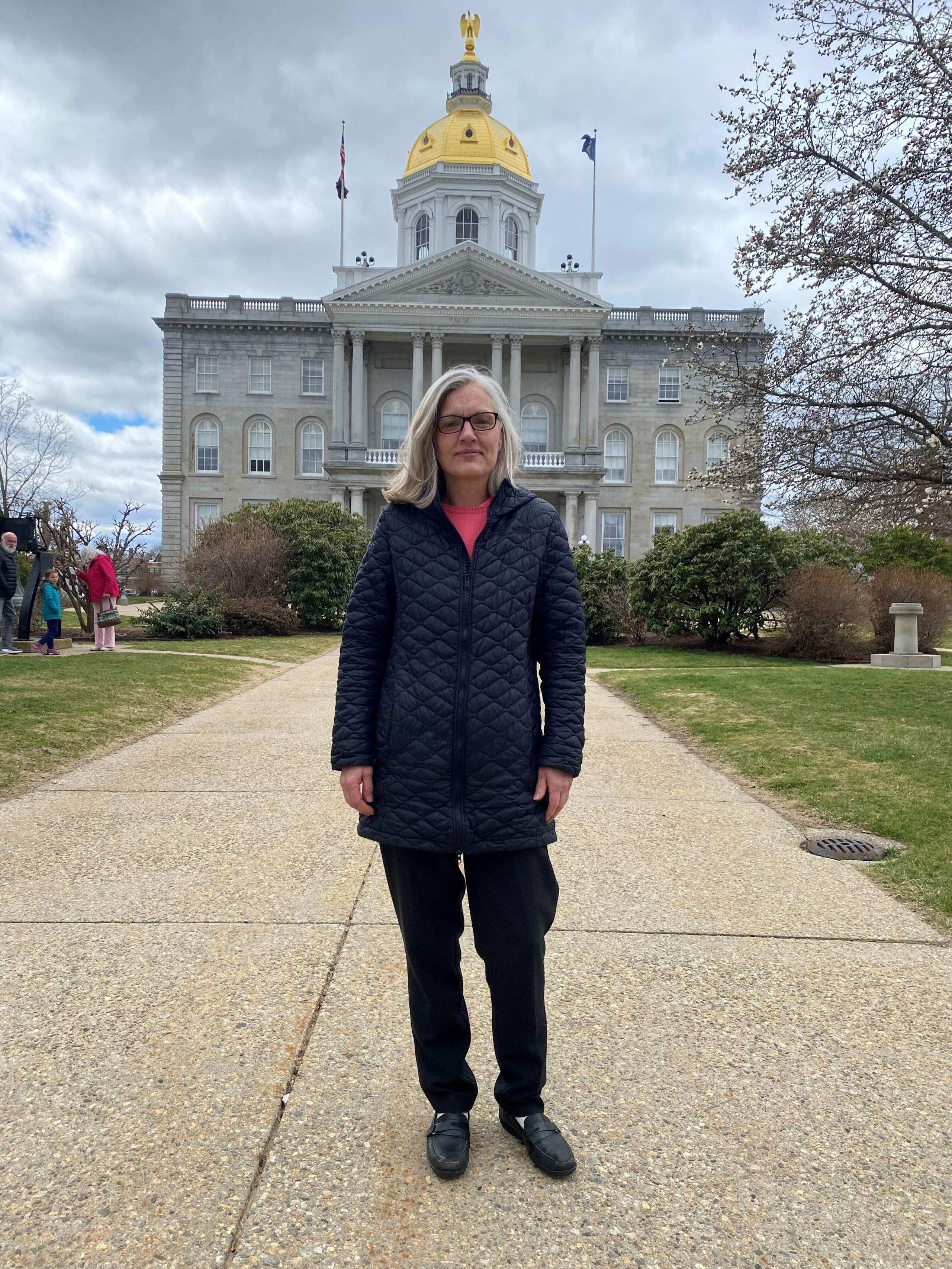
Harrington occupies one side of a debate that puts New Hampshire smack in the middle of a major battle in America's culture wars. It pits parents like her, who say they want more control over their kids' education, against those who say book bans are misguided.
At issue is a bill approved by the Republican majority in New Hampshire's House that that would make it easier for parents to challenge books they deem offensive and have them restricted or removed from public school classrooms and libraries. The bill would allow parents to their take complaints to the state Department of Education, and expands state obscenity laws.
John Chrastka, the founder of EveryLibrary, a national group that opposes book bans, called the bill bad public policy and bad education policy. He said the measure would have a chilling effect on teaching, and could, for example, criminalize an art teacher's decision to show images of Michelangelo's sculpture of David. All it would take is a parent who disapproves of kids seeing nudity.
"You could have an uncomfortable parent say, 'I don't like it; it shows genitalia, which is something that offends me, and therefore it should be removed from the school,' " Chrastka said, adding that the teacher involved could face criminal charges.
Proponents of the New Hampshire legislation say that example is far-fetched and would not happen.
At the heart of this debate is what constitutes obscene or offensive material — a matter of subjective judgment. And the rhetoric around book bans is often politically charged; after all, material some would consider controversial is at the fingertips of youth on their phones.
At a recent legislative hearing in the state Senate, Republican Rep. Ron Cordelli, the lead sponsor of the House bill, condemned sexually explicit passages from the popular book, "The Perks of being a Wallflower," by Stephen Chbosky.
"If people think that this crap is culture, then we're in bad trouble in New Hampshire," Cordelli said during the hearing. "These explicit sexual materials have no place in our schools."
State Sen. Debra Altschiller, a Democrat, challenged Cordelli, accusing him of cherry-picking sexually explicit passages from the book. She said "The Perks of being a Wallflower" tackles important issues, like sexual assault and mental health.
She asked Cordelli if he had read the whole book. Cordelli said he had not and that he had "no interest" in doing so.
Katie DeAngelis of Nottingham, New Hampshire, did read the book, and said it helped her.
"What it did do is make me feel a lot less alone," she said.
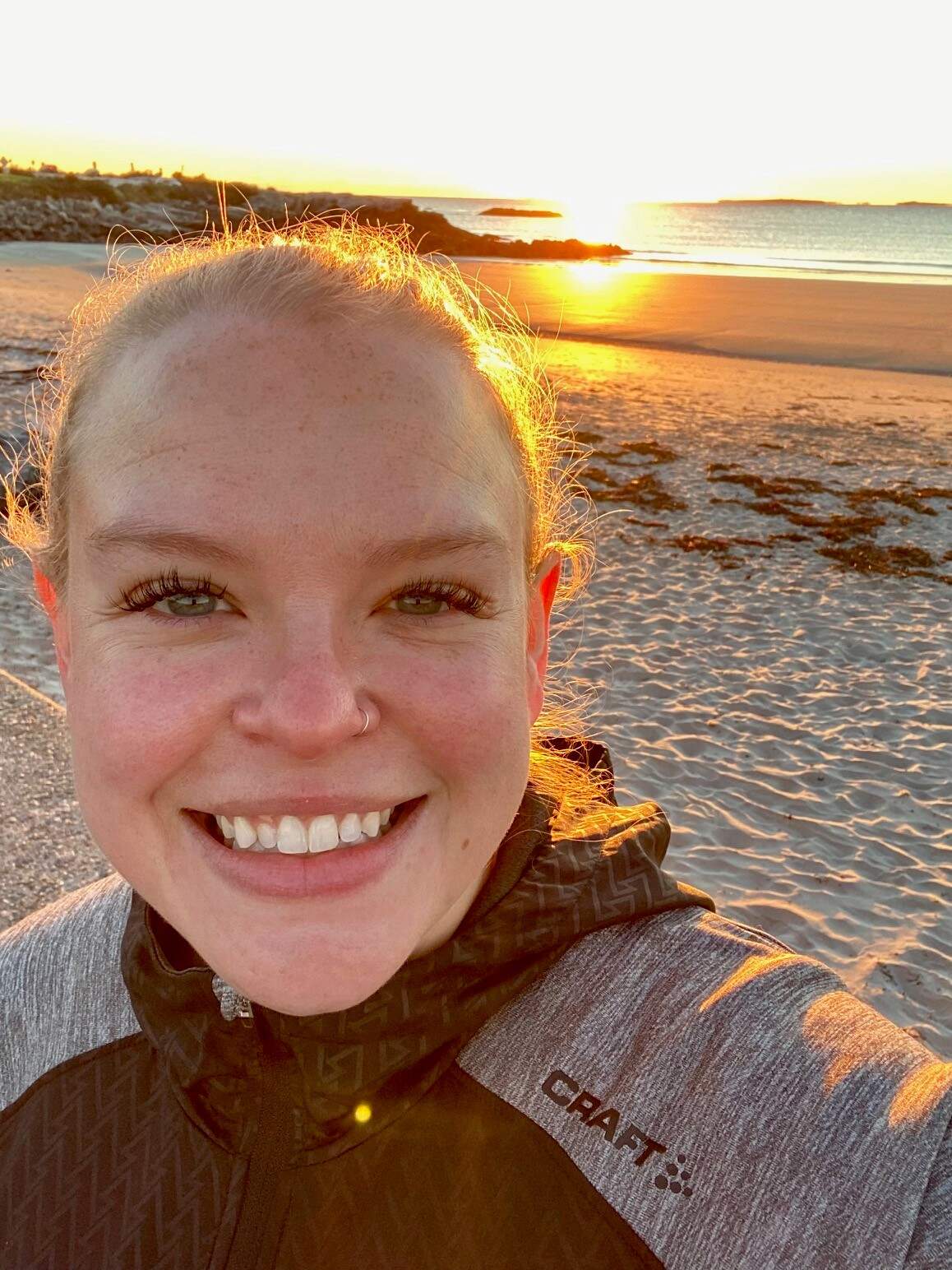
DeAngelis, a young mother of two, said as a child, she was the victim of sexual assault, and books like "The Perks of Being a Wallflower" helped her deal with her trauma. In her view, supporters of the bill want to cut kids off from any talk about sex or sexuality, which she believes is a big mistake.
"It's difficult to hear because it feels very similar to the way that I grew up, and I know what ended up happening," she said.
DeAngelis said that if she had been exposed to these kinds of books when she was young, she might have been better prepared, and might have been able to avoid the situation that led to her assault.
New Hampshire’s local school boards already have the authority to respond to parental concerns about reading materials and to decide what books to teach or make available in libraries. Critics say in many cases, conservatives are pushing bans across the country as a way to target LGBTQ books.
But Harrington, the concerned parent from Dearing, says the bill is not a book ban; it's an effort to protect children.
"We're just getting rid of literally triple-X stuff," she said. "We are not going after the common book."
Asked if she thought teachers would face prosecution under the law, Harrington was unsure, but said, "There should be a consequence ... if you put a really sexual book in front of a kid who shouldn't have that book."
A number of other states are adopting similar legislation. In the 2023-2024 school year, PEN America, which fights censorship in public schools and libraries, counted book bans in 29 states and 220 public school districts, with Florida and Iowa having the most. Of the most commonly banned books, 44% feature people and characters of color and 29% feature LGBTQ people and characters, according to PEN America.
Both the New Hampshire House and Senate have approved versions of the law, but the House bill goes furthest, giving parents more power to challenge books, while hitting schools with tougher penalties. If lawmakers can sort out the differences in their legislation, it will be up to Gov. Kelly Ayotte to decide whether the bill becomes law.
This segment aired on April 25, 2025.