Support WBUR
Boston's Morning Newsletter
A new Boston program helps friends and family jointly purchase multi-family homes. Here's how it works
Editor's Note: This is an excerpt from WBUR's daily morning newsletter, WBUR Today. If you like what you read and want it in your inbox, sign up here.
This week marks 50 years since the Fall of Saigon. And in a special three-part series, former longtime WBUR Morning Edition host Bob Oakes revisits stories of the Massachusetts lives lost in the Vietnam War (plus one who narrowly escaped). Read Part 1 here.
The local Vietnamese community is also holding two flag raising ceremonies today — at City Hall Plaza and at the Dorchester Vietnam Veterans Memorial — to pay tribute to the lives lost, and to the refugees who rebuilt new lives in Boston and beyond.
Now, to the news:
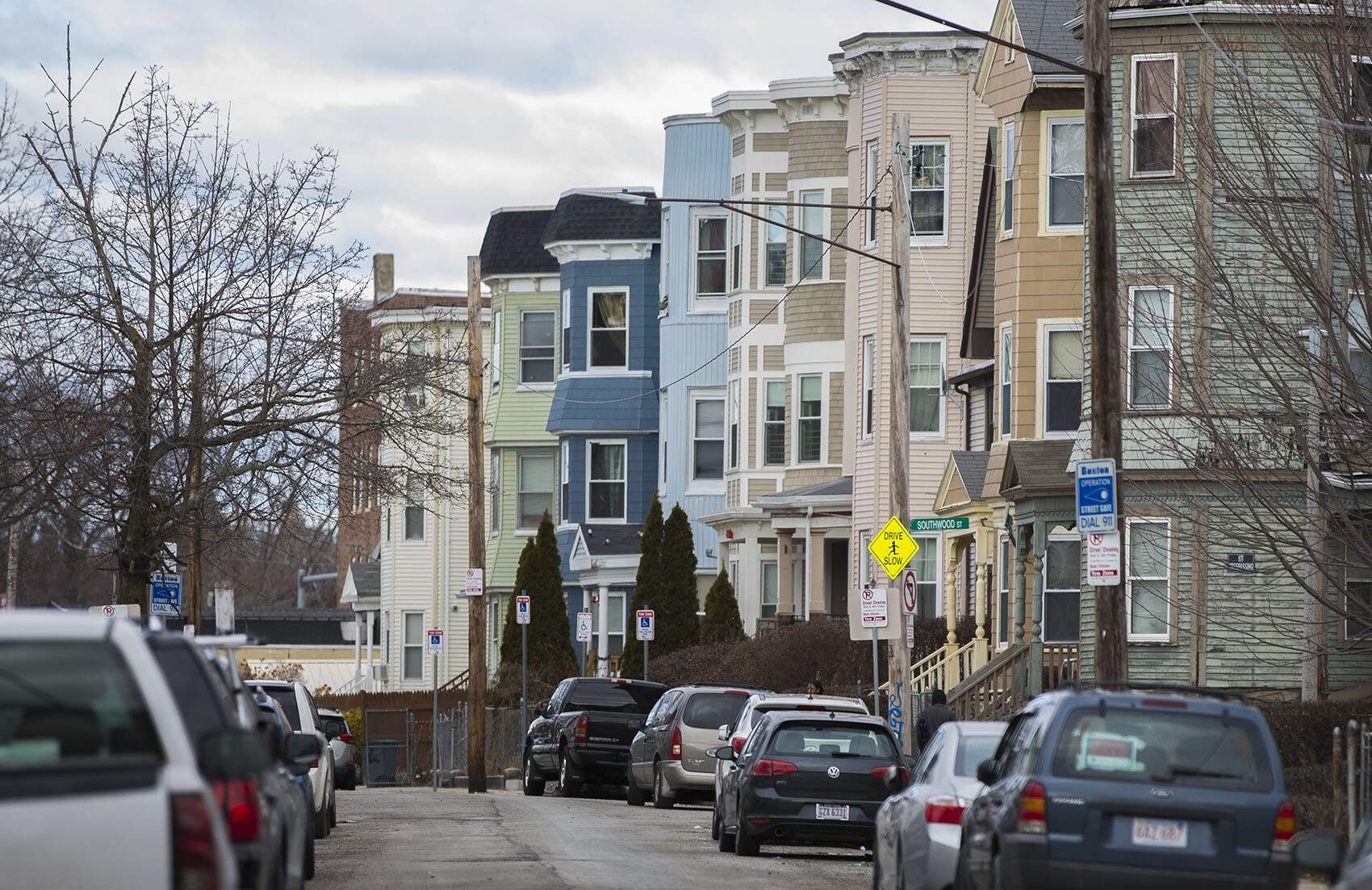
Won't you be my neighbor? If you have ever dreamed of buying a duplex or triple-decker home with your sibling or best friend, now's your chance. This month, the City of Boston launched a pilot program aimed at helping homebuyers do just that. As WBUR's Amy Sokolow reports, the new co-purchasing housing program, launched via the city's "Housing Innovation Lab," offers zero-interest loans to help middle-income residents buy multi-family homes and build wealth in the city, together. " Instead of just having investors be the only ones who could buy a triple decker and then rent it out, or 'condo-ize' it, now families will be able to own their piece of it," Mayor Michelle Wu told WBUR's Morning Edition host Tiziana Dearing.
- Who's eligible? To qualify, each individual household must make less than 135% of the area's median income. (That's about $176,00 for a household of two, or $154,000 if you're single.) You also have to be a first-time homebuyer, contribute at least 1.5% of the purchase price of their share of the property, agree to live in the home as your primary residence and have less than $100,000 in liquid assets.
- How does it work? The program offers each household a zero-interest loan of up to 5% of their share of the purchase price to help cover the down payment and closing costs. For homebuyers making 135% AMI, the loan is capped at $35,000. But for those making less than 100% AMI, it can be as much as $50,000.
- The backstory: Paige Roosa, the director of the city's Housing Innovation Lab, says the idea came out of a brainstorming session focused on how to make homeownership less of a stretch for middle-income families, for whom the median sales price of a two-bedroom condo ($790,000) is out of reach. They turned their attention to multi-family homes to "unlock more of the private market to our buyers" and give them a leg up against investors, Roosa said. "Your typical first-time homebuyer won't have the funds to buy three homes, even if they financially would be able to afford one and then rent out the other two," Wu added. "That first step of getting the larger down payment together just isn't possible. And so here's a situation where we now are empowering individual, multiple households and individual families to come together."
- Go deeper: Learn more about the process in the city's co-purchasing guide.
Boston police are investigating what happened after a Boston Public School bus hit and killed a young boy as he was returning from school yesterday near his home in Hyde Park. According to the Boston Herald, the student, whose identity has not been released, was hit around 2:44 p.m. near 107 Washington St., and later pronounced dead at the hospital.
- BPS officials said they will offer support services to any students, families and staff members who need it in the wake of the "heartbreaking loss." "We extend our deepest condolences to our student’s family, school community, and all those affected by this tragedy," Superintendent Mary Skipper said in a statement.
On the docket: A federal judge in Boston will hear arguments in Harvard University's lawsuit against the Trump administration over frozen federal funds in late July. As WBUR's Emily Piper-Vallillo reports, Judge Allison Burroughs granted Harvard's request for a fast-tracked timeline. However, it still means the university will be without the frozen funding for at least the next two and a half months.
- What's next: The Trump administration must turn over all information it relied upon when it canceled the school's more than $2 billion in grants and contracts by May 19.
Meanwhile: Rümeysa Öztürk, the Tufts doctoral student detained by ICE for writing a student newspaper op-ed critical of Israel, won't be transferred to Vermont for a hearing this week after all, due to a federal appeals court ruling Monday. WBUR's Jesús Marrero Suárez has more on the latest development here.
P.S.— Listen to the rest of Wu's Morning Edition interview here, in which she discussed parenting in the public eye and what the late Pope Francis meant to her family.