Support WBUR
Remembering the fallen 50 years after the close of the Vietnam War
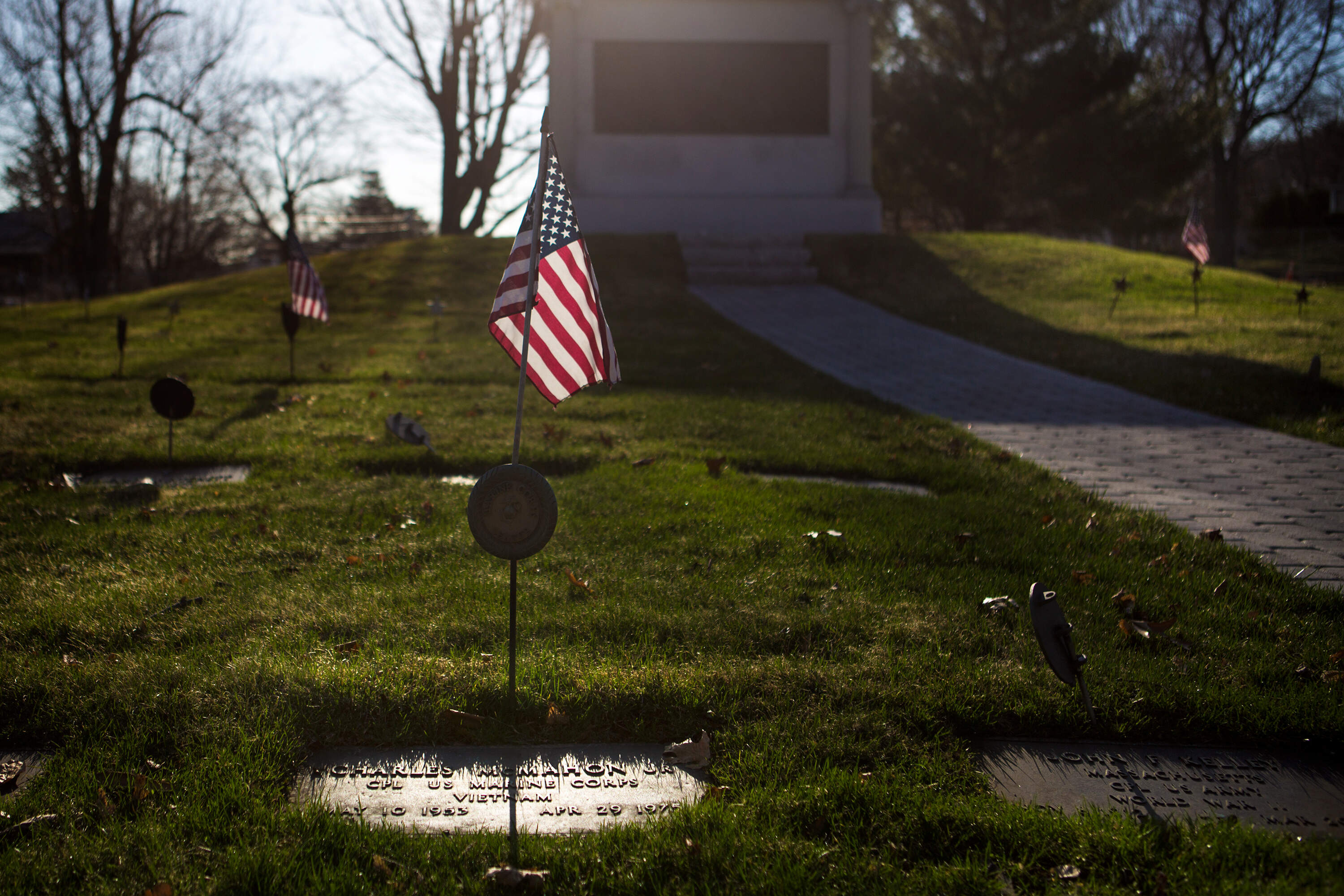
For Air Force Tech. Sgt. Richard Fitzgibbon Jr. of Stoneham, Massachusetts, the war ended on June 8, 1956 — two weeks shy of his 36th birthday.
He was the first American service member to die in Vietnam, nearly a decade before U.S. combat troops were officially deployed there.
For Cpl. Charles McMahon of Woburn, it was a rocket attack in the dawn hours of April 29, 1975. He was among the very last to die.
These are their stories.
American families that 'paid a higher price'
Fitzgibbon Jr. was sent to Vietnam as a flight engineer in early 1956. He joined a team flying missions for the U.S. Embassy in Saigon, capital of the newly established Republic of Vietnam — better known as South Vietnam.
The French had withdrawn after nearly a century of colonial rule, and Vietnam was now divided between the communist-led north and western-aligned south.
U.S. President Dwight Eisenhower saw South Vietnam as a crucial bulwark against the independence movement led by Vietnamese revolutionary Ho Chi Minh, who sought to unify the country under communist rule.
Eisenhower sent the first American military advisers there in 1955 to train the South Vietnamese Army, along with hundreds of million dollars in aid.
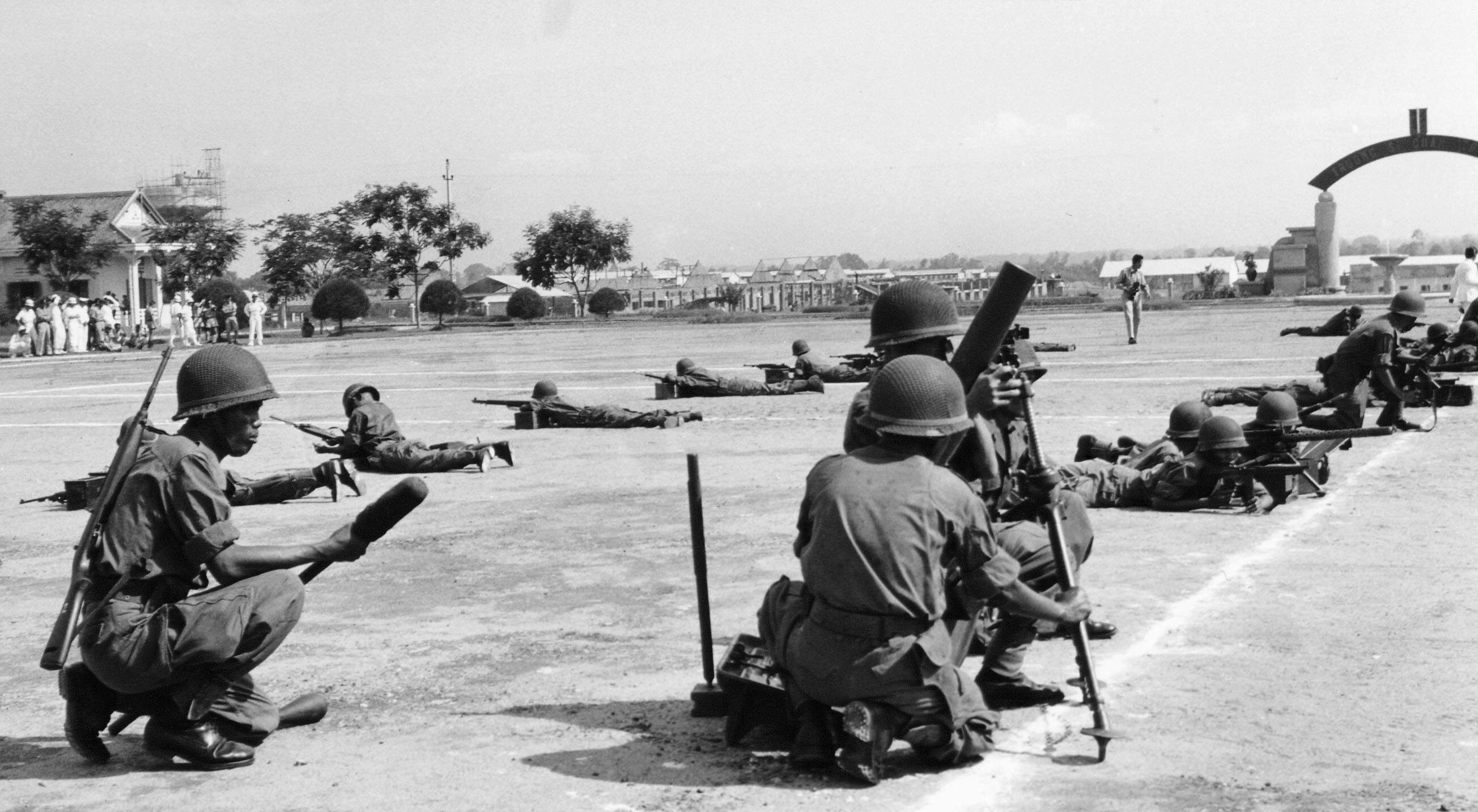
It was all part of America’s global efforts to contain the spread of communism during the early Cold War, according to the "domino theory" popularized by Eisenhower.
“You knock over the first one, and what will happen to the last one is the certainty that it will go over very quickly,” Eisenhower told reporters at a 1954 press conference in Washington D.C. “... Asia, after all, has already lost some 450 million of its peoples to the communist dictatorship, and we simply can't afford greater losses.”
If one country fell to communism, the theory went, others in the region would follow.
Fitzgibbon's flight crew was kept busy, airlifting supplies and personnel to and from South Vietnam.
“Most of his missions were from the Philippines on into Saigon,” said Vietnam veteran and historian Ray Bows, who wrote about Fitzgibbon in his book, “Vietnam Military Lore: Legends, Shadows & Heroes.”
Although the U.S. presence was technically advisory at the time, Bows explained, Fitzgibbon and his flight crew were routinely exposed to anti-aircraft fire from North Vietnamese ground forces. They were, in his view, clearly in combat.
Fitzgibbon was not killed in flight, however. He was murdered — shot — on the front porch of his Saigon barracks by a disgruntled radio operator from his own crew.
“After one particularly perilous mission,” Bows said, “Fitzgibbon had corrected him about his duties and what the operator was supposed to be doing versus what he was doing.”
Fitzgibbon was not the last of his family to die in Vietnam. His son and namesake, Richard, joined the Marines several years after his father's death, and was killed when he stepped on a landmine there in 1965. He was 21.
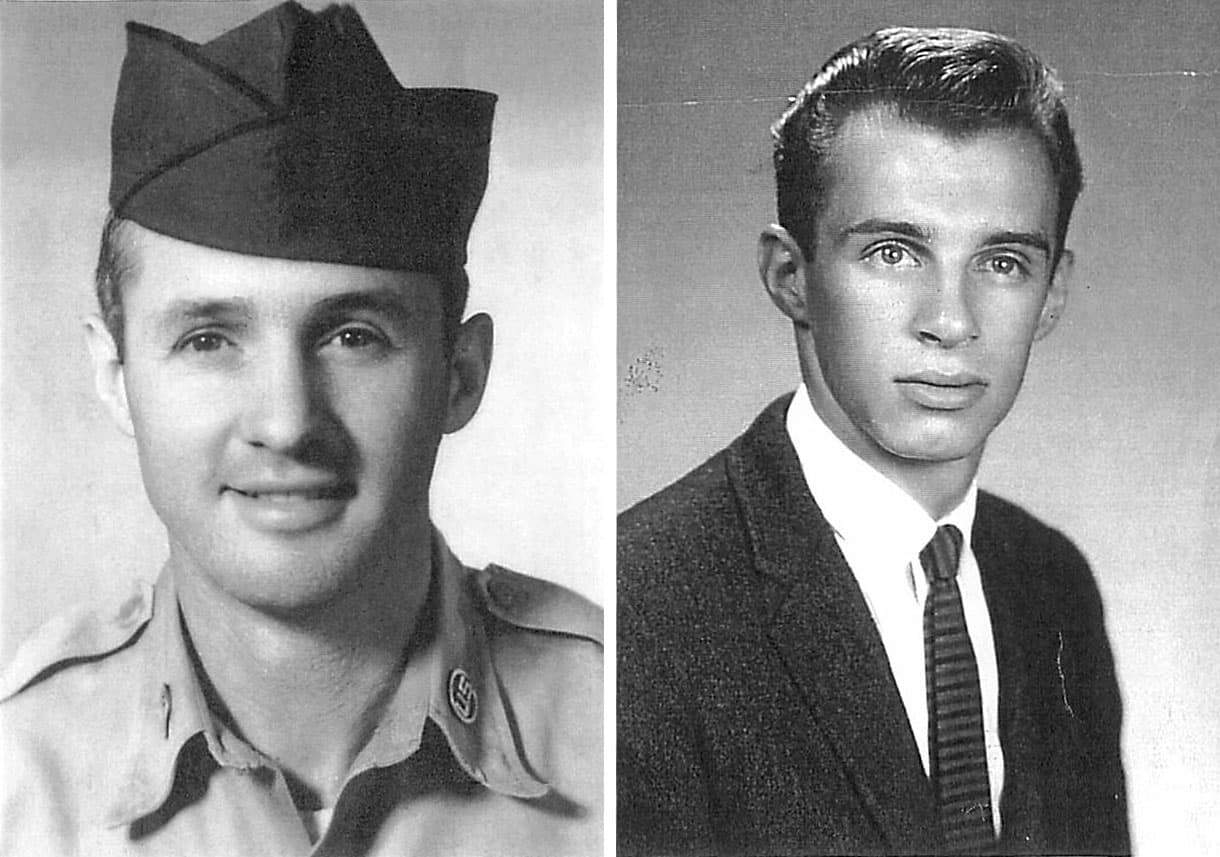
The elder Fitzgibbon’s death went unrecognized as a Vietnam War fatality for decades, because the Defense Department long considered January 1961 to be the official start of the war. So although his son's name was engraved on the Vietnam Memorial Wall in Washington, his was not.
For years, family members made calls, met with government officials, circulated petitions — only to be essentially told rules are rules. Then, in 1997, Fitzgibbon’s family caught the attention of then-U.S. Congressman Ed Markey, when the replica memorial wall traveled to Stoneham.
Markey took up the cause, and successfully lobbied the Pentagon to push back the official start of the war.
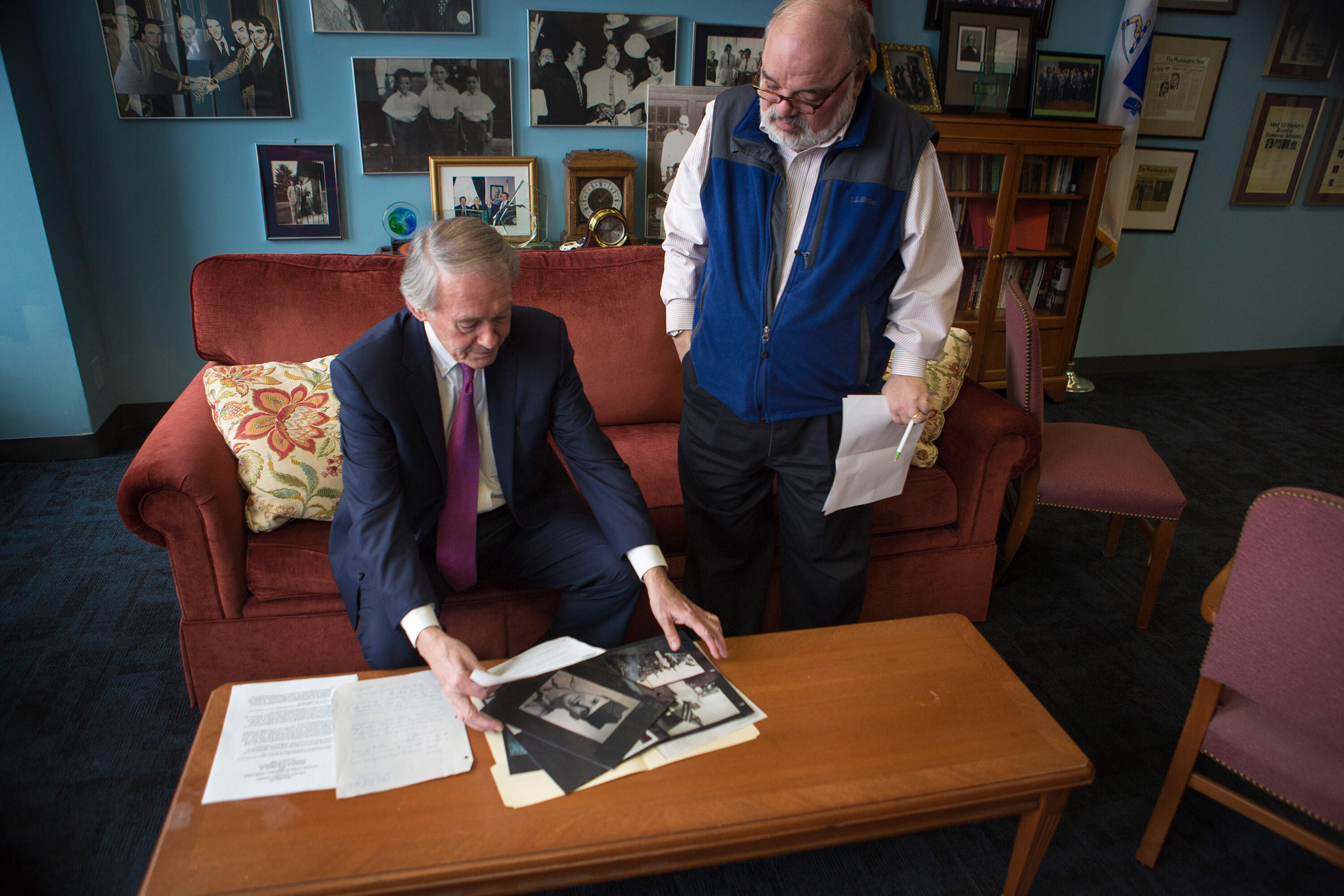
“I think it began the kind of closure that the family needs,” Markey said. “This family that paid a higher price — a father, and a son — would finally get the recognition they deserved.”
Today, the names of the Richard Fitzgibbons — father and son from Stoneham — can both be found on the Memorial Wall in Washington D.C. The men are just one of three father-son pairs killed in the war.
'The rockets fell right on top of us'
Of the 58,220 U.S. service members who died in Vietnam, more than 1,300 were from Massachusetts — including Marine Cpl. Charles McMahon.
McMahon and Lance Cpl. Darwin Judge, of Iowa, were killed the day before the war ended. They’d arrived in the country less than two weeks before they died on April 29, 1975, in the final North Vietnamese assault.
President Richard Nixon had withdrawn all American combat troops in April 1973, after the signing of the Paris Peace Accords, but dozens of U.S. Marines remained in Saigon to guard the American Embassy and the Defense Department's last remaining outpost at what was then called Tan Son Nhut air base.
Now, exactly two years later, communist forces were poised to take the city.
“The North Vietnamese had captured some South Vietnamese Air Force airplanes, and they flew, I think, six of them down to Saigon and started dropping bombs.”
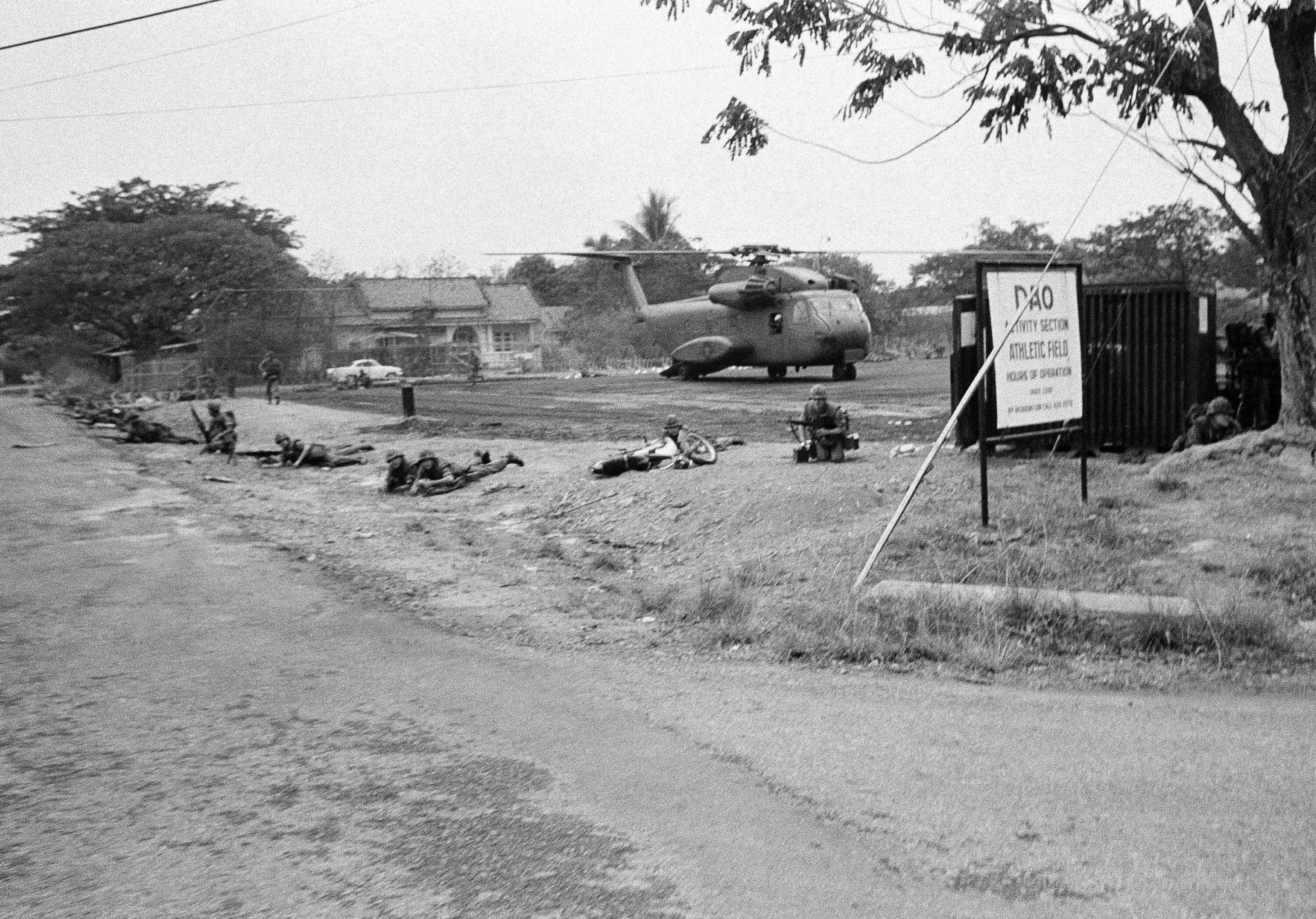
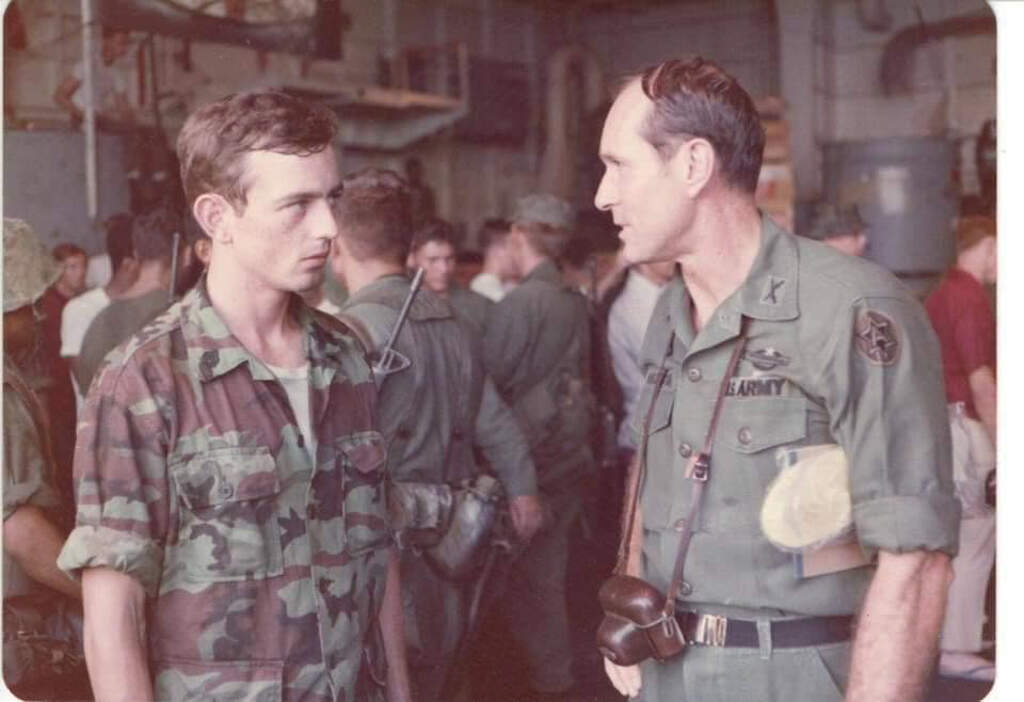
Marine Sgt. Kevin Maloney, who grew up in Worcester, was at the air base with Judge and McMahon on April 28. Near midnight, Maloney assigned them to guard duty on a perimeter gate.
Just hours later, there was a rocket attack.
“I posted the relief on the gates there and I went back to sleep,” Maloney said. “And about 4 o’clock in the morning, the rockets fell right on top of us.”
In that predawn hour, McMahon and Judge died instantly.
“It was shocking,” Maloney said. “I was up on my feet, sleeping in my uniform there. I put on the boots, grabbed a rifle and ran out.”
Maloney said it easily could have been him that night. In fact, if it wasn't for a last-minute scheduling switch, he said, it would have been him.
“Judge was pals with McMahon, so I swapped them out,” he said. “I sent Judge out there with McMahon, and I went to bed. I'm here talking to you about that now, because of that decision.”
Back home in Woburn, McMahon’s parents were soon notified of their son's death. It would be many months, however, before McMahon and Judge were returned to U.S. soil.
In the chaotic evacuation of Saigon, their bodies had been left behind.
As the Fitzgibbon family would do in the 1990s, McMahon’s parents turned to a Massachusetts lawmakers for help — in this case, the late U.S. Sen. Edward Kennedy.
Kennedy had connections throughout Vietnam thanks to his work on a Senate subcommittee focused on helping refugees flee the war. By the end of 1975, Vietnamese officials announced they'd located the bodies — and on Feb. 22, 1976, Dale de Haan, a Kennedy aide who helped lead the effort to repatriate the soldiers' remains, flew to Vietnam on an Air France charter to bring the Marines home.
Darwin Lee Judge — age 19 when he died — was buried in his hometown of Marshalltown, Iowa.
Charles McMahon — just shy of 22 was buried at the Woodbrook Cemetery in Woburn. At the local Boys & Girls Club, where McMahon was once named “Boy of the Year,” there remains a display in his honor and a scholarship in his name.
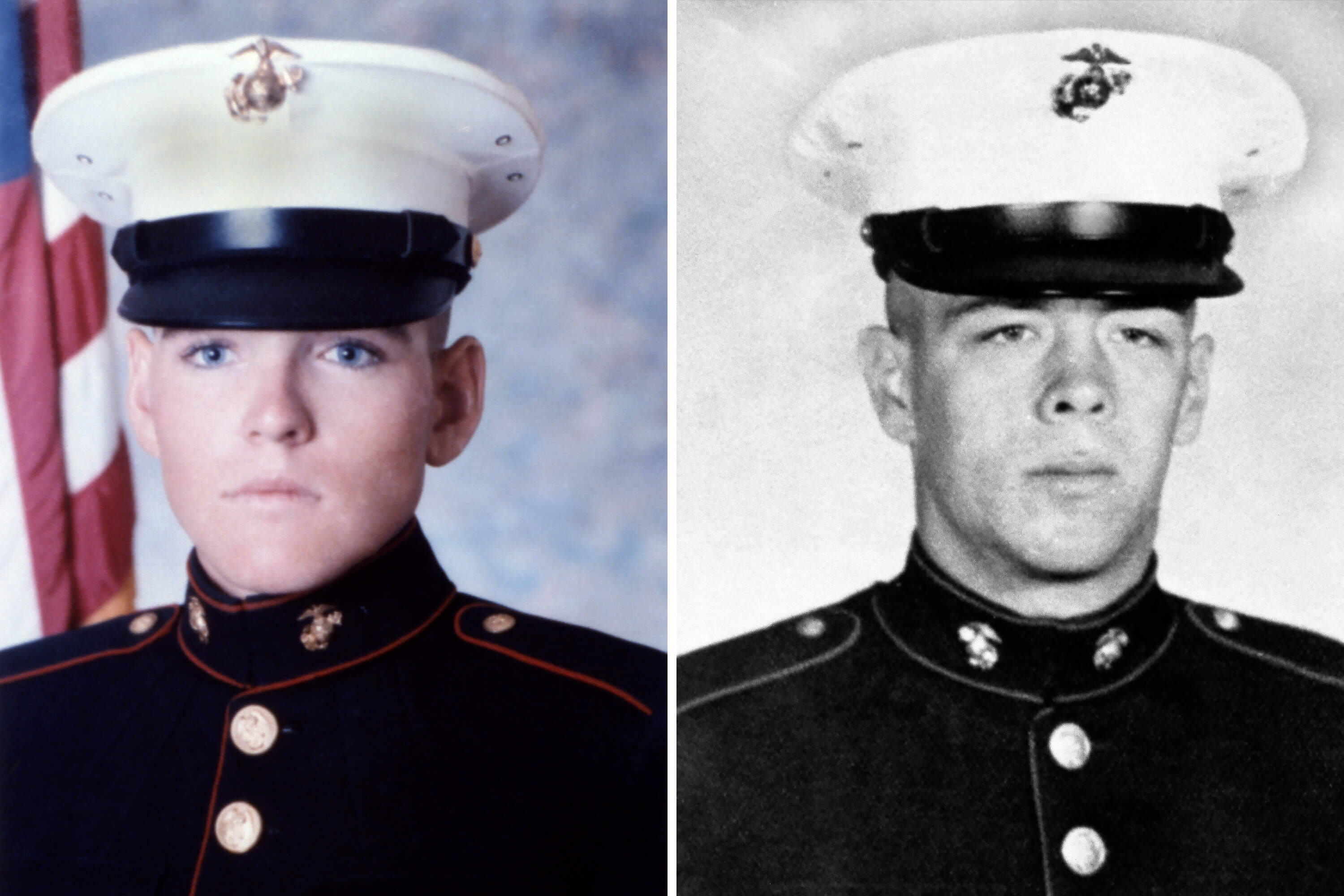
For the Marines who stayed in Saigon until the end, the deaths of McMahon and Judge still sting, 50 years later.
“I’ve run through the survivor’s guilt process, and for some reason God wanted me alive,” Maloney said. “I think probably every Marine wound up with [post-traumatic stress disorder], and I’m no different. But there's no sweats in the middle of the night, no screaming and no craziness anymore.”
McMahon and Judge were the last U.S. soldiers to die on Vietnam soil.
“It tends to mellow out, I guess — at least it has for me,” he said. “But not a day goes by that some glimmer or some memory doesn't float by ... . They were top notch. They were both good Marines.”
This is part one in a series marking 50 years since the fall of Saigon and the end of the Vietnam War.
This segment aired on April 29, 2025.