Support WBUR
The Weekender: Boston's Saturday Morning Newsletter
Can you eat the cicadas emerging in Massachusetts? Here’s what to know
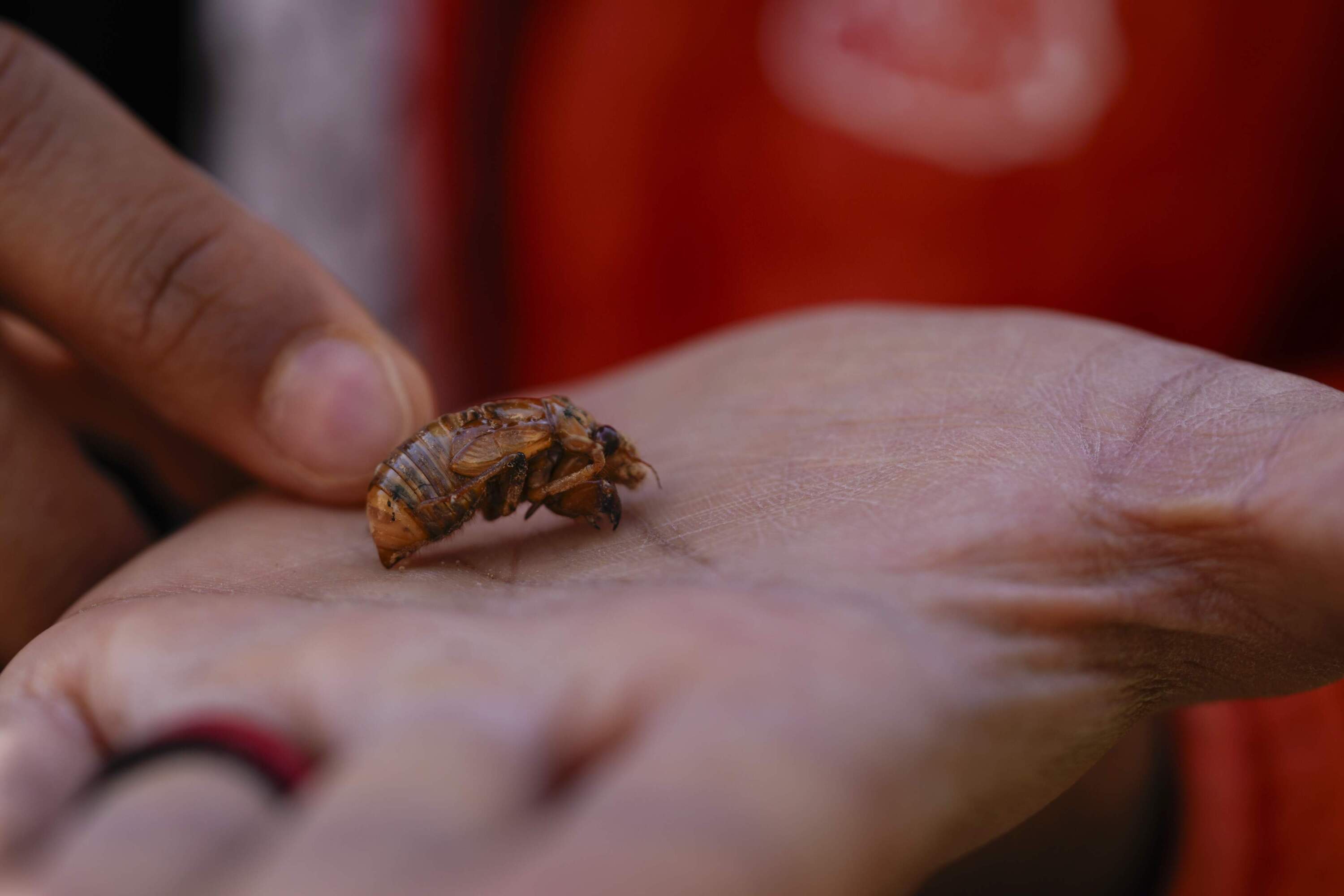
Editor's Note: This is an excerpt from WBUR's Saturday morning newsletter, The Weekender. If you like what you read and want it in your inbox, sign up here.
After 17 years underground, Brood XIV cicadas are expected to emerge this spring and summer in parts of Massachusetts. The buzzy insects are a nuisance to some, a sign of warmer days to others, and to a select crowd, an exciting appetizer.
Eating insects, or entomophagy, isn’t very common in American culture. But each time a brood of cicadas emerges in the U.S., there’s a unique opportunity to give the practice a try, says Joseph Yoon, chef and founder of Brooklyn Bugs.
If you haven’t heard of Yoon, he’s kind of a bug deal in the entomophagy world. His pursuit of insect-based eats have earned him features in The New York Times and many other national media outlets. He’s been cooking with insects since 2017, and first started sampling out cicada recipes when Brood X emerged in 2021.
“People all around the world eat insects,” Yoon told me. “ I never wanna be didactic and tell people they have to eat insects because it's sustainable. I like to focus on the fact that they can be prepared deliciously.”
If you’re local and cicada-curious, Yoon has a few tips on safely foraging, cleaning and preparing wild-caught cicadas to eat. (You can also find him crunching on crickets, ants and mealworms on Instagram.)
Here are some highlights from our interview, edited and condensed for clarity:
Hanna Ali: How do cicadas compare to other arthropods, like shrimp and crayfish, texture- and flavor-wise?
Joseph Yoon: "Well, I love that you bring up that insects are arthropods, just like shrimp and lobster. Because [cicadas] are a lot smaller, they're not gonna have the same meatiness that you would get with something larger. But there are similarities.
"The Brood XIV cicadas have lived underground for 17 years, slowly feasting on plant and tree xylem. And so they're gonna have a very vegetal quality to them, and a nutty quality as well. If you cook it in a sauce or ferment it in kimchi — one of my all-time favorite applications for cicadas — it will take a lot of those juices and flavors. If you deep fry them, I think almost anything deep fried is going to be delicious. The more you learn about the culinary applications, the better you'll be at preparing them."
HA: What should locals know before trying to forage for cicadas?
JY: "Number one, make sure you're in a safe place. Don’t stop on the side of the road. Two, make sure that you're in an area where you know that there are no potential contaminants, heavy pesticides or metals that would affect the health of the cicada. So you wanna think about an area that is in nature.
"If you’re looking at Cape Cod, it might be a little sandier than the typical soil in forest areas where [cicadas] are more commonly seen. You’re gonna have to look more in the tree line, because they rely on the nutrients from the xylem of the plants."
HA: What should you look for as you’re foraging?
JY: "Once you're in the forest, you're in nature, you'll typically see all these little holes that the cicada nymphs utilize to claw out from underground when the ground temperature hits 64 degrees.
"About a week or two after you start seeing these holes, you will see tons of cicada nymphs everywhere, climbing up the nearest thing — most likely a tree. These cicada nymphs are amazing. To collect them, I use a reusable plastic container. You can also collect adult cicadas and put them into your container. Then, take them home and put them in the freezer. That’s the best way to euthanize them. You wanna freeze them for a good while — I typically keep them overnight."
HA: Do you need to gather a lot of cicadas for one recipe?
JY: "It really depends on how much you want to eat. Some people just wanna try a couple for the sake of trying it, and others might make an entire meal out of it. If you just wanna cook up a few to taste, you're probably good with five to 10. If you want to have them as the actual sustenance of your meal, you’re going to want to gather anywhere from 25 to 50.
"These are incredible, beautiful insects. So I would respectfully ask that if anyone does decide to go and collect cicadas, do it with respect for the sanctity of their lives. Don’t just go out and grab a whole bunch just to kill them."
HA: What’s the best way to prepare the cicadas you’ve collected?
JY: "After freezing, I rinse them off thoroughly. The only reason why I don't rinse them first is because then there will be frost all over the cicadas. Get a towel and pat them dry, and they’re ready for cooking.
"Some people boil their cicadas, which I entirely disagree with because when you boil an adult cicada, it will liquefy the innards and you kind of lose the meat of the cicada. Nymphs, however, are more water resistant because they live underground for so long. If you want, you can blanch [nymphs] briefly before frying. But typically, I don't boil them.
"I think the most easy and delicious cicada recipe that was most agreeable for the over 10,000 people that I've fed cicadas to has been tempura-fried cicadas."
"Make your tempura batter or beer batter. Or go ahead and buy whatever your favorite frying batter may be. I personally add cricket powder to my batter, because I like layering different insects in my food."
(Editor's note: Yoon shared two easy batter recipes for fried cicadas that you can find here.)
"Instead of just chucking all the [battered] cicadas into the hot frying oil, go ahead and pick up each cicada by the wing and gently drop it in. That way, you’ll have a wing spread. It’s so beautiful when you can see the entire cicada. Add your favorite dipping sauce, and people will Pac-Man them into their mouths. You could also put them in a roll to make a fried “cicada roll” instead of a lobster roll.
"And because the cicadas are coming out on Cape Cod, I thought, what about a cicada chowder? Think about making a classic clam chowder, but substitute the clams with cicada nymphs. I think this is more suitable for cicada nymphs, which will add flavor and texture. You know how you put oyster crackers on top of clam chowder? Maybe we could add some tempura cicadas on top as well. A double whammy of cicadas!"
P.S. — Wondering where the cicadas will be popping up? As WBUR's Katie Cole reports, residents of Cape Cod and Plymouth County will have the best chance of seeing Brood XIV cicadas. Learn more about the insects' arrival in this explainer.