Support WBUR
Review
'Jaja's African Hair Braiding' captures one explosive day at a Harlem salon
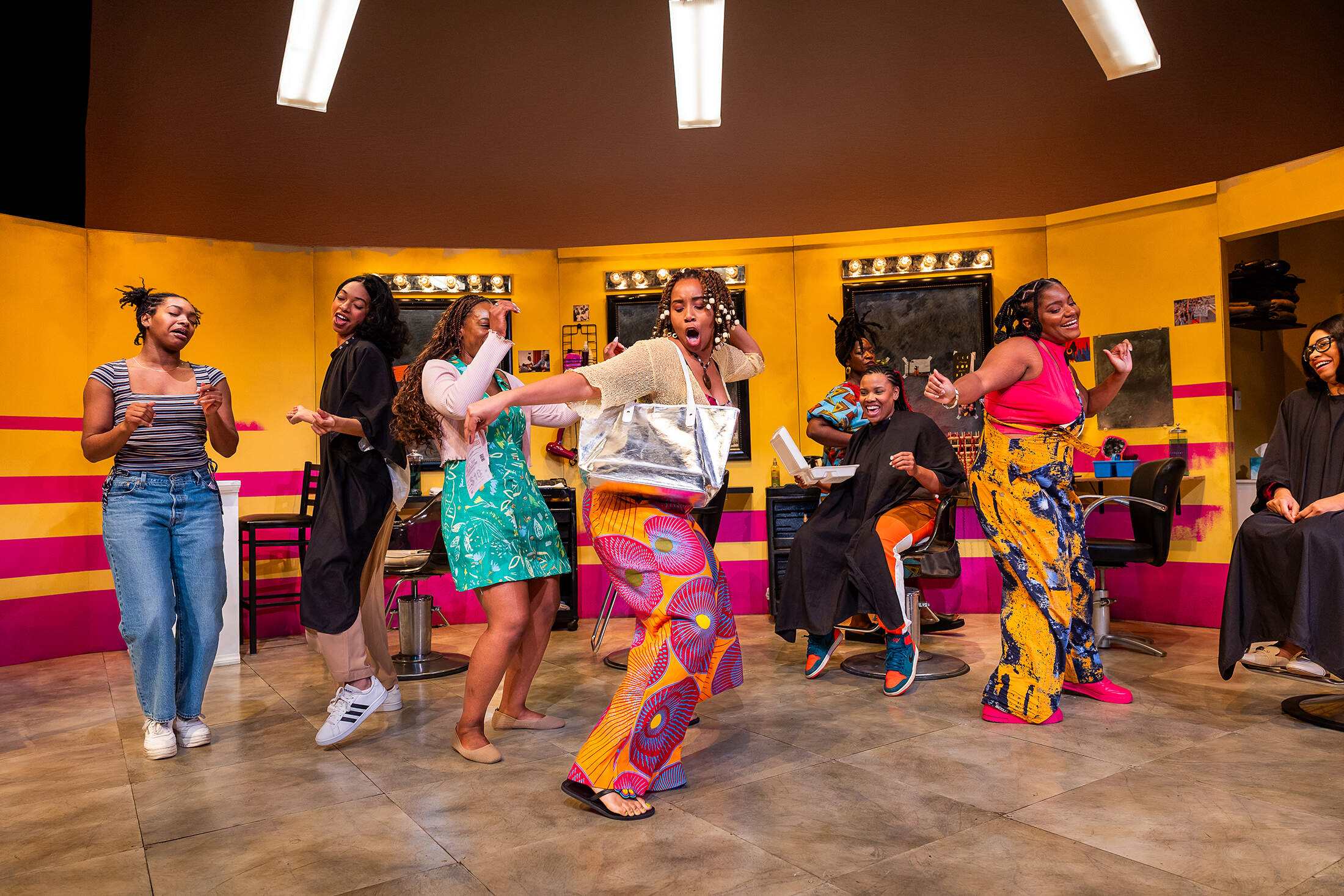
When the metal grill-like curtain parted in the Roberts Studio Theatre, we not only entered "Jaja’s African Hair Braiding" salon in Harlem, we stepped into the hilarious, but complicated lives of several African immigrants and got a glimpse at the social and cultural experience of braiding.
Janie E. Howland’s realistic set for the SpeakEasy Stage production provides a solid foundation for the sometimes flighty, always fervent personalities that populate Jaja’s salon. Although compared to “Steel Magnolias” — also set in a salon — playwright Jocelyn Bioh collapses years of experiences into one explosive day, while folding drama smoothly into the comedy. The determination and delight of these women never flags for a moment during this fast-paced, 90-minute production.
That’s due to the outstanding ensemble, with every actor delivering nuanced performances of archetypes — rude or demanding customers — as well as the unique personalities who work in the shop, just trying to make a living. The aptly named Bea (the always terrific Crystin Gilmore) is the queen bee of the salon, or at least she would be, if Jaja didn’t own it. She’s always talking about how she would run her shop, how much better it would be, and becomes enraged when she believes Ndidi (Catia), another braider, who is working temporarily at the salon, has stolen Bea’s longtime client. The fact that Ndidi is younger and faster only adds to the tension, but Catia’s ability to shift effortlessly from sassy confidence to shy embarrassment when a man gives her a gift, prevents Ndidi from being two-dimensional.
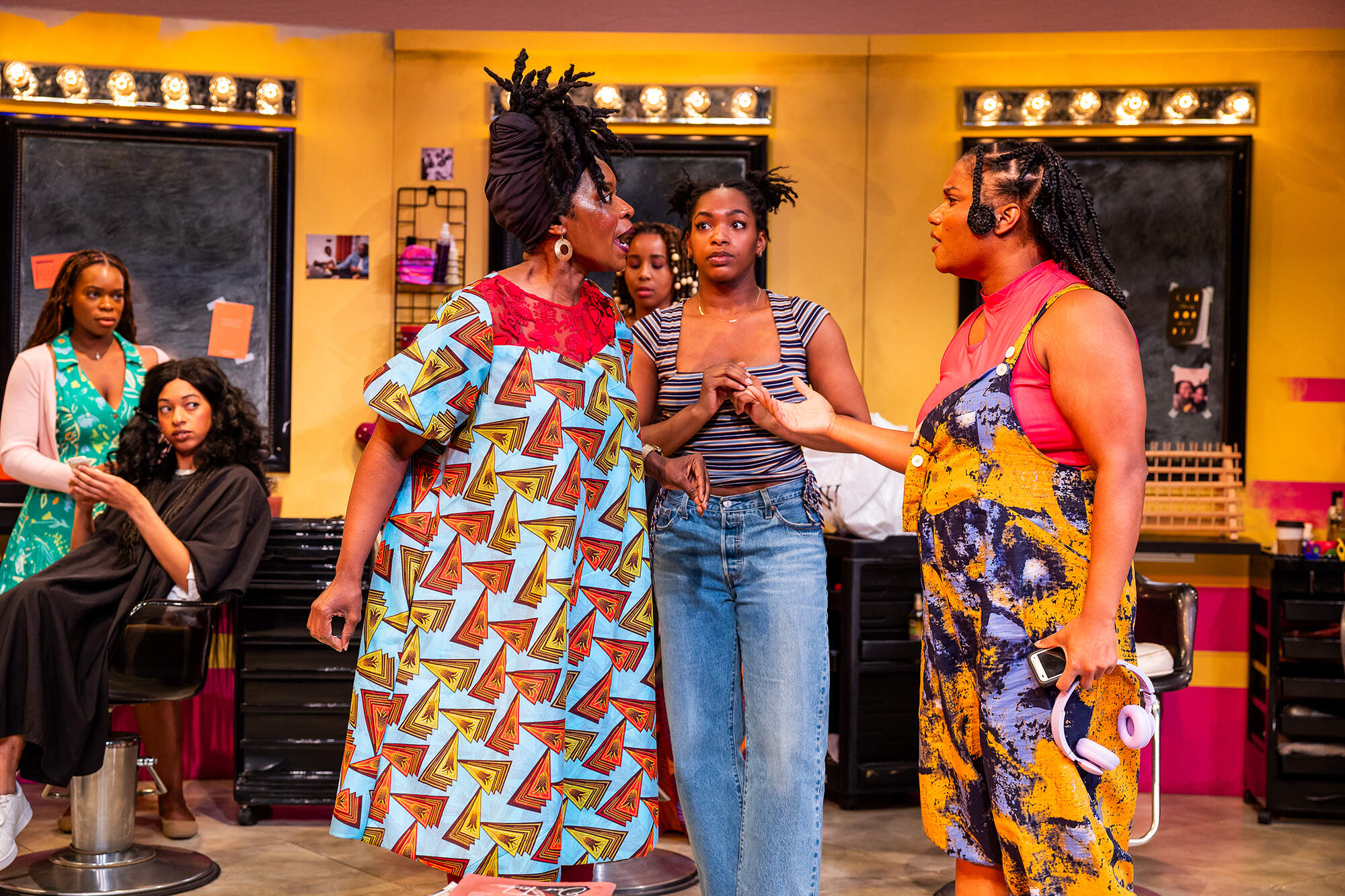
Aminata (Kwezi Shongwe) is Bea’s sidekick, for whom the shop is more of a home than the one she shares with James, the husband who spends her money entertaining other women. Then there’s Miriam (MarHadoo Effeh), a recent immigrant from Sierra Leone, who is working hard to save money to bring her daughter to the U.S., and despite her struggles, remains optimistic about life and love. Last but not least is Marie (Dru Sky Berrian), Jaja’s teenage daughter, who manages the shop while worrying about her immigration status. She dreams of going to college and becoming a writer, but is having trouble convincing her mother, who wants her to get a job that makes lots of money.
Into the slightly cramped quarters comes Jennifer (Hampton Richards), who wants long micro-braids, a process that will take all day and leave the braider with blisters on her fingers. Bea and Aminata toss the job to Miriam, making the salon hierarchy crystal clear. Six other customers are played by Ashley Aldarondo and Yasmeen Duncan, who make each one distinctively hilarious or annoying, with the help of Danielle Dominique Sumi’s distinctive costume pieces (love those matching boots and bag). One actor, Joshua Olumide, plays all the men, who, with the exception of James, are committed to taking care of the people in the neighborhood.
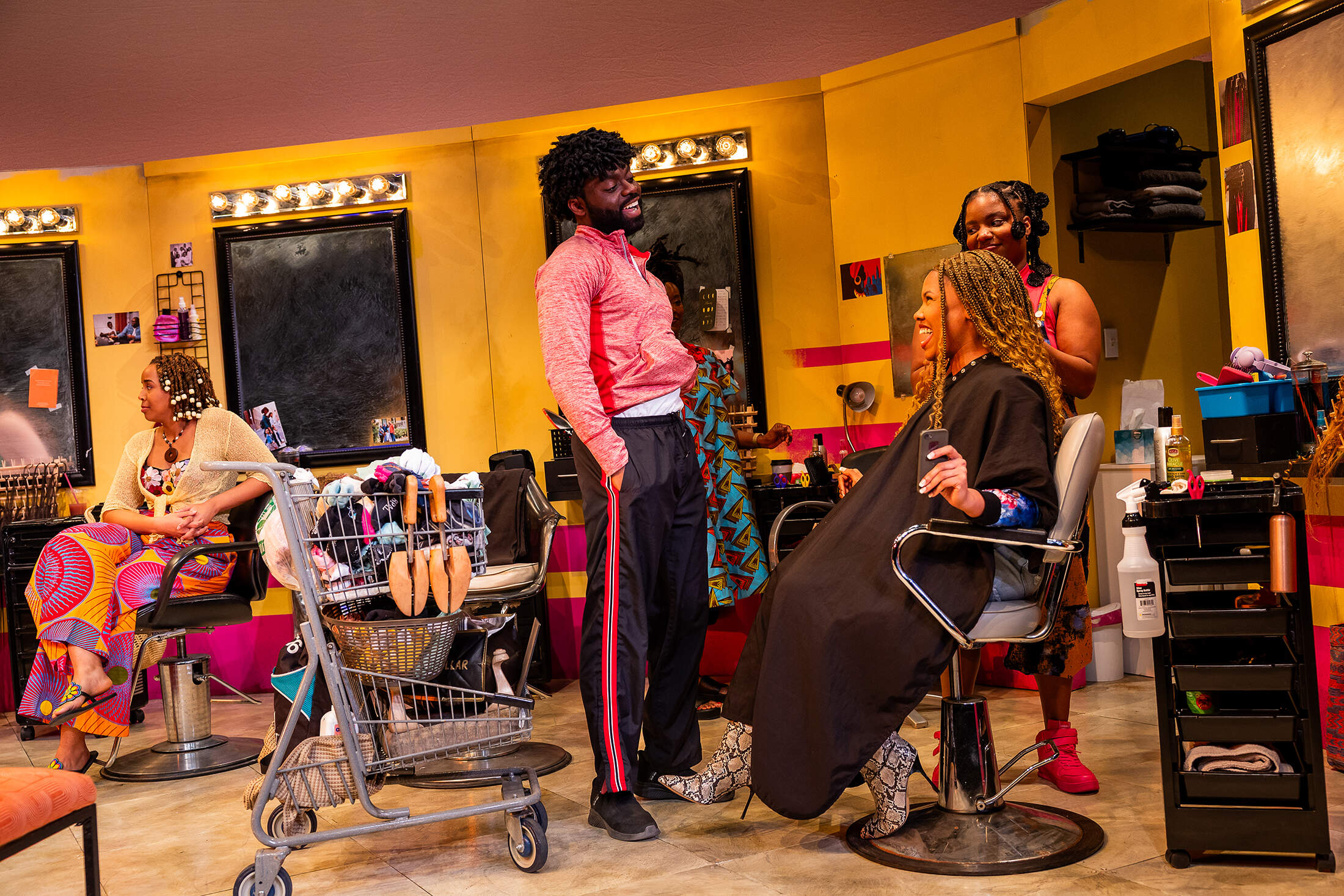
While hair is transformed into array of braided styles — with Nadja Vanterpol’s hair and wigs transitioning magically from “in progress” to complete as the action unfolds — we learn a little more about each of these individuals: their excitement over a scratch ticket win; their concern about getting green cards and legal status; and their determination to make the best of the hands they’ve been dealt.
Director Summer L. Williams gives each member of her ensemble room to make the character their own, while making sure they react and support each other. (When James shows up, the collective eye roll is almost audible, and all the braiders seem to hold their breath when he asks Aminata for money.) Williams, who also directed Bioh’s "School Girls; or, the African Mean Girls Play" at SpeakEasy in 2019, knows how to balance these individual stories with the flow of the salon day and the overarching theme of community.
Williams’ taut direction moves with an irresistible flow, propelled by a soundtrack of pop hits and African songs that serve as amplifiers, transitions and connectors as the day in the salon unfolds. When these women pause their work to dance, it always feels like the most appropriate response at that particular moment.
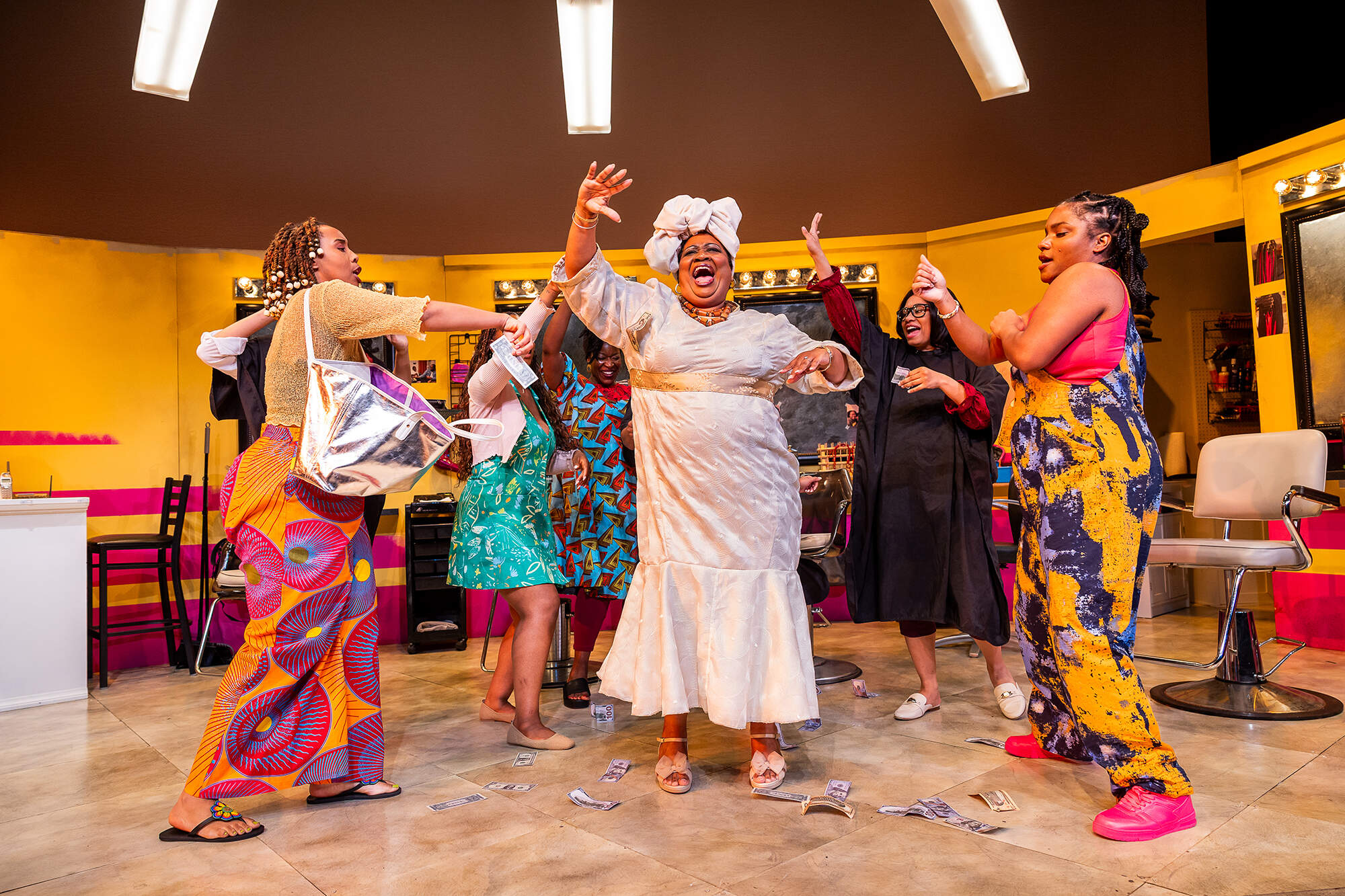
Just as the bickering between the braiders starts to heat up, Jaja (MaConnia Chesser) finally sweeps in, dressed for her wedding to a white landlord that will take place in a few hours nearby at City Hall. Though she’s arriving late to her own shop, she moves from one chair to the next, making just the right comment to each worker to lower the temperature in the room, evoking a sense of joy and excitement over her impending nuptials. As Jaja dances among them, they all toss money at her, in the tradition of Nigerian weddings.
Bioh’s final plot twist has been hinted at throughout the play, so it may not come as a complete surprise, but what does provide reassurance in the midst of an uncertain finale is the way these women step up to take care of each other. In the end, Bioh suggests, it’s our community — whatever that looks like — that helps us through when times get tough.
SpeakEasy Stage Company's production of “Jaja's African Hair Braiding” runs through May 31.