Support WBUR
'Business as usual': Democrats closest to House leadership get most budget earmarks
The Massachusetts House of Representatives passed its $61.5 billion annual budget this month, and an annual reality emerges: millions of dollars in pet projects go to the lawmakers closest to Democratic leadership.
Legislators tacked on $81 million in amendments to the final bill, mostly money for local projects, programs and organizations, according to data compiled by the legislative tracking service MassTrac. And the lawmakers who received the most — in total dollars and in percentage of requests approved — chair some of the Legislature's most influential committees.
" This is business as usual for the State House," said Jay Kaufman, a former Lexington state representative and committee chair who now heads the Beacon Leadership Collaborative. "It has been sort of top-down, follow-the-leader in a way that is completely disruptive of democracy."
Earmarks are not voted on individually. Instead, House Ways and Means Chair Aaron Michlewitz and his staff group together the requests into massive "consolidated" amendments that hit the floor all at once.
Critics argue this process means only the items blessed by leadership get passed, while all the rest are cast aside.
" Everything that happens has been preordained," said Phil Sego, a former Sierra Club lobbyist and advocate for legislative transparency. "There's no debate."
In an investigation into House earmarks by The Boston Globe last year, several lawmakers likened the process of pitching funding requests to House leadership in a private backroom to the TV show "Shark Tank."
State Rep. Adrian Madaro, an East Boston Democrat who chairs the joint committee on revenue, was one of the body's biggest winners this year, netting $3.5 million in approved funding.
Madaro secured 12 of the 14 earmarks he asked for, including $1.3 million for Boston Harbor ferry service and $1 million for the New England Aquarium. Madaro did not respond to a request for comment.
Rep. David Biele, vice chair of the financial services committee, got $3.6 million in earmarks — nearly three-quarters of his ask. That money is slated for fire department training and "entrepreneurial fellowships." In a statement, Biele said these initiatives reach "well beyond my district."
Rep. Dan Hunt, chair of the election laws committee, also said he received a higher total because his earmarks impacted the wider region. Hunt landed $2.7 million, with the vast majority going to RIZE Massachusetts, an opioid addiction treatment nonprofit, and Harbor Health Services.
"It’s not pork," Hunt said in an interview. "These are locally located organizations but they service metro Boston or the whole state.”
Another victor was Back Bay Democrat Jay Livingstone, chair of the Joint Committee on Children, Families and Persons with Disabilities, who got funding for 15 of his 17 requested earmarks. That $2.5 million will go to some of Boston's most prominent cultural institutions, like the Commonwealth Shakespeare Company, the Boch Center and First Night Boston.
In a statement, Livingstone said many of the programs these organizations offer are free.
"While this entertainment is free to the public, it does not happen without incurring great expense that requires public support," he said. "I am pleased that my colleagues recognize this."
In contrast, the lawmakers who lost out are those farthest from the inner circles of power — like members of the minority party.
The bottom of the earmarks list is littered with Republicans. Westfield Republican Kelly Pease requested $75,000 for things like a children’s museum and a local Lion’s club — and got nothing.
It also hurts to be a freshman lawmaker. Among the 40 legislators who received the least amount of money, 18 are in their first term.
Funding allocations are "not really based on the needs of the district," said Scotia Hille, executive director of the nonprofit watchdog group Act on Mass.
"It seems the worst thing you can do in terms of getting money for your district is be a first-term rep,” she said, adding "It’s just a sign they’re starting on that rung of the escalator of power. That’s not how democracy is supposed to work."
Kaufman, the former state rep, said when he was elected he quickly learned to funnel his requests through more senior members.
" I knew anything that would have had my name attached to it would be summarily dismissed and rejected," he said. "That's the way the game is played."
House leaders denied claims of unfairness in the process.
"The House’s budget process ensures that every member has multiple opportunities to have their voice heard, and their amendments considered and voted on," House Speaker Ron Mariano said in a statement.
"As the elected officials closest to their communities," Mariano said, "Representatives know the needs of their districts well, and advocate for the inclusion of local earmarks that are often a critical source of needed support for their constituents."
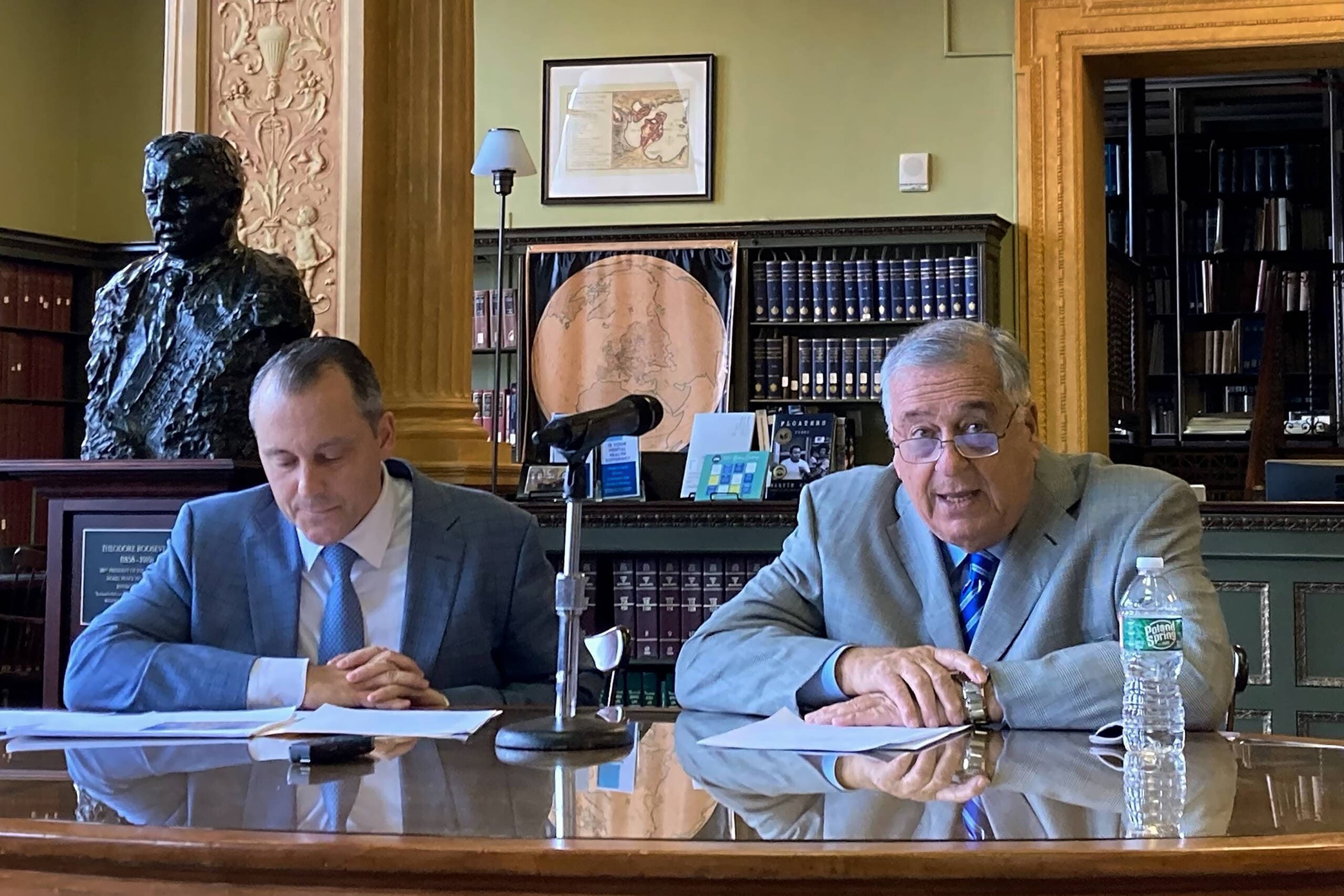
The House approved about 10% of the total amount of requested earmarks submitted by members.
The budget is a massive document that lawmakers say is the most important piece of work they do each year. The version that passed the House earlier this month is only the first step: the Senate will pass its own budget in the coming weeks, and negotiators from both chambers will then work to reconcile differences between the two documents. Once the compromise budget is reached, both bodies will vote to send it to the governor for her signature or veto.
Old political hands say earmarks help grease the wheels of this intricate, laborious process — and some political observers agree.
Lawmaking "involves lots of different people, with lots of different perspectives, coming to agreement on big bills with competing priorities," said Evan Horowitz, director of The Center for State Policy Analysis at Tufts University. "Earmarks are a really valued commodity in the horse-trading world."
"In an ideal world would we need them? Maybe not," Horowitz said. "But it is really valuable to have mechanisms to trade, to get to agreement and advance policy."
Correction: A previous version of this story did not include earmarked funding for Republican Minority Leader Brad Jones that was added during a later process. Jones secured $350,000 in earmarked funding.