Support WBUR
Remembering artist Rob Stull, whose work spanned canvases and comics
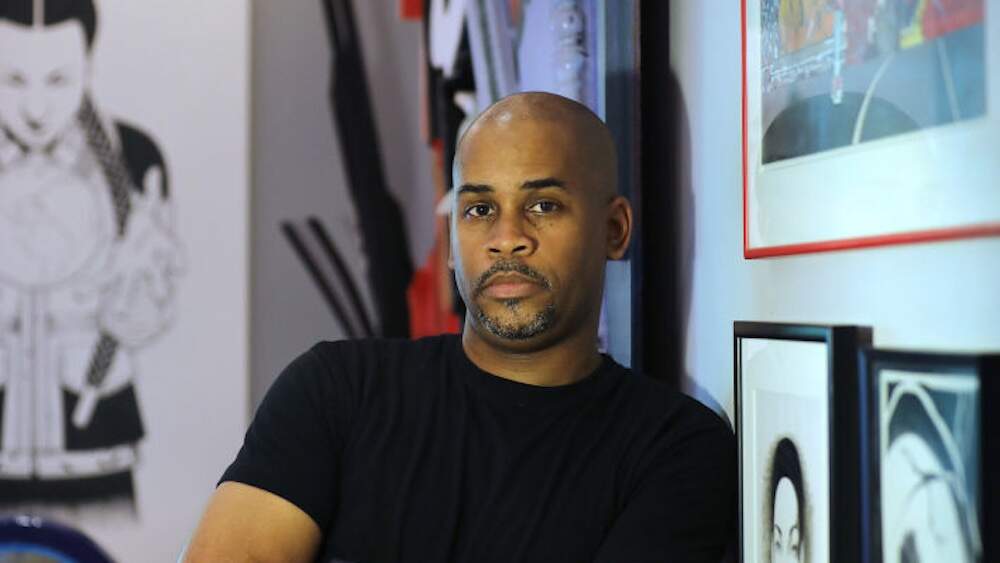
Cydney Garrido barely remembers a time when her brother Rob Stull wasn't creating something. Yes, he was her (sometimes annoying) little brother. But from a young age, Garrido and the family knew he was talented.
" Even when he was teeny tiny," she says. "We have a family photograph of him where he had cut pieces of a brown terrycloth bathrobe or towel and stuck pieces to his upper lip and his eyebrows, like one of the Marx brothers or something. He was always doing stuff like that. He was always creative."
Younger sister Gia Stull describes building pillow forts and reading comic books with her older brother. She looked up to Stull. "I probably wanted to hang out with him more than he wanted to with me," she says. "I wanted to be like my big brother."
Stull was an artist, mentor, teacher and cultural legend in Boston and beyond. His work as a leading Black artist in comic books was internationally recognized. Stull passed away on April 17 at the age of 58 after a battle with cancer.
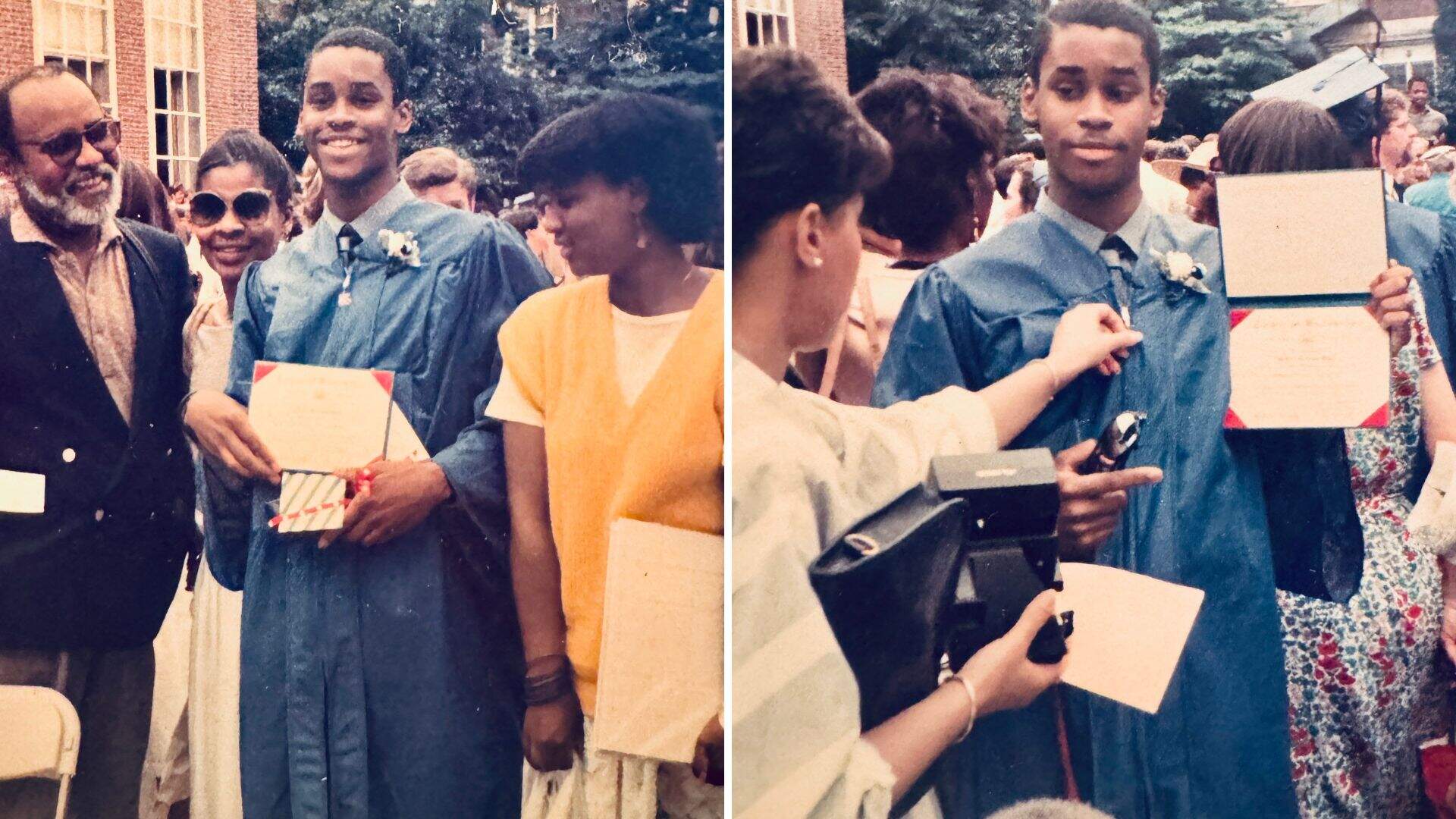
Stull's parents were famed architect Donald L. Stull and dancer Patricia Stull, and they were among some of the first families to desegregate Brookline. They lived next to the family of Aron "Teo" Lee, whose father, also an architect, worked with Donald Stull. From a young age, Lee and Stull were inseparable.
Lee was one of several loved ones with Stull when he died. As boys, they walked to school together, created art, played sports and started a band (Stull played the drums.) When hip-hop took over the cultural scene in the 1980s, it was an inspiration to Stull — he even learned how to breakdance. Lee describes Stull as a brother, one who always left him in awe with his creativity.
" We were these artsy kids. A strong wind could blow us over, we were both so skinny," Lee says. "The reason Rob and I drew is because our imaginations were massive. I remember watching Rob sketch. There was a way that he addressed the page that did not have indecision."
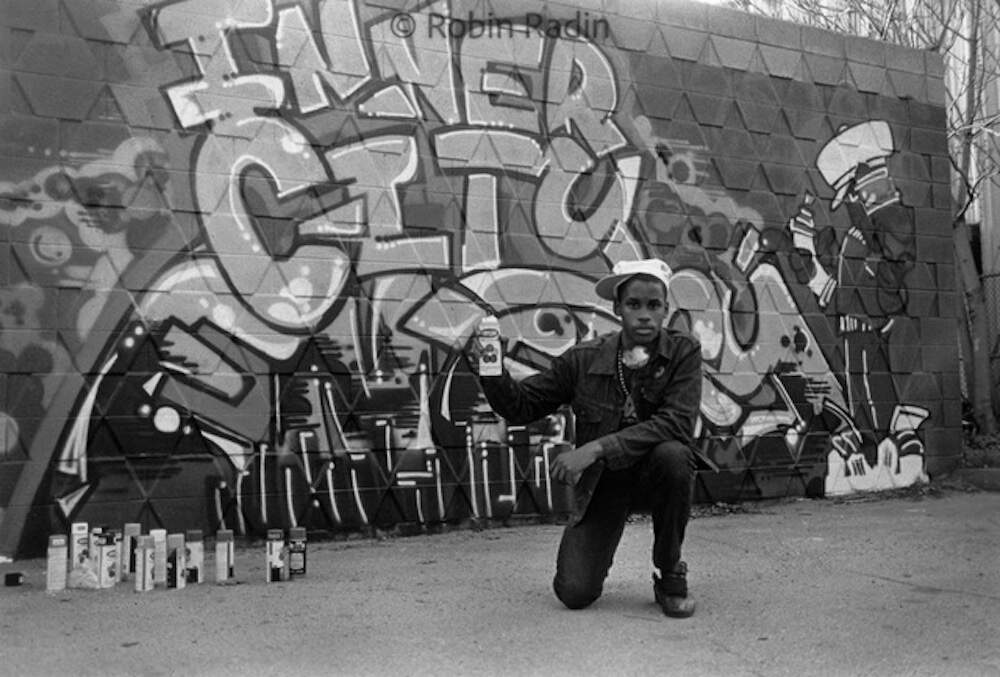
One of Stull's first official art commissions was titled "Inner City." He executed the painting in Jamaica Plain around the time he and Lee graduated from Brookline High School in 1985. Lee believes the piece was commissioned by the Parks and Recreation Department and was one of the first graffiti-style pieces commissioned in Boston. "It caused quite a few traffic jams. It was so good," Lee says.
After graduating from high school, Stull had no backup plan. He knew he was going to be an artist, one way or another. He attended the School of the Museum of Fine Arts. Gia, his younger sister, also went to SMFA but was a few years behind him.
"I would sometimes watch him working, looking over his shoulder," she says. "It would amaze me at how easy it was for him to draw anything he wanted to in such exact realism. And he hardly ever sketched anything out."
In that time, Garrido, his older sister, moved away from Boston to New York. Stull would come to visit. On the train to her apartment he would see the graffiti gracing the buildings along the way and found himself inspired.
" He was trying to get into the comic book world, he was trying to get his foot in Marvel," Garrido says. " The drawings were coming from inside him and he knew what he wanted on that paper — it was effortless."
Stull did get his foot in the door at Marvel, DC, Dark Horse Comics and other comic book publishers. He inked pieces and worked on titles like "Spiderman" (a beloved superhero from childhood,) "Iron Man," "Batman," "Wonder Woman" and many more.
But Garrido points out that Stull had a vast repository of work that existed outside of his endeavors for major comic book publishers. Part of that work was the way in which he connected with and highlighted other artists. In the mid '90s he created an exhibition called "Sequential Art: The Next Step" which showcased the contributions of 15 Black artists in the comic book industry. The exhibition traveled the country until 2003.
Although Stull was an incredible artist with a vast career, one of his greatest ambitions was to teach others. Both Lee and Stull began teaching at the Eliot School of Fine and Applied Arts in Jamaica Plain in 2013 and 2014. Stull taught for approximately a decade about the art of comic books. While there, he met and grew close to Abigail Norman, the former executive director of the Eliot School, and instructor Alison Croney Moses, who formerly served as associate director.
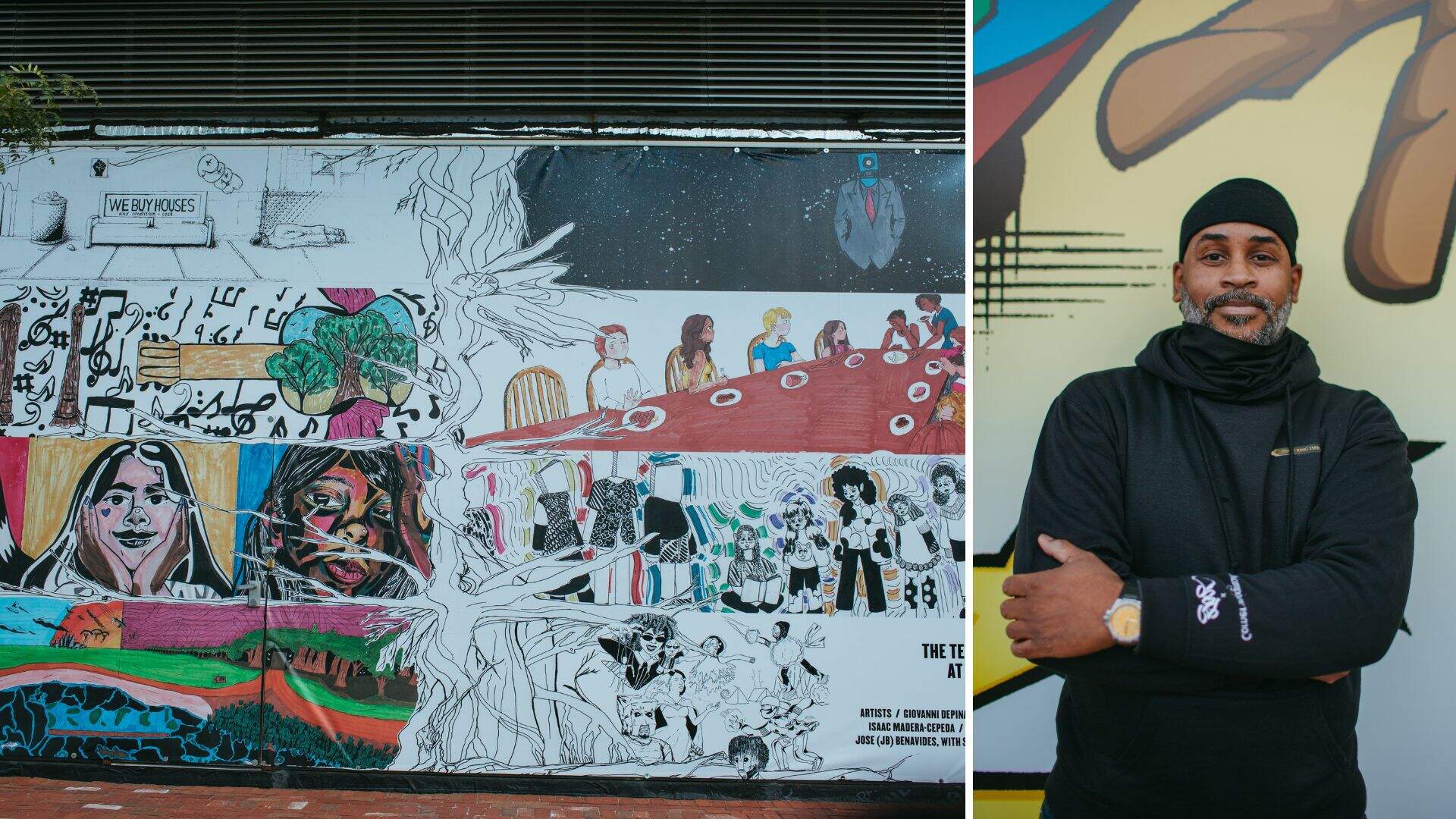
"When he was teaching kids, he would bring his original artwork and pin it up on the wall for them," says Norman. "These kids were in awe of him. He would show the blue pencil drawings and then have finished ink drawings on top of them and he'd share his whole process with them."
Through the Eliot School's art program, Teen Bridge, Stull was able to involve students in the creation of a large vinyl mural as part of the 2021 Fenway Art Walk. " It was installed on the side of a building," Moses recalls. "They did celebrations and artist talks around it. It gave the students the real experience. It was such a positive experience for them to have."
Moses, who looks to Stull as an older brother, says that the important things to him were not the fame or the money or the recognition. "It's the relationship with others that he focused on." Moses and Norman estimate that hundreds of young people learned from Stull throughout his time at the Eliot School.
Stull continued to rise in the last half decade of his life. In 2019, he was the first Black artist to become artist-in-residence the Museum of Fine Arts, Boston, where he created banners that hung on the museum's façade. The banners were part of the museum's exhibition "Writing The Future: Basquiat and the Hip-Hop Generation," which showcased the cultural importance of graffiti, hip-hop and street art. The Isabella Stewart Gardner Museum selected him as a Luminary artist and he organized programming that examined how and why the world values certain art forms above others.
In the wake of his passing, Stull's family and close friends are considering how to preserve Stull's artwork and legacy.
"We're trying to make sure that his art is presented in places that inspire and create opportunities and possibilities," says Lee. "Rob was not making a whole bunch of pieces for people to write big checks and put in their private collection. He cares so much about the younger artists, he sees himself in them."
While Stull's work was part of a prolific and inspiring career, he was much more than his accomplishments or accolades. He'll be remembered for his art but he'll also be remembered for his hats (something he picked up from his father,) snazzy sneakers and his signature crossbody bag.
Friends and family say that what people will really recall is his constant support of others and how he uplifted the artists around him. They'll think of how he helped cultivate a thriving cultural ecosystem. "I want people to remember the legacy of his connections to other people," says Garrido. "I want people to remember the human."
For those closest to him, there's a desire for Stull's legacy to go beyond what he created artistically. " He was strong," Lee says. "He was mighty. And he mattered. And he will continue to matter."