Support WBUR
Do ICE agents need a warrant to make arrests? Often the answer is no
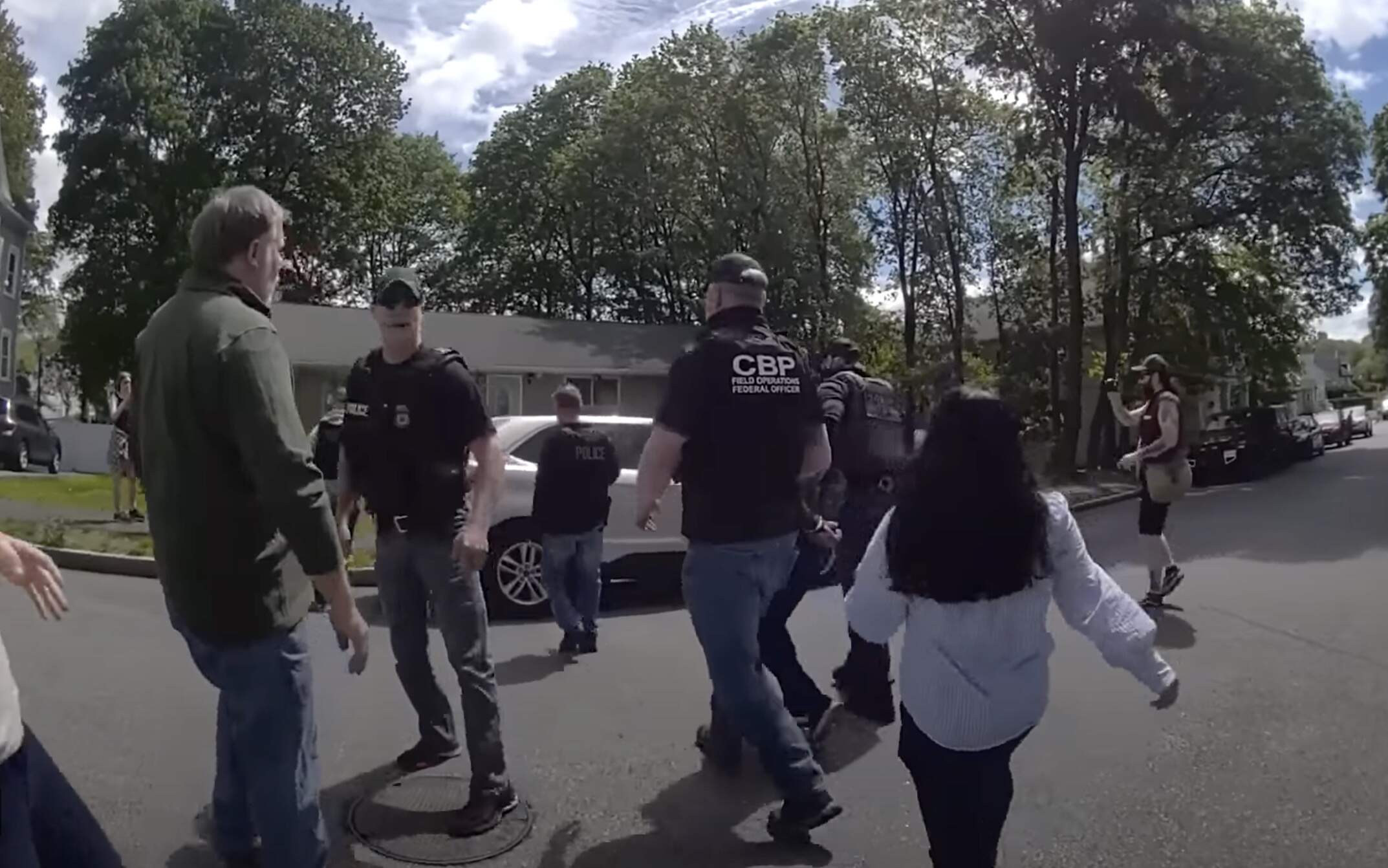
As ICE agents apprehended a Brazilian woman on a Worcester street earlier this month, bystanders tried to interfere, chanting “Where’s the warrant?” One person called police to complain that federal agents were allegedly making warrantless arrests, according to a 911 recording.
Questions regarding ICE protocols swirl as Massachusetts communities witness a surge in immigration arrests. In Worcester, agents simply ignored the demands to see warrants.
Contrary to what neighbors and bystanders sometimes believe, ICE agents often don’t need warrants to arrest people they suspect of being in the country illegally, according to lawyers and law enforcement officials.
“That's absolutely ludicrous for the public to get involved” when law enforcement officers are trying to make an arrest, said Bruce Foucart, who served as special agent in charge of ICE’s criminal branch from 2006 to 2015. “They're putting themselves in harm's way.”
Foucart said the agents are correct to ignore bystanders and continue carrying out arrests — regardless of whether they have warrants in a given case.
Under federal law, warrantless arrests are allowed in certain circumstances. Agents can detain people without warrants based on “probable cause” — a subjective standard that allows them to target a wide swath of people.
In civil immigration enforcement, a warrantless arrest can be justified based on suspicion that a person is in the country illegally, and the belief that the person would flee before a warrant could be obtained. That’s according to Lindsay Nash, a law professor at Cardozo School of Law in New York City who’s written about ICE’s use of warrants.
“I think there are going to be questions about how ICE is exercising that authority right now,” said Nash.
Civil rights experts distinguish between two kinds of warrants — judicial and administrative — and there’s a key difference between the two. Criminal arrest warrants are issued by judges and allow officers to enter private spaces protected under the Fourth Amendment. By contrast, ICE warrants are “administrative,” meaning they’re signed by an agency staffer.
Administrative warrants don't entitle ICE to go into someone's home. That’s one reason so many arrests recently witnessed in Massachusetts are happening in public settings.
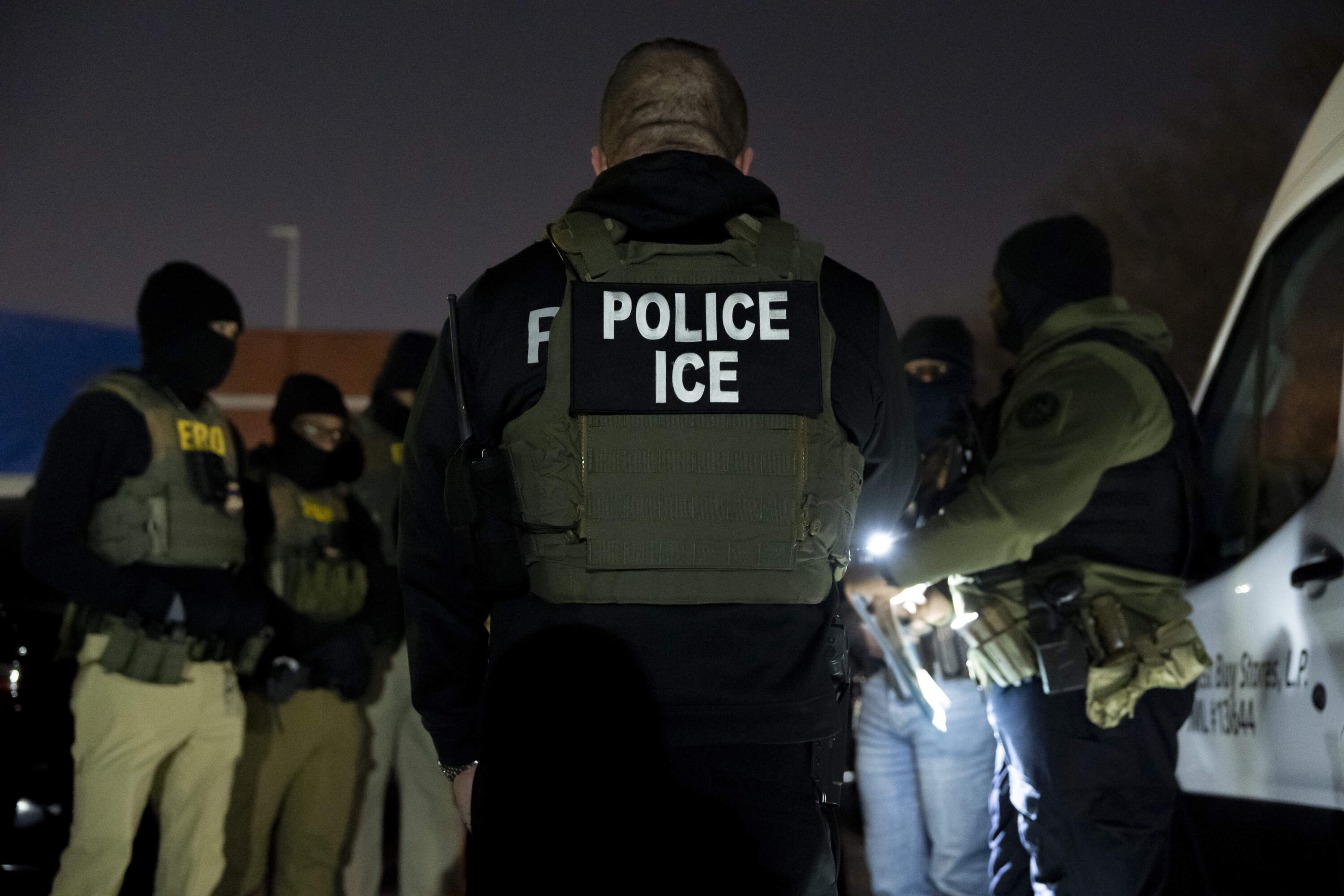
Nash wrote in the Stanford Law Review that neither the Constitution nor the Supreme Court has specified when warrants are required for deportation-related arrests.
In several cases reviewed by WBUR, immigration lawyers said their clients were arrested without warrants.
Warrantless arrests were challenged under the first Trump administration. Plaintiffs in the Chicago area argued that agents racially profiled people in heavily Mexican neighborhoods in a broad immigration sweep.
The lead attorney on the case, Mark Fleming, said in an interview that the recent surge of ICE operations in Massachusetts echoes what led to the Chicago lawsuit.
Fleming said it’s common for ICE to have a short list of targets, people who may have recently interacted with the criminal justice system, and then to use those as “a pretext or a strategy to then swoop up significantly more collateral arrests.”
"Collateral" is what agents call the extra people they grab while out hunting for someone else. It’s a practice top immigration officials embraced during Trump’s first administration, and are now openly implementing again.
The Chicago case resulted in a settlement in which ICE agreed to document warrantless arrests, and to train officers about what’s required to make those arrests. The settlement expired earlier this month; Fleming is asking a federal judge to reinstate those terms, alleging that ICE has skirted the rules — by issuing warrants after making arrests.
That’s what happened last month in New Bedford, after agents stopped a couple in their car, smashed in the windows and arrested a man from Guatemala. WBUR reviewed the warrant: It was signed by an agent with a time stamp seven hours after the arrest.
The attorney in that case, Ondine Galvez-Sniffin, said in this rapidly shifting climate it’s frustrating to try to teach immigrants about their constitutional rights.
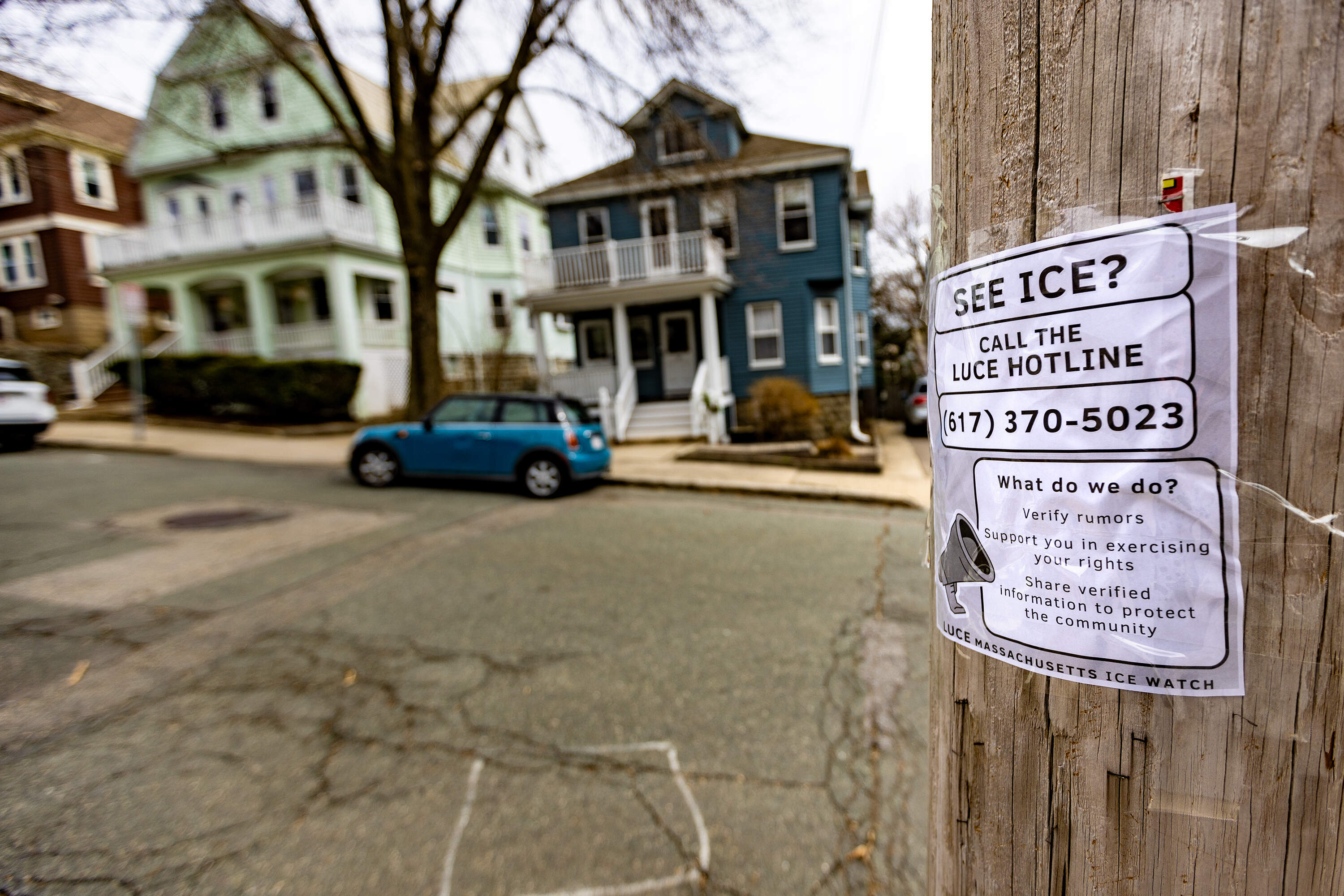
She said it seems “that it doesn't matter if you're exercising your rights that you've been taught about — that you think you can advocate for — because the federal government is going to run right over it.”
ICE did not respond to WBUR’s questions about warrantless arrests.
In court filings, government attorneys have defended ICE actions, arguing that agents need to make quick decisions in the field, and they’re following the law on cases that need a warrant.
Either way, ICE agents have made it clear they’re under no obligation to produce documentation to bystanders — like those demanding it in Worcester.
Thomas Duffy, a Worcester officer and head of the police union there, said the same is true for local cops.
“Confronting the police and demanding a warrant on the scene — it's not something the public has a right to demand,” Duffy said. “If I'm arresting an individual for a warrant or have a charge for them, and another random resident comes up to me and asks me why am I arresting so-and-so, I have no obligation to tell them.”
However, the public can review booking details at local police stations.
ICE is not subject to the same transparency rules.
Foucart, the former ICE assistant director, said there can be good reasons why ICE doesn’t disclose information about the people it’s arresting. One is to protect a detainee’s privacy, he said; another is in case the person becomes an informant.
“If that individual decides to cooperate with the government maybe, and with ICE, and provide further information regarding criminal activity, why would you want to put that person's name out there?” Foucart said.
But advocates question whether ICE has the best interests of detainees in mind. Some of the recent arrests in Massachusetts have been shocking — five agents tackling a man in Watertown; two hours of chaos in Worcester; agents smashing a car window smashing to get access to a man in New Bedford; a harrowing multi-state transport after a Tufts student who didn’t know her visa was revoked was picked up by plainclothes agents.
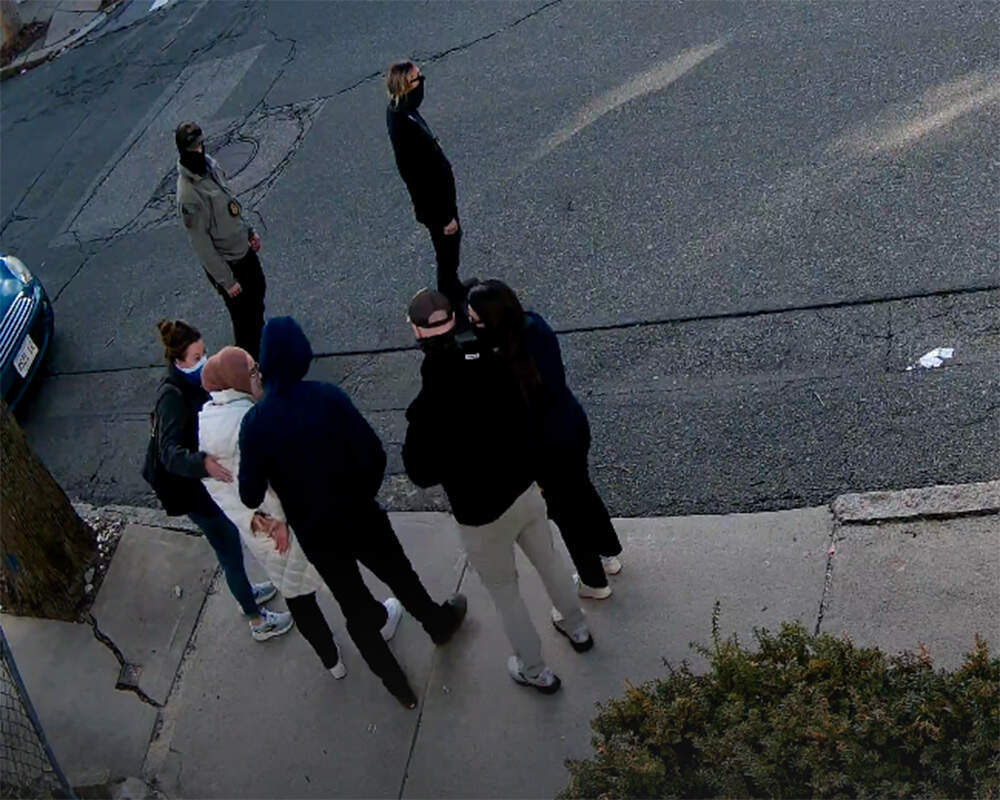
Several of these cases have drawn national attention, and in each instance, the public has excoriated ICE’s handling of the arrests.
Nash, the law professor, said people are witnessing “something new and different” from ICE.
“They're seeing an agency that seems to feel empowered to come very, very close to the line, and across the line in some circumstances,” she said. People are “feeling like this can't be allowed, this can't be legal.”
This article was originally published on May 22, 2025.
This segment aired on May 22, 2025.