Support WBUR
As Trump targets Harvard's foreign student enrollment, scholars worry about the future of U.S. innovation
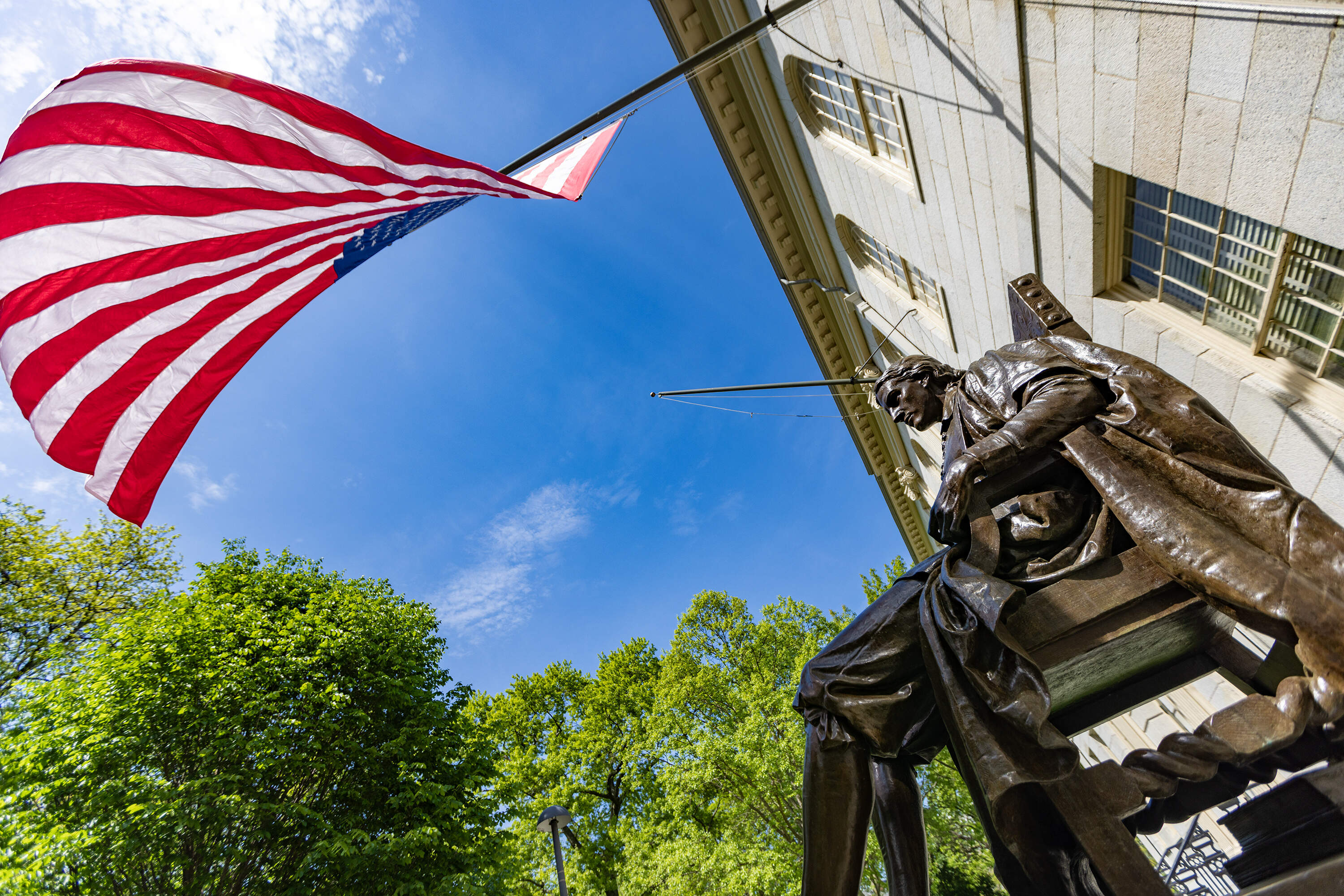
For international students in America, these are disconcerting times. The ripple effects of President Trump's attempt to end Harvard University's right to enroll foreign students are being felt across the region and the country — and could threaten research, science and innovation for years to come.
Alison Frank Johnson is a professor of history at Harvard, currently on a fellowship in Germany, working on a book about antisemitic myths. She's concerned that other countries are already poised to scoop up foreign students who might feel unwelcome in the U.S.
For example, government officials in Hong Kong have called on the city's universities to open their doors to those affected by Trump's attempted ban on foreign students. Ireland wants to become a “first choice” destination for international students; and Germany's minister of culture has talked about establishing a research university for "scholars in exile from the United States."
"Other countries are ready to poach researchers doing the kind of work that they understand is valuable, even if the Trump administration doesn't," Frank Johnson said.
"Losing our international students — there is no way to exaggerate how devastating that would be," she added.
Just the threat of expelling foreign students could cause irreparable damage to research projects decades in the making, according to Frank Johnson.
Harvard has pushed back against the Trump administration, which accuses the university of antisemitism and of promoting “leftist” points of view. The government has frozen more than $3 billion in research grants and contracts.
But stripping Harvard of its ability to enroll foreign students could be the biggest blow of all. They comprise more than a quarter (27%) of the entire university's student population, numbering close to 7,000.
The administration has demanded the university turn over information about these students. Last week, Trump went so far as to say Harvard should cap their numbers at 15%.
"I want to make sure these are people that can love our country," Trump said at the White House. "We don't want to see shopping centers exploding. We don't want to see the kind of riots that you had," Trump added, in a misleading reference to last year’s protests against Israel’s war in Gaza. While sometimes raucous, the vast majority of protests were peaceful.
Critics of the president say his actions against Harvard threaten not only free speech, but a major source of U.S. competitiveness: the more than 1.1 million foreign students enrolled at the nation's colleges and universities, many of whom are engaged in cutting-edge research in medicine, technology, environmental sciences and the humanities, helping to make Harvard — and many other American universities — the envy of the world.
Foreign students across the country also contribute $44 billion a year to the U.S. economy, according to the Association of American Universities.
Ted Mitchell, president of the American Council on Education, said international scholars are among the reasons that "American higher education is a crown jewel of the nation."
"The international students who come here are quite often the very best, the very brightest, the most ambitious from all over the world," Mitchell said.
And when these students graduate, they do one of two things, according to Mitchell: They land work in the U.S., where they have an outsized impact on entrepreneurship, as well as scientific and biomedical innovation. Or they go back home and spread American democratic values.
"It makes little sense for the Trump administration to be cutting off this important part of what Harvard provides to the U.S. and the world," he said.
For its part, the Trump Administration is doubling down on its campaign, announcing last week that it plans to revoke the visas of many Chinese students, who make up one of the largest groups of foreign scholars in the U.S.
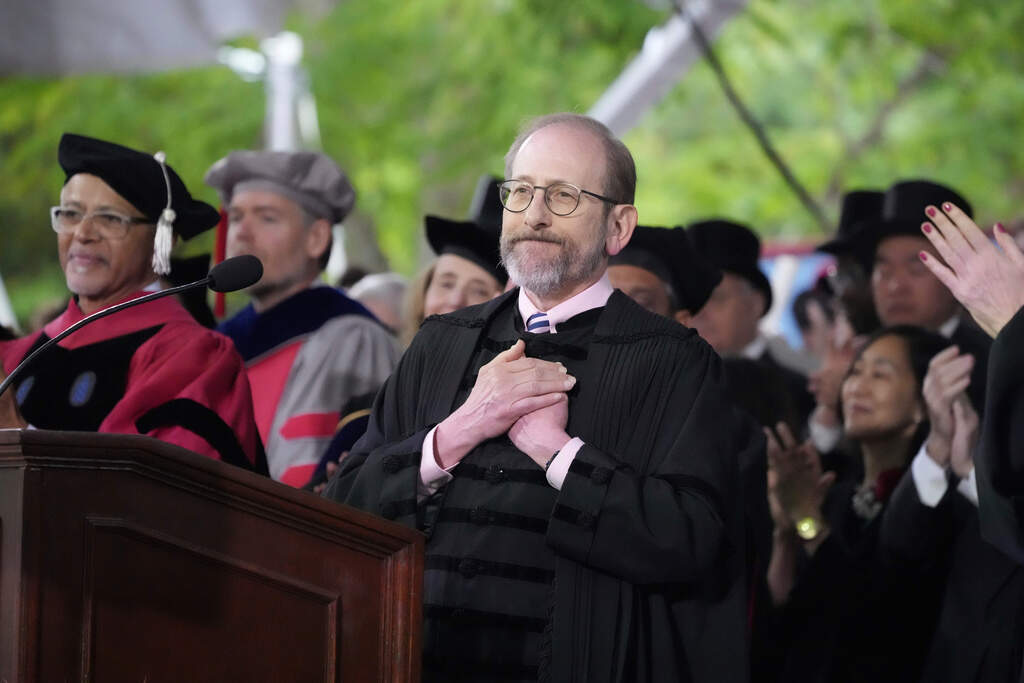
At last week's Harvard commencement ceremony, mindful of what's at stake for the nation's oldest university, University President Alan Garber took a not-so-subtle shot at the Trump administration as he addressed the class of 2025 "from down the street, across the country and around the world," prompting a standing ovation from students, families and faculty.
"Around the world," Garber repeated, adding, "Just as it should be."
Despite Garber's words of support, many international students say they're in a state of limbo.
"I think for many of us, there's a huge amount of uncertainty," said Francesco Anselmetti, an Italian-British dual-national citizen pursuing a PhD in Harvard's Joint Program of History and Middle Eastern Studies.
Anselmetti is currently doing research in Greece, and he's worried about getting back into the U.S. Like many graduate students, Anselmetti is a teaching fellow — so at stake is not only his scholarship but the way he makes a living.
"Most of us don't have the privilege to be able to simply transfer to another university or find other forms of employment," he said.
A foreign scholar from Toronto also expressed alarm over the situation. Chris is a graduate student at Harvard pursing a dual degree; WBUR agreed to use only his first name, because he fears retribution from the government.
He called the Trump administration's assault on foreign students "frightening and devastating."
Chris said he's afraid that his life-long dream of completing his studies at Harvard, and all the work he's done, could be "ripped away." He's also worried that his professional goal — finding ways to reduce economic inequality — will be derailed.
"For me, it's economic inequality. For another student, it might be health care research," he said. "And when a presidential administration attacks students, attacks the university, we all lose."
Chris said because foreign students like him are suddenly on "shaky ground," they might have to continue their education elsewhere — what he called making "a flight to safety." Others might call it a loss for America.
This segment aired on June 4, 2025.