Support WBUR
OMG, why is it raining every Saturday in Boston?
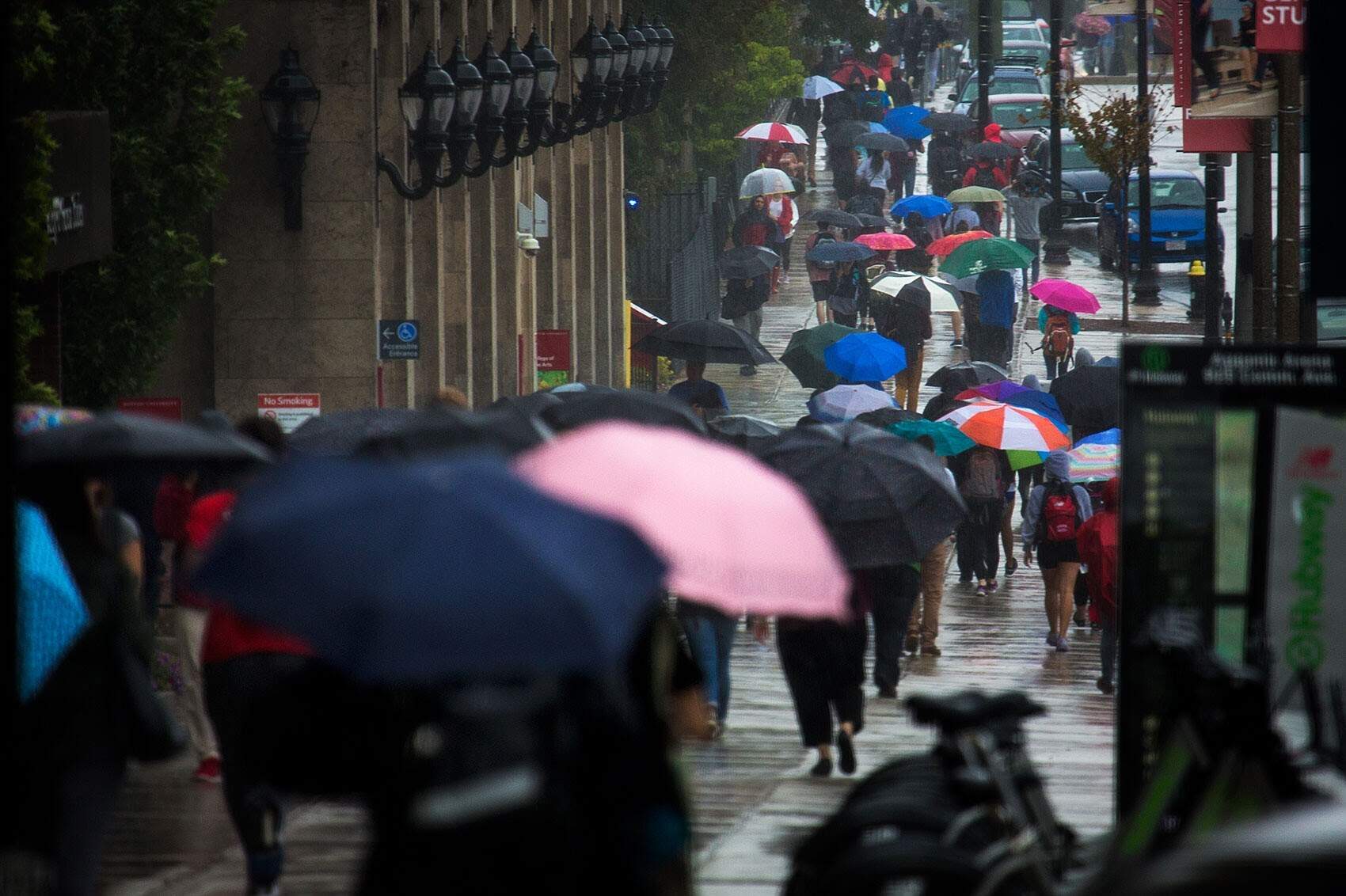
Perhaps you were thinking this Saturday you would finally head to the beach, take that hike, enjoy a stroll through the sculpture park.
But no. Looks like rain is coming, again.
There have been 12 Saturdays in a row with rain, according to Danielle Noyes, WBUR contributor and meteorologist with 1 Degree Outside, a weather forecasting company.
And yes, more is coming, forecasters say.
The grass may be lush and green, but many people are not happy.
So ... what gives? Is Boston cursed? Is this climate change? Have we angered the weather gods? Or is there a scientific explanation?
WBUR went down a muddy rabbit hole looking for answers. Here's what we found.
Does all this weekend rain have something to do with air pollution?
One of the folks from the Reddit Boston community threw this idea into the ring: "I've read that one theory is that it's related to air pollution that builds up during the week due to heavier traffic."
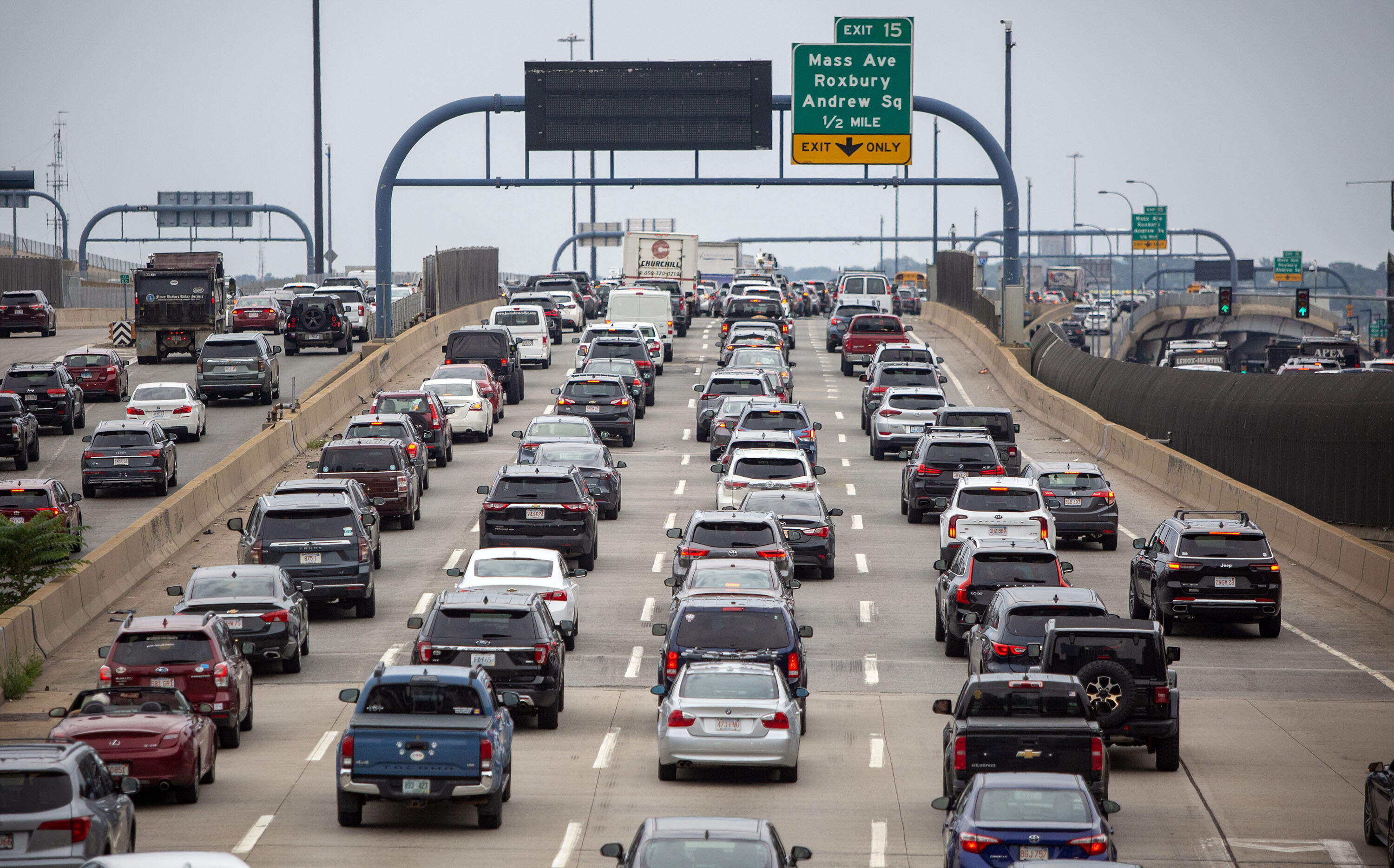
This theory has been around for a century or so, and it has a name: the weekend effect. The basic idea is that pollution from cars and factories builds up during the week, culminating in a big Friday afternoon pollution cloud. This pollution helps form rain clouds, which dump rain all over your Saturday. The process starts again the following week.
The weekend effect is "real in some respects," said Lucy Hutyra, a professor of Earth and Environment at Boston University. Burning fossil fuels like oil and gasoline releases pollution, including carbon dioxide; people burn less fossil fuels on the weekends, "so you can see differences in the amount of CO2 in the air," she said.
One type of pollution is particularly important to this story: little particles of soot and gunk called "particulate matter."
Particles of the right size — not too big and not too small — float into the atmosphere and create little landing pads where water vapor can condense, said Maura Hahnenberger, an associate professor of Earth and Environmental Sciences at Salt Lake Community College in Utah. These "cloud condensation nuclei," as they they're called — whether they are dust, pollen or pollution — are necessary for rain clouds to form, she said.
In 2008, Hahnenberger co-wrote a paper looking at whether air pollution could influence rainstorms, and she did find a statistically significant correlation between pollution and rain. But it happened around Wednesdays, not Saturdays.
Turns out, most air pollution doesn't actually build up over the course of a week — it disperses over the course of a day.
"The weekly effect is really more like a daily effect," said Hahnenberger. (An exception is an "inversion" when a layer of warm air traps cool air underneath, allowing pollution to build up into a smoggy haze.)
Hahnenberger isn't sure why the biggest effect happened midweek. ( "Sometimes maybe there's like holidays on Mondays or Fridays?" she offered.) But regardless, the pollution was certainly not driving the formation of rainstorms, she said.
She also pointed out that particulate air pollution has improved dramatically in the U.S. over recent decades, dampening any possible effect.
Other research has called into question whether this pollution effect exists at all, and how significant it may be, said Matt Barlow, a professor of climate science at the University of Massachusetts, Lowell.
His inconclusive conclusion: “The jury is maybe still out as to whether perhaps in some locations it may have some modest effect.”
Safe to say, pollution is not the main culprit for rainy Saturdays in Boston.
Maybe it's the jet stream?
The jet stream is a fast-moving ribbon of air that zips around the Earth affecting the weather. BU's Lucy Hutyra pointed out that the jet stream often bends and twists right around Boston, putting its residents in the "sweet spot of having really variable weather."
The jet stream can sometimes get stuck in big dip or "trough," said meteorologist Noyes.
"Troughs produce stormy weather, and we've had a persistent trough across the northeastern United States during this stretch," she said. "It's here for a few days, and it lifts out and we get another trough that digs in."
Aha! So does this flip-flopping jet stream explain why it rains every Saturday? Well, not exactly, Noyes said. But it's partly why it's been raining so much overall.
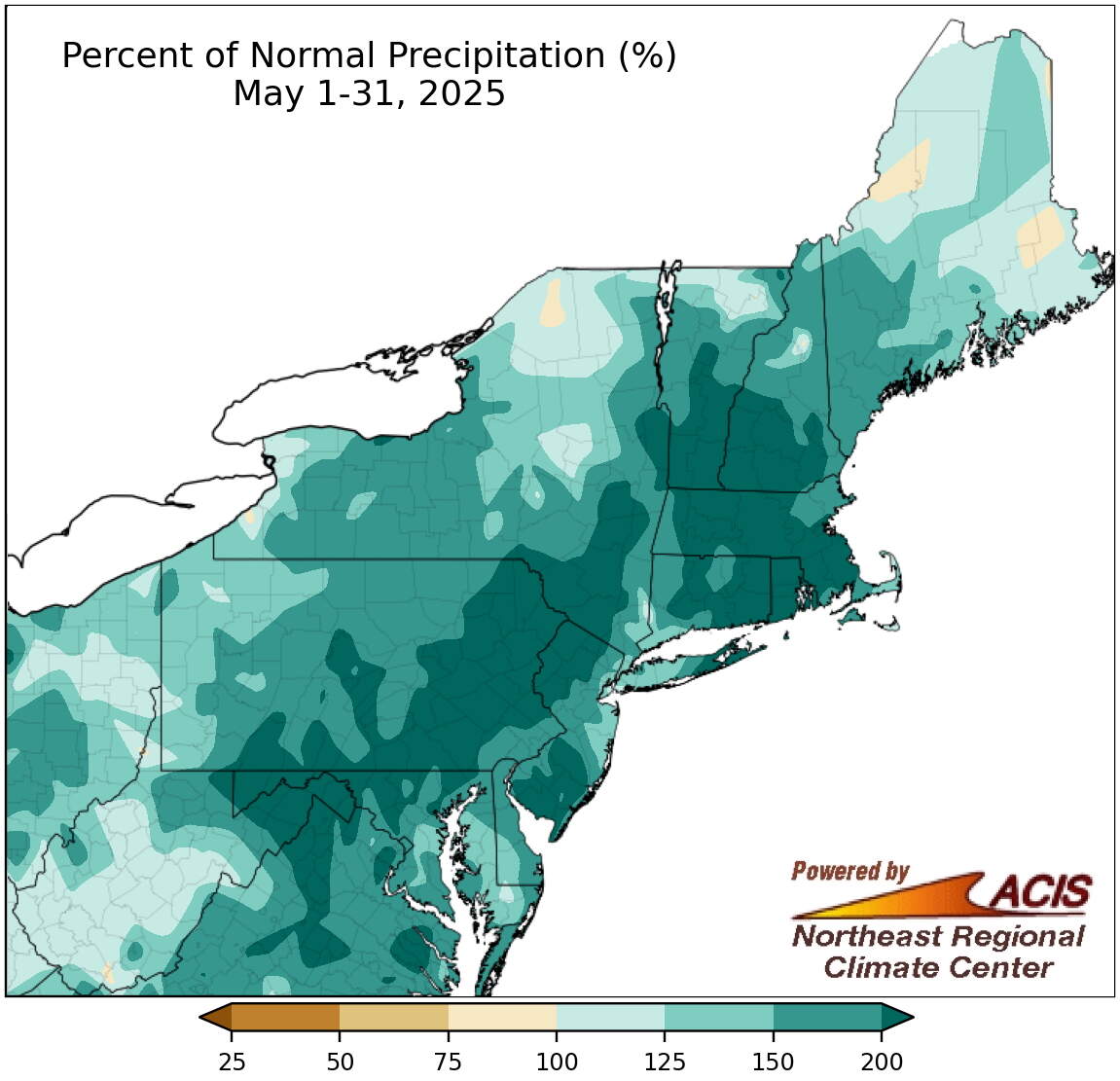
According to the Northeast Regional Climate Center, most parts of the region saw a record to near-record wet May. And as climate change brings more extreme ridges and dips in the jet stream, Noyes said, more extreme weather will become Boston's new normal.
So you're telling me this is just bad luck?
"Pretty much," said UMass Lowell's Matt Barlow. "It's been a wetter than average season, so probably folks are gonna notice that."
And wetter overall "means it's also wetter on the weekend," he said.
"Ordinarily I'm talking about some really devastating flood or wildfires," he added. Compared to that, rainy weekends don't seem like such a disaster.
Barlow offered another reason to be thankful: decades of reliable weather data, which allow us to answer — or at least ponder — these interesting (and sometimes important) questions. But that whole system is in jeopardy, he said.
"The weather service centers are not fully staffed, we're sending up fewer weather balloons, there are proposals for massive cuts to our satellites," he said. " So our ability to say anything about all of these things is already considerably worse than it was six months ago. And it may get much, much worse as we go forward."
For now, I say: Embrace the rainy weather! At least you won't have to water the garden on Saturday.
Keep an eye out for a future episode of WBUR's podcast Endless Thread, where we discuss this endless rain with humor and improvisational song.
This article was originally published on June 06, 2025.