Support WBUR
Blue Man Group ends its 30-year run in Boston
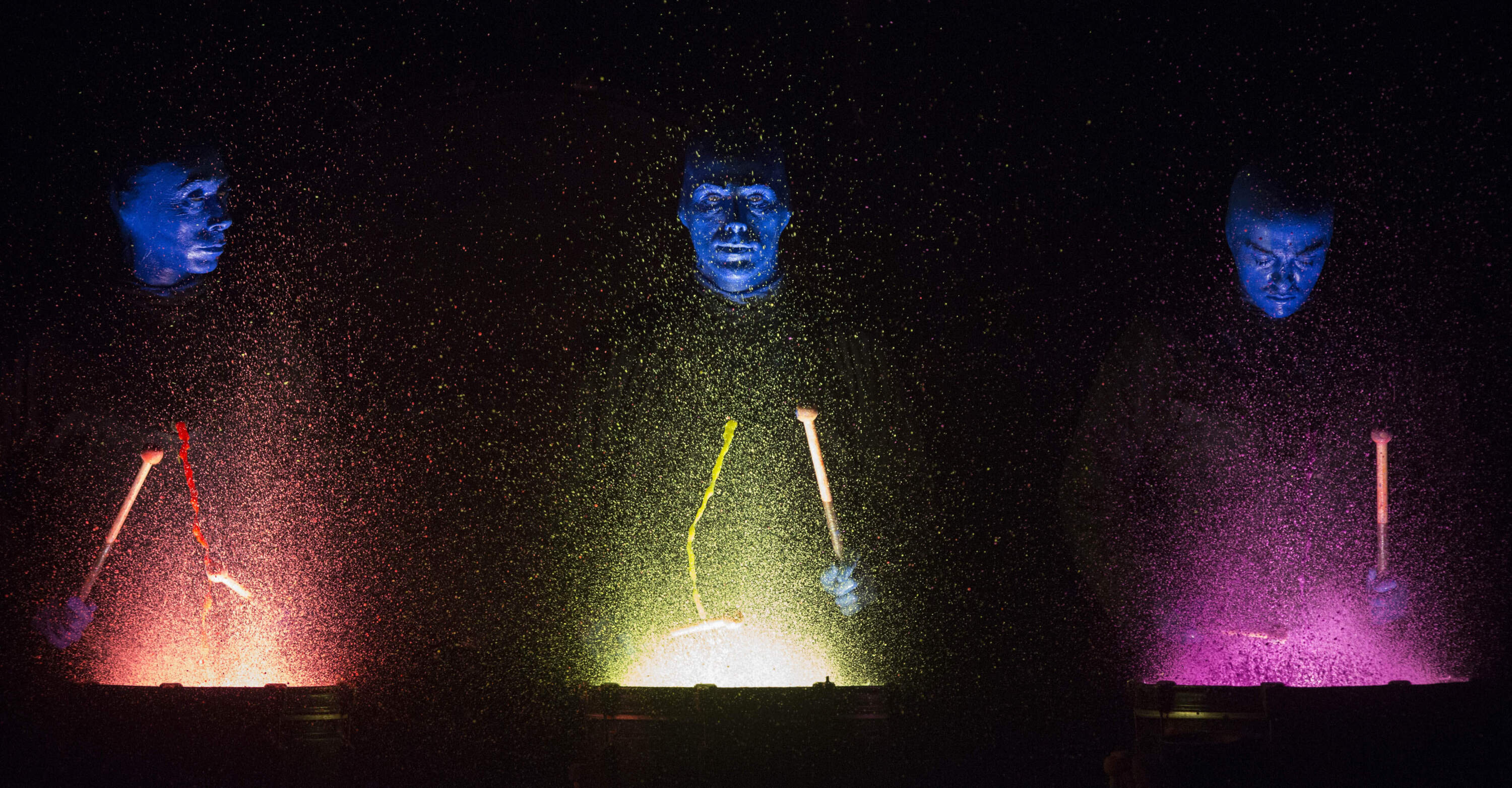
Blue Man Group is wrapping up its residency in Boston on Sunday, banging out the final notes of its 30-year run in the city.
" We initially were thinking this would maybe be two or three months, and that would've been considered a success," said Jonathan Screnci, general manager and a former performer with the group. "And it's incredible that 30 years later, we've done over over 13,000 shows. It's been, you know, an amazing journey."
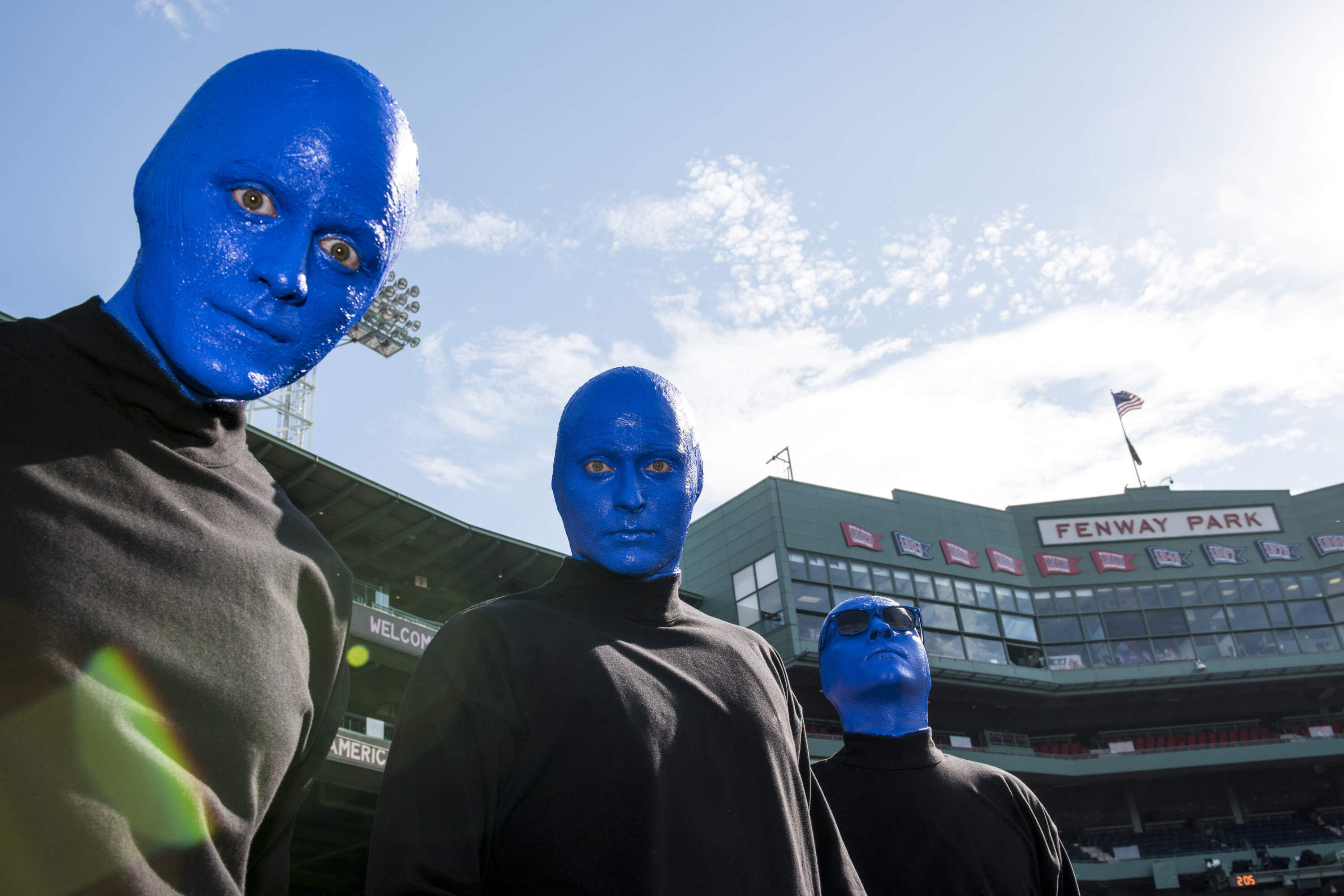
For those unfamiliar with the set up, the show always revolves around three bald blue men dressed in black. The whites of their eyes pop against their painted skin, giving them an almost alien-like quality.
They're accompanied by three musicians and make percussive music, often with non-traditional instruments like PVC pipes. Sometimes, they'll splatter paint or dance. But the blue men never speak.
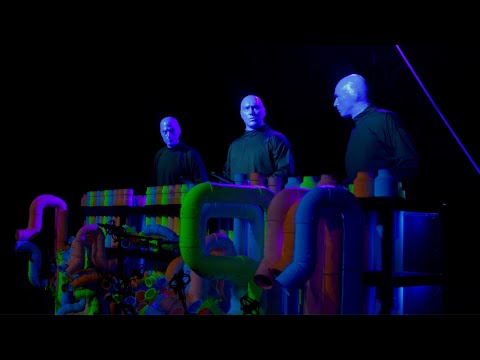
The group began as performance art project in New York in the 1980s and early '90s, transforming into a theatrical act before expanding to a Boston residency at the Charles Playhouse in 1995. Blue Man Groups has since put up residencies in other U.S. cities, toured the country and taken their shows worldwide.
Screnci said the show blends elements of music, comedy, science and pop culture, and can change each performance.
" It's not a canned experience," he said. "The performers are allowed to take inspiration from the atmosphere or the moment and the environment. And I think that's something that resonated with people."
While tourists passing through Boston attended the shows, Screnci said the audience skewed local. And people who came often would return to see the show again.
" They sometimes come for their first date and then they come back a few years later and bring family members," he said. "In our last like 10 years or so, [it] was people bringing their families back now that they have kids and sharing in this thing."
Blue Man Group has been a key figure in the city over the years, partnering with local organizations like the Boston Pops, the Children's Museum and Red Sox, said Screnci.
"We were a show, but we were also a part of a community," he said. "And I think that was something that everyone will carry forward and something we're maybe most proud of."