Support WBUR
The Weekender: Boston's Saturday Morning Newsletter
What's the difference between a frappe and a milkshake in New England?
Editor's Note: This is an excerpt from WBUR's Saturday morning newsletter, The Weekender. If you like what you read and want it in your inbox, sign up here.
It’s not hard to find a milkshake in Massachusetts. But if you’re planning to order a cold, creamy drink off the menu at a local ice cream shop or farm stand, the confection you seek might be going by another name.
In New England, you'll often hear the word “frappe” used to refer to a blended drink made with ice cream, milk and other flavors or mix-ins. You’ll see it on the menu at diner counters and Massachusetts-based ice cream chains. Sometimes, you'll even see it on the menu alongside milkshakes.
So, is frappe not just a regional moniker, but an entirely separate culinary entity? And if so, what's the difference?
I had to find out.
What makes a frappe
Like many local oddities, the difference is rooted in our history.
“Boston’s different,” said Jeri Quinzio, author of “Of Sugar and Snow: A History of Ice Cream Making.” For decades, ordering a milkshake in New England would get you a drink with no ice cream at all.
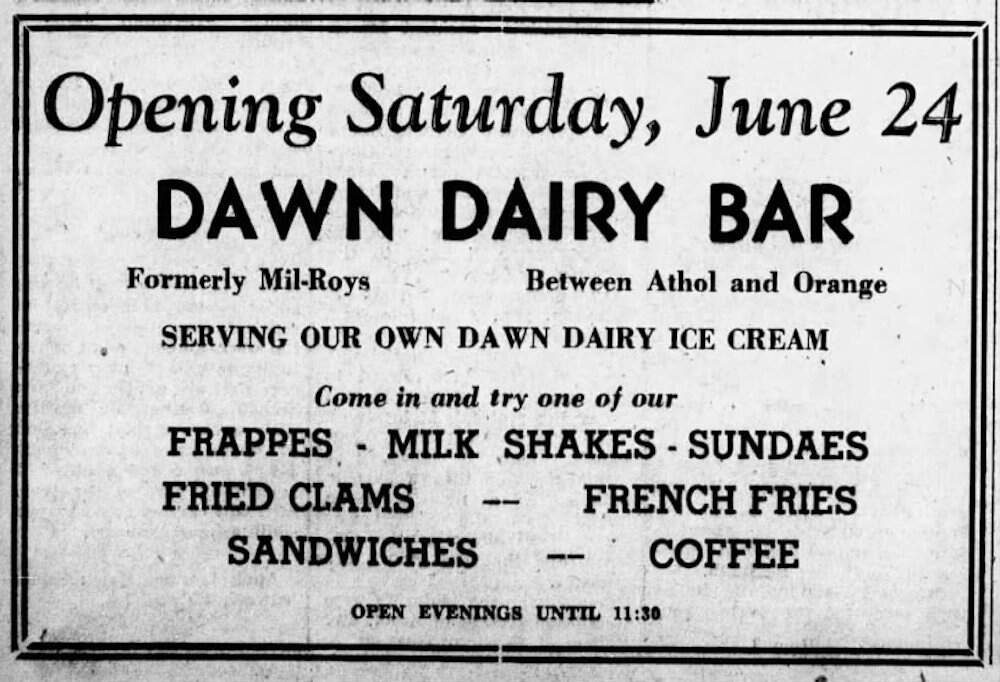
Following the advent of the soda fountain in the late 19th century, a milkshake was just "milk and maybe a squirt of seltzer,” said Quinzio. "A frappe contained ice cream, and it was a richer, thicker drink."
It wasn’t until around 1915 that milkshakes containing ice cream became à la mode nationwide, according to a passage on frappes by Clara Silverstein in "The Oxford Encyclopedia of Food and Drink in America." However, the ice cream-less milkshake stayed in fashion in New England — as did the distinction. (After all, New Englanders love their regional terminology.)
"Nationally, people were calling what we call a frappe a milkshake, but in New England, we kept using frappe," Silverstein told me.
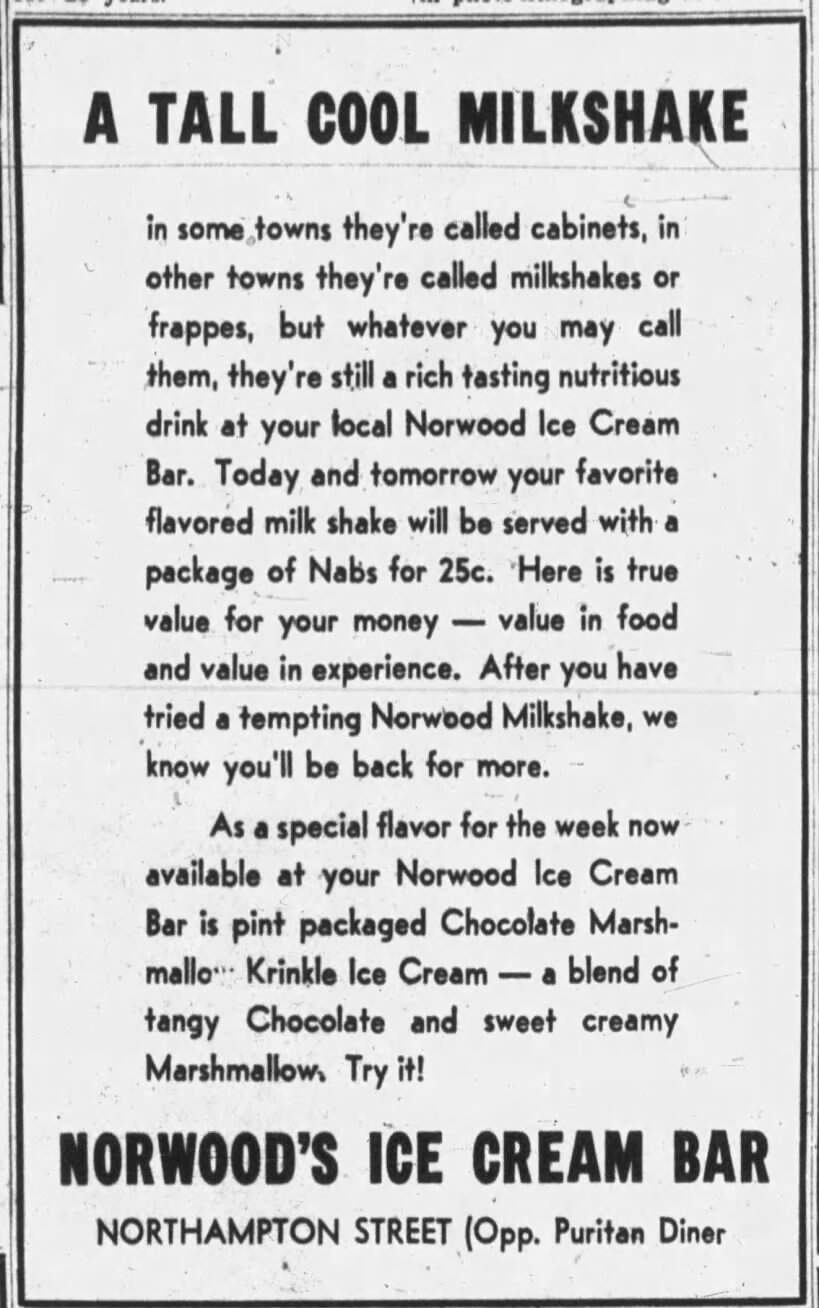
Gus Rancatore, the owner of the Cambridge-based ice cream shop Toscanini’s, told me that despite growing up in New York, he became familiar with the distinction between milkshakes and frappes during trips to see family in Lawrence and Andover.
"A milkshake was simply milk and syrup that was agitated with a blender or 'frappe machine,'" Rancatore said (and yes, ice cream businesses run in the family). "A frappe [here] contained milk, syrup and ice cream and was identical to what New Yorkers called a milkshake."
Silverstein remembers getting ice cream-less milkshakes back in the '80s at Morse Tavern in Natick, where the drink was "literally shaken milk, very cold, without ice cream."
“You don’t see that so often anymore," she said.
Meanwhile, Michael Bissanti, a managing partner at Veggie Galaxy in Cambridge insists a frappe is defined by a certain thickness: “Thin enough that you can suck it up through a straw and not too thick that your eyes pop out of your head while you’re trying to get it up through the straw,” Bissanti said.
Why we say “frappe”
While the historic difference between a frappe and a milkshake is well-documented, the local origins of the word “frappe” itself remain somewhat elusive.
According to word researcher and historian Barry Popik, the word “frappe” was first used in New England to describe a frosty blended coffee drink in Boston in 1868. “There were also champagne frappes available too, which were kind of like a 7-Eleven slurpee,” he added. (Who knew they had frosé in 1868?)
Greece is also home to frappés — a shaken iced coffee drink with a thick froth on top. However, the Greek frappé didn’t come onto the scene until 1957, and by then, New Englanders had been using the term for decades.
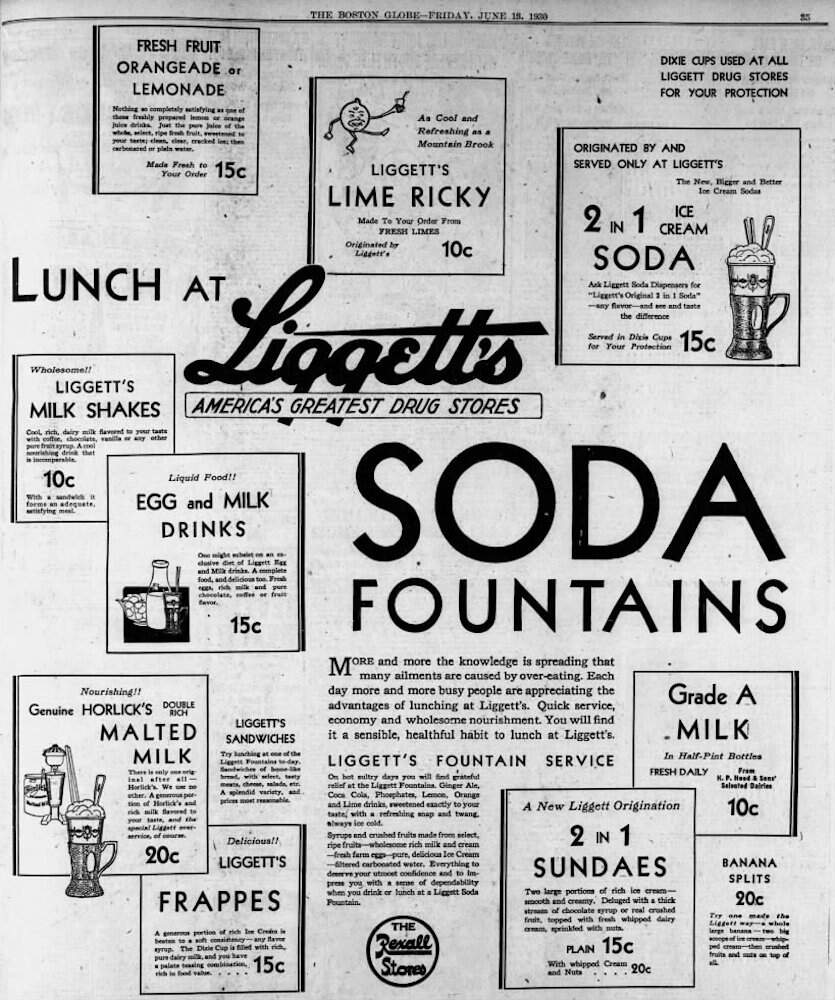
Popik said newspapers began to mention ice cream frappes more often once the electric drink mixer came on the scene in the late 1910s. “And by 1930, Liggett’s Drugstore had clearly defined frappe,” said Popik.
A musical comedy set at a soda counter in 1905 called “A French Frappe” might also imply a French connection. In French, the verb “frapper” can mean to hit or to shake, both steps someone might take to create this frozen, blended drink. But “there’s no clear answer as to why it became known that way in Boston,” said Silverstein. “It’s sort of mysterious, but somehow it stuck.”
What's the difference nowadays?
Many locals and ice cream shops use milkshake and frappe interchangeably, but you can still find spots with both on the menu.
When Don Levy opened Deluxe Town Diner in Watertown in 2000, he didn't know the difference — until "our customers corrected us" and he added the ice cream-less milkshake to their menu. (It's just milk, shaken with chocolate, vanilla or coffee syrup.)
He says people still order the old-fashioned Massachusetts-style milkshake. “We have to tell them it doesn’t have ice cream though,” said Levy.
“I know when people order milkshakes they are generally from New York,” said Levy. “Most everybody wants a frappe.”
P.S. — Where do you like to get frappes — or even better, Massachusetts-style milkshakes? Tell us in this form and your response could be included in a future newsletter.