Support WBUR
Discounted T fare enrollment exceeding estimates
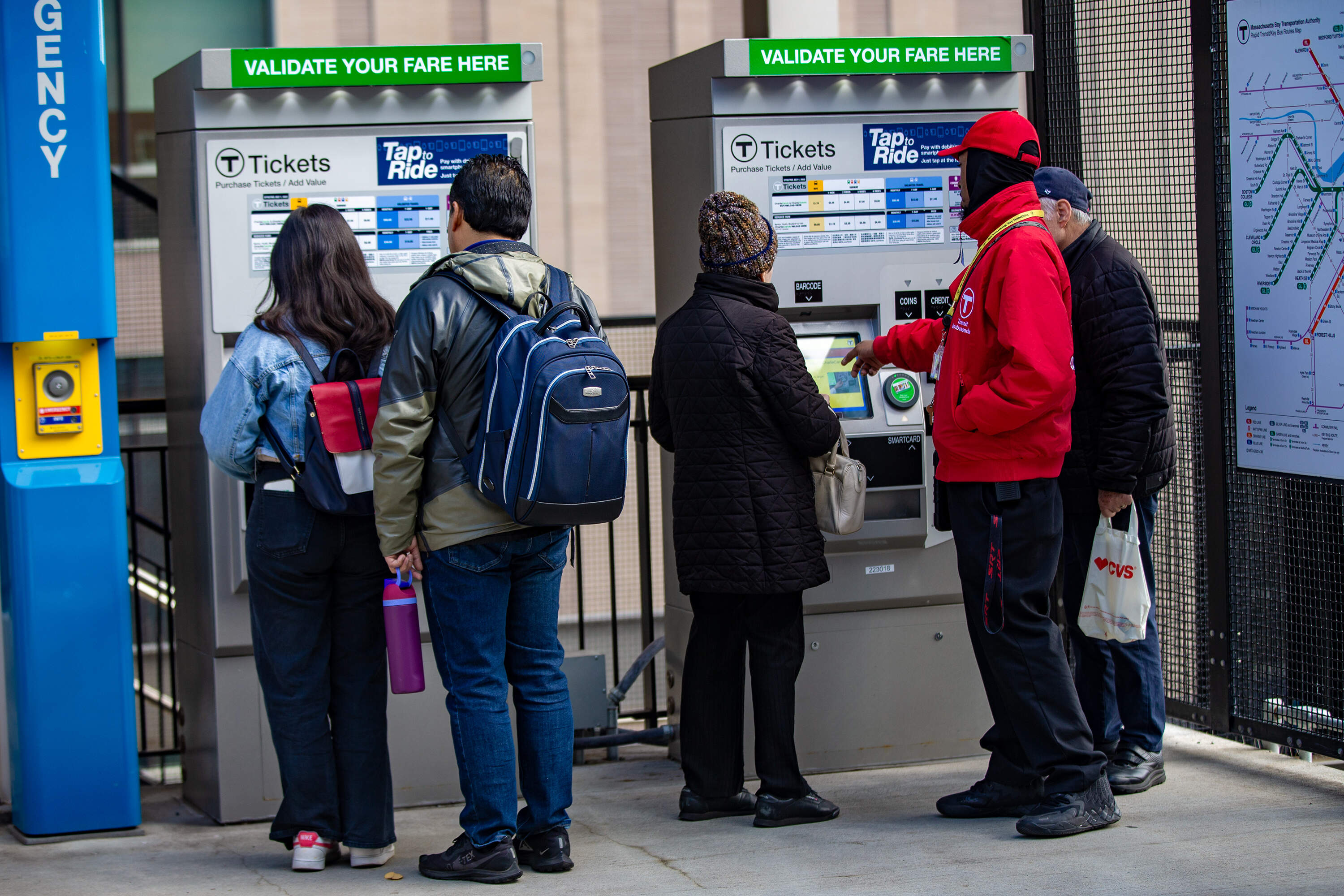
Nearly 30,000 people have enrolled in the MBTA's new low-income fare program in the first nine months after it launched, and 3% to 4% of all trips across the entire system are now made using discount fares, officials said Thursday.
Since Sept. 4, riders who earn less than 200% of the federal poverty level — $31,300 for an individual or $64,300 for a household of four — have been eligible to get half-priced fares across the MBTA network.
David Churella, the MBTA's senior director of fare policy and analytics, told the agency's board that more than 29,800 applications have been approved through July 15.
More than 13,000 of the approved applicants live in Boston, representing nearly 45% of the total pool and far more than any other municipality, according to MBTA data. Quincy (1,413 enrollees), Malden (1,316), Cambridge (1,115) and Revere (951) were the next most common communities.
Within Boston itself, the most common neighborhoods from which applicants hailed were Dorchester, East Boston and Beacon Hill.
Before the program launched, the T projected that 25,000 to 29,000 fixed-route riders would enroll in the first year. Officials forecast the annual membership would grow to 62,000 by the fifth year, generating millions of additional trips in the process as well as increasing usage — and costs — of the RIDE paratransit service.
The legislature and governor provided the MBTA with extra funding, including a total of $45 million in fiscal year 2025, to cover operating costs and foregone revenue as a result of the low-income fare program.