Support WBUR
The Weekender: Boston's Saturday Morning Newsletter
A behind-the-scenes look at how the incredible Revere Beach sand sculptures are made
Editor's Note: This is an excerpt from WBUR's Saturday morning newsletter, The Weekender. If you like what you read and want it in your inbox, sign up here.
If you’ve ever strolled along Revere Beach during its annual sand sculpture festival, those tall, elaborate works of sand-based art may leave you with a question, or two.
“How do you go so high?"
"How does it hold together?"
"What happens when it rains?"
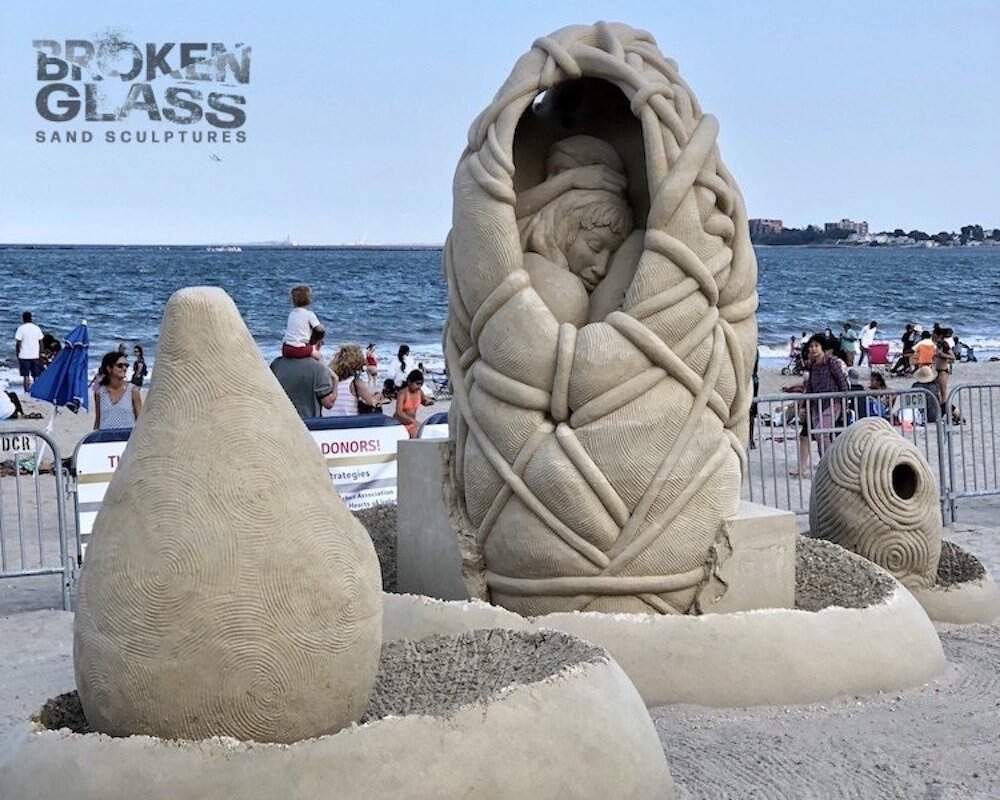
"Those are the main questions that we get over and over,” said Melineige Beauregard, a longtime sand sculptor who has won first place in Revere, most recently in 2019.
For the last four years, Beauregard and her husband, Chris Guinto, have helped organize the Revere Beach International Sand Sculpting Festival. Now in its 21st year, the contest is expected to attract hundreds of thousands of curious visitors this weekend. However, artists have a limited amount of time to create their sculptures, which means “we don’t have a lot of time” to answer questions, according to Ndricim “Jimmy” Bejko, a returning competitor this year.
That’s why I caught up with Bejko and Beauregard ahead of this weekend’s beachfront hustle and bustle to get some answers to the questions sand sculptors often receive.
What goes into making a winning sand sculpture?
First and foremost, you probably need serious sculpting experience.
Bejko, who lives in East Boston, began sculpting clay at the age of 7. He got a fine arts degree in monumental sculpture in his native Albania and has worked as a professional sculptor in Woburn for nearly 20 years. Beauregard has also been sculpting for more than two decades. She says she started with snow and ice sculptures growing up in the Quebec area with her dad, who is also a sculptor.
These sculptors don’t use just any kind of sand, either.
Instead of the sand on Revere Beach, which has soft grains that have been rounded by the tide, the contest supplies its sculptors with a fine, slightly rougher sand from a quarry. These sand grains are “more square” with lots of silt, and can better hold together a vertical sculpture with precise cuts through it, said Beauregard.
“It’s like stacking a bunch of marbles or a bunch of cubes,” she said.
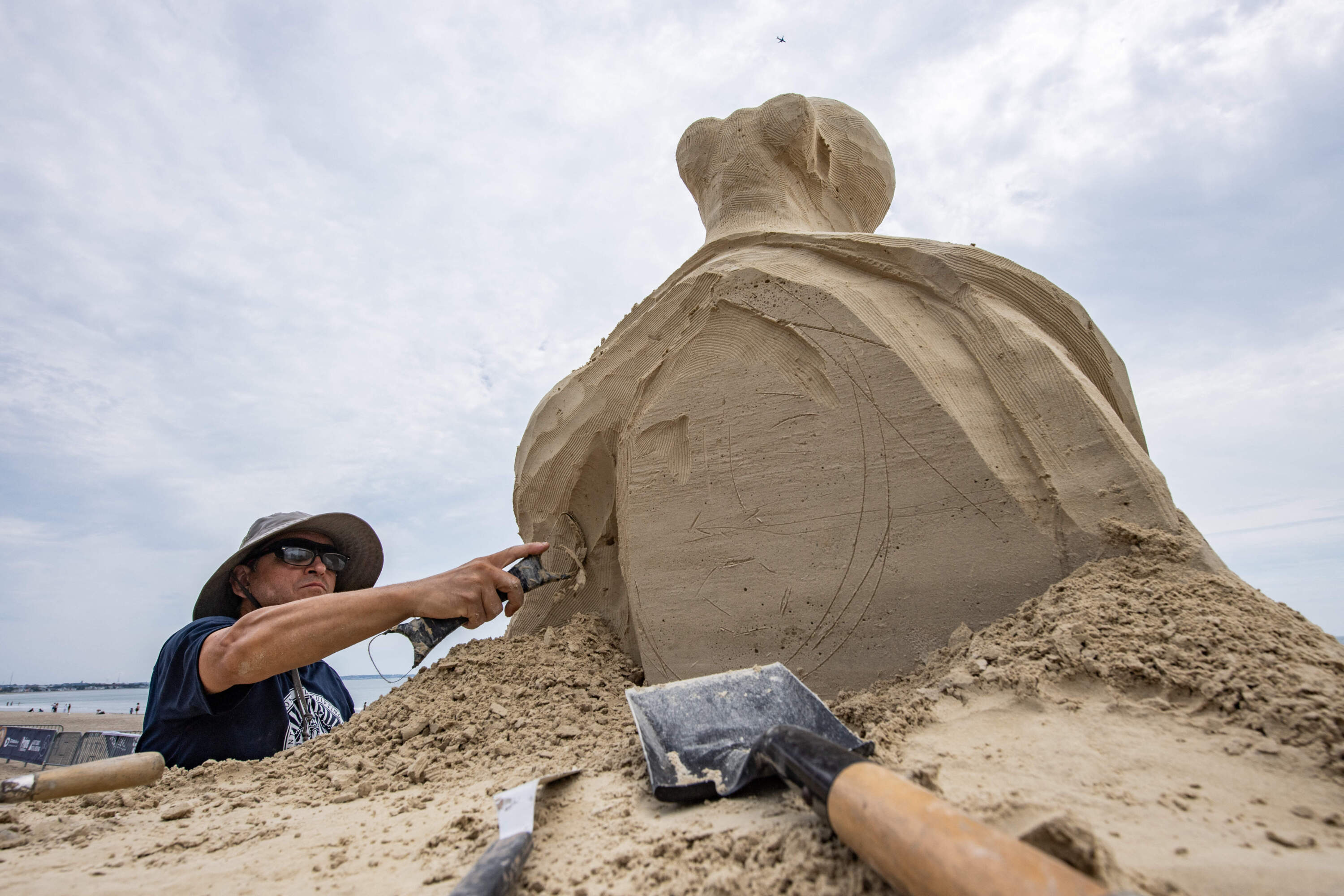
To carve the sand, sculptors use trowels, shovels, knives, and oil painting spatulas.
“And they should be sharp — very sharp,” said Bejko.
Sharp tools help with precision, which Bejko says is necessary when working with such a fragile material. Unlike clay, it’s hard to add sand back onto a sculpture if you make a mistake and a piece falls off, he said.
“Every step you carve, every moment, you should be 100% focused on comparing the volume. You must imagine the weight,” Bejko said. “ It's a beautiful material to work, but very, very, very challenging.”
There are also elements that are out of the artists’ control — specifically weather, like rain. But the sculptors have a trick up their sleeves. It’s common practice to frequently spray a mixture of wood glue and water over sand sculptures to help them withstand the rain. That’s why a light shower won’t wash them away like your average sand castle. “But if there is a strong storm, you cannot do anything about it,” said Bejko.
A look at the 2025 competition
During the festival, competitors have between 8 a.m. to 5 p.m. on Friday and Saturday to construct their sculptures. This year’s theme is “America 250” in honor of the 250th anniversary of the American Revolution. There will be 16 sculptures, including a large centerpiece depicting Paul Revere’s midnight ride. (Revere Beach also has its own foothold in American history as the country’s first recognized public beach.)
As an organizer, Beauregard won’t be competing, but Bejko will. He’s hoping to impress visitors with his piece, “The Power of Beauty,” which he says will “appear 2D” to the viewer. He’s hoping he won’t run into the same problems he had during his first time competing, which was last year.
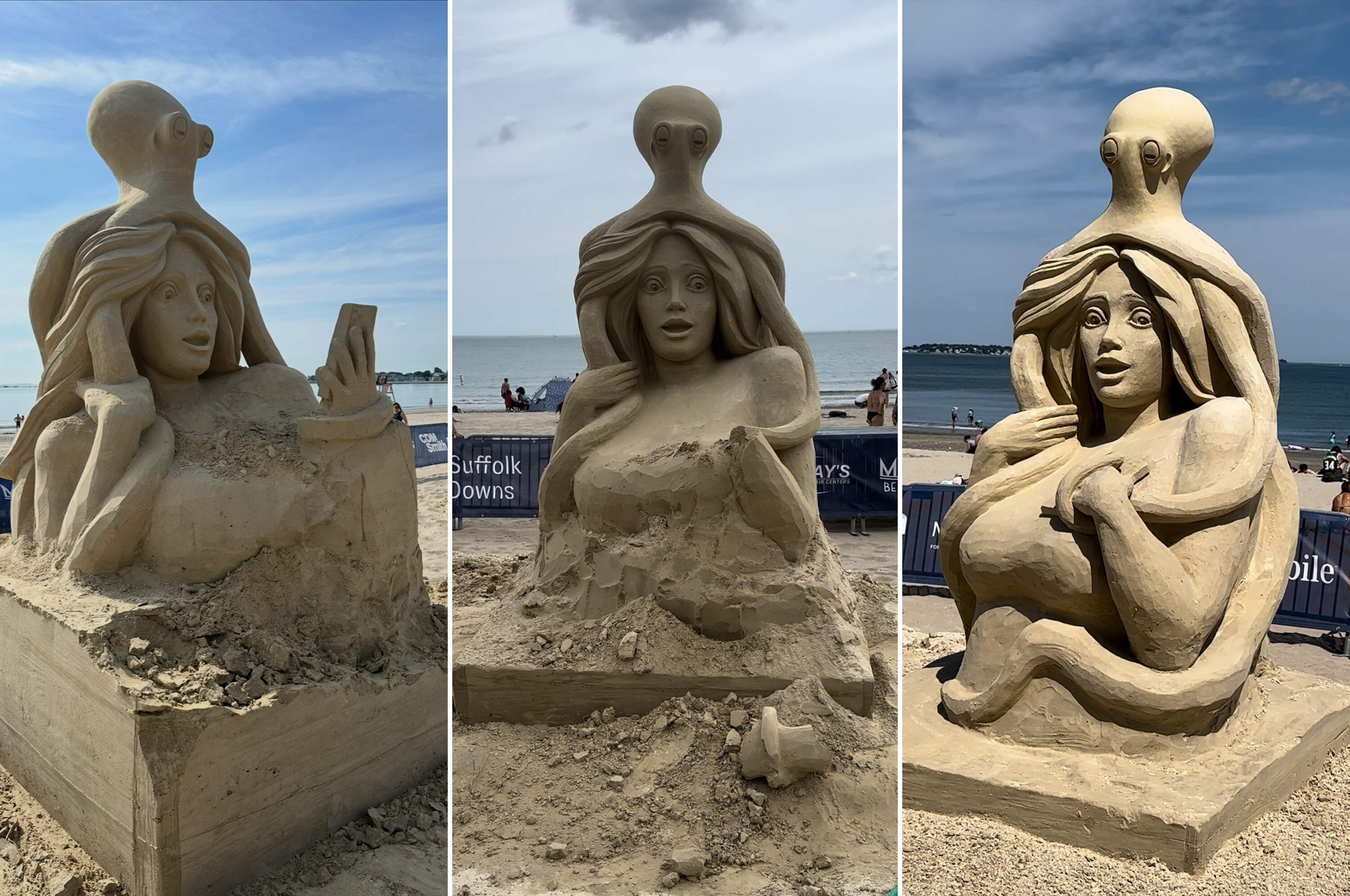
Before the 2024 competition, Bejko made a mockup of his sculpture, “Let’s Take a Selfie,” with clay. It featured a woman with a phone in one hand, taking a selfie with an octopus on her head. But when he started sculpting it with sand, “the arm fell,” said Bejko.
“The sand dried too much,” said Bejko. He chalked up the accident to lack of experience, and ended up producing a modified version of the sculpture. “This year I'm gonna do better,” said Bejko. “I hope I’m gonna do better.”
P.S. — There will be a people’s choice vote on the sculptures from 10 a.m. to 4 p.m. Saturday. The winners will be crowned at 6 p.m., when they’ll also receive their prize money. The entire event runs from Friday through Sunday, rain or shine. Click here for more information about the festival's amusements, fireworks and food.