Support WBUR
Worcester cut overdose deaths in half. Now it faces federal cuts
Something astonishing is happening in Worcester.
The city cut its overdose deaths in half in 2024. And with just 13 recorded overdose deaths through April, New England's second largest city is on track for even fewer deaths this year.
The drop in mortality is welcome news for a city and surrounding region that recently had the highest rate of fatal overdoses in the state.
There’s something similar happening across the U.S., where estimated fatal overdoses declined by 27% last year. In some places, deaths have dropped back to where they were before the pandemic, a time when fatal overdoses spiked. But with a 55% drop in 2024, Worcester's reversal is more dramatic.
Doctors, nurses, city leaders and outreach workers say they've changed how they approach the problem, which they believe has led to fewer deaths. The hope is that this combination of efforts could become a map for sustained relief from the drug overdose crisis.
But with that hope comes fresh concern: Virtually all of the interventions experts credit with the decline in deaths rely to some degree on federal funding that is now at risk.
The methadone van
It only takes Trina a few minutes to walk from her room at the YMCA to a mobile methadone clinic parked behind Saint John’s Catholic Church. The line at this converted mobile home usually moves quickly. Trina, a 60-year-old former nurse, loves the convenience.
"From where I live I can throw a rock almost and hit it,” she said.
Without the van, Trina would have to take two buses to get to a clinic that offers methadone, a prescription drug that helps her fend off cravings for fentanyl.
“It’s a big rigamarole and sometimes I don’t make it,” Trina said. WBUR agreed not to use Trina’s full name because she still occasionally buys illegal drugs.
For the last two years, the mobile clinic has made daily stops at three different locations and delivered doses to more than 1,500 patients according to Spectrum Health Systems, the company that operates the van.
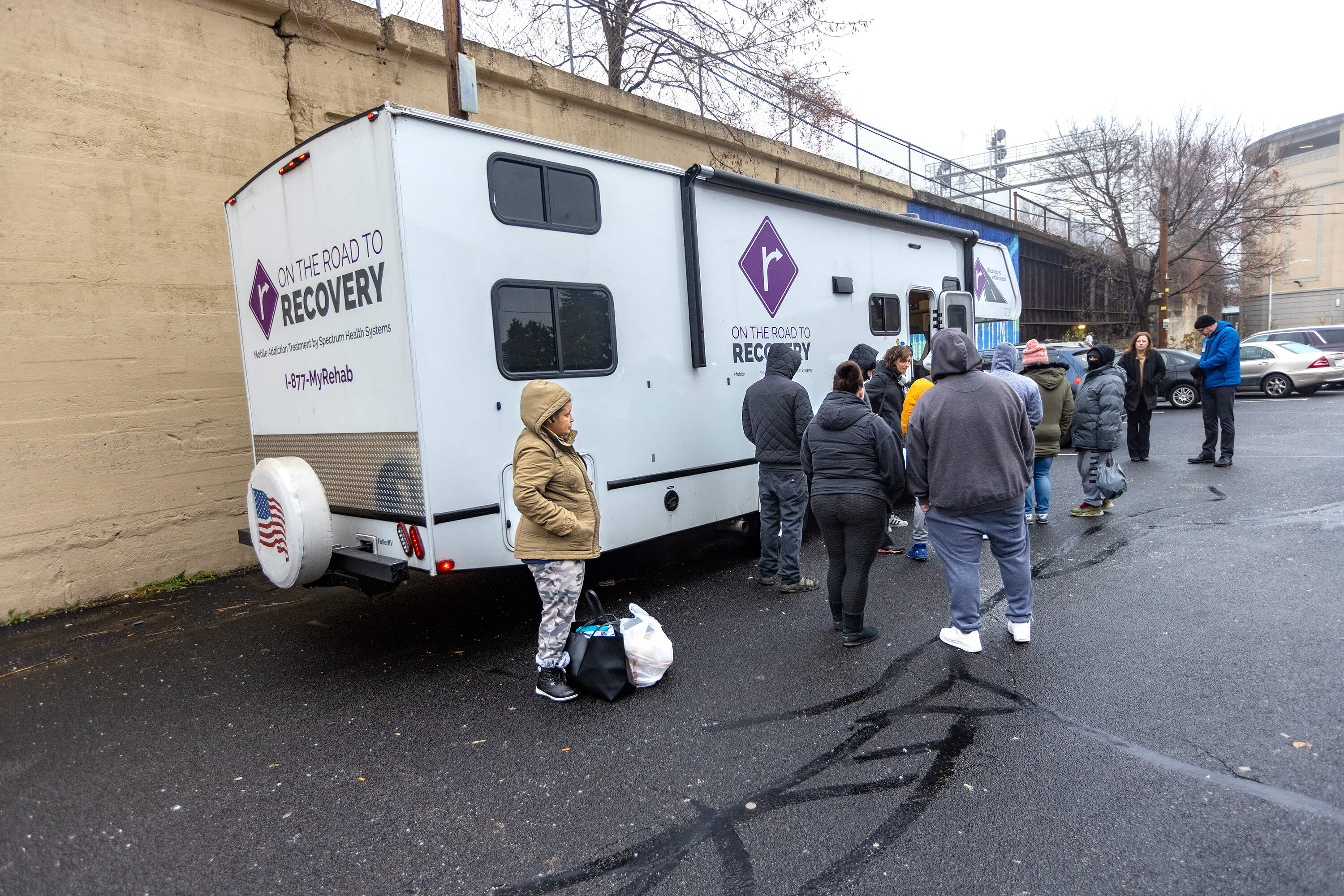
“It’s definitely more successful than opening up a [stationary] program,” said Heidi DiRoberto, who oversees the van for Spectrum. “And it’s really the right thing to do.”
Research shows methadone reduces the chances of a fatal overdose among people addicted to opioids by more than 50%. Dr. Jeff Baxter, Spectrum’s chief medical officer, said he’s certain that making methadone more available in Worcester is helping save lives.
“When people take methadone, they're not feeling sick, they're not in withdrawal," Baxter said. “No treatment that we do in medicine really, apart from maybe a surgery, is as effective as methadone is, so we should respect it.”
Methadone has a bad rap among some critics because it’s an opioid, like heroin and fentanyl. But there are key differences. Federal researchers say methadone is slow-acting, stays in the body longer than other opioids and doesn’t give patients a feeling of euphoria with prescribed doses.
Trina said methadone helps her feel like her life is worth something again.
“My biggest saving grace is not hating myself anymore, not beating myself up,” she said. “That’s where I’m doing good.”
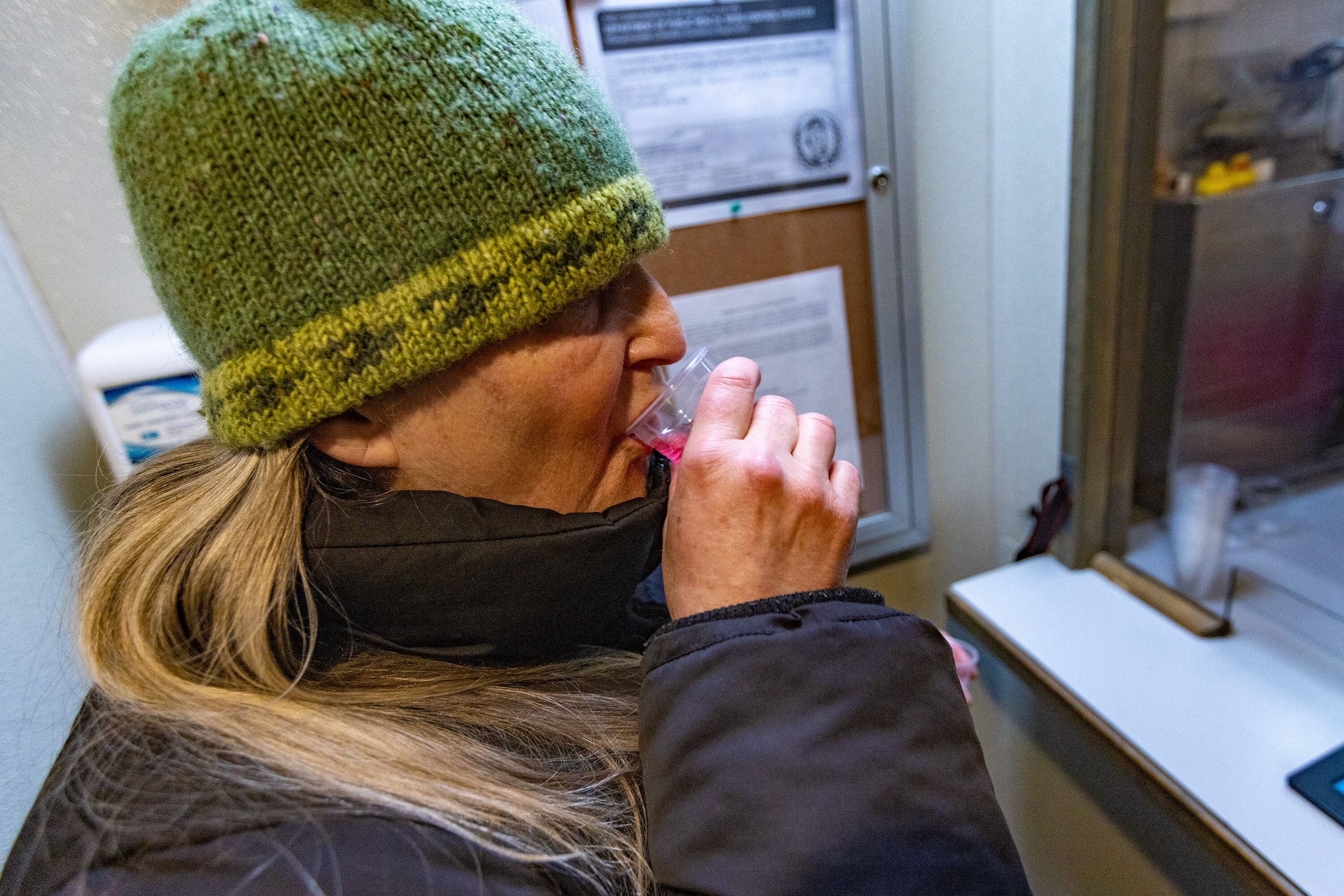
But starting and sticking with methadone treatment isn't easy. Federal rules require that patients use a designated methadone clinic, and most patients, like Trina, have to go daily for their dose. The American Society of Addiction Medicine issued a brief in July that said expanding access to methadone treatment is “critical,” and urged the federal government to ease the rules.
Mobile clinics can make it easier for patients to take methadone, but some treatment programs hesitate to invest in the units. And some residents and business owners fear that bringing services for people who use drugs to their neighborhood will increase crime and drug use. Those worries may be unfounded; research suggests violent crime is no higher around drug treatment programs than it is around convenience stores.
Baxter said Spectrum would like to add more stops in Worcester but hasn’t been able to secure permission from private property owners.
Cost is also a barrier. The van doesn’t break even. Spectrum’s numbers show insurance payments only cover 57% of its operating costs.
“The operational energy and money that we’re dumping into running this thing every day is wild,” Baxter said.
The van may become even more expensive for Spectrum when Medicaid cuts included in the "One Big, Beautiful Bill Act" proposed by President Trump and approved by Congress take effect. Almost 90% of opioid addiction treatment in the U.S. is paid for by Medicaid, according to a Brookings Institution analysis. It's unclear whether state funding will fill any voids left by federal cuts.
Currently, five mobile methadone clinics are in operation across Massachusetts, all started with grants from the state Department of Public Health. There are also five mobile clinics that offer buprenorphine, a less tightly regulated opioid treatment drug. Worcester has one of each.
Narcan is everywhere
If you ask Worcester’s top health official why overdose deaths have plummeted in Worcester she has a quick, decisive answer.
“Narcan,” said Dr. Mattie Castiel, Worcester’s commissioner for health and human services. "That's the most relevant thing.
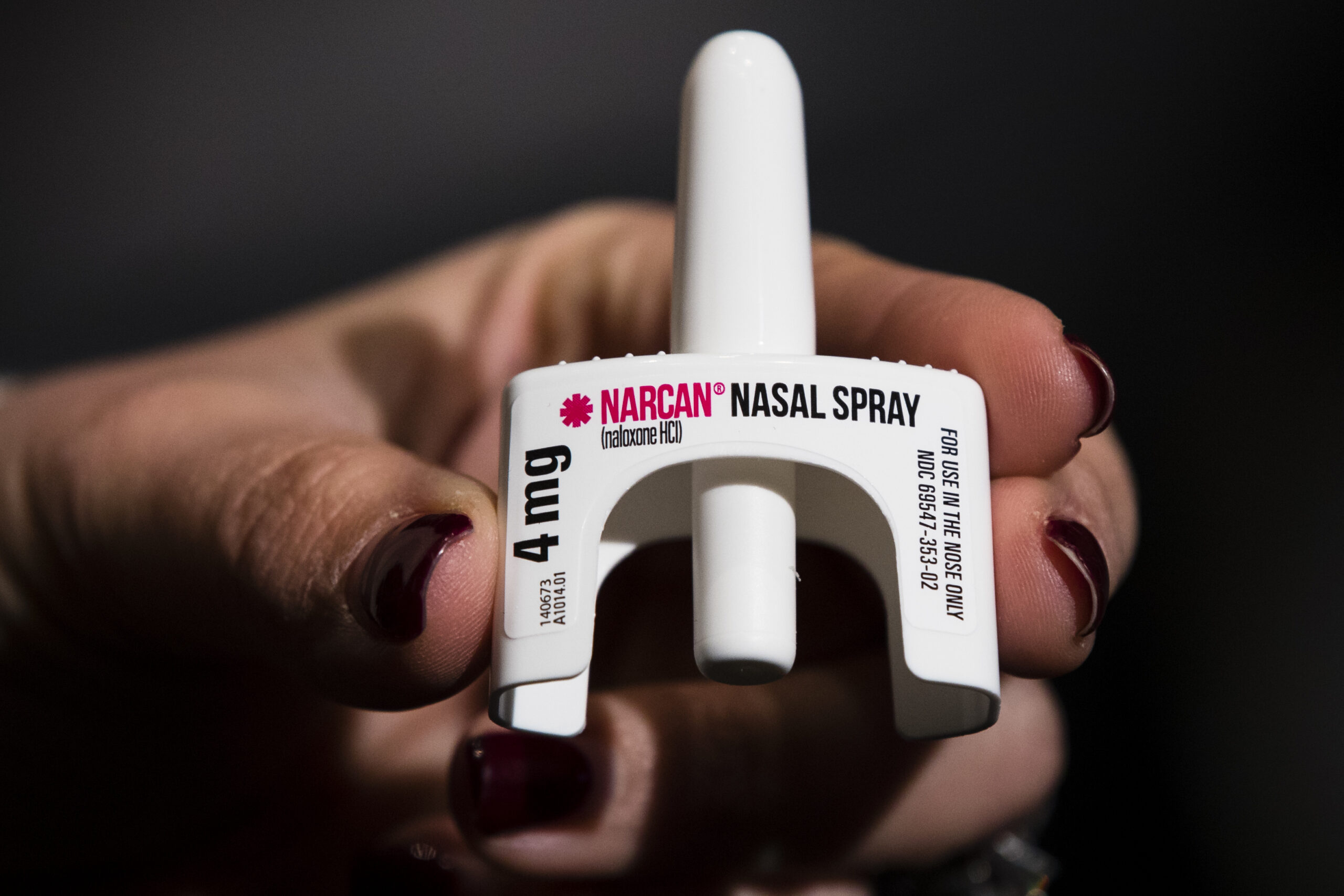
The city stocks Narcan, a brand of naloxone, at 13 locations including the train station, shelters and the main library. You might see packages of the white nasal spray tucked into fences near parks or in baskets at street fairs.
“We talk about Narcan as being like CPR,” Castiel said. “Everybody needs to carry it and know how to use it.”
Naloxone training videos are available in English and Spanish online and through a free city app. A state dashboard shows Worcester hospitals, nonprofits, the city and residents received 12,430 naloxone kits between July 2023 and June 2024.
One question is whether groups in Worcester will be able to continue blanketing the city with this much naloxone. The budget for the federal agency that funds distribution of the drug has been cut, fueling concerns that communities will have to ration access. And federal funding changes may threaten yet another piece of Worcester’s overdose prevention strategy — one that reveals a surprising dimension to the city’s steep decrease in deaths.
The xylazine effect
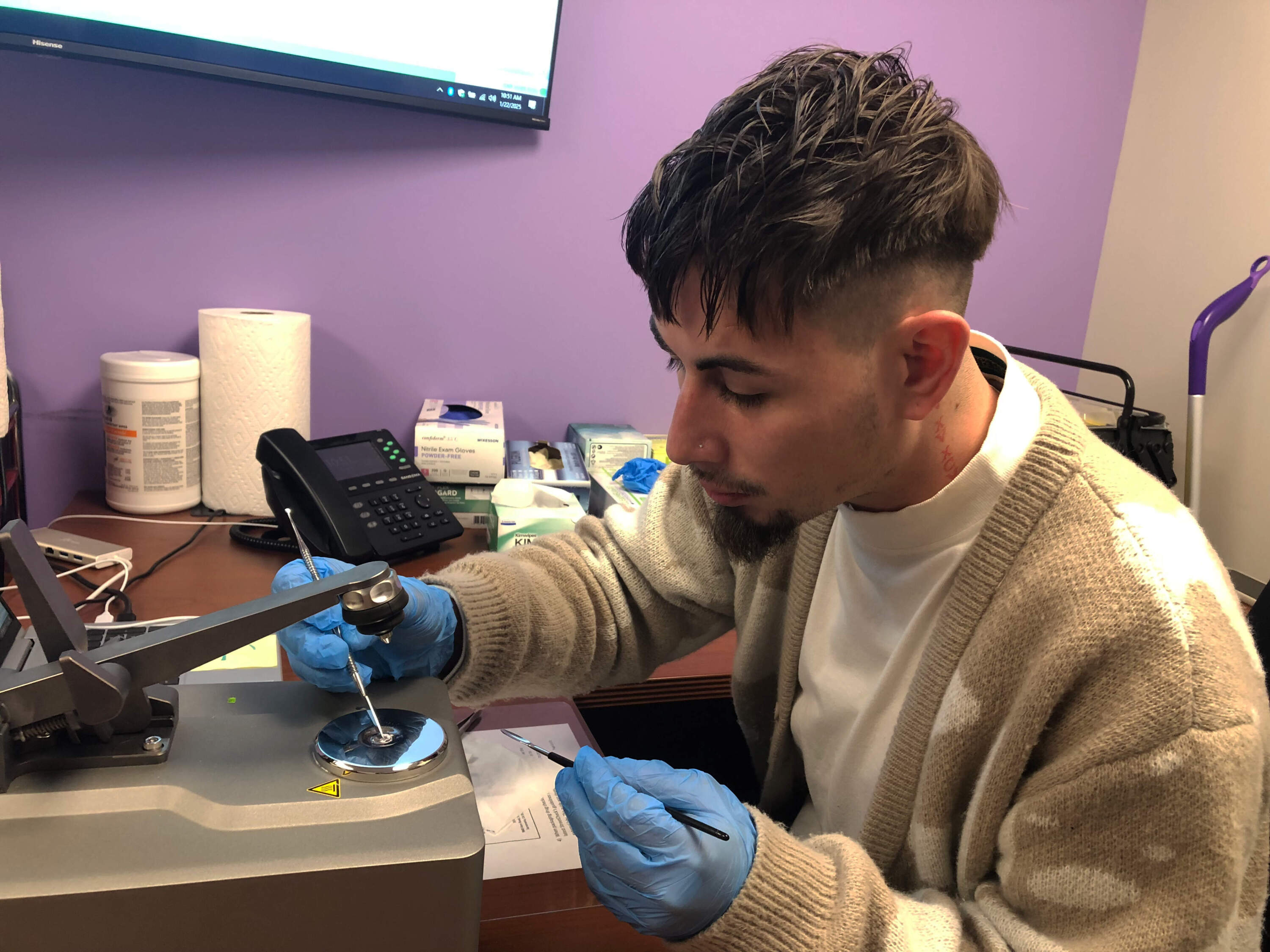
Kevin Davila, a harm reduction specialist at AIDS Project Worcester, used a toy-like spoon to scoop powder out of a tiny plastic bag and empty it onto a drug checking machine called a spectrometer. The powder came from a blue pill sold on the street; the buyer was told it's benzodiazepine, like Xanax. After a quick scan by the $55,000 machine, Davila learned the truth; that pill contained a mix of fentanyl, ketamine, a coating stabilizer used in plastic manufacturing and the animal tranquilizer xylazine.
Of the samples tested in Worcester last year, 64% contained xylazine, more than in most communities in Massachusetts. Davila said learning what's really in a pill can help people avoid an overdose.
“It could be an eye-opener for them to be like, ‘Hey, maybe it’s time for me to stop using this,’ ” Davila said. “Or, ‘I need help.’ ”
Xylazine can put someone out for eight or more hours at a time. Compare that to fentanyl, which can wear off in a couple of hours.
“Xylazine doesn’t necessarily increase overdose risk, but it creates more complex overdoses,” said Jamie Davis, who until recently worked at the Opioid Policy Research Collaborative at Brandeis University, the program that oversees drug checking in Massachusetts.
The upshot is that when there’s a lot of xylazine in the drug supply, people don’t use as often. Traci Green, who directs the Opioid Policy Research Collaborative, said that’s likely another reason overdose deaths plummeted in Worcester.
“This doesn’t mean that there's zero risk,” said Green. “It just means there’s potentially less fentanyl or fewer opportunities to overdose.”
Xylazine is awful in its own way, creating deep skin wounds and infections, but some communities with less Xylazine saw overdose deaths increase last year, Green said.
Worries about reversing progress
Like the funding for drug treatment and naloxone, the grant that supports drug checking at AIDS Project Worcester is in question. Federal officials had warned of delays, but this week said they expect funding to continue for state and local grant recipients.
And a new presidential pronouncement has stirred a new fear in some local treatment advocates.
In late July, Trump signed an executive order called “Ending Crime and Disorder on America’s Streets.” It eliminates funding for programs that aim to reduce the harms from drug use, if they don’t “achieve adequate outcomes” and “only facilitate illegal drug use.” Aspects of Worcester’s mobile treatment vans, Narcan training and drug checking efforts could be at risk because of their focus on keeping people alive during their struggle with addiction.
It’s not clear yet how or when the order will be implemented, but Deirdre Calvert, who has directed the Bureau of Substance Addiction Services under both Democratic and Republican governors in Massachusetts, said it won’t make anyone safer.
“It does nothing to address homelessness and substance use disorder — and just pushes more people into the criminal justice system,” said Calvert. “We should be focusing on making housing more affordable and increasing access to substance use disorder prevention, treatment and recovery programs.”
In Worcester, Castiel stressed that while deaths are down, there’s no indication that fewer people are struggling with drug use.
“We are saving people’s lives but we are not necessarily treating addiction,” Castiel said.
Her biggest concerns are the pending Medicaid cuts, the addiction patients who may drop out of treatment, and the services that may not keep up with demand.
“People right now are just bracing and waiting to see what will happen,” said Castiel. “The cuts will undermine some of the things we’ve done to date. But I think we can figure this out by outreaching to the community.”
Resources in Worcester are already shrinking. In the past few months, Castiel said the city lost an urgent care addiction program and a crisis response team that helped guide people to treatment. For Castiel, it feels like another emerging pandemic.
“This is that kind of emergency,” Castiel said. “So how do we collaborate and help each other out?”
Editor's note: This story has been updated to reflect new information about federal grant funding for drug-checking programs.
This article was originally published on August 06, 2025.
This segment aired on August 6, 2025.