Support WBUR
Experts warn poor air quality might be here to stay in the Northeast
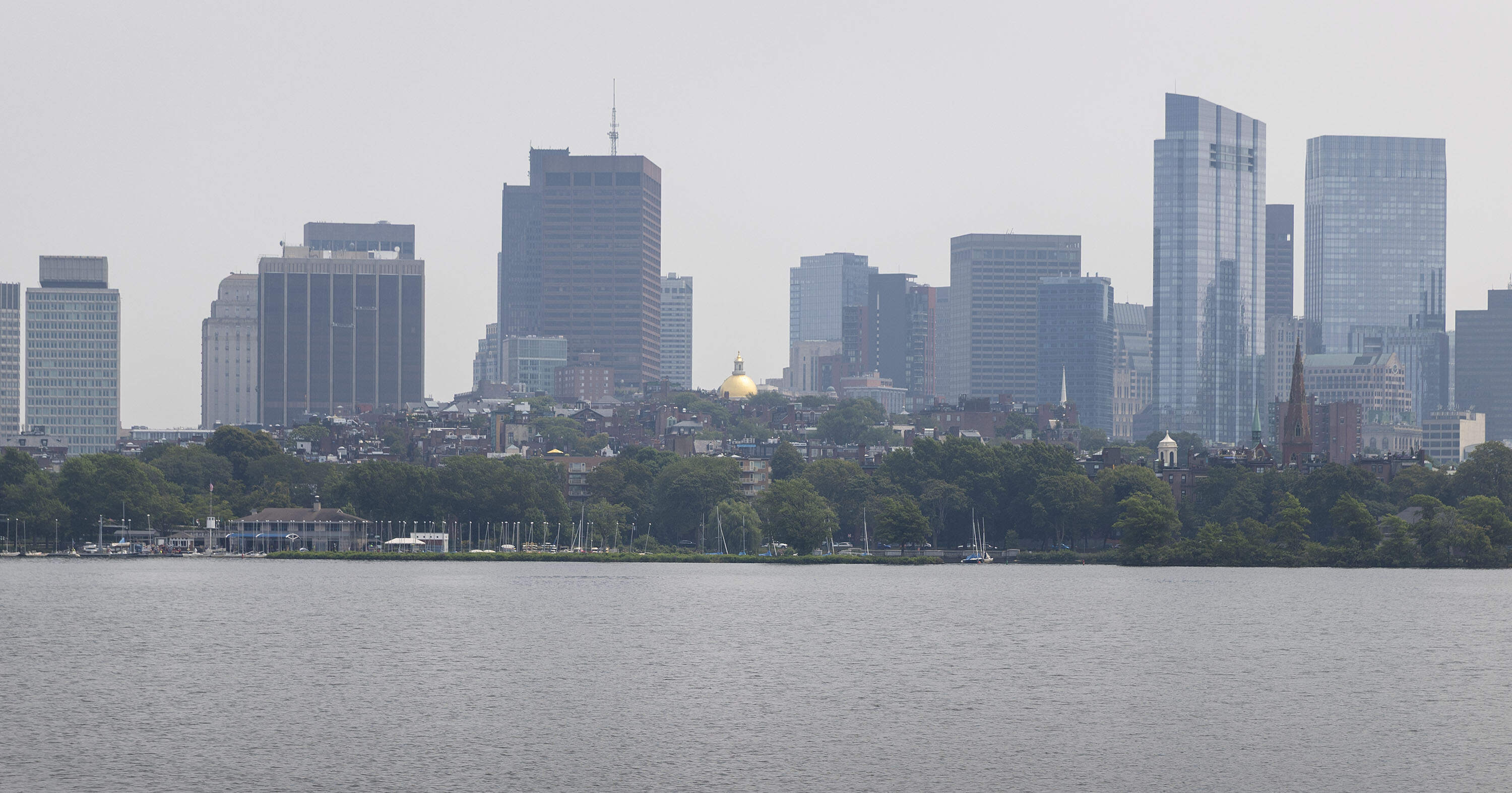
Wildfire smoke has left a haze over much of New England this week, triggering public health warnings. Experts say it’s no longer just a West Coast problem — and even healthy people should take precautions on smoky days.
Nicholas Nassikas is a pulmonologist and researcher at the Institute for Lung Health at Beth Israel Deaconess Medical Center. He joined WBUR's All Things Considered to explain why New Englanders should expect more of these warnings as the climate warms.
Interview highlights
Portions of this interview have been lightly edited for clarity.
On what's inside wildfire smoke that's so bad for us:
"A lot of what's in the smoke depends on what it's burning. The main thing that we worry about with the wildfire smoke down from Canada is something called fine particulate matter. It's really tiny particles that can get really deep into the lungs and wreak havoc on health.
On who's most at risk and when to worry about air quality levels:
"So the tool that most of us use is the Air Quality Index (AQI), and that's a helpful tool to say if the numbers above 100, it's perhaps a day that you know more sensitive groups, those are people like children and adolescents, pregnant people, people with underlying chronic lung diseases or heart diseases might want to be a little more careful about spending a lot of time outside. I'd say once it starts to get above 150 or certainly above 200, even healthy people can start to be affected."
On how air quality experts make health recommendations:
"It's gonna be hard to tell everybody to stay inside at certain point, if there's just any bit of smoke outside. What we do is we say, based on what we know about the harms of wildfire smoke on your health, what are the groups that might be most vulnerable, most sensitive to that smoke? And here are some recommendations we would make for those sensitive groups."
On his research about climate change's lasting impact on wildfire pollutants:
" I think one of the important parts of that study was first just identifying the role that climate change is playing in wildfire-related deaths and making that connection. And I think the second part of that study that's important to point out is that it ended in 2020.
"What we all in New England know is that in 2021 we had really bad Canadian wildfire smoke that affected us. And in 2023, [there was] another Canadian wildfire event that many of us will remember. Right now, so our study doesn't include these important years for wildfire smoke in in the Northeast.
"One of my concerns going forward is that we're going to see more and more of these wildfire events that are gonna start to affect our health here in New England. It's certainly something we need to be paying attention to."
This segment aired on August 7, 2025.