Support WBUR
Field Guide to Boston
How Boston’s Liberty Tree helped plant the seeds of Revolution in Massachusetts
A decade before the first shots of the American Revolution, colonists in Boston were brewing with frustration over a new tax from across the Atlantic Ocean.
“It's the first time that the British Parliament assessed the American people directly,” said Jonathan Lane, executive director of Revolution 250, an organization dedicated to commemorating the historical events.
The proposal taxed nearly every piece of paper used in the colonies, from parchment to playing cards. So on Aug. 14, 1765 — 260 years ago — the colonists gathered under a giant elm that would soon be known as the Liberty Tree to start their dissent to the Stamp Act.
In one of the first instances of organized political action and public acts of defiance leading up to the American Revolution, the colonists strung up effigies on the Liberty Tree that day. One had the initials of the local Stamp Master Andrew Oliver on it, which Lane said was done as a threat to get him to resign. The group then marched down to Oliver’s warehouse, near Long Wharf, and destroyed much of his property in a huge bonfire.
“What they couldn't burn, they threw into Boston Harbor,” Lane said.

The giant elm where the protests started would come to be called the Liberty Tree, and Lane said colonists called the space under the tree “Liberty Hall.” Colonists gathered there “in times of crisis and protest” before and after the protests, Lane said. It’s rumored the funeral procession for the Boston Massacre victims five years later even passed by the tree.
Lane said Boston’s Liberty Tree protests inspired communities to christen their own Liberty Trees, including ones in Newport, Rhode Island and Charleston, South Carolina.
“And if they didn't have a tree, they would erect a liberty pole,” Lane said. “And these liberty poles really become the places where citizens of those communities gather and show their support for the cause of the colonies.”
The Liberty Tree was over a hundred years old during the protests, said Lane, making it a young tree when the Puritans landed on Massachusetts soil in 1620.
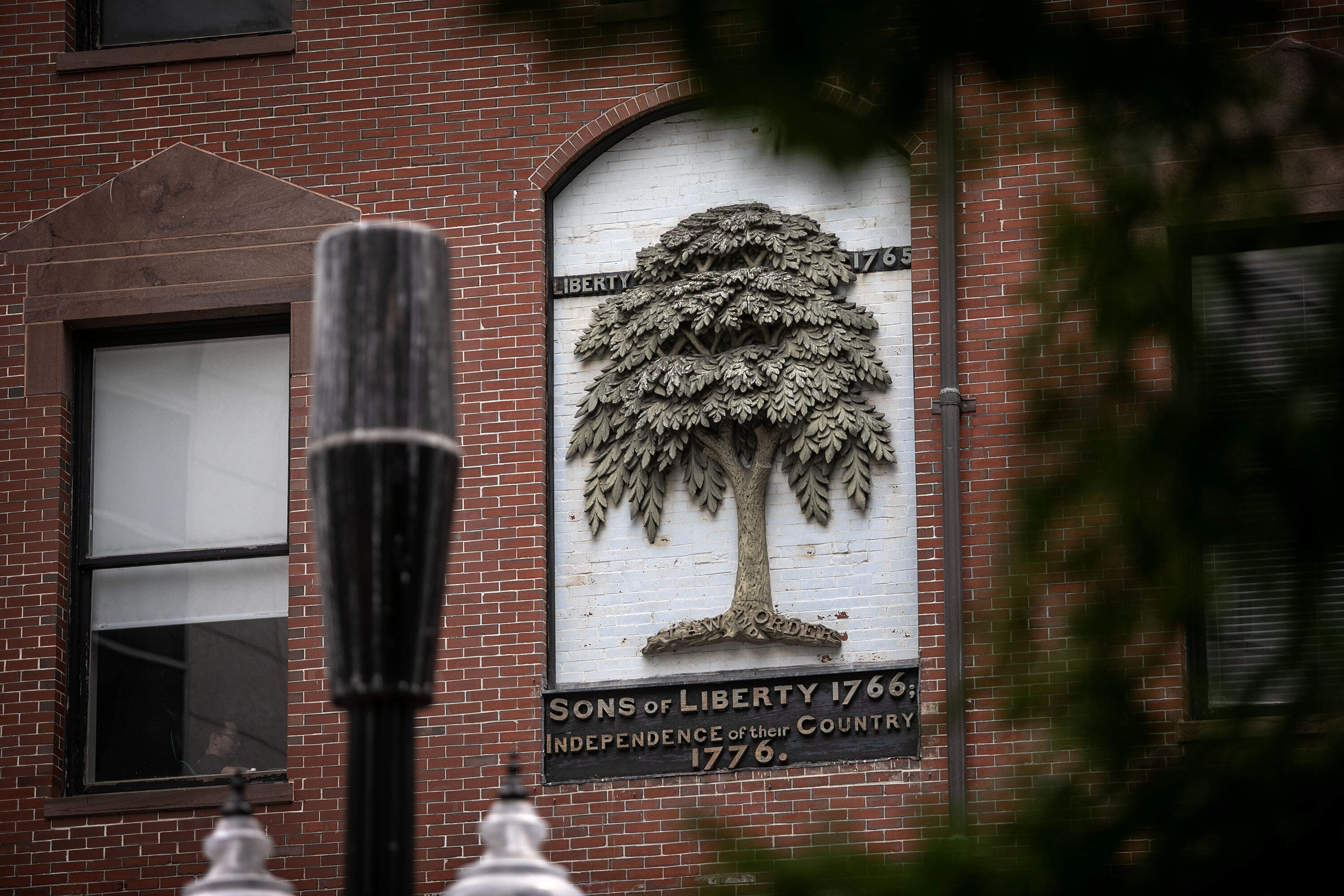
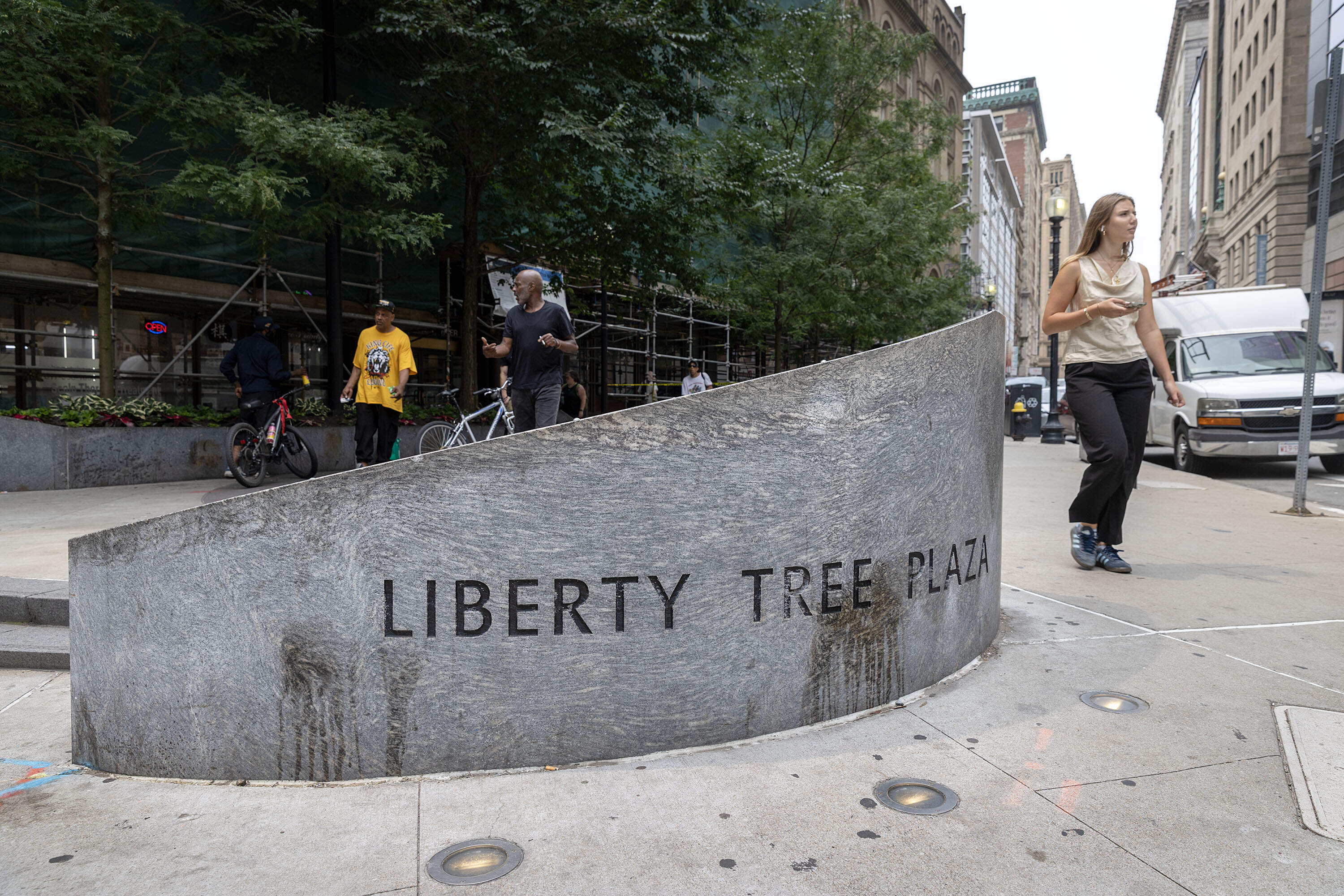
A decade after the Stamp Act protests, though, it was cut down by the British during the Siege of Boston, which began in April 1775. After the siege ended the following March, the colonists erected a pole where the tree once stood. Today, where the Liberty Tree grew is known as “Liberty Tree Plaza” with the city memorializing the tree with a plaque on the sidewalk near the Chinatown T Stop in Downtown Boston. There’s also a plaque of a tree on a building on Washington Street that looks over the plaza.
Lane said the biggest lessons he takes from the Stamp Act protests are the power of coordinated and collaborative action.
“What we got out of the American Revolution was not a guarantee,” Lane said.
“It was a promise. A promise of something better. It was a hope that we got out of it, and that requires continual work. We can't just kick back and let it happen. We need to be there to be part of this. That's the true legacy of what happened here.”
This segment aired on August 14, 2025.