Support WBUR
Commentary
'Jaws' is back in theaters for its 50th anniversary
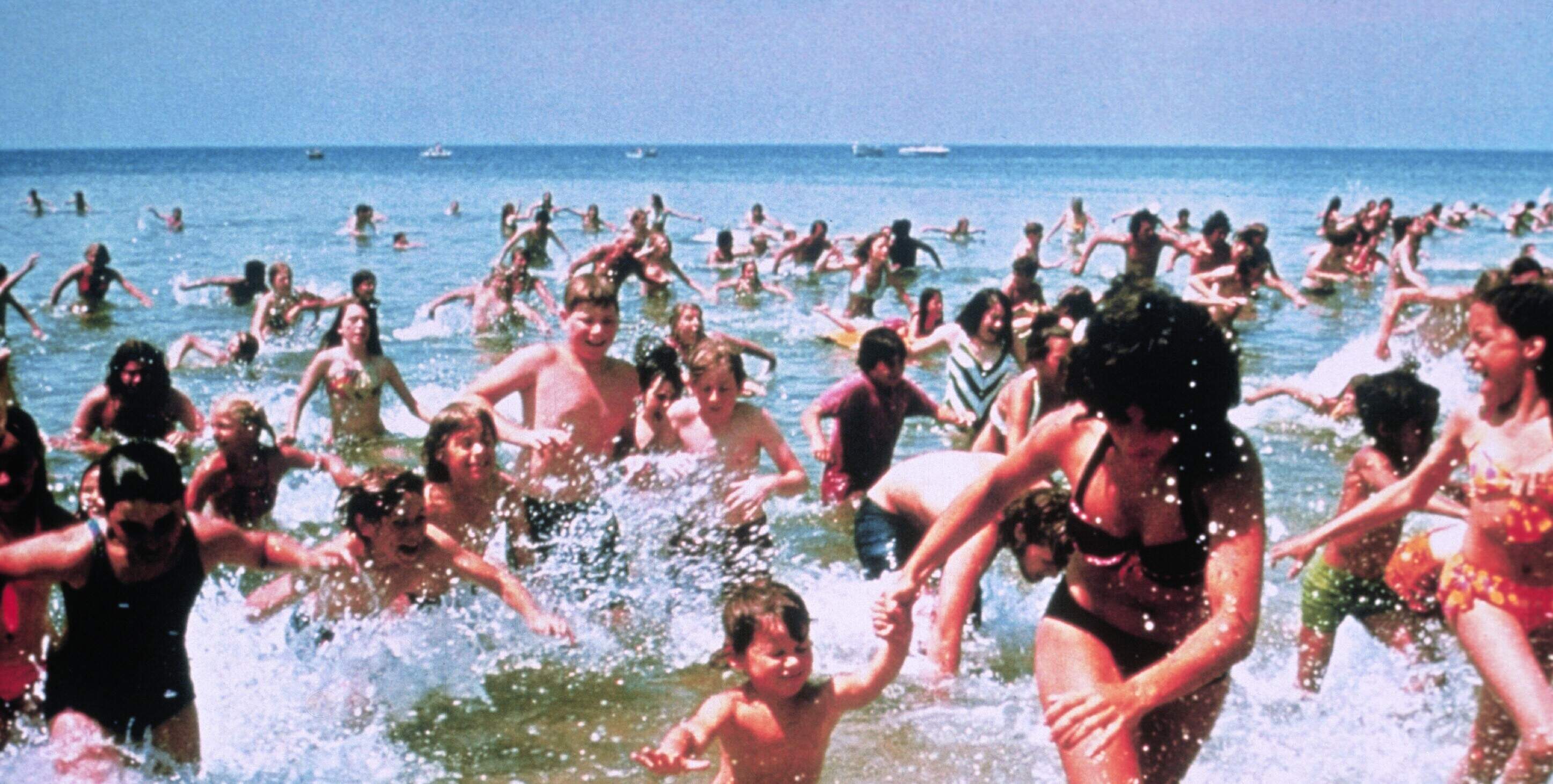
With all the 50th anniversary retrospectives, exhibitions and celebrations, it was easy to feel a little “Jaws”-ed out this summer. The Steven Spielberg classic is one of my all-time favorite movies, and even I got pretty sick of hearing the oft-told tales about the film’s arduous Martha’s Vineyard shoot. The whole saga was dutifully repackaged once more in “Jaws @ 50: The Definitive Inside Story,” a sloppy Nat Geo/Hulu/Disney+ doc that was basically a cut-and-paste remix of director Laurent Bouzereau’s “The Making of Jaws” from the 30th anniversary home video release. (Except this time with added commentary from Emily Blunt. She doesn’t have anything to do with “Jaws,” but she’s in Spielberg’s next movie so she must have been hanging around the office that day.)
It seemed the only thing you couldn’t do to celebrate “Jaws” this summer was go see it in a movie theater. Outside of Cape Cod, theatrical showings were verboten by distributor Universal Pictures in order to whet appetites for this weekend’s nationwide anniversary re-release. (That’s why the Brattle Theatre’s annual Fourth of July screenings didn’t happen this year, not because they really wanted to show “Streets of Fire” instead.) The 1975 classic will be rolling out to multiplexes in shiny new digital transfers, as well as enhanced premium formats like IMAX and RealD 3D — though those of us who remember the dreadful 1983 second sequel “Jaws 3-D” might argue that two dimensions are more than enough. For we purists, Coolidge Corner Theatre has wrangled an exclusive 35mm engagement so you can see “Jaws” on film in all its original grain and glory, the way God and Steven Spielberg intended.
It might seem like strange timing to re-release the ultimate summer blockbuster right when everyone’s going back to school. One assumes the delay was because Universal wanted to keep screens freed up for their big Fourth of July weekend blockbuster “Jurassic World Rebirth,” which included its own pathetic “Jaws” homage with Scarlett Johansson on the bow of a boat trying to harpoon an underwater dinosaur. (One can only gawk at this rote tedium grossing nearly a billion dollars and wonder how bad one of these “Jurassic” sequels would have to be to lose money.)
In recent years, I’ve been attending the Coolidge’s annual Labor Day screenings of “Jaws,” a tradition that has come to feel like an unofficial farewell to summer — a scary movie to accompany the “back to school scaries” I somehow still suffer from even though I graduated in the ‘90s. The theater sells cans of Narragansett Lager with the old ‘70s logo and encourages the audience to hold them up and crush them when Robert Shaw’s Captain Quint does so onscreen. Watching the movie with a packed audience still screaming and cheering after half a century suggests another reason Universal might have elected to save it until September: “Jaws” makes today’s summer blockbusters look embarrassingly bad.
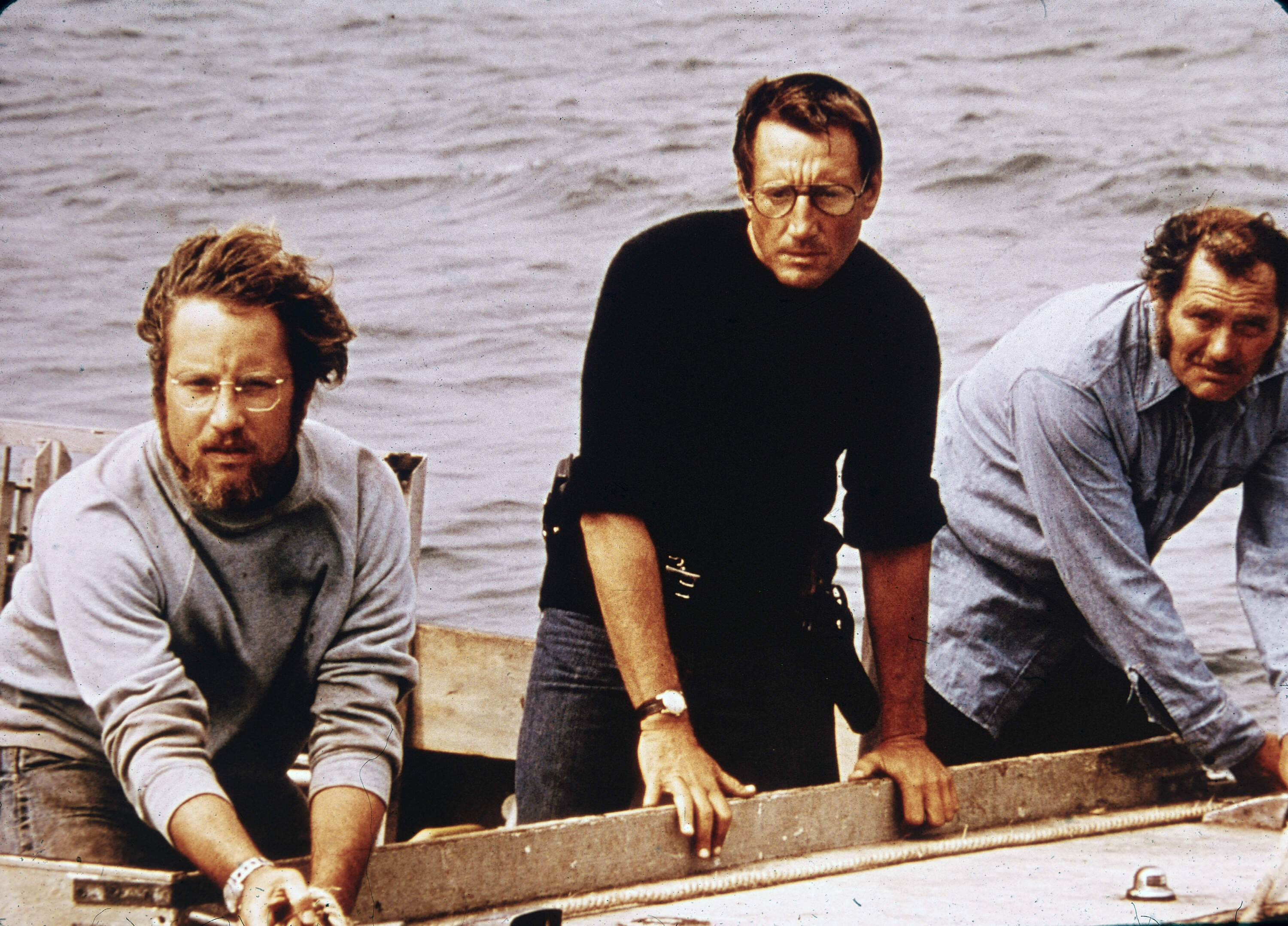
In the words of Richard Dreyfuss’ oceanographer Matt Hooper, “What we are dealing with here is a perfect engine... It's really a miracle of evolution.” The brilliance of the film’s structure is that it’s two pictures for the price of one — a terrifying slasher movie followed by a rousing, seafaring adventure. After an hour of being helpless and vicariously preyed upon at the beach, we get to take things to the creature’s turf and hunt it down out in the open water. Not only that, but it’s the landlubber audience surrogate — Roy Scheider’s everyman Chief Brody — who gets to kill the monster. Not Shaw’s grizzled fisherman nor Dreyfuss’ wisenheimer scientist, but the guy who’s scared of the ocean and started the story knowing as much about sharks as you did when you walked into the theater. That’s smart storytelling, not to mention incredibly cathartic for an audience that the film just put through the wringer. Brody also gets to blow the shark to smithereens, instead of it just slowly bleeding out and sinking into the deep like it does in the Peter Benchley novel on which the film was based.
Benchley’s 1974 bestseller was a paperback sensation — a beach book that made you afraid to go in the water. It’s also quite bad, in the venerable tradition of lousy books that made great movies. (See also: “The Godfather.”) Benchley’s novel is dour and humorless, with stupid subplots like the mayor being mixed up with the Mafia and Hooper having an affair with Brody’s wife. One of Spielberg’s shrewdest moves was hiring his friend Carl Gottlieb of the San Francisco improv comedy troupe The Committee to play a small part in the picture as Amity Island’s newspaper editor. This way, Spielberg could have Gottlieb on the set every day improvising with the actors and rewriting the script to make it funnier. (They also got rid of the love triangle, thus sparing an already traumatized audience from having to think about Richard Dreyfuss having sex.)
Despite being scary as hell, “Jaws” has more laughs than most comedies. The first half of the film sketches a chaotic tapestry of busybody small-town politics and petty, territorial beefs. It’s bustling and everybody’s talking over each other, alluding to amusing backstories we’re left to imagine. (The seriousness with which Chief Brody repeatedly insists that a deputy “let Polly do the printing” on the beach signs speaks volumes.) It’s Spielberg’s most Altman-esque movie, casting a wary eye on institutions his later pictures would exalt. The reason the mayor from “Jaws” became such a popular meme during COVID-19 is because the film is bracingly up front about how people in charge are not necessarily looking out for your best interests. There’s a New Hollywood cynicism that time and success stripped out of the director’s subsequent work.
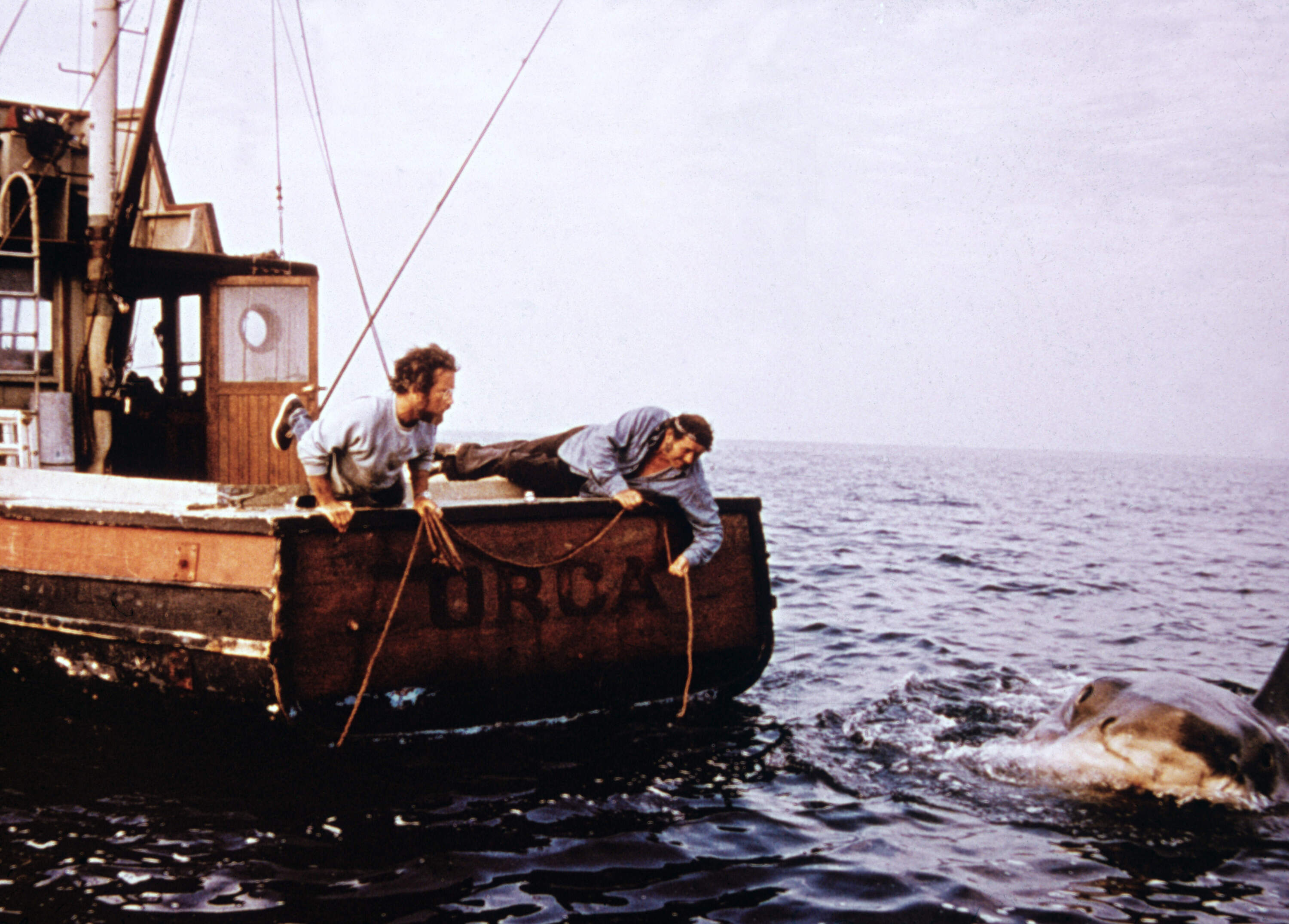
One of the benefits of all the downtime on set when the mechanical shark wasn’t working or the weather wouldn’t cooperate was that these actors really got to dig into their roles. Famously fueled by boredom, alcohol and improv exercises, the central trio came up with endless little bits of business and character quirks. These men are simply more specific and believable than the leads in any summer blockbusters since. I fondly remember critic Gene Siskel panning Spielberg’s original 1993 “Jurassic Park” for its paper-thin characterizations — which seem positively Dostoyevskian by today’s franchise standards — asking his TV sparring partner Roger Ebert where was the “adult energy” of the three men from “Jaws?”
It's a terrific dynamic, pitting know-it-all college boy Hooper against sneering old salt Quint, with poor Brody getting seasick trying to mediate the bickering while campaigning for a bigger boat. Their camaraderie is hard-won, and as much credit as Shaw rightfully receives for nailing the movie’s showstopping USS Indianapolis monologue, what helps really sell the scene is how intently Dreyfuss is listening in the two-shot. You’re watching these characters’ relationships evolve in real time, from drunken sing-alongs to scar-measuring manhood contests. (One thing about watching “Jaws” today is that you can’t help noticing how much more people used to drink 50 years ago. That generation could really put it away. A friend once synopsized the plot as: “Three alcoholics go fishing.”)
Alfred Hitchcock said after seeing “Jaws” that Spielberg was “the first one of us who doesn’t see the proscenium arch.” Unencumbered by traditions of the theater, the freakishly talented 27-year-old wunderkind emerged as a creature of pure cinema. Spielberg’s virtuosity can be showboaty — like the famous dolly-zoom compressing the background behind Brody as he sees the Kitner boy getting chomped. But other times it’s deployed more subtly. I don’t know how many viewings it took before I realized that the scene on the ferry during which Murray Hamilton’s Mayor Vaughn bamboozles Brody into keeping the beaches open is all one take, with the actors moving in and out of different positions in a locked frame as if the movie were cutting between medium shots and close-ups.
Spielberg has often admitted that the mechanical shark not working most of the time made “Jaws” a better film, forcing him to rely on the power of suggestion and suspense techniques, like POV shots and John Williams’ instantly iconic two-note theme, instead of just showing the monster whenever he wanted to frighten us. The result is indeed a perfect engine. Maybe not a miracle of evolution, but one of brilliant instincts and happy accidents.
“Jaws” is back in theaters starting Thursday, Aug. 28.