Support WBUR
How a blue envelope is helping autistic drivers feel safer on Mass. roads
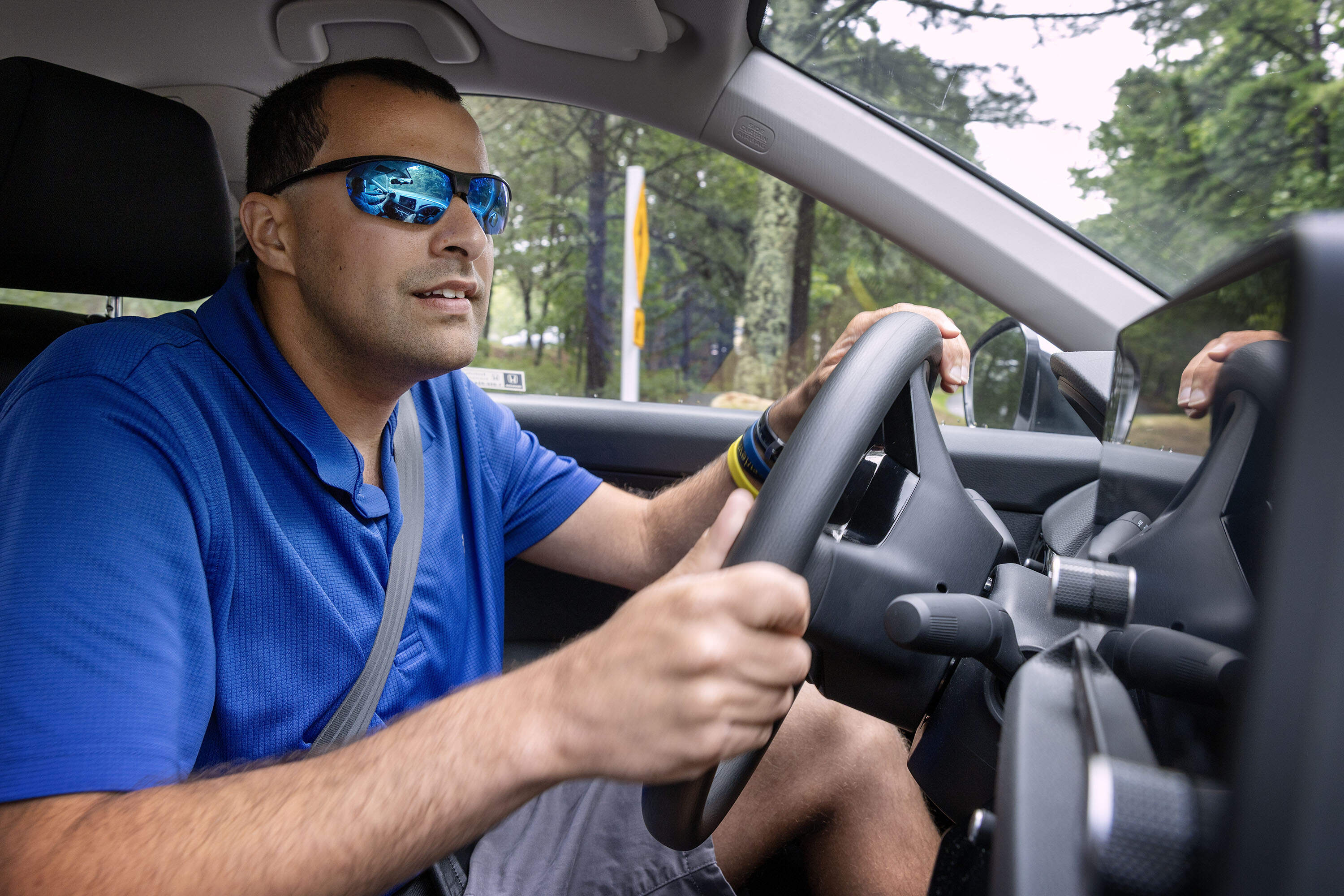
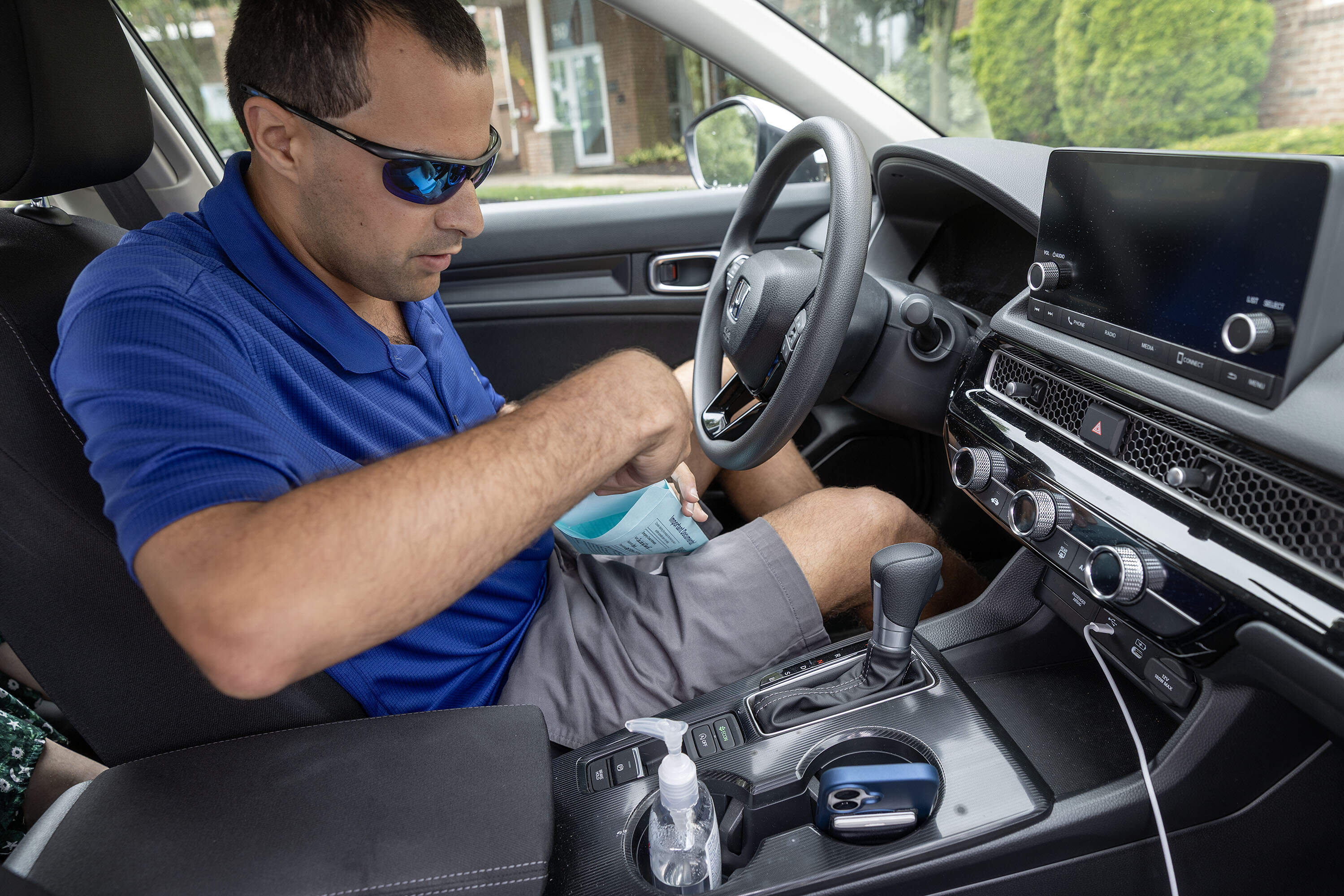
Sam Kanji loves to get behind the wheel. He drives everywhere he can, from work to the grocery store. Before he hits the road, though, he checks his glove compartment for a blue envelope. The simple item is key to keeping him safe on the road.
“It has my insurance and registration in case I get pulled over by police,” Kanji said. And most importantly, it flags to any police officer that Kanji, who is autistic, might need a little extra help.
Kanji is one of roughly 12,000 autistic drivers in the state who are participating in what's known as the Blue Envelope Program.
The envelope signals to officers that “this person might need more time," said Trooper Derek Henneberry, who helped develop the program for Massachusetts State Police.
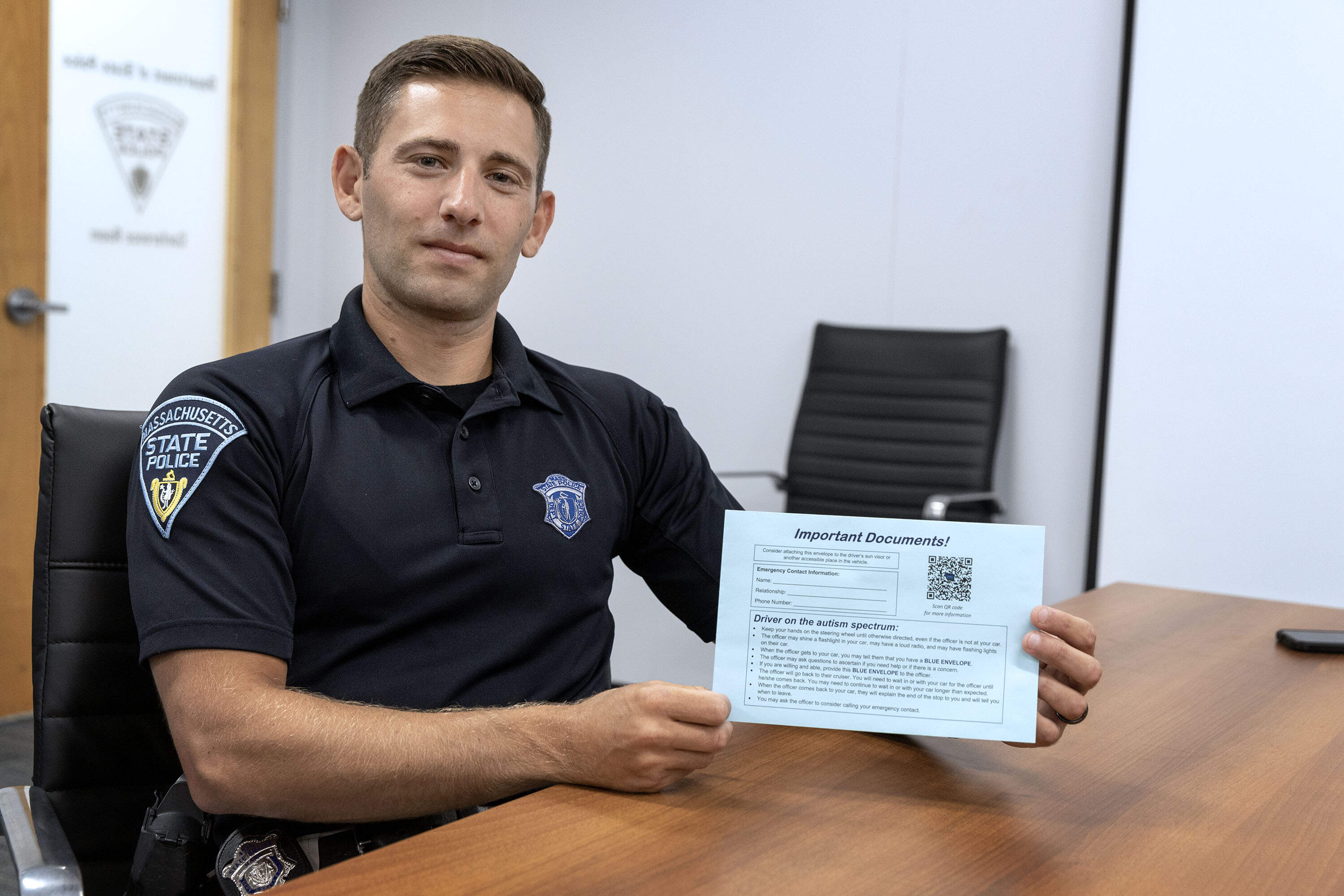
The envelope is more than just a visual signal. It has essential information on it. Drivers can list their emergency contacts. The envelopes have tips for drivers and officers on what to do at a traffic stop or if an accident happens.
Officers might make other choices as a result, Henneberry said.
“Maybe I should reach out to their emergency contact. Maybe I should take a different approach,” he said.
Interacting with police — or getting in an accident — can be especially overwhelming for someone on the autism spectrum. Police cars may have flashing lights or loud radios, which can cause debilitating anxiety. Some people may get flustered by a simple traffic stop or wrongly inflate the amount of trouble they're in.
“Oftentimes ... a person with autism might be functioning fine until anxiety hits and then maybe they really can't speak, or certainly they cannot make eye contact,” said Maura Sullivan, CEO of the Arc of Massachusetts, a non-profit that advocates for people with intellectual and developmental disabilities.
Sullivan said police officers could interpret garbled speech or lack of eye contact as behavior similar to someone under the influence of alcohol or drugs. An autistic driver could inadvertently escalate a normal traffic stop with this behavior.
”The point is to not get them out of a ticket,” Sullivan said. “The point is just to help them get through that interaction with the police officer safely, with less trauma or less anxiety.”
In Sam Kanji’s case, he needs extra time to answer questions. Sometimes, he repeats back thoughts or words in his answers in the wrong context. It’s called echolalia, a common symptom for some people with autism. For example, if an officer asks Kanji, "Were you speeding?" he may answer, "Yes, I was speeding," even if he wasn’t.
Kanji’s mom Ilyse Levine-Kanji is also worried her son would become so anxious during a police stop he would get out of the car and walk into traffic.
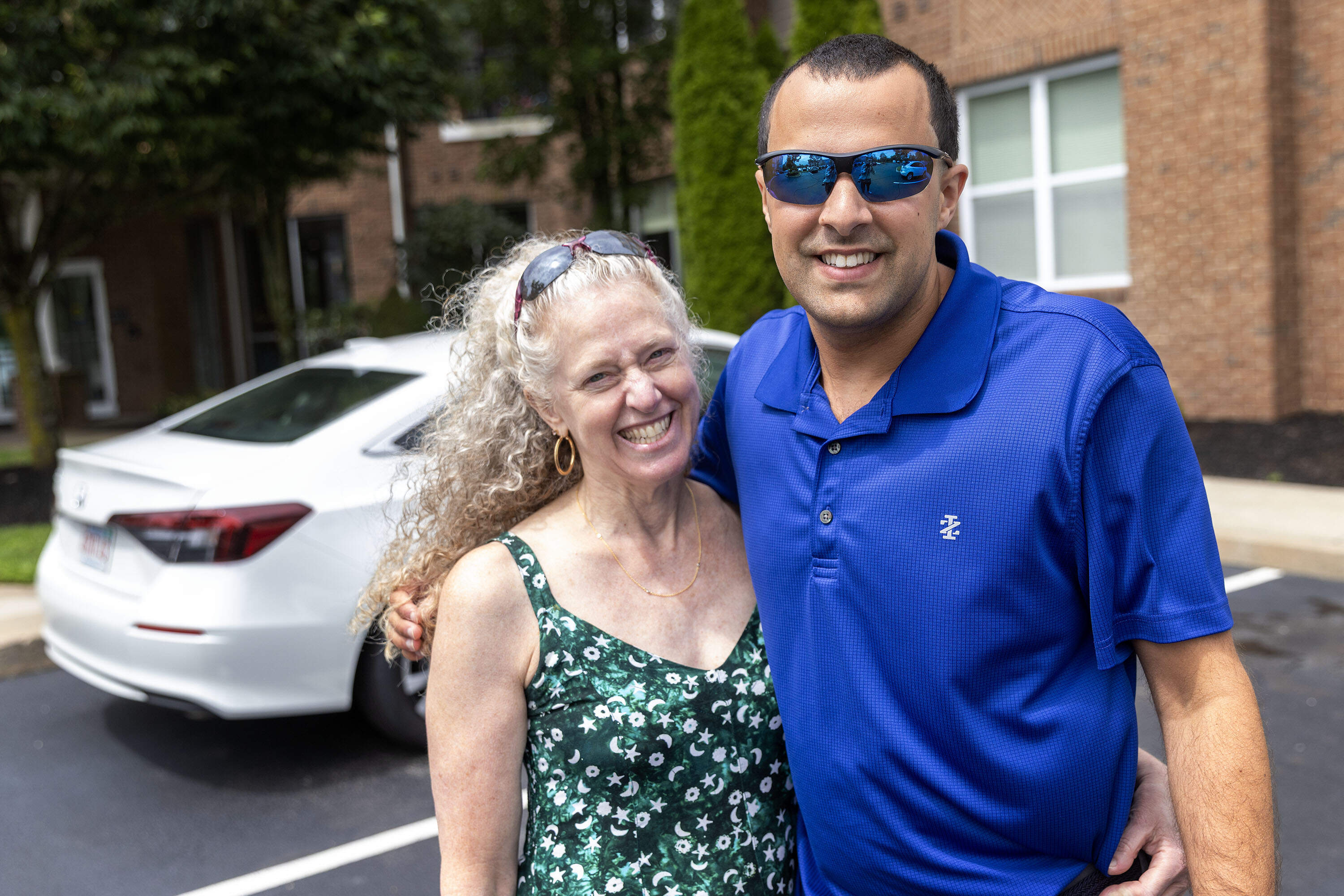
“ He just might not be able to follow basic instructions like staying in your car,” Levine-Kanji said. “He just might be so anxious that he just wants to get out of his car and try and explain or try and see what's happening.”
The blue envelope eases some of Levine-Kanji’s nerves when she thinks about her son driving and potentially interacting with an officer.
Anxiety can look different for everyone. For Taylor Morel, who is also on the autism spectrum, she'll fidget or play with her hands when she gets nervous. The college freshman has high-functioning autism. It might not be immediately apparent to a stranger she’s on the spectrum. Her mom, Meggie Brennick, said that’s why it was important for her daughter to have a blue envelope.
“When we got it, I felt like I could breathe because it would help [police] understand her communication skills,” Brennick said.
Morel thinks more people should know about the program so they can feel safer on the road.
“If anything ever does happen with a police officer pulling me over ... I would be kind of a little more safe,” Morel said.
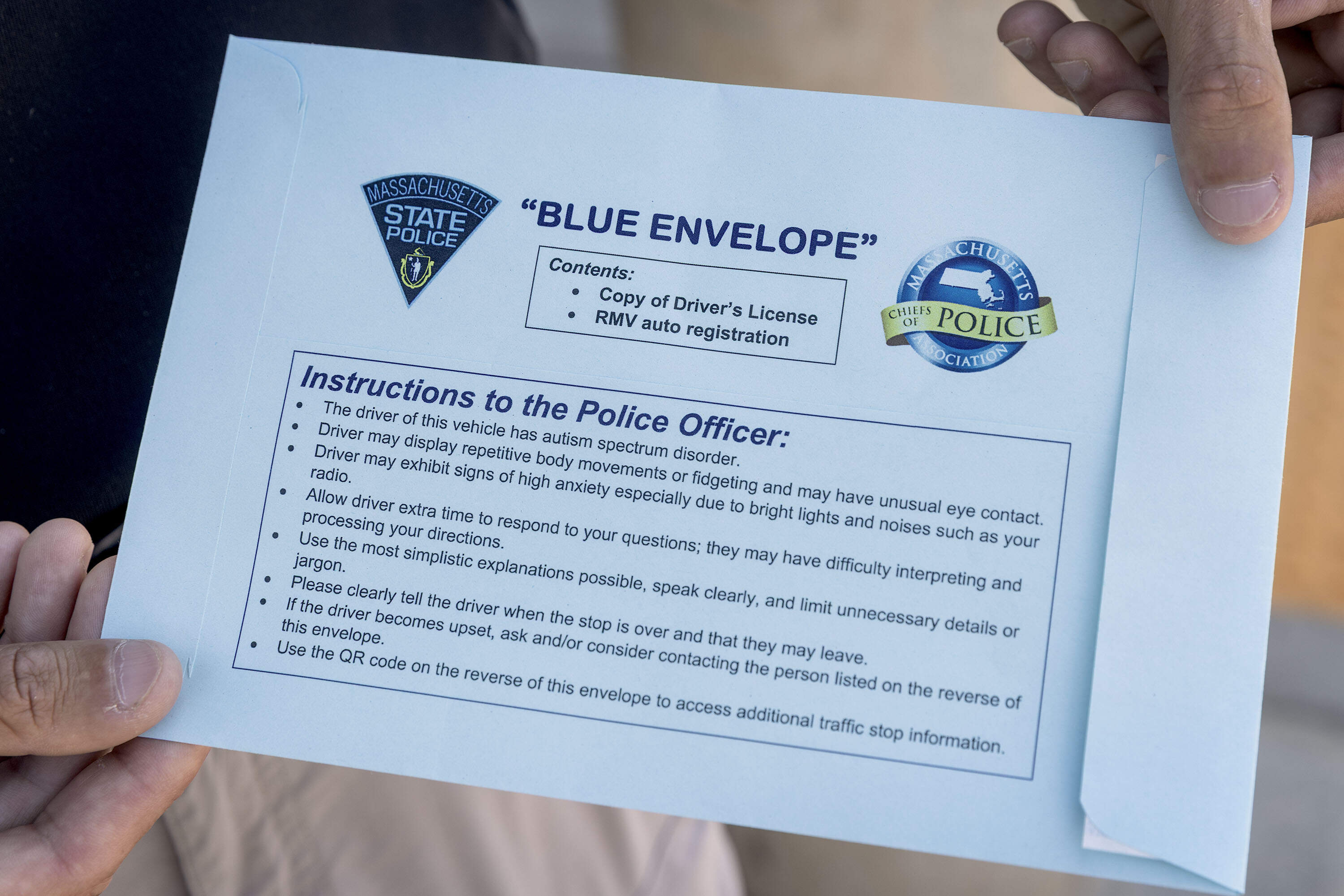
Massachusetts State Police and some other local police departments are currently trained in the Blue Envelope Program. There is a push to expand that and train all municipal police officers. The state Senate approved a bill requiring the training, and it’s currently waiting for a vote in the House.
Any driver can get an envelope from the State Police or other participating departments, like in Lexington and Malden. But while any driver can carry one right now, codifying the program statewide would mean police officers in other towns will be trained on what to do when they see it.
For Kanji and other autistic drivers, a safer driving experience means more freedom. Kanji recently turned 27, lives in an apartment with a roommate and works part-time in retail. Having his license and his car help him live the life he wants to.
“And it makes me feel happy when I drive," Kanji said. "I really enjoy being independent."
This segment aired on September 4, 2025.