Support WBUR
2025 Fall Arts Guides
A guide to Greater Boston's autumnal cornucopia of classical music events
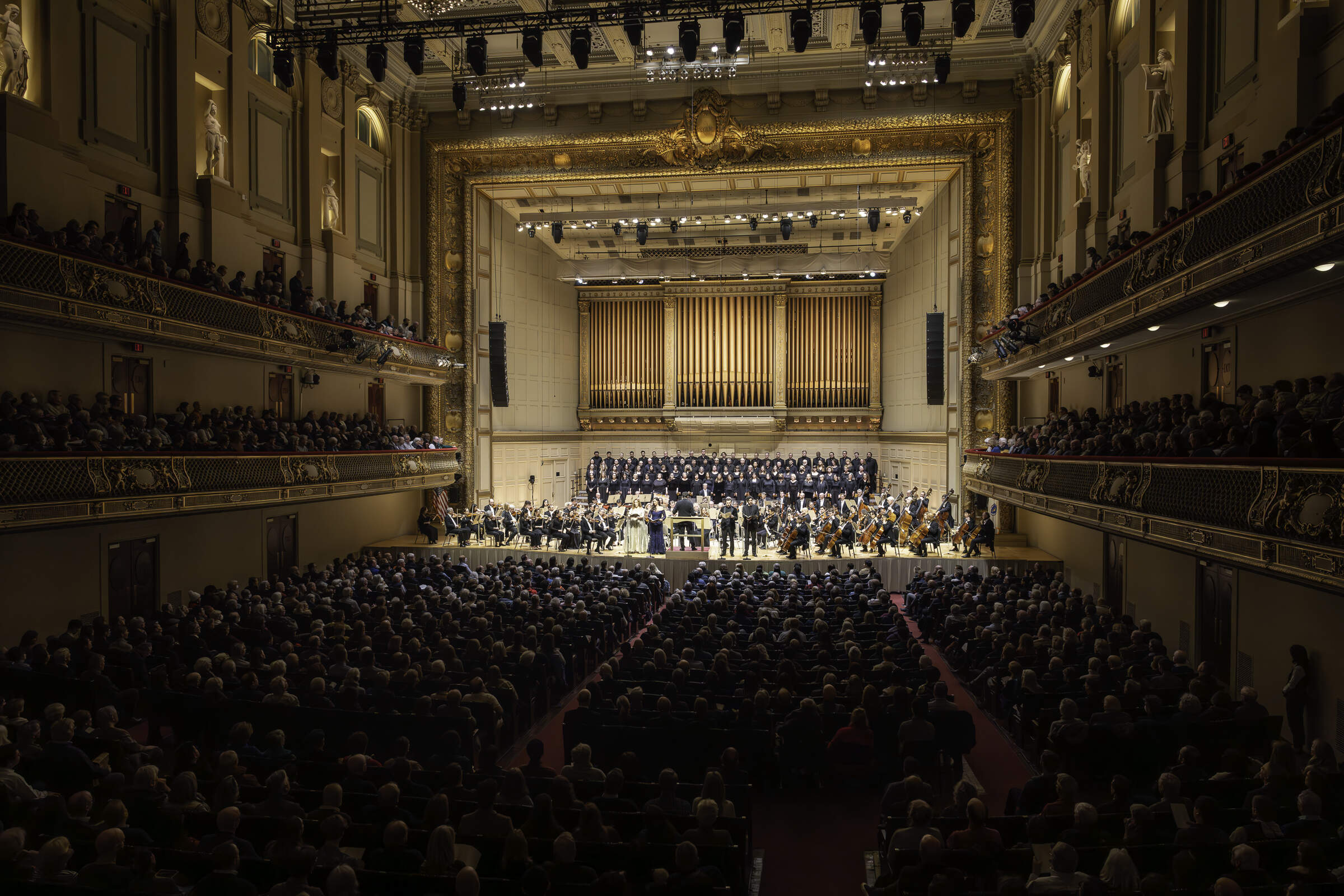
In his great ode “To Autumn,” Keats addressed the season itself: “Where are the songs of spring?... Think not of them, Thou hast thy music too.” This autumn there’s an amazing amount of music — especially classical music — taking place around here. In the summer, we had to leave town to hear the most serious concerts, but in the fall, everything starts to percolate closer to home. So here’s our autumnal cornucopia of the choices classical music lovers will have this fall.
And as I like to remind you every season, there are numerous excellent and often free programs at Boston’s schools and conservatories. And please keep your eyes and ears open for any other performances I might not know about in time for this listing.
SYMPHONY ORCHESTRAS
Boston Symphony Orchestra
Symphony Hall | Sept. 25-Nov. 29
Whatever one’s take on any individual concert, conductor, or guest artist, there’s little disagreement that the Boston Symphony Orchestra is one of the world’s great instrumental ensembles. The season of weekly concerts begins with BSO music director Andris Nelsons leading Mozart’s magnificent “Jupiter” Symphony (his last and most complex) and Richard Strauss’s autobiographical and self-promotional “Ein Heldenleben (A Hero’s Life),” more up Nelsons’ alley (Sept. 25-27).
This year, the BSO is exploring Boston in 1900, with music composed around the time of the opening of Symphony Hall. The first of these programs will include the odd coupling of Debussy’s “Nocturnes,” a sensuously seductive piece often spoiled by the final movement with wordless chorus (“Sirens”). Perhaps the estimable Lorelei Ensemble will give us mystery and danger instead of the usual sugar-coating. Debussy shares the program with a composer Andris Nelsons has been more at home with: Mahler. It’s the enchanting Symphony No. 4, with the young German soprano Nikola Hillebrand, whose operatic roles suggest she might have the perfect voice for the last movement’s view of heaven through a child’s wide eyes (Oct. 2-4).
The following week comes one of the greatest of all choral works, and the very first piece to be performed at Symphony Hall: Beethoven’s “Missa Solemnis” — challenging for the conductor, the orchestra, the chorus, the four vocal soloists, and for the audience! Andris Nelsons conducts, but after the surprising announcement of the resignation of James Burton, director of the Tanglewood Festival Chorus since 2017, the crucial choral director will be Anthony Blake Clark. The only one of the vocalists I’m familiar with is Wagnerian tenor Klaus Florian Vogt, but all four have impressive resumes (Oct. 9-11).
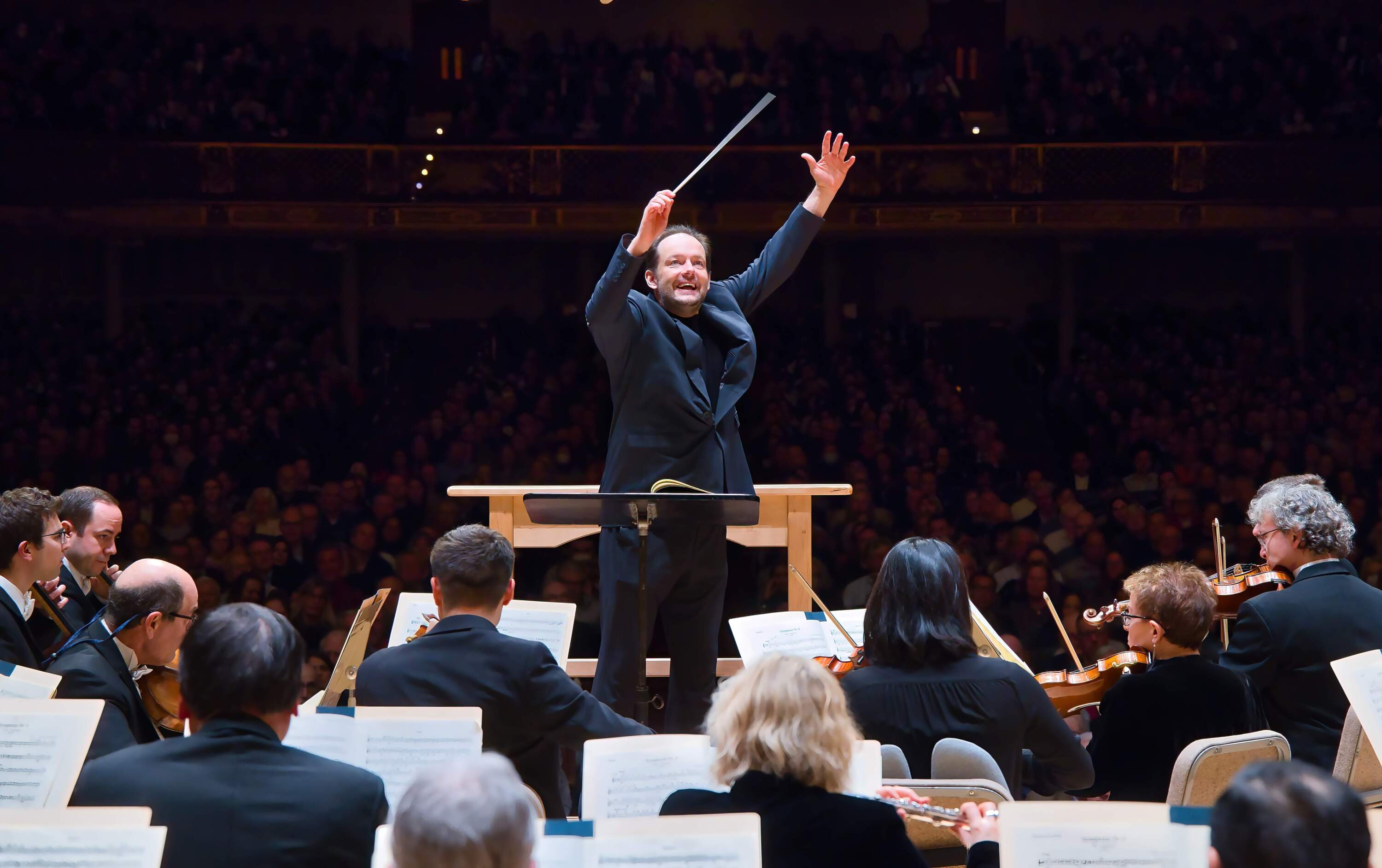
The remaining BSO programs of the fall season begin with Nelsons leading Tchaikovsky’s Fifth Symphony and John Adams’s Violin Concerto (surely the best of Adams’ purely instrumental works) featuring Italian-born, American German virtuoso and BSO 2025-26 artist-in-residence Augustin Hadelich (Oct. 16-18), followed by superstar pianist Yuja Wang playing Prokofiev’s Piano Concerto No. 2 under Domingo Hindoyan on a program including Three Dance Episodes from Leonard Bernstein’s “On the Town” and Aaron Copland’s Third Symphony (Oct. 23-25). Then we’ll get the Dvořák Violin Concerto under guest conductor Nodoka Okisawa (in her BSO debut), on a program with Dvořák’s Symphony No. 7 and Takemitsu’s “Requiem” for strings (Nov. 6-8).
And before it’s time for the Pops, we’ll get guest conductor Dima Slobodeniouk conducting the world premiere of Tania León’s “Time to Time,” Roberto Sierra’s Concerto for Saxophones and Orchestra (James Carter playing both soprano and tenor saxes), and what less likely a closer than Brahms’s Symphony No. 2 (Nov. 13-15). And there’s still more Dvořák in store when assistant conductor Samy Rachid leads the popular Cello Concerto (with Spanish cellist Pablo Ferrández) and the Symphony No. 8 (Nov. 28-29).
These are all likely to be excellent performances, and I’m happy to see some new ideas injected into the programming, but except for the León premiere, the Sierra and Adams concertos, and the overwhelming Beethoven mass, there’s a disappointing familiarity about the repertoire. I wish our greatest orchestra were a little more adventurous in that critical department.
Bach, Beethoven, & Brahms Society
United Parish & All Saints Church | Sept. 28-Dec. 14
You couldn’t accuse Steven Lipsitt’s BB&B of dull or inappropriate programming. Still performing in Brookline churches while its home at Boston’s Faneuil Hall is renovated, BB&B puts the Brahms Second Symphony on a bill with works by Emilie Mayer and Mendelssohn’s rarely performed “Psalm 42,” with soprano Sonja Tengblad and the New World Chorale (Sept. 28). Then Lipsitt weaves a fascinating program in which Bach’s familiar Air (the so-called “Air on a G-String”) from his Orchestral Suite No. 3, Arhtur Foote’s Air & Gavotte, John Corigliano’s Fantasia on a Bach Air and Samuel Barber’s famous Adagio for Strings both bounce off each other and lead inevitably into Howard Frazin’s Peace Cantata, in its Boston premiere, with soprano Carley DeFranco, mezzo-soprano Krista River and baritone Keith Phares (Nov. 18). BB&B’s annual pre-Christmas concert features “minuets, scherzos, & waltzes by Mozart, Bach, Beethoven, & Brahms” (BB&B loves ampersands) with the choral music performed by the Apollo Club, Heritage Chorale and VOICES Boston Children's Choir (Dec. 14).
Boston Philharmonic Orchestra &Youth Orchestra
Symphony Hall | Oct. 19, Nov. 7 & Nov. 23
The passionate fans of Benjamin Zander’s Boston Philharmonic are going to be thrilled by the upcoming programs. On Oct. 19, an evening of Brahms firsts, the Piano Concerto No. 1 with Alessandro Deljavan, maybe the best pianist you’ve never heard of, and the First Symphony — both massive, ambitious works Brahms waited a long time to confront. And even more thrilling, the Verdi Requiem, one of the greatest pieces of choral music ever written and perhaps the most operatic (and scariest) of all masses. With Zander happily in charge, the splendid vocal soloists are soprano Ailyn Perez, mezzo-soprano Daniela Mack, tenor John Osborn and bass Maharram Huseynov. The Chorus pro Musica is under the direction of Jamie Kirsch, but the special guest choral coach and artistic advisor will be Donald Palumbo, who was music director of the Chorus pro Musica in the 1980s before he became the chorus master of the Metropolitan Opera, the position from which he has only recently retired. This will mark a very welcome return (Nov. 23).
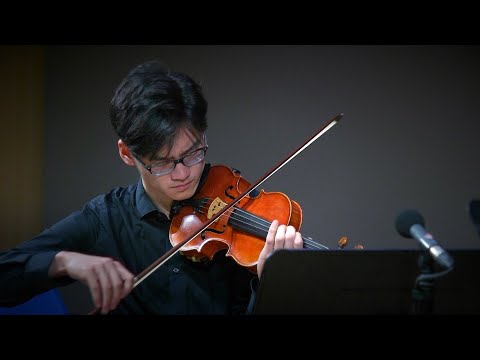
Aside from giving his phenomenal Boston Philharmonic Youth Orchestra a major workout, I’m not sure what holds their fall program together: Bernstein’s “Candide” Overture, Brahms’s unique Double Concerto, with violinist Guy Braunstein and cellist Zvi Plesser, and Prokofiev’s Symphony No. 5. An odd but potentially wild ride (Nov. 7).
VISITING ARTISTS
Weekend Concert Series
Isabella Stewart Gardner Museum | Sept. 21-Nov. 24
The Gardner Museum’s concert series brings celebrity chamber players and soloists to the city. September winds up with the Junction Trio, made up of three chamber music virtuosi: violinist Stefan Jackiw, cellist Jay Campbell and pianist Conrad Tao. I applaud them for presenting a program consisting entirely of music by John Zorn, no piece composed earlier than 2022 (Sept. 21). The Catalyst Quartet evidently made a great impression in its Gardner debut last year, so they’ve been invited back for a program of Joseph Bologne, Croatian composer Dora Pejačević and Beethoven’s late String Quartet in A minor, Op. 132, the quartet that probably inspired the structure of T.S. Eliot’s “Four Quartets” (Sept. 28).
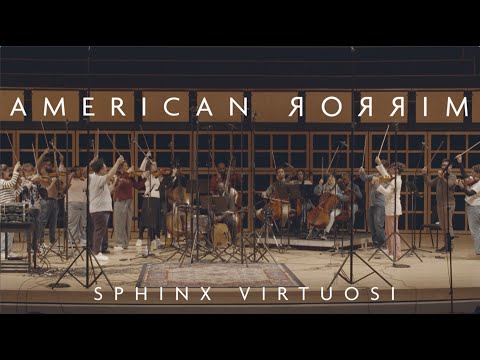
October brings the Sphinx Virtuosi, a 22-piece string ensemble, performing works from across the Americas (plus Prokofiev) composed between 1910 and 2025, with guest cellist Sterling Elliott back by popular demand (Oct. 5). Violinist Miranda Cuckson and pianist Blair McMillen play Beethoven, Lili Boulanger, Prokofiev (one doesn’t hear the gorgeous F-minor sonata often enough), Ross Lee Finney and Eleanor Alberga (Oct. 19). And the superb violinist Rachel Barton Pines returns to play works by Vivaldi, Telemann and Haydn for viola d’amore (on the Gardner’s own super-rare, 18th-century instrument!) and pieces on the violin (I assume her own) by Brahms, Sarasate and Loeffler (Oct. 26).
Then, November brings us Harvard’s Claire Chase playing the flute with violinist Aisslinn Nosky, cellist Katinka Kleijn and Alex Peh on various keyboards in a program of music from the Baroque to the brand new (Nov. 2). Pianist Clayton Stephenson, a recent graduate of Harvard and NEC, makes his Gardner debut in a program ranging from Bach and Schubert’s Impromptus to Albéniz, Stravinsky (Three Movements from “Petrushka”) and Gershwin’s “Rhapsody in Blue” (Nov. 9). The exciting mezzo-soprano Sasha Cooke (Kitty Oppenheimer in the Metropolitan Opera production of John Adams’s “Doctor Atomic” and on the Met’s compelling DVD) brings a cornucopia of mostly American songs with a few detours on the other side of the Atlantic, from Ives’ “Circus Band” to Sondheim’s “The Boy from…,” along with Gershwin, Copland, a world premiere by Jasmine Barnes co-commissioned by the Gardner, Rachmaninoff, Alma Mahler and Kurt Weill’s 1934 “Youkali.” Her piano accompanist is Myra Huang (Nov. 16). (These November shows are currently sold out, but you can join the waitlist.)
The Gardner ends its 2025 concerts with Grammy-winning pianist Michelle Cann playing music by performer-composers, from Mendelssohn, Chopin and Liszt to Florence Price and Atlanta-based Joel Thompson (Nov. 23).
Rockport Music
Shalin Liu Performance Center | Oct. 5, Nov. 2 & 14
Often, I think of Rockport as a place to hear excellent chamber music in the summer. But in fact, Rockport Music continues well into the following seasons and includes a few classical concerts worth looking into. Silver-medalist in the 2022 Van Cliburn International Piano Competition, Russian pianist Anna Geniushene (now living in Lithuania) sounds like she’s a powerhouse. Her Rockport program begins with Schumann’s “Forest Scenes” and Debussy’s marvelous travelogue “Estampes,” and concludes with Glinka’s “Variations on a Theme of Mozart” and a couple of charmers by Fritz Kreisler in piano arrangements by Rachmaninoff (Oct. 5).
I haven’t yet heard Brooklyn-born countertenor Aryeh Nussbaum Cohen, but he comes to Rockport trailing a lot of buzz. Will he transform the role of the countertenor? His recital, accompanied by pianist John Churchwell, includes only one piece from the usual countertenor repertoire: a Handel aria, which will be surrounded by songs by Korngold, Leslie Adams, Florence Price, Clara Schumann, Brahms, Janowski, Ravel’s “Kaddisch” from his “Two Hebrew Melodies,” Jake Heggie and Robert Schumann’s great song-cycle “Liederkreis” (Song-Cycle) (Nov. 2).
One of the Broadway aces singing in and around Boston this season is the marvelous Renée Elise Goldsberry, Tony Award winner (among other prizes) for her portrayal of Angelica Schuyler in the original cast of “Hamilton.” No further details are currently available about this recital (Nov. 14).
Celebrity Series of Boston
Various locations | Oct. 9-Nov. 21
Our richest venue for classical music visitors to the greater Boston area is the Celebrity Series of Boston. Here are this fall’s visiting artists: Mezzo-soprano J’Nai Bridges, a superb artist who can sing Philip Glass as vividly as she can Bizet, is surely worth a trip to the Groton Hill Music Center (Oct. 9). I thought the celebrated young pianist Yunchan Lim was off his form when he was playing Rachmaninoff with the Orchestre de Paris (turned out he had a hand problem that later forced him to cancel his European tour), but he is now back and we trust in good form for his Celebrity Series recital debut, playing Hanurij Lee’s “…Round and velvety smooth blend…” (a piece Lim commissioned) and no less than Bach’s challenging and infinitely moving Goldberg Variations (Symphony Hall, Oct. 22).
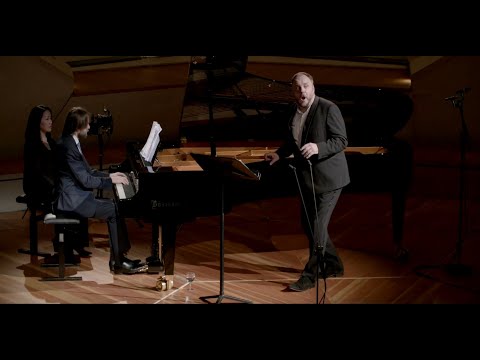
A concert I’d like to single out is the Schubert recital with the magnificent “Lieder” singer baritone Matthias Goerne performing Schubert’s ravishing late song cycle “Schwanengesang (Swan Song)” with pianist Daniil Trifonov, who will also be playing Schubert’s Sonata in G, his last sonata published during his brief lifetime (Jordan Hall, Oct. 24).
I haven’t yet heard the Finnish string quartet Meta4, but they are making their Celebrity Series debut with an intriguing program featuring the late Kaija Saariaho’s “Terra Memoria,” Shostakovich’s String Quartet No. 4 and Beethoven’s late Quartet No. 15 in A minor, an uncompromisingly moving program (Groton Hill Music Center, Nov. 2). Kelli O’Hara is a star of both Broadway and the Metropolitan Opera (and has recently appeared in a featured role on TV’s “The Gilded Age”). An evening with her at Symphony Hall is sure to be a treat (Nov. 4). I haven’t yet heard pianist Beatrice Rana, whose “storytelling prowess and emotional expressiveness” the Celebrity Series particularly praises, qualities especially crucial for the piano versions she’ll be performing of music from two famous ballets, Tchaikovsky’s “Nutcracker” and Prokofiev’s “Romeo and Juliet” (Jordan Hall, Nov. 8). Making her debut in the “Debut Series” will be 17-year-old violinist Amaryn Olmeda. No repertoire has yet been announced (Longy’s Pickman Hall, Nov. 19).
And closing the season will be Yo-Yo Ma playing the Bach cello suites (Nov. 21). The concert has long been sold out, but Ma and the Celebrity Series have partnered to offer a free simulcast of his performance to Massachusetts audiences.
VOCAL MUSIC
Guerilla Opera
BCA Plaza Theatre | Sept. 19-21
One of the most adventurous opera companies in the country, Guerilla Opera has produced more than 40 new works. The latest is Elisabet Curbelo’s interdisciplinary “Ululations and Gurgles of the Invisible,” which blends music (soprano, piano and percussion), dance, sign language and technology. Guerilla Opera partners with the Urban Jazz Dance Company and Deaf artists. The opera is inspired by the poems of Federico García Lorca and uses, we are told, “wearable motion-sensor technology.” Soprano Angela Yam is joined by dancers from the Deaf community in this production choreographed by Antoine Hunter with projections by Daniel B. Chapman.
White Snake Project
Strand Theater | Sept. 26-28
Librettist and activist Cerise Lim Jacobs is the backbone of White Snake Projects, a series of operas with strong social undercurrents that began in 2011 with composer Zhou Long’s Pulitzer Prize-winning “Madame White Snake.” This fall’s opera is “White Raven, Black Dove,” which is described as “a sci-fi fantasy about life after the sixth extinction,” dealing especially with issues of race and climate change. The composer is Jacinth Greywoode (with Andrew Lynch listed as “associate composer”), with stage direction by Laine Rettmer. Tianhui Ng conducts.
Emmanuel Music
Various locations | Sept. 28-Dec. 1
Even before the official start of Emmanuel Music’s concert performances, there are the Bach cantatas that are part of the weekly Sunday service at Boston’s Emmanuel Church. Anyone who would just like to hear the cantata itself is welcome to arrive at 11 a.m. Hear one of your favorites or discover one you haven’t heard before. Check the website for the particular cantata for any given week, and read the wisely eloquent notes by Emmanuel Music’s legendary founder Craig Smith and current music director Ryan Turner.
The first Emmanuel concert event actually takes place at MIT: Errollyn Wallen’s “Dido’s Ghost,” a chamber opera that looks at Purcell’s 17th-century masterpiece as a dream sequence. Rebecca Miller Kratzer directs and Shura Baryshnikov choreographs a cast that includes Carley DeFranco (Dido), David Thomas Mather (Aeneas), Jonathan Woody (the Sorceress), Katherine Maysek, Morgan Mastrangelo and Mara Riley, with the MIT Chamber Chorus (Thomas Tull Concert Hall, MIT, Oct. 18-19).
Emmanuel approaches the holiday season with one of the most ravishing of all Bach’s works, the Christmas Oratorio, made up of six cantatas, with tenor Charles Blandy as the Evangelist (Emmanuel Church, Dec. 13-14).
Handel + Haydn Society
Symphony Hall & Jordan Hall | Oct. 3-Dec. 21
Artistic director Jonathan Cohen plunges into the 211th consecutive season of America’s longest-running arts organization with one of the greatest vocal masterpieces in music, Handel’s gorgeous, tragic and sexy oratorio “Saul,” telling the biblical story of Saul and David (and David and Merab, and David and Jonathan). The solo singers are bass-baritone Neal Davies (Saul), countertenor Christopher Lowrey (David), soprano Sarah Brady (Merab), soprano Julie Roset (Michal) and tenor Linard Vrielink (Jonathan). They are joined by the H+H Orchestra and Chorus, the H+H Youth Choruses and CitySing participants. “Saul” is in English but we are promised English supertitles. Thank you! (Oct. 3 & 5).
Raphaël Pichon returns as guest conductor of Beethoven’s Symphony No. 7 paired with the Beethoven Piano Concerto No. 3 featuring French fortepianist Tanguy de Williencourt (Oct. 24-25). Next comes H+H’s 172nd annual performance of Handel’s “Messiah,” with soprano Lauren Snouffer, mezzo-soprano Avery Amereau, tenor Ben Bliss and bass-baritone Nicholas Newton (Nov. 28-30). And conductor Scott Allen Jarrett brings us a “Baroque Christmas” including Christoph Graupner’s Magnificat in C and works by J.S. Bach and his cousin J.L. Bach (Jordan Hall, Dec. 18 & 21).
Boston Lyric Opera
Emerson Colonial Theatre, Oct. 10 & 12 | SoWa Power Station, Nov. 12
In its 2025-26 season, our most established opera company is offering two fully staged opera productions. The one this fall is Verdi’s “Macbeth,” and although we never get enough Verdi, it’s especially nice to get one that isn’t among the handful we get all the time. “Macbeth” is early Verdi, but it’s the opera considered his first really mature work, or at least the early one that has the most mature music in it, including some of his greatest moments, including Lady Macbeth’s two arias (one of which Verdi added much later in his career) and her chilling “Sleepwalking” scene. The singers include two experienced American regional singers who have even appeared briefly with the Metropolitan Opera: baritone Norman Garrett (Macbeth) and soprano Alexandra LoBianco. One of my favorite local singers, Omar Najmi (Mr. Snow in BLO’s “Carousel” last year), sings Malcolm. “Macbeth” will be conducted by David Angus and directed by Steven Maler (Oct. 10 & 12).

“Macbeth” will be followed by a concert evening called “Ride of the Valkyries,” which BLO is describing as a “madcap operatic mashup,” and will feature celebrity Wagnerian soprano Christine Goerke (last here in BLO’s production of Korngold’s “Die Tote Stadt”) and the much-admired bass and three-time All-American football star Morris Robinson (Nov. 12).
The Cantata Singers
Various locations | Oct. 17, Nov. 7 & Nov. 23
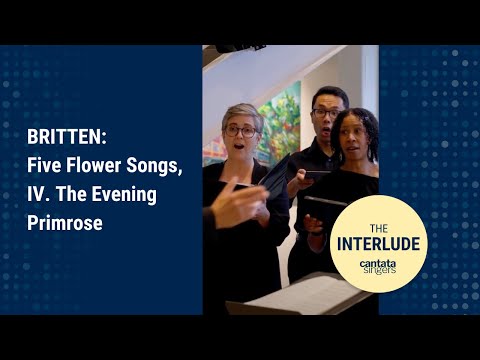
Music director Noah Horn begins the Cantata Singers' fall season with Caroline Shaw’s cantata “To the Hands” and other works not yet announced. This “Choral Festival” includes the participation of high school students who have sung in their schools’ choral groups and who will spend the day of the concert immersing themselves in what they will sing that evening (Boston’s Old South Church, Oct. 17). This will be followed by “Zemlinsky’s World,” in the Cantata Singers Chamber Music Series, directed by Allison Voth, who will also serve as piano accompanist. The music will include Brahms, Berg, Schoenberg and Korngold (Lexington’s Follen Church, Nov. 7). Then Horn will return to lead Handel’s “Messiah” (Cambridge’s Sanders Theatre, Nov. 23).
Coro Allegro
Church of the Covenant | Nov. 16
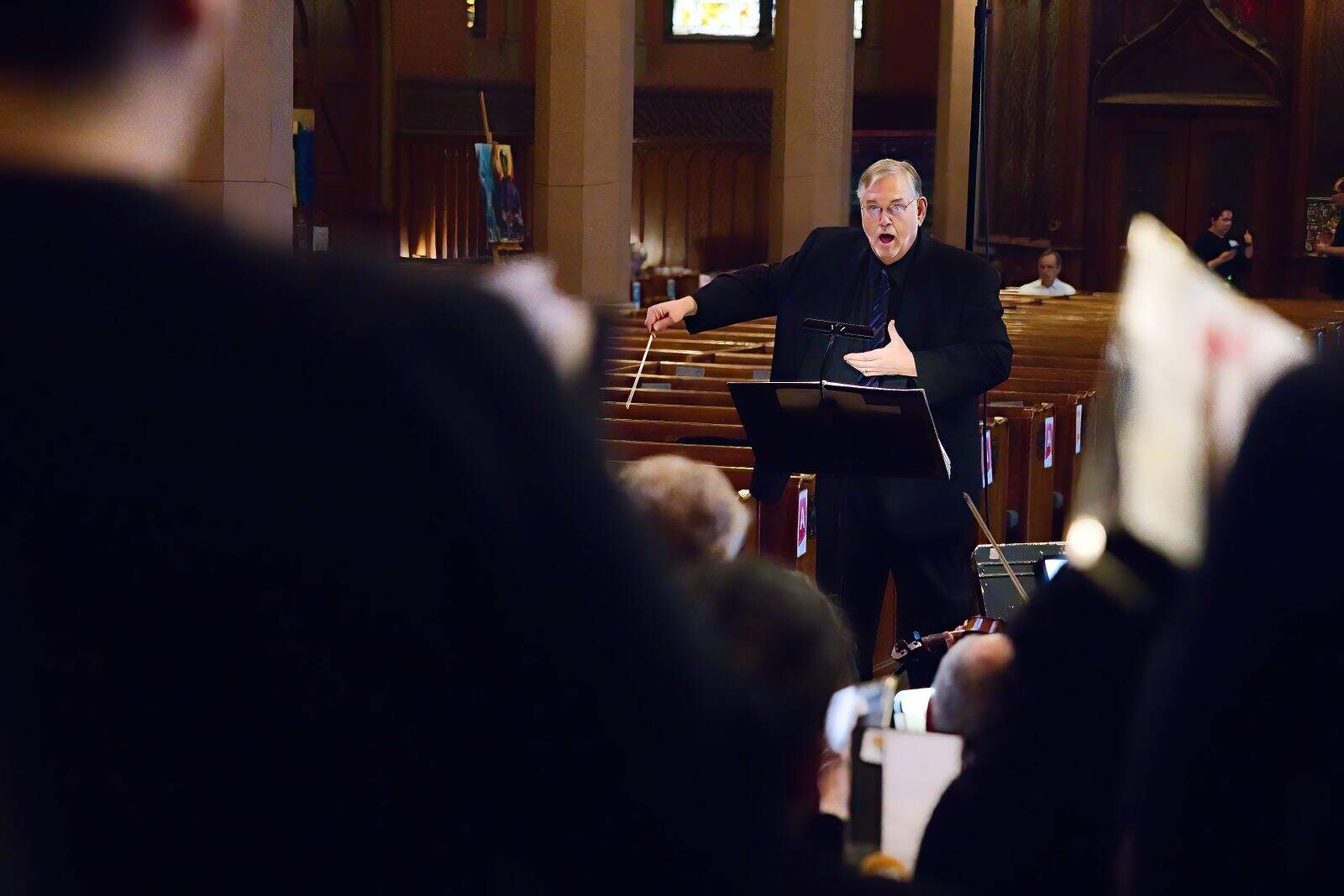
Boston’s choral group dedicated to the LGBTQ+ community and its allies has only one fall concert, called “Eternal Light.” Music director David Hodgkins directs Louis Vierne’s “Messe solennelle” and Morten Lauridsen’s “Lux Aeterna,” two massive liturgical works, both with guest organist Jerrick Cavangaro, along with Ilyas Iliya’s intimate “Avoonans Dbishmayya,” an a cappella version of the Lord’s Prayer, in Aramaic(!).
CHAMBER MUSIC
A Far Cry
Various locations | Sept. 20-Dec. 15
This conductorless chamber orchestra is one of Boston’s most admired musical groups. Each concert is the idea of various members of the ensemble. “Then Is Now,” for example, is curated by violinist Alex Fortes (each member is playfully referred to as a “crier”) and includes music by Caroline Shaw, Osvaldo Golijov, Komitas (arrangements of Armenian folk songs) and Benjamin Britten’s “Variations on a Theme by Frank Bridge” (Jordan Hall, Sept. 20).
“Coming to Boston: From Korea,” curated by criers Jae Cosmos Lee and Megumi Stohs Lewis, includes chamber pieces by Haydn, Jörg Widmann and Korean composers Eun Young Lee, Binna Kim and gamin, a master of Korean wind instruments, who will be playing piri/saenghwang in her own trio “The Stars” and in Lee’s trio “Bagooni” (St. John’s Church Jamaica Plain, Oct. 25; First Church Cambridge, Oct. 26).
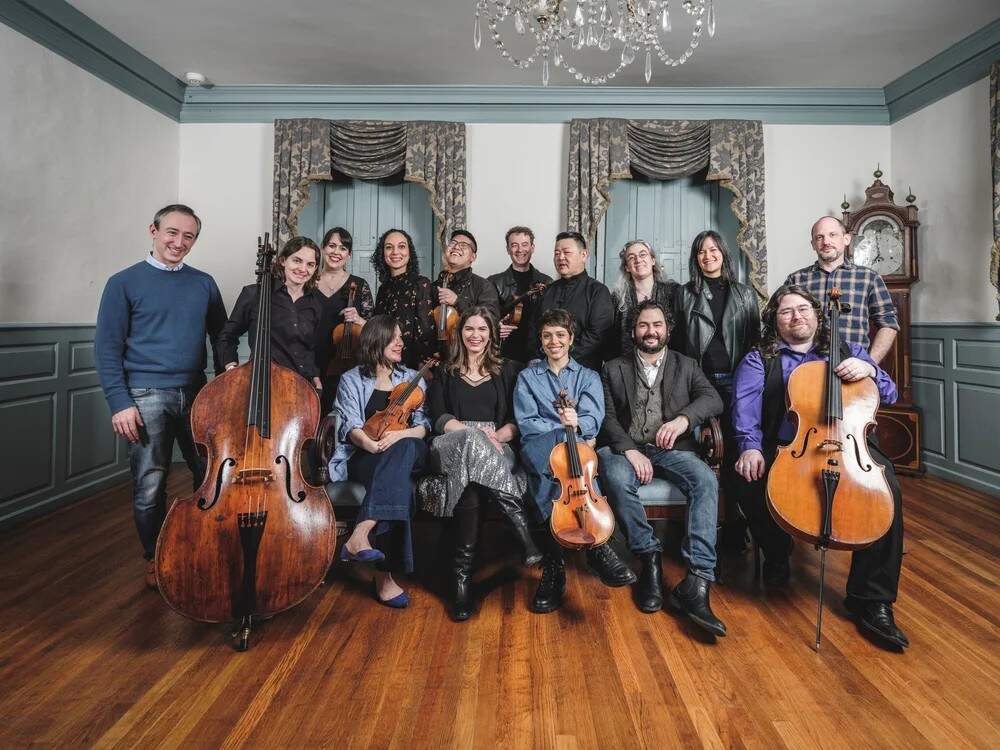
Crier Miki Cloud’s “Lineage” includes pieces reminding us of memory, with some folk-music elements, beginning with the Baroque composer Georg Muffat’s Passacaglia and contemporary composer, pianist and animator Lembit Beecher’s “These Memories May Be True.” These will be followed by four folk songs arranged by A Far Cry and the concert will conclude with Bartók’s great Divertimento for String Orchestra (Jordan Hall, Nov. 22).
And Stohs Lewis returns to curate “Schubert Octet,” a program built around — guess what — Schubert’s uncanny Octet, never performed often enough (St. John’s Church in Jamaica Plain, Dec. 13; First Church in Cambridge, Dec. 14).
Pro Arte Chamber Orchestra of Boston
Various locations | Sept. 21 & Nov. 2
Pro Arte kicks off its 48th season with “Sweet Love, Wild Dance,” led by conductor emerita Gisèle Ben-Dor. The program contrasts Mozart’s dramatic overture to “Don Giovanni” with his more tender Piano Concerto No. 17, with soloist Seokyoung Hong, and concludes with Ginastera’s ballet “Estancia” narrated by baritone Marcelo Guzzo (Sanders Theatre, Sept. 21). Then Sarah Ioannides leads “Uncommon Gems,” with music by Bartók, Swedish composer Elfrida Andreé’s “Intermezzo,” Copland’s Duo, featuring Pro Arte principal flute Anne Bobo, and Poulenc’s Sinfonietta (Second Church in Newton, Nov. 2).
NEC Faculty Recital
Jordan Hall | Sept. 22
Three of the country’s most distinguished musicians are members of the same family, and two of them live in Boston. Violinist and violist Paul Biss and violinist Miriam Fried are married to each other and are both faculty members at the New England Conservatory. Their son, Jonathan Biss, is the superlative classical pianist and co-artistic director of Vermont’s Marlboro Music. Their gift to the Boston community this season is a family and friends recital. The program includes the Mozart Violin Sonata in F, and Dvořák’s Violin Sonatina in G with Paul and Jonathan, and the Mendelssohn String Quintet in B-flat, with Fried and NEC alumna violinist Stephanie Zyzak, Paul Biss and Luther Warren (a current NEC student) on viola, and BSO cellist Christine Lee.
Aston Magna
Newton | Sept. 25 & Dec. 11
During its summer season, violinist Daniel Stepner’s period-instrument chamber group Aston Magna has its concerts in fairly traditional venues. But during the year, the venue is unique, an intimate concert room in the director’s own home, and food and drinks are served before each performance. The first of the two concerts this fall is called “Autumn Cornucopia," and includes music by Mozart, Debussy, Chopin, Gershwin and Stepner himself, performed by Stepner and pianist Peter Takacs (Sept. 25). The second program, “Treasures from the Early Venetian Baroque,” includes music by Monteverdi and Barbara Strozzi, and the performers are soprano Sophie Michaux, gambist Laura Jeppesen and Catherine Liddell on theorbo (Dec. 11).
Boston Chamber Music Society
Sanders Theatre | Sept. 28, Oct. 19 & Nov. 9
Stellar violist Marcus Thompson’s Boston Chamber Music Society is a group with moving parts, a number of admirable soloists playing in a variety of combinations. Its fall season opens with Beethoven’s Cello Sonata in D with cellist Raman Ramakrishnan and pianist Max Levinson, Mendelssohn’s String Quintet in A (Thompson himself is one of the two violists) and the Franck Piano Quintet (Sept. 28). The second concert includes music by Haydn, Louise Farrenc and Brahms (the B-flat String Sextet) (Oct. 19). And the third program, all works in a minor key, features Mozart’s devastating G-minor Piano Quartet (Max Levinson again at the keyboard), Coleridge-Taylor’s Clarinet Quintet in F-sharp minor (Romie de Guise-Langois on clarinet) and Dvořák’s Piano Trio in F-minor (Nov. 9).
Music for Food
NEC's Brown Hall, Sept. 28 | NEC's Williams Hall, Nov. 16
Music for Food may be the most enjoyable fundraiser this city has to offer. Admission is always free, with a suggested donation that will support Women’s Lunch Place. The first concert, “Ancient Heroes,” includes music by Berlioz, Beethoven and Berio, with celebrated violist Kim Kashkashian and flutist Paula Robison (Sept. 28). The second concert, “Songs and Improvisations,” with music by Berio and Schumann, will be performed by Stephanie Zyzak, Kim Kashkashian, Marcy Rosen, Max Levinson, Nathan Cole and vocalist Dominique Eade (Nov. 16).
Boston Symphony Chamber Players
Jordan Hall, Oct. 5 & Nov. 2 | Shalin Liu Performance Center, Nov. 23
The BSO Chamber Players — made up mainly of BSO principal players on their Sundays off — continue the orchestra’s dedication to works composed around 1900, the time of the building of Symphony Hall. The season’s first concert (Oct. 5) includes works by Loeffler, Koechlin, Saint-Saëns, Beach (with guest pianist Randall Hodgkinson) and Schoenberg’s chamber arrangement of Mahler’s “Songs of a Wayfarer,” led by BSO assistant conductor Earl Lee, with the superb mezzo-soprano Sasha Cooke (who will be back in November for a solo recital in the Gardner Museum Weekend Concert Series). The first part of this concert will be repeated at Rockport (Nov. 23), followed by the BSO’s extraordinary principal harpist Jessica Zhou in Debussy’s Trio for flute, viola and harp, and Françaix’s Dixtuor.
The Chamber Players’ other fall concert (Nov. 2) is an all-Mozart program: the far more than merely diverting Divertimento for string trio, the early flute sonata in C, and the brilliant E-flat piano quintet with guest pianist Inon Barnatan. I’ve admired the Chamber Players for their attempts at Mozart over the years, but I confess that I’ve been almost invariably disappointed. It might not be so hard to play Mozart’s notes, but it probably takes years — maybe decades — for a group to develop the intimate interweaving, the spontaneity, and the sense of mystery that make Mozart’s chamber music breathe, sing, and move us so deeply. This necessary intimacy must be particularly difficult for musicians who play mainly in a full symphony orchestra. Maybe with the BSO’s new concertmaster joining the ensemble, the situation might change. I wish I were more optimistic. This is a marvelous program, but my expectations aren’t high.
First Monday at Jordan Hall
New England Conservatory | Oct. 6, Nov. 3 & Dec. 1
Curated for 40 years by Laurence Lesser, cellist and former New England Conservatory president, and now in the hands of violist Nicholas Cords, violinist Soovin Kim and pianist HaeSun Paik, these Monday concerts join NEC faculty members with young musicians from the Institute for Concert Artists. The season’s opening performance includes NEC alumni cellist Deokyong Kim, who has recently been appointed to the New York Philharmonic Orchestra, and violinist Gabriela Diaz, who has just become the newest member of the extraordinary Kronos Quartet, playing in the great Shostakovich Piano Quintet, along with music by Ravel and the late Sofia Gubaidulina (Oct. 6).
November’s First Monday celebrates the legacy of former NEC president Gunther Schuller with a performance of his Quartet for Double Basses, along with the beloved Brahms Clarinet Quintet (Nov. 3). And at December’s First Monday, NEC violist Wenting Kang joins BSO violinist Julianne Lee in Mozart’s sublime Sinfonia Concertante, a concerto for two strings and orchestra in Schuller’s arrangement for string sextet. Also on the program, Caroline’s Shaw’s Harpsichord Concerto (Dec. 1). These First Monday concerts are free but you need to register for tickets online.
Radius Ensemble
Longy’s Pickman Hall, Oct. 9 | MIT’s Thomas Tull Concert Hall, Nov. 20
Jennifer Montbach’s highly admired Radius Ensemble (in residence at the Longy School of Music of Bard College) begins its 27th season with a contemporary composer we don’t get to hear often enough. The “Chronicles” program on Oct. 9 opens with Chicago-based Augusta Read Thomas’ “Rumi Settings” for violin and viola, followed by music by Martinů, Copland and the American premiere of Chinese American composer Fang Man’s “Folktale of Four Dragons,” narrated by tenor (and celebrity chef) Jason Wang. The second concert, “Currents” on Nov. 20 at MIT, features Kinan Azmeh’s “The Fence, the Rooftop and the Distant Sea” for clarinet and cello, Reena Esmail’s “Nadiya” for flute and viola, Ravel’s Piano Trio in A minor and the world premiere of Elena Ruehr’s “Carnival” for wind quartet.
Chameleon Arts Ensemble
First Church, Boston | Oct. 11-12 & Nov. 22-23
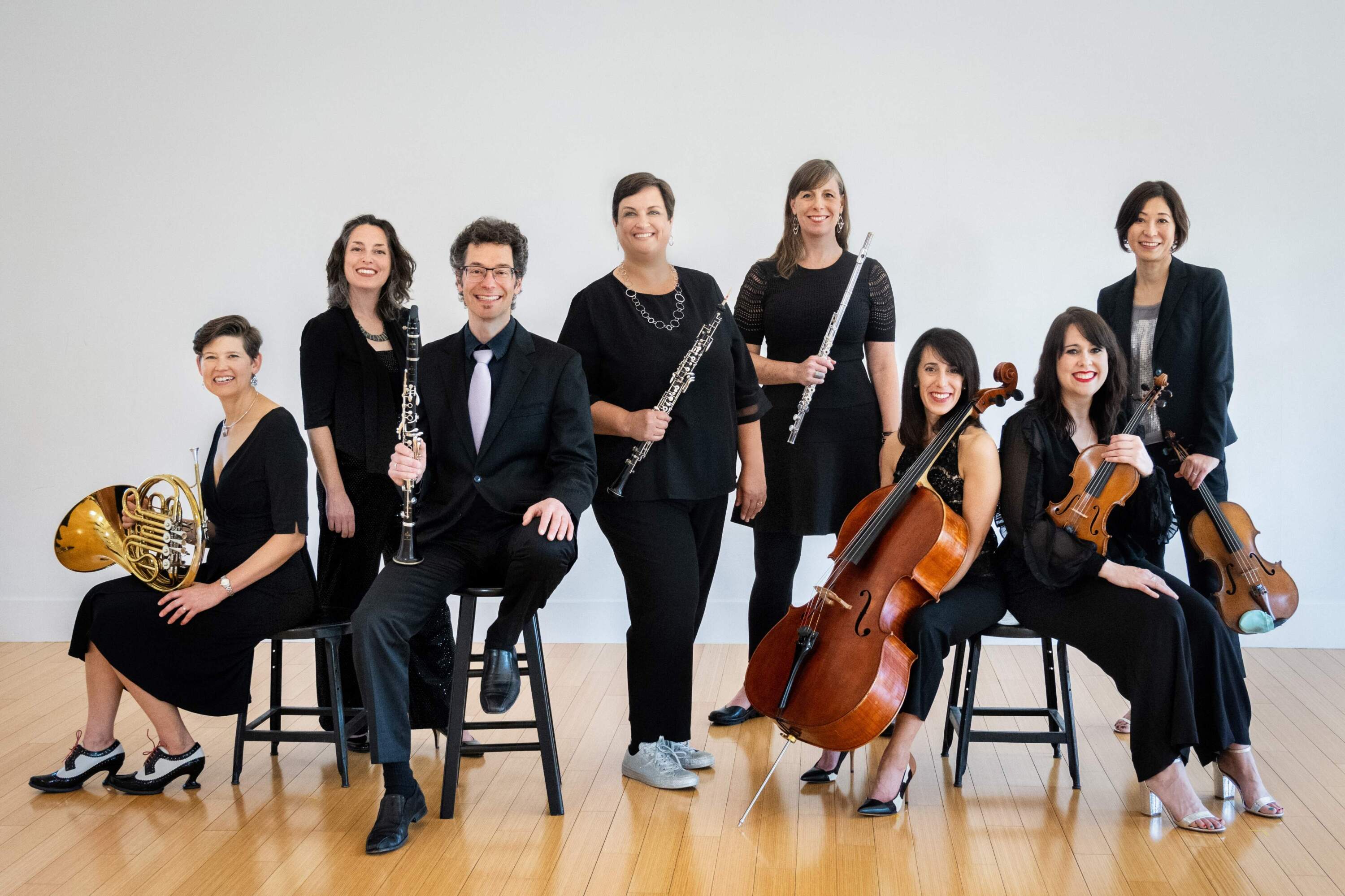
Flutist Deborah Boldin’s distinguished chamber group enters its 28th season with a series of what they’re calling hymns to twilight. “Beneath the setting sun” presents a fascinating selection of work by William Grant Still (“Summerland”), John Adams (“Road Movies”), Fauré, Eleanor Alberga (“No-Man’s-Land Lullaby”) and one of Brahms' most sublime late pieces, his Quintet in B minor for clarinet and strings (Oct. 11-12). Chameleon also brings us a richly varied program called “Homeward Bound,” with chamber music and songs (with soprano Mary Mackenzie), both familiar and surprising, by Schubert, Stacy Garrop, Ives (“The Housatonic at Stockbridge” and other songs), Ernest John Moeran and Beethoven’s Op. 29 String Quintet, “Storm” (Nov. 22-23).
Concord Chamber Music Society
Various locations | Oct. 12, Nov. 22 & Nov. 23
CCMS begins its 26th season under new management. Founding music director Wendy Putnam has retired and the new artistic directors are violist Jessica Bodner and violinist Daniel Chong. For their first concert, they are joined by legendary clarinetist Charles Neidich, cellist Jonathan Swensen and pianist Roman Rabinovich in a program culminating in Messiaen’s still-overwhelming Quartet for the End of Time. Leading up to that will be Schumann’s late trio for clarinet, viola and piano, “Märchenerzählungen (Fairy Tale Tellings),” and Fauré’s Piano Quartet in C-minor (Groton Hill Music Center, Oct. 12). This concert will be followed by a free event at the Concord Free Public Library on Nov. 22 (more details to come) then a program from the percussion quartet Sō Percussion playing music by Caroline Shaw, Bryce Dessner and John Cage (Lexington’s Maxwell Auditorium, Nov. 23).
The Allen Center
Newton | Oct. 19-Dec. 18
Newton’s Allen Center has some exciting news for its upcoming concert season, the biggest of which is that the Lydian String Quartet, the stellar group that has had its home at Brandeis University for decades, has now found a new place to live, as quartet in residence at the Allen Center. And TAC has another new partner: M. Steinert & Sons, which is donating a 9-foot Steinway concert grand piano for visiting artists. Here are the classical highlights for the fall season.
One of Boston’s favorite singers, baritone Philip Lima, and pianist Tudor Bota will be taking on one of the Everests of all song cycles, Schubert’s devastating “Winterreise” (Oct. 19). Then the Lydians arrive for a series of “interactive” open rehearsals, starting with an early and a late Beethoven quartet (Nov. 13).
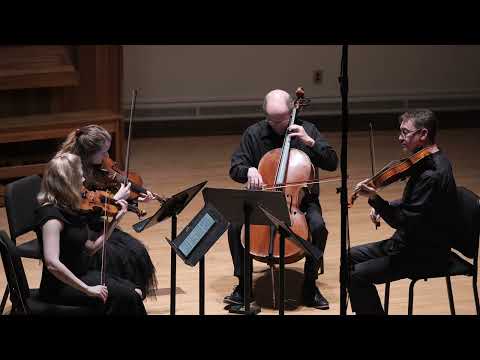
The ensemble Boston Brilliance, which includes BSO violinist Alexander Velinzon, violist Cathy Basrak, cellist Allison Eldredge and pianist Max Levinson, brings a program that includes the Robert Schumann Piano Quartet (Nov. 23).
The fall season ends with Stefan Jackiw and friends. The remarkable violinist Stefan Jackiw will be joined by pianist Kevin Ahfat in the gorgeous Prokofiev Violin Sonata in D and duos by Mozart and Schubert with clarinetist Yoonah Kim, who will then join Ahfat and cellist Allison Eldredge in Walter Rabl’s Piano Quartet for Violin, Piano, Clarinet and Cello (Dec. 18).
Mistral
West Parish Church, Andover & St. Paul’s Church, Brookline | Oct. 25-26 & Dec. 6-7
In Andover and Brookline, flutist Julie Scolnik’s Mistral offers “Young at Heart For Ages 5-95,” a program for the child in all of us that features (pre-Thanksgiving) Bruce Adolphe’s “Tough Turkey in the Big City,” Dukas’ “The Sorcerer’s Apprentice” and David Mullikin’s “The Emperor & the Nightingale” (Oct. 25-26). This concert will be followed by “The Baroque Big Band,” with music by Bach, Handel, Vivaldi, Rameau and Pallavacino (Dec. 6-7).
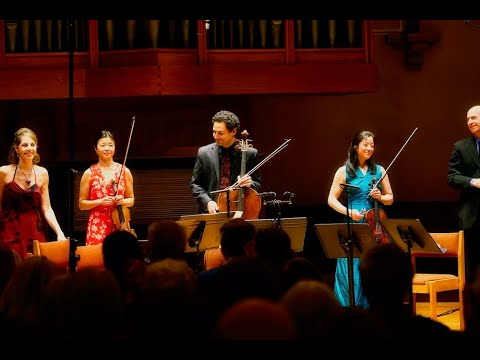
Sarasa Chamber Music Ensemble
Various locations | Nov. 14-16
In honor of the American sesquicentennial, the delectable ensemble Sarasa is offering programs of works that had their debut in 1775 in Boston, London, Paris and Vienna. The November concert, “Sweet Sleep” with soprano Kristen Watson, includes music by Dowland, Arne, Bembo, Muffat, J.B. Bach and J.S. Bach. The ensemble performs at the Brattleboro Music Center in Vermont, Watertown’s Church of the Good Shepherd, and Lexington’s Follen Church.
Winsor Music
St. Paul’s Episcopal Church, Brookline | Nov. 30
Winsor Music has a special treat for its 30th birthday. To honor the extraordinary Peggy Pearson, stellar oboist and founder of Winsor Music, co-directors violinist Gabriela Díaz and clarinetist Rane Moore have commissioned celebratory world premieres by some of Winsor’s (and Pearson’s) favorite contemporary composers — Shaw Pong Liu, Marti Epstein, Peter Child, and John Harbison — and inserted them between a couple of Winsor’s (and Pearson’s) favorite composers of the past, Schubert and Bach. The opening Schubert is the well-known song “The Shepherd on the Rock” (with soprano Mary Mackenzie), and the Bach will be the Brandenburg Concerto No. 6, with Díaz on the viola joining legendary violist Marcus Thompson. Cheers to 30 years!
EARLY MUSIC
Boston Baroque
Jordan Hall | Oct. 11-12, Dec. 5 & 7
You can see how hard it will be to replace Martin Pearlman, longtime director of Boston Baroque (Boston’s first full-time period orchestra), in the decision to have each of the upcoming programs this season led by a different conductor. The October concert will be led by British early music specialist Christian Curnyn, whose extensive CV arouses genuine excitement for his Boston Baroque debut. He’ll be conducting the relatively obscure cantata “Il Pianto di Maria” by Giovanni Battista Ferrandini, with the rising young mezzo-soprano Meridian Prall, a suite from “Les Boréades” (one of Rameau’s operatic masterpieces), Bach’s Sinfonia to Cantata BWV 42 and a suite from Handel’s thirst-quenching “Water Music” (Oct. 11-12).
Boston Baroque’s assistant conductor Filippo Ciabatti, in his BB debut, leads the annual performance of Handel’s “Messiah,” with an impressive team of vocal soloists: soprano Amanda Forsythe, mezzo-soprano Paula Murrihy, tenor Thomas Cooley and baritone Roderick Williams (Dec. 5 & 7).
Boston Early Music Festival
NEC’s Jordan Hall & St. Paul Church, Cambridge | Oct. 17-Dec. 5
The Boston Early Music Festival is the Celebrity Series for early music and historically oriented performances. The season opens with director and gambist Cristiano Contadin’s Opera Prima, with special guest — Boston’s beloved Baroque soprano — Amanda Forsythe, called “Grand Tour: Virtuosic Music of the Galant,” a complex international style. The Galant style masters performed on this program are Hasse, Abel, Tartini, C.P.E. Bach, Johann Gottlieb Graun and his brother Carl Heinrich, and Alessandro Scarlatti (Jordan Hall, Oct. 17). Next, we get the wonderful vocal ensemble Stile Antico in a concert devoted to “The Prince of Music,” Palestrina, including music by his contemporaries and a new piece by British composer Cheryl Frances-Hoad written for this program (St. Paul Church, Nov. 7).
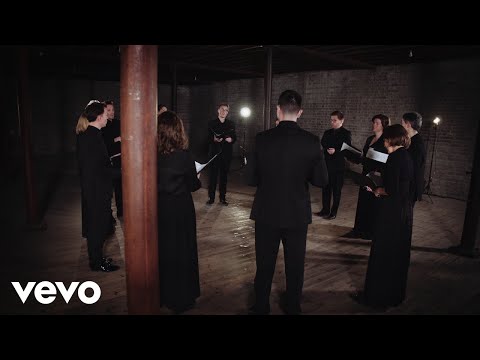
BEMF’s Chamber Opera Series presents Neapolitan composer Francesco Provenzale’s “Stellidaura’s Revenge,” which BEMF describes as a “sultry romp,” “zany tragicomedy” and an “earthy Shakespearean drama.” Musical directors Paul O’Dette and Stephen Stubbs and stage director Gilbert Blin lead the BEMF Chamber Ensemble and soprano Hannah De Priest in the title role, tenors Aaron Sheehan and Richard Pittsinger, baritone Giuseppe Naviglio and soprano Mary Riley (Jordan Hall, Nov. 29-30). And the Tallis Scholars make their 37th annual return in “Mother & Child: English Music for the Virgin Mary,” with music by Byrd, Tallis, Britten (“Hymn to the Virgin”) and a newly commissioned work by Matthew Martin (St. Paul Church, Dec. 5).
The Boston Camerata
Various locations | Oct. 25, Dec. 7 & 21
Hard to believe the ever-youthful Boston Camerata is now entering its 71st season. Artistic director Anne Azéma leads three Boston programs this fall. In “City of Fools: Medieval Songs of Rule and Misrule,” we’re promised selections from “Carmina Burana” and “Roman de Fauvel” along with songs by the Provençal troubadour Peire Cardenal (Friends Meeting in Cambridge, Oct. 25). Camerata’s first Christmas program, “Sing We Noel: Christmas Music from England and Early America,” will arrive in Boston (Old South Church, Dec. 7) after performances in Damariscotta, Maine, Springfield and Newburyport (Dec. 4-6). And its second Christmas program, “The Midnight Cry: An American Christmas,” we are promised will be full of the Camerata’s most popular songs, carols and hymns (First Church, Cambridge, Dec. 21).
Blue Heron
First Church, Cambridge | Oct. 25 & Dec. 19-20
This crowd-pleasing, early music singing group celebrates German poetry and song from the 12th through the 15th centuries. Guest artistic director Priscilla Herreid, who helms the Philadelphia-based ensemble Piffaro, leads the Blue Heron singers and her own Piffaro players in German music from the Minnesingers to Oswald von Wolkenstein (Oct. 25). In December, Blue Heron returns for “Christmas in 16th-Century Spain.” The program combines “mystical motets” by Cristóbal de Morales, “vivacious villancicos” (Christmas carols) by Francisco Guerrero, and the Catalan composer Mateo Flecha’s “rollicking” shipwreck-on-Christmas-Day ensalada (a musical mixed salad) “La Bomba” (Dec. 19-20).
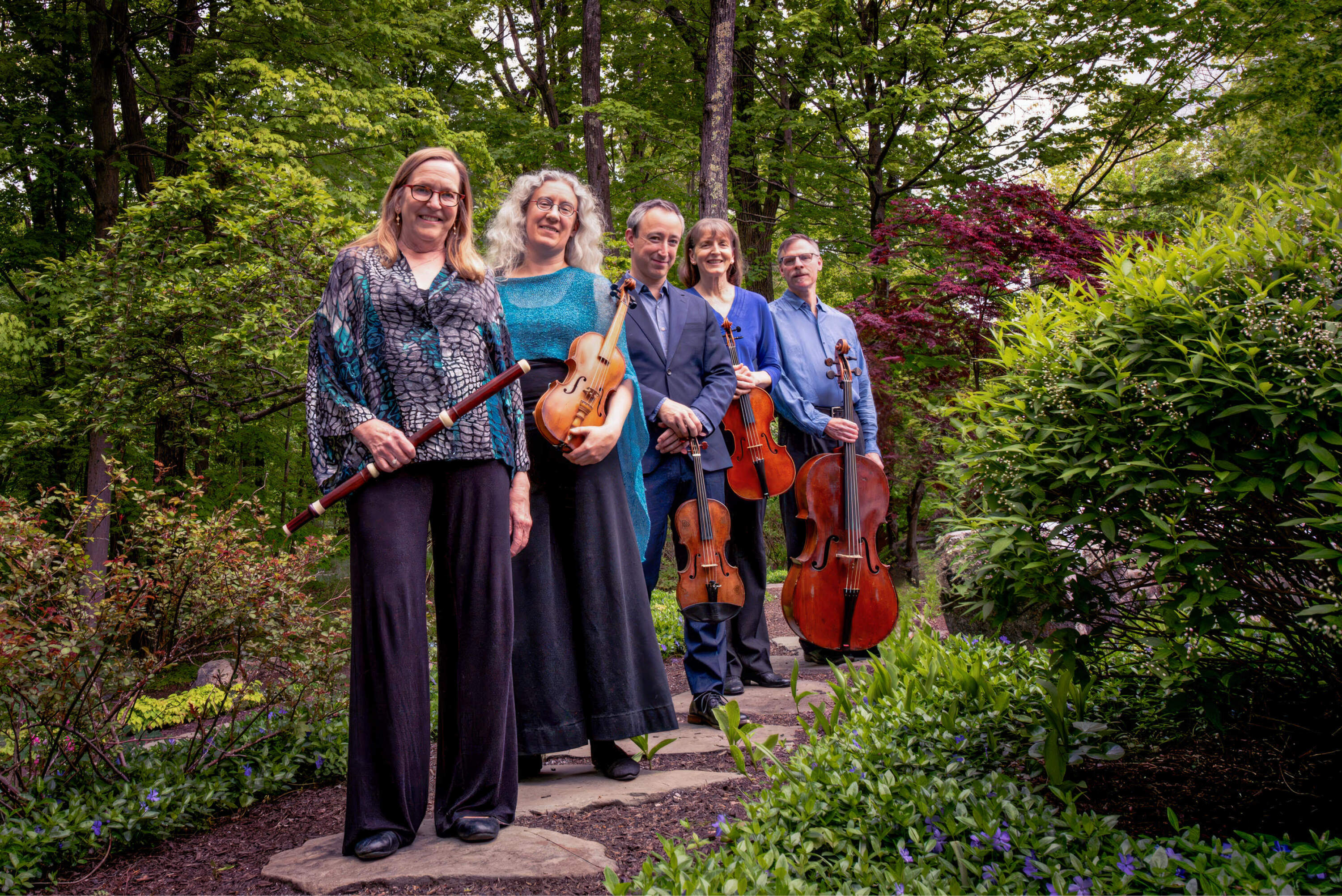
Musicians of the Old Post Road
Various locations | Oct. 25-26 & Dec. 13-14
This outstanding, long-running, early music group offers two concerts this fall. “Brilliant Borrowings” explores the penchant of Baroque composers to rewrite music by other composers. So we’ll be getting Telemann versions of a “Corelli” sonata and a Handel concerto, Nicolas Chédville’s version of Vivaldi’s “Four Seasons,” a Charles Avison string concerto “after Scarlatti,” and Bach’s “Italian Concerto” arranged by the Post Road group for chamber ensemble (Sudbury’s First Parish, Oct. 25; Boston’s Old South Church, Oct. 26). “Christmas in the Bach Workshop” presents arias, cantatas and instrumental works by Bach, his students and his son Johann Christoph Friedrich’s miniature oratorio “Die Kindheit Jesu” (Jesus’s Childhood). Soprano Michele Kennedy, mezzo-soprano Sophie Michaux, tenor Jason McStoots and bass Daniel Fridley join the festivities (Worcester’s First Unitarian Church, Dec. 13; Boston’s Old South Church, Dec. 14).
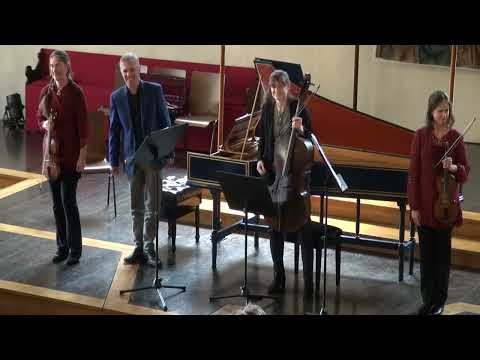
Newton Baroque
Various locations | Oct. 26-Dec. 7
Newton Baroque is an adventurous period instrument ensemble directed by keyboard player Andrus Madsen. Of their six remaining performances this season, only one of them is actually in Newton (three are in Boston, and the rest in Sudbury). I’ve never heard any of their concerts, but the musicians in the ensemble are outstanding. And I applaud the group’s search for less familiar material. The programs this fall are “All the Pleasures of Platti: Sonatas for Flute and Harpsichord by Giovanni Benedetto Platti” (Oct. 26-27), “Loving Lusitano: Motets for 4-6 Voices by Vicente Lusitano and His Contemporaries” (Nov. 14 and 16), and “A North German Christmas: Music by Buxtehude, Bruhns, Geist, and More” (Dec. 6-7).
Seven Times Salt
Various locations | Dec. 18 & 22
This lively quartet’s annual Christmas concert takes place in churches in Beverly (Dec. 18) and Watertown (Dec. 22), but it actually celebrates not so much the holiday of Christmas as the winter solstice. We’re promised carols, consort tunes, wassailing songs, Renaissance dances and Irish reels with audience participation enthusiastically encouraged.
CONTEMPORARY MUSIC
Collage New Music
Longy’s Pickman Hall | Sept. 28 & Nov. 2
Collage New Music, now in its 53rd season, is one of our few musical institutions left devoted exclusively to new music and it has always been one of the best. Eric Nathan, now entering his second season as Collage director, calls the first concert “Memory Palaces,” and focuses on music with a sense of place or memory of a place, in particular Los Angeles and Boston, West Coast and East Coast. In the first half are Curtis K. Hughes’ “Vestibule III” for bass clarinet and marimba, Joan Huang-Kraft’s “A Flowing Brook in Yunnan” for solo piano, Sarah Gibson’s “I prefer living in color” and Christopher Cerrone’s “South Catalina.” After intermission comes Hughes’ “Vestibule I” for flute and bass clarinet, Nina Young’s “Rising Tide,” the world premiere of Nomi Epstein’s “with” (a Collage commission) and Steven Stucky’s “Ad Parnassum” (Sept. 28).
The second concert, “Clocks for Seeing,” will be led by Jeffrey Means, a specialist in contemporary music I’ve especially admired, along with soprano Tony Arnold, Collage’s artistic partner, whom I’ve also admired. We’re advised that this program combines the sense of time passing with the sense of home. It’s also about the lineage of composers, the influence a teacher has on a student — and vice versa. The program consists of György Ligeti’s “Poème Symphonique” with 100 metronomes, Inga Chinilina’s “In den finsteren Zeiten,” Anthony Cheung’s “Clocks for seeing,” world premieres by Collage fellow Gaston Gosselin’s “New Work” and Eric Chasalow’s “Three Tastes of Home,” both Collage commissions, and Olivier Messiaen’s “Danse de la fureur, pour les sept trompettes," the sixth movement of his “Quartet for the End of Time” (Nov. 2).
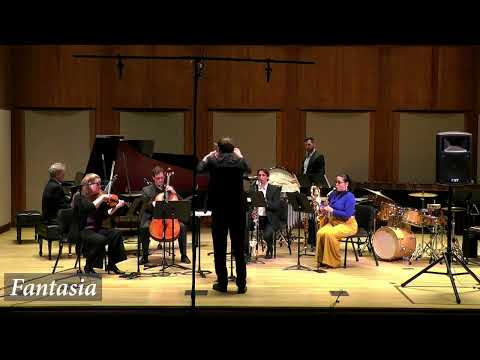
New England Philharmonic
Boston University’s Tsai Performance Center | Oct. 11 & Dec. 14
The New England Philharmonic is not, in the strictest sense, a new-music ensemble, but under music director Tianhui Ng, it might just as well be. Its first concert includes the Boston premiere of NEP’s composer-in-residence Carlos Carrillo’s “The Gathering Grounds,” the winner of NEP’s “call for scores” program Loren Loiacono’s “Beanie’s Chapbook,” Missy Mazzoli’s “Procession,” featuring NEP’s outstanding concertmaster Danielle Maddon — none of these completed before 2018! The program concludes with Mussorgsky’s “Pictures at an Exhibition” — a work from 1874 but in Ravel’s arrangement from 1922, which sort of makes it a 20th-century work (Oct. 11).
Did you know that the Harvard-Smithsonian Center for Astrophysics had a resident composer? (I didn’t.) His name is David Ibbett and this year’s NEP’s family concert includes the world premiere of his “Black Hole Symphony,” also his “Cosmic Traveller’s Guide to the Black Hole.” There’ll also be a concerto performed by the winner of this year’s Young Artist Competition (Dec. 14).
This article was originally published on September 11, 2025.