Support WBUR
Boston's Morning Newsletter
Boston is making it easier for restaurants to upgrade their alcohol licenses
Editor's Note: This is an excerpt from WBUR's daily morning newsletter, WBUR Today. If you like what you read and want it in your inbox, sign up here.
Pack your umbrella; today's forecast is calling for scattered downpours.
But first, the news:
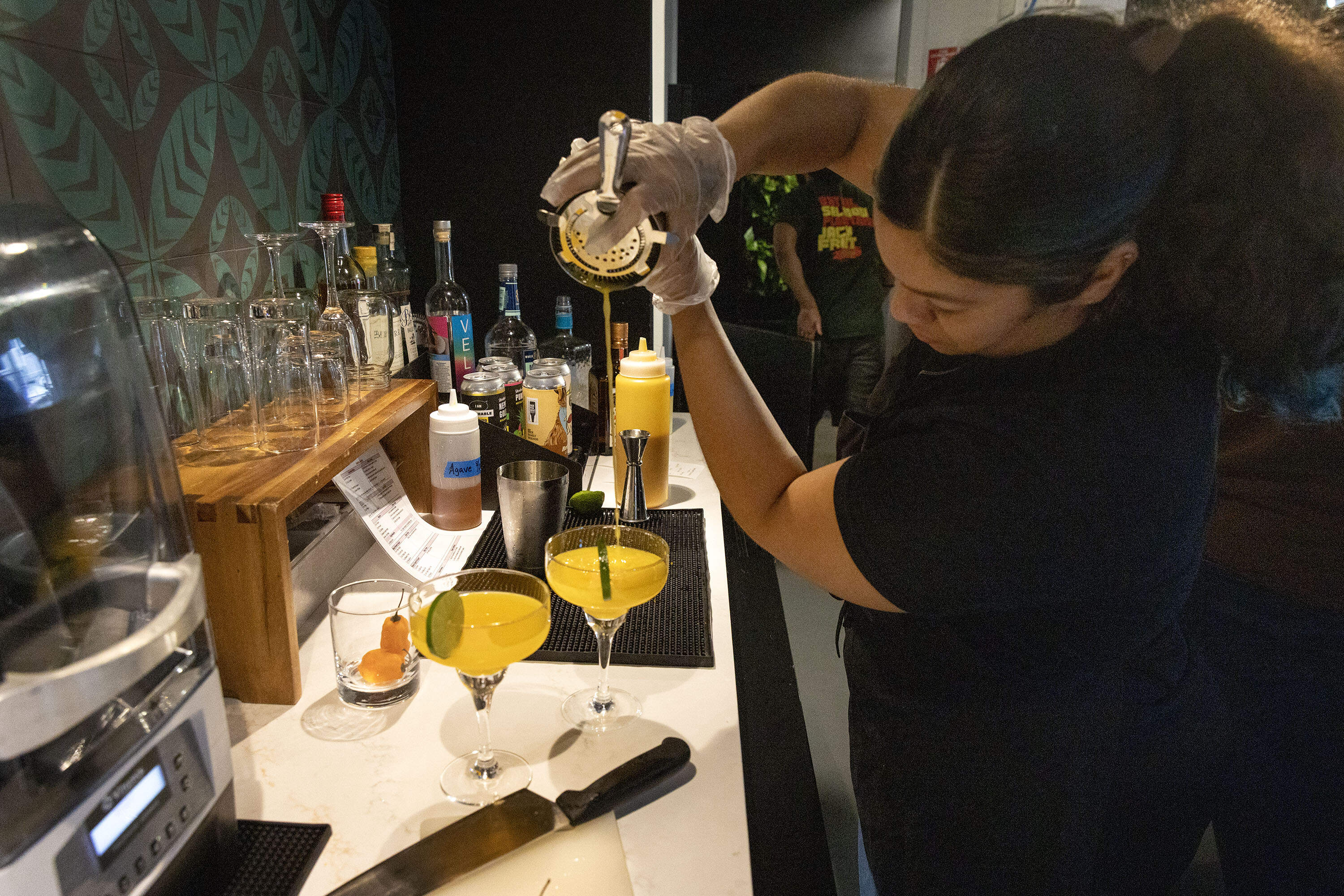
Top shelf: The Boston City Council approved a measure yesterday that allows restaurants to upgrade their liquor licenses. As WBUR's Amanda Beland reports, the bill would allow the 375 businesses in Boston with existing licenses to sell only beer and wine to exchange it for an all-alcohol license to sell liquor and cocktails, too. The move would allow them to bypass the often six-figure cost of buying a whole new license. Councilor Gabriela Coletta Zapata, who introduced the measure at the meeting yesterday, said it "reasonably expands opportunity to small businesses across the city to help them increase profit margins and compete in the industry."
- Case in point: At a hearing earlier this week, Mimi Chan, co-owner of Dynasty in Chinatown, said an upgraded license would allow the restaurant to offer "a more authentic" dining experience. "In American, Italian and French restaurants, red wine pairs with red meat; white wine pairs with white meat," Chan said. "But for Chinese cuisine, it pairs well with rice wine and other Chinese spirits that we do not offer today because of the restriction of our license." Chan added they understand "the responsibility that comes with serving hard liquor" and pledged to maintain a "safe, respectful and family-friendly" environment.
- Why now? The measure takes advantage of a recent state law change included in Beacon Hill's budget this summer, which freed up city and towns to allow the license upgrade, if they opted in. Restaurants need to be in good tax and labor standing, and get the state's sign-off to be eligible for an upgrade.
- What's next: The measure now goes to Boston's Liquor Licensing Board, which will hash out the regulations and work with businesses on the process.
- ICYMI: Boston — which has long had its alcohol licenses capped by the state — successfully pushed for 225 new licenses last fall, the biggest increase since the Prohibition. Most of them were reserved for neighborhoods that had been left out of the liquor license game. However, so far, uptake has been slow in most of those neighborhoods. Amanda has an in-depth look at what's going on.
The void in the valley: Nashoba Valley residents are getting a new emergency care option. This week, UMass Memorial Health broke ground on a "satellite emergency facility" in Groton. As WBUR's Amy Sokolow reports, it's expected to open in early 2027 and will help fill the void left by the closure of Nashoba Valley Medical Center in Ayer last year after owner Steward Healthcare went bankrupt. According to UMass Memorial Health, the facility will have the same level of services as a traditional emergency department, including a helipad, beds and certain imaging services.
- Why it matters: Right now, it can take up to an hour to get emergency care in the area, according to state Sen. John Cronin. When the new facility opens in early 2027, Cronin said that's expected to drop to 20 minutes max. "It's so important that patients are able to access a hospital and an emergency department within that 'golden hour' — that first hour between when a medical emergency onsets and getting to care," he said.
- What's next: First responders and other regional emergency rooms are still being squeezed by increased demand after Nashoba Valley Medical Center's closure, Cronin said. So, with the opening of the new satellite facility still over a year away, Massachusetts lawmakers recently put $5 million in a supplemental spending bill to help. "That's gonna help cover overtime and extra coverage for paramedics until the satellite emergency facility is opened," Cronin said.
Skip the confusion: The City of Boston is hosting a series of free vaccine clinics this fall — no appointment, insurance or ID necessary. All of the clinics will offer flu and COVID shots, and some will offer routine childhood vaccinations. See the schedule here.
- The clinics come after Gov. Maura Healey's administration earlier this month ordered local insurers to cover state-recommended vaccines, regardless of federal guidelines. So if you do have health insurance, bring your card.
P.S.— Tonight at CitySpace, we're hosting a self-defense class to learn skills and tips on how to stay safe — no matter your gender, ability, background or experience. The event includes remarks from Diane Rosenfeld, founding director of the Gender Violence Program and lecturer at Harvard Law School, hands-on self-defense training from IMPACT Boston's Meg Stone, and even some dance music and networking. Get your tickets here.