Support WBUR
A quest to end breast cancer slows as the Trump-Harvard dispute drags on
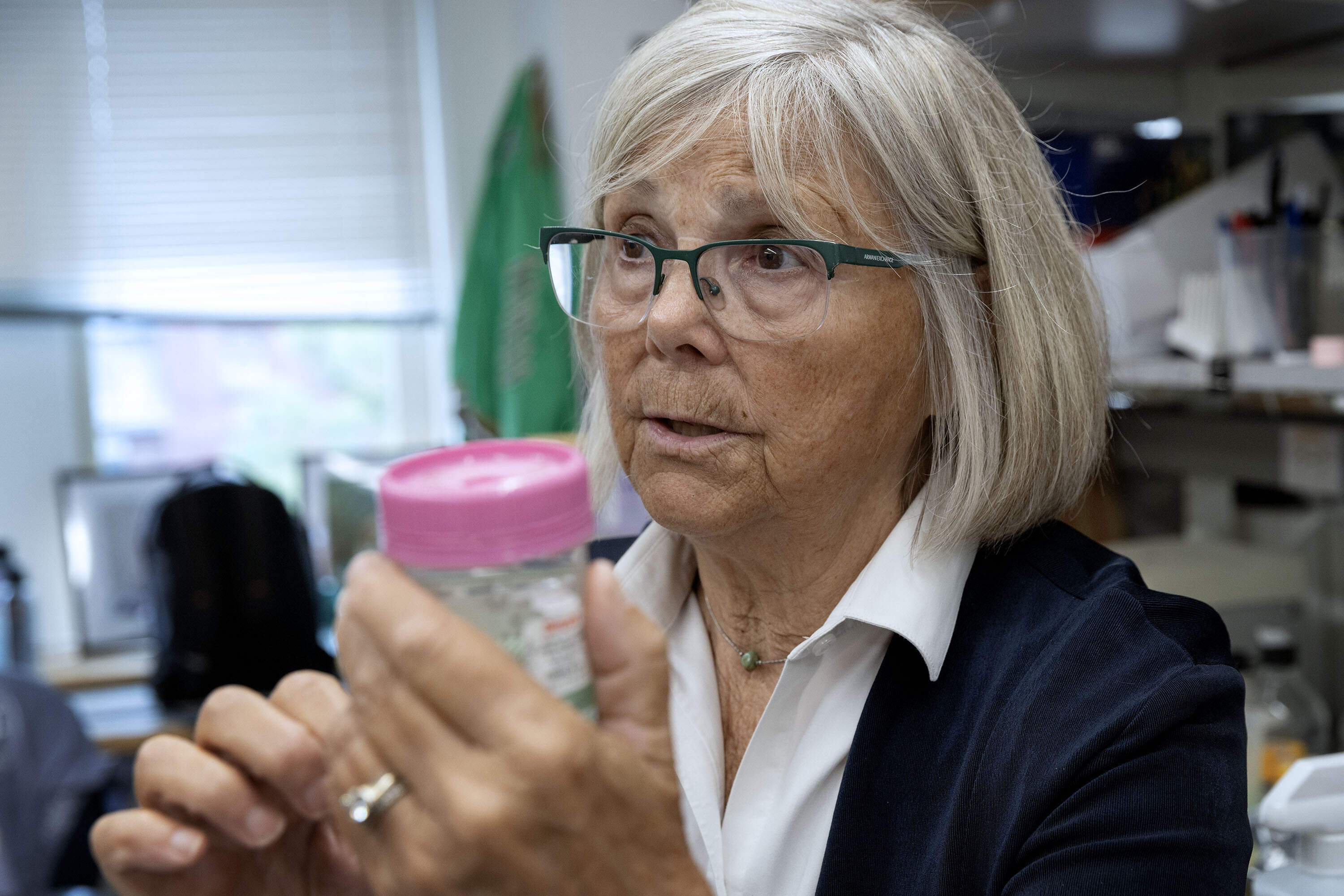
About two dozen small, pink-lidded plastic jars sit on a metal counter inside a lab at Harvard Medical School. Veteran cancer researcher Joan Brugge lifts one and looks at it with reverence. Each jar holds breast tissue donated by patients who had a biopsy or surgery at Dana Farber Cancer Institute — samples that may reveal a new way to prevent breast cancer.
Brugge’s team analyzes these samples in a quest to help the roughly 1 in 8 women, and some men, who will battle breast cancer avoid the pain, suffering and risk of death that accompanies this disease. Their work shows progress.
Late last year, Brugge and colleagues identified the specific cells that contain the seeds of breast tumors. And, surprisingly, they discovered that these “seed cells” were present in what appeared to be the normal, healthy tissue of every breast sample they examined.
The next challenges: finding ways to detect, isolate and terminate the mutant cells before they have a chance to spread and form tumors.
“I’m excited about what we're doing right now,” Brugge said. “I think we could make a difference, so I don’t want to stop.”
Yet the lab’s work has slowed way, way down. Brugge’s project is one of hundreds at Harvard caught up in an ongoing dispute with the Trump administration over the university’s handling of antisemitism on campus. Last spring, the administration froze nearly $3 billion in research grants and contracts to punish Harvard. That included funding from the National Institutes of Health for Brugge’s breast cancer research — a seven-year grant worth $7 million.
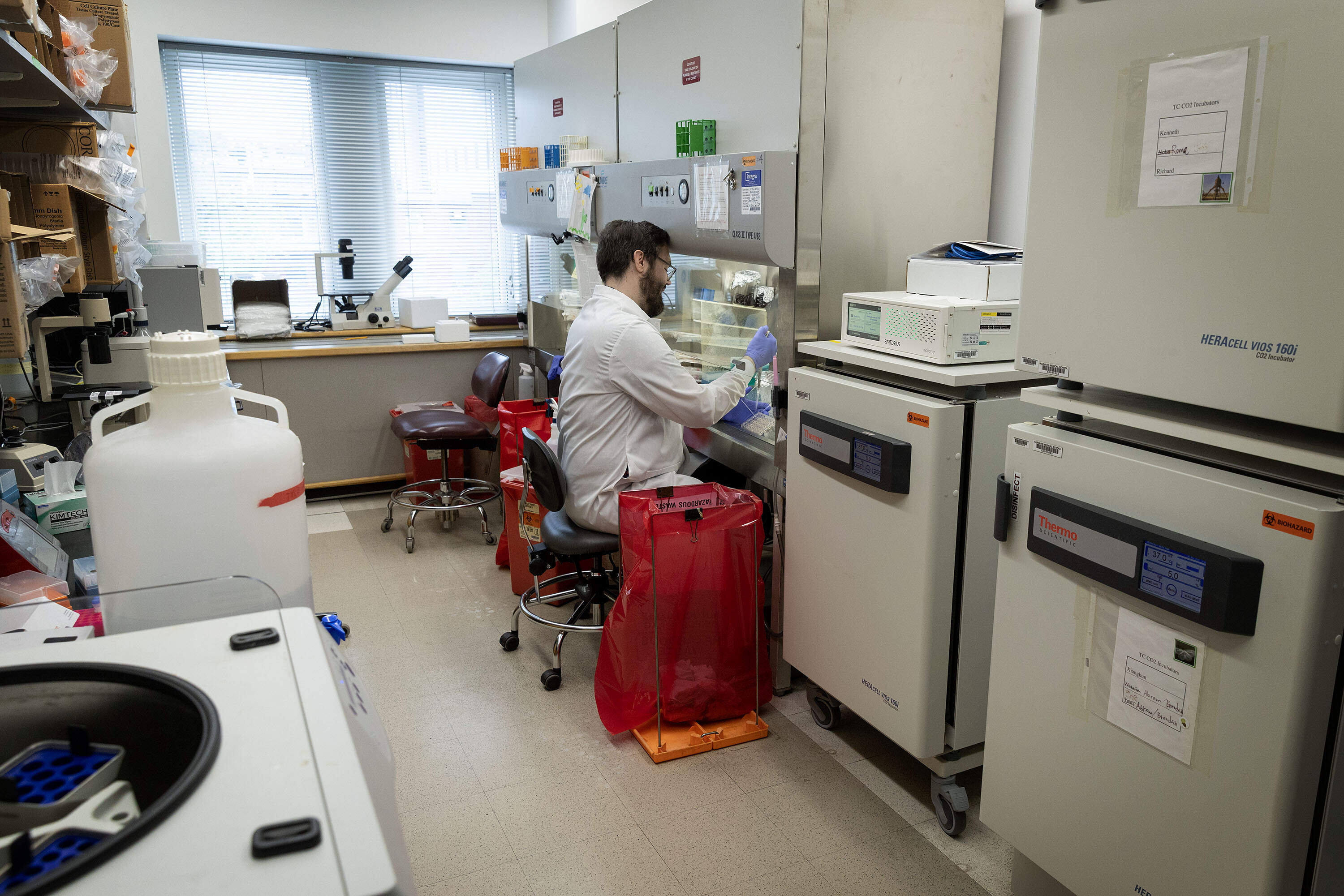
It’s not just Brugge’s lab. Harvard scientists trying to improve care for patients with other types of cancer, Alzheimer’s, diabetes, and ALS are all struggling to keep experiments running amid uncertainty about the future of their federal funding.
Harvard and the Trump administration have been in settlement talks but not reached a deal. In the courts, Harvard won the first round of a legal challenge to the federal funding freeze, and some back payments have come in, but the administration has said it will appeal. And even if the current awards are restored, there may be a lot less federal funding for cancer research nationwide next year.
Already, President Trump has proposed cutting the NIH budget by nearly 40% in 2026. In a budget message, the White House said the “NIH has broken the trust of the American people with wasteful spending, misleading information, risky research and the promotion of dangerous ideologies that undermine public health.”
House and Senate budget plans are more generous, but the outcome for funding is still unknown. Mark Fleury, a policy specialist at the American Cancer Society Cancer Action Network, was in Washington D.C. earlier this month reminding lawmakers that research is one reason the cancer death rate is down 34% since the early '90s.
“But we still have an incredible ways to go before we can say that we’ve changed the trajectory of cancer,” said Fleury. “There are still cancer types that are fairly lethal and there are still populations of people for whom their experience of cancer is vastly different from other groups.”
Fleury said reducing research funding will have a direct impact on treatment options for patients. A 10% funding cut would eventually result in two fewer new drugs or treatments per year, according to a Congressional Budget Office projection.
A study published Thursday in the journal Science found that more than half of drugs approved by the FDA since 2000 used NIH-funded research that would likely not have happened if the NIH had operated with a 40% smaller budget.
“We can’t say, ‘But for that grant, that drug would not have come into existence',” said Pierre Azoulay, a study co-author and a professor at MIT. “But it makes us at least want to pause and say, ‘What are we doing here? Are we shooting ourselves in the foot?’ ”
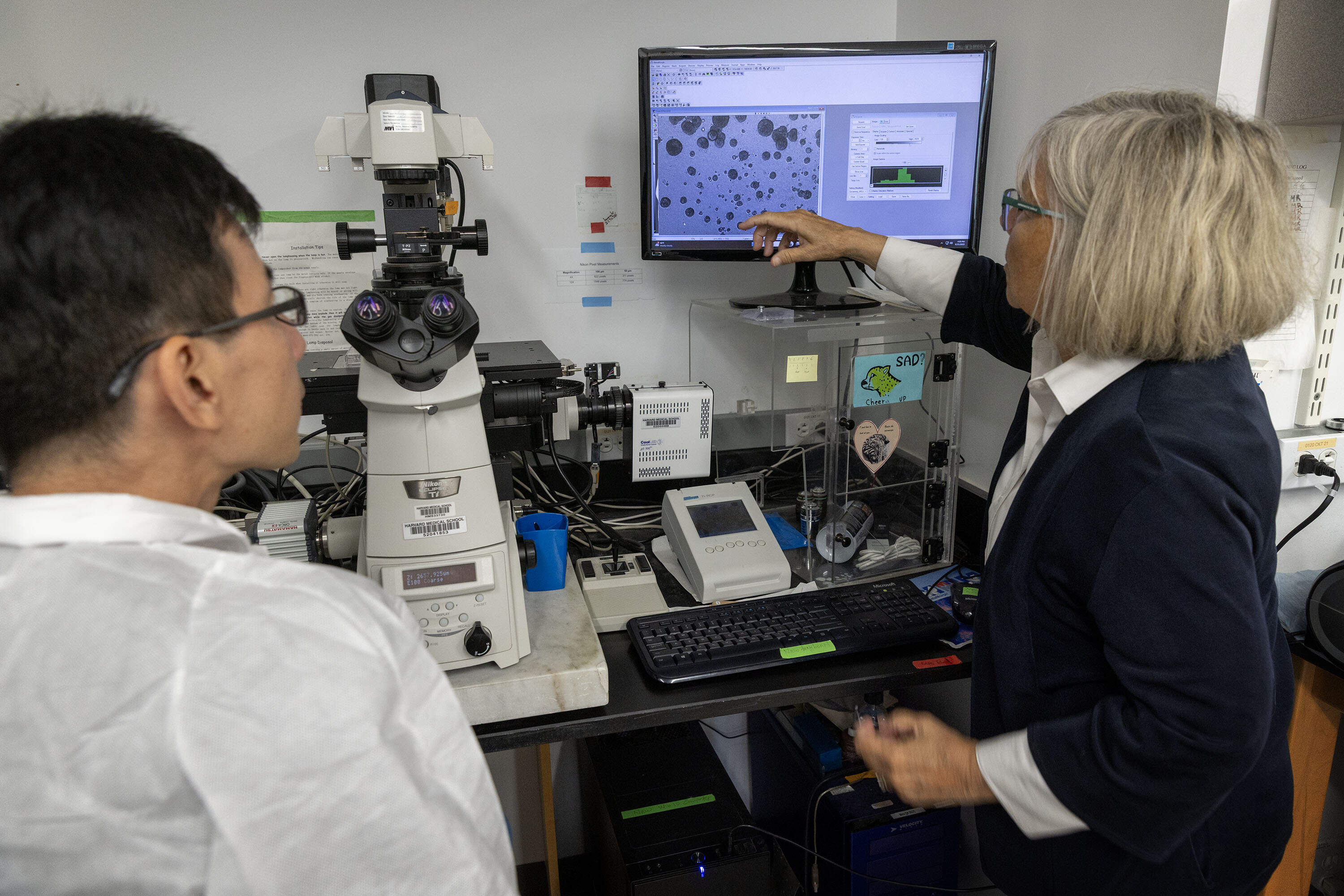
Amid these pressures, Brugge’s research has suffered. She now has to spend about half of her time searching for funding, managing employees’ anxieties and trying to decipher updates from the media, the university and the Trump administration — instead of focusing on the investigations she’s confident could save lives. She’s had to tell staff she can’t guarantee their jobs. Six of her 18 lab members left as a result.
Brugge is losing another key person, a computational biologist named Y, in a few weeks. (WBUR agreed to use one of the woman’s initials, Y, because her visa is tied to the cancelled NIH grant, and she fears that speaking out could affect her immigration status.)
Y helped design and run the tool in Brugge's lab that analyzes millions of breast tissue cells. She stopped that effort and is writing summaries of her work hoping someone else can resume it in the future.
“I thought the U.S. would be a safe place for scientists to learn and grow, but now here I am,” said Y, who got her master’s degree in bioinformatics in Boston. “I really hope that those who have the opportunities to study this further can fill in those missing pieces in cancer research.”
Y plans to leave the U.S. altogether. She started looking for a new job after the federal funding cuts made her future at Harvard uncertain, and has since accepted a research position in Switzerland. Brugge doesn’t have the money to replace her and said talented researchers, both foreign and U.S.-based, are wary of coming to Harvard. In fact, Brugge said, it may become impossible to rebuild her staff if Trump’s proposed $100,000 fee on visas for foreign researchers survives legal challenges.
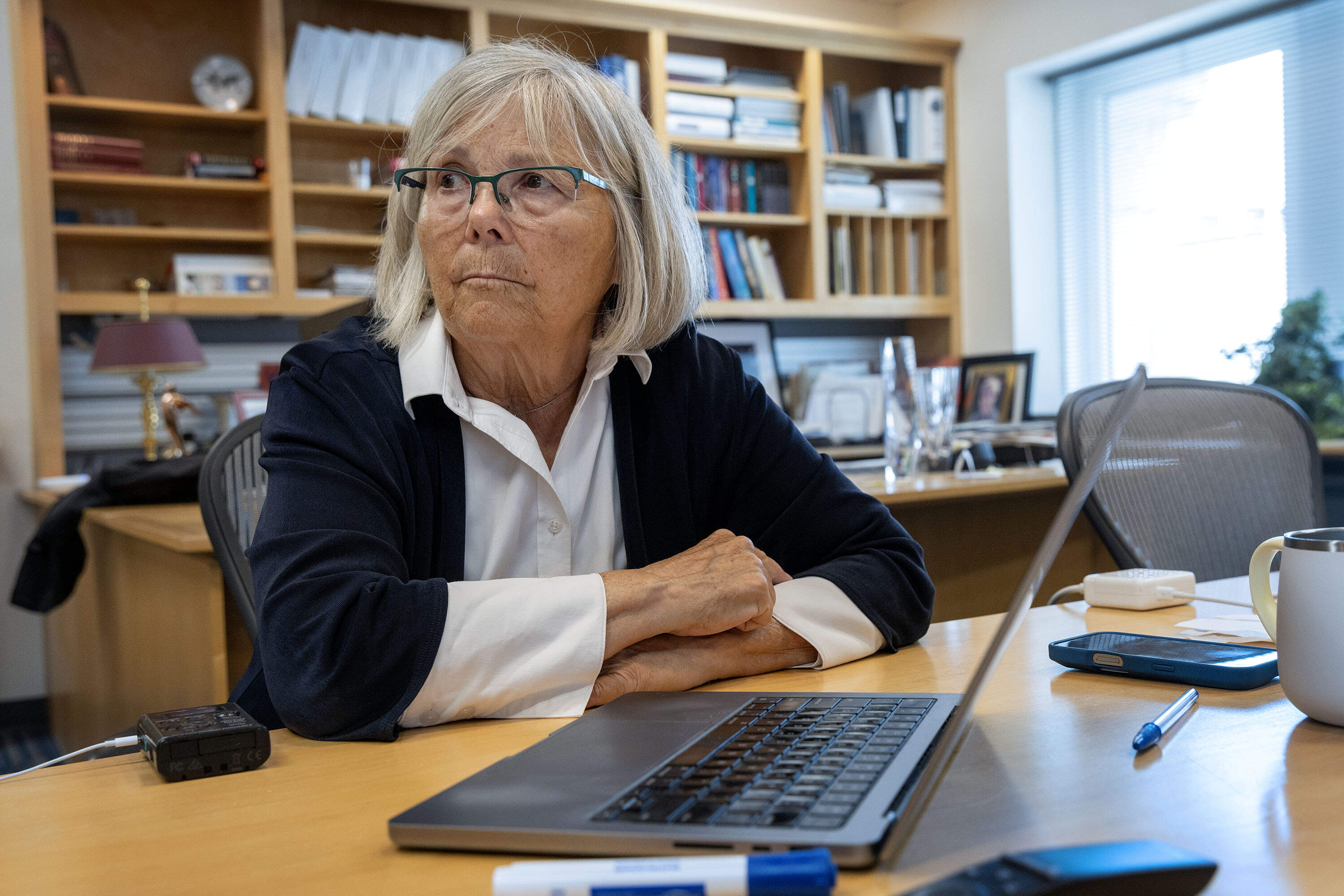
Even if her funding is fully restored, Brugge said it could take more than a year to hire and train new employees and restart experiments. She’s not sure work in her lab will ever return to normal.
“There'll always be now this existential threat to the research,” Brugge said. “I will definitely be concerned because we don't know what's going to happen in the future that might trigger a similar kind of action.”
Brugge has thought about shutting down her lab. But she still has staff whose careers are tied to finishing their research. And she sees so much promise in those pink-lidded jars.
“I can’t stop just because of these hardships that we’re facing now,” Brugge said. “We all need to work hard to make a difference for cancer patients and their families. It affects everyone.”
This segment aired on September 26, 2025.