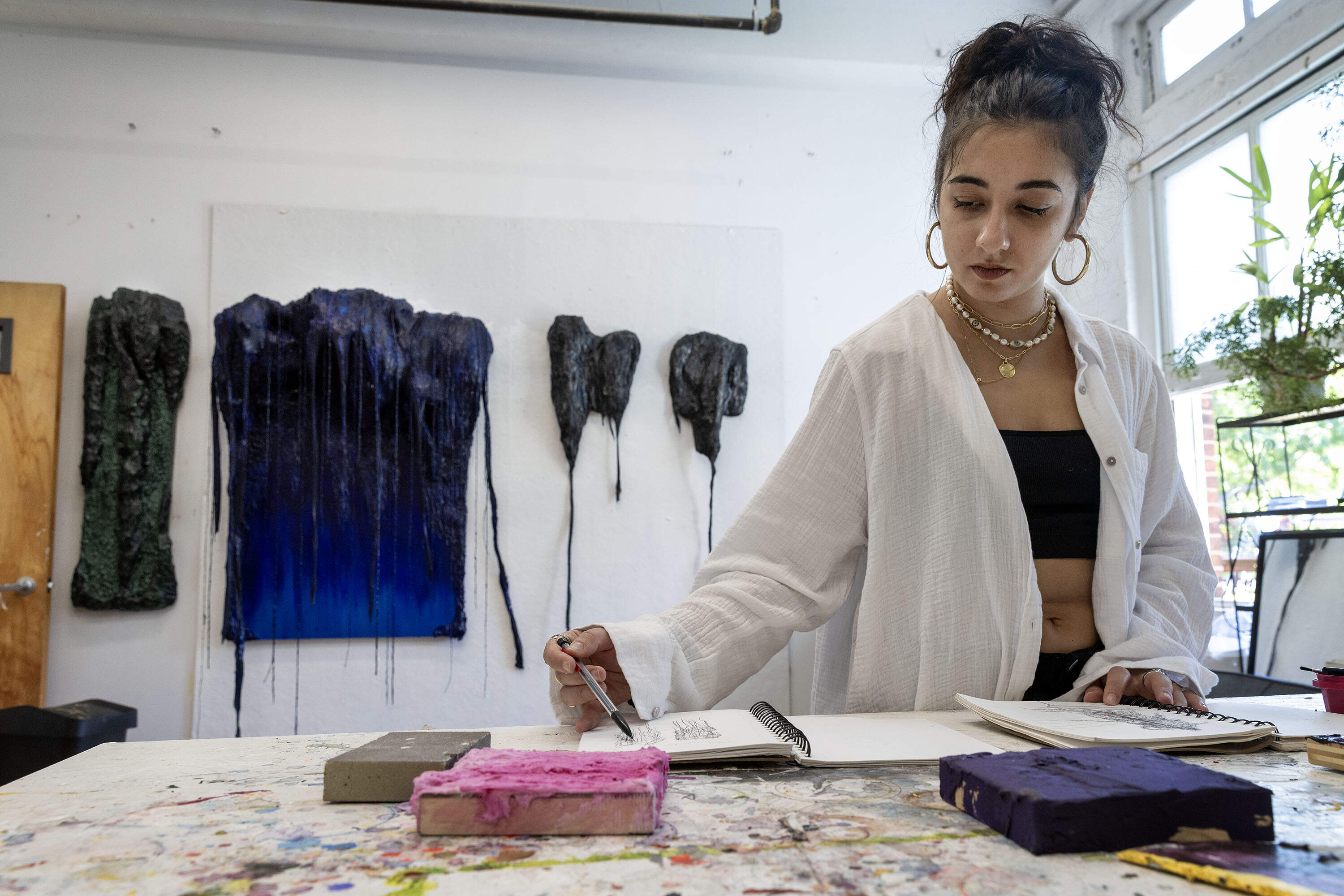
Jo Nanajian interrogates memory's durability through natural forms
Torn, spiky-looking tire shreds are arranged randomly on a small square canvas, almost like someone spilled the material all over the surface. It’s one of seven pieces artist Jo Nanajian designed specifically to allow people to reach out and touch. To demonstrate, Nanajian ran her painted nails over the panel of tire shreds encased in glossy resin.
“It’s just so messy and spiky and — I don't know, a wreck — and I really enjoy it,” Nanajian said.
In mid-August, her work was displayed at her childhood home in Belmont while she was in between studios. Sculptures hung from the walls or took up space on a dining table. “They all kind of give you this inviting feeling that you wanna come and touch them,” she said.
Nanajian, 29, creates textured wall sculptures using materials like plaster, glass and wire. The sculptures are typically forms found in nature, like a giant dried rose. With her series on dried plants, she said she tries to represent all the ways that human memory can be preserved, changed or lost.
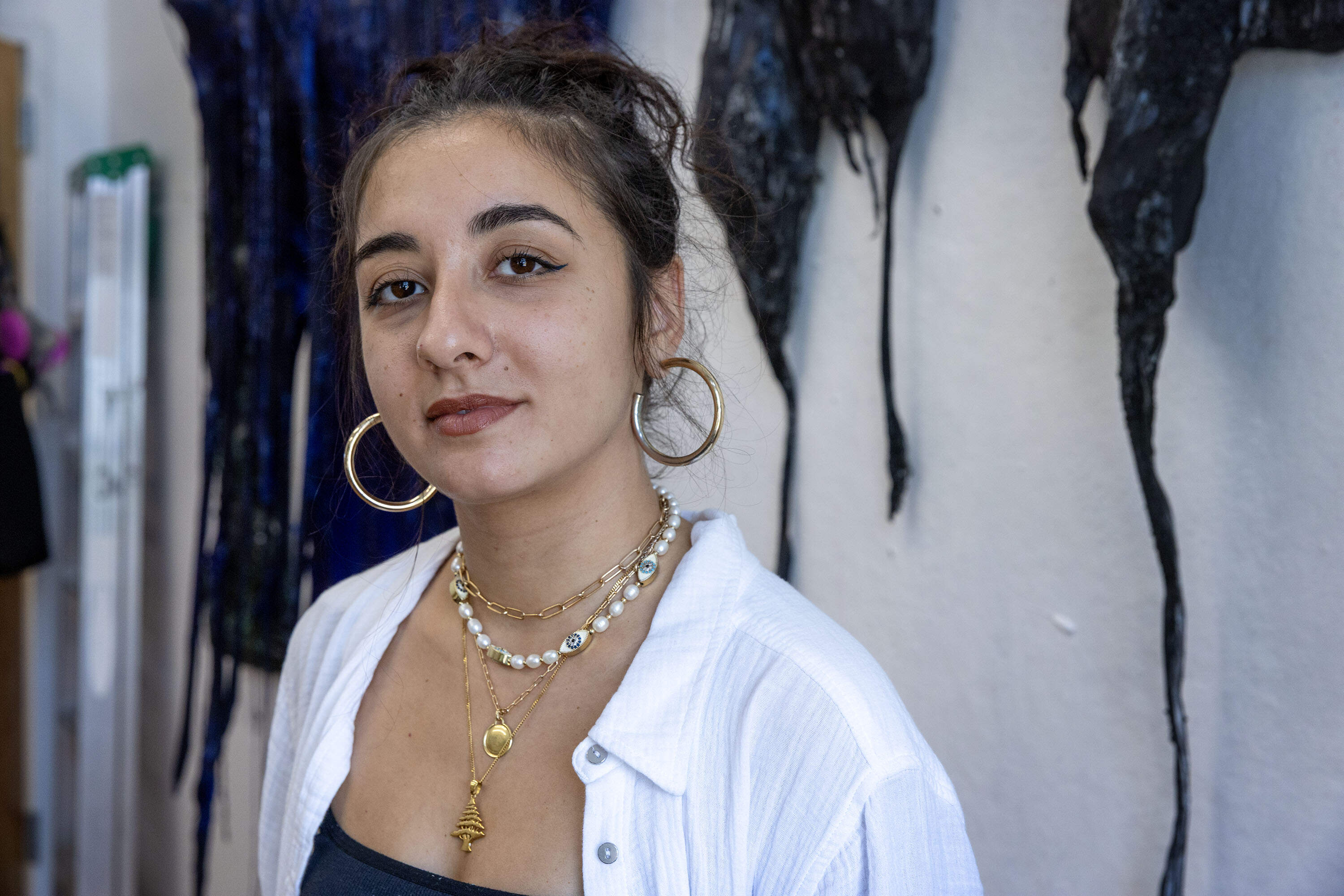
“ I recreate abstract dried flowers because dried flowers themselves are a form of preservation,” she said. “ I question what it means to hold onto something that is always slipping away.”
Her deep, jewel-like blue sculpture “Watery Willow” stands five feet tall with a voluminous plaster tree canopy. Branches droop down and create a sense of motion.
Nanajian's artistic concept stems from growing up in Beirut, Lebanon, then immigrating with her family to Massachusetts when she was 12.
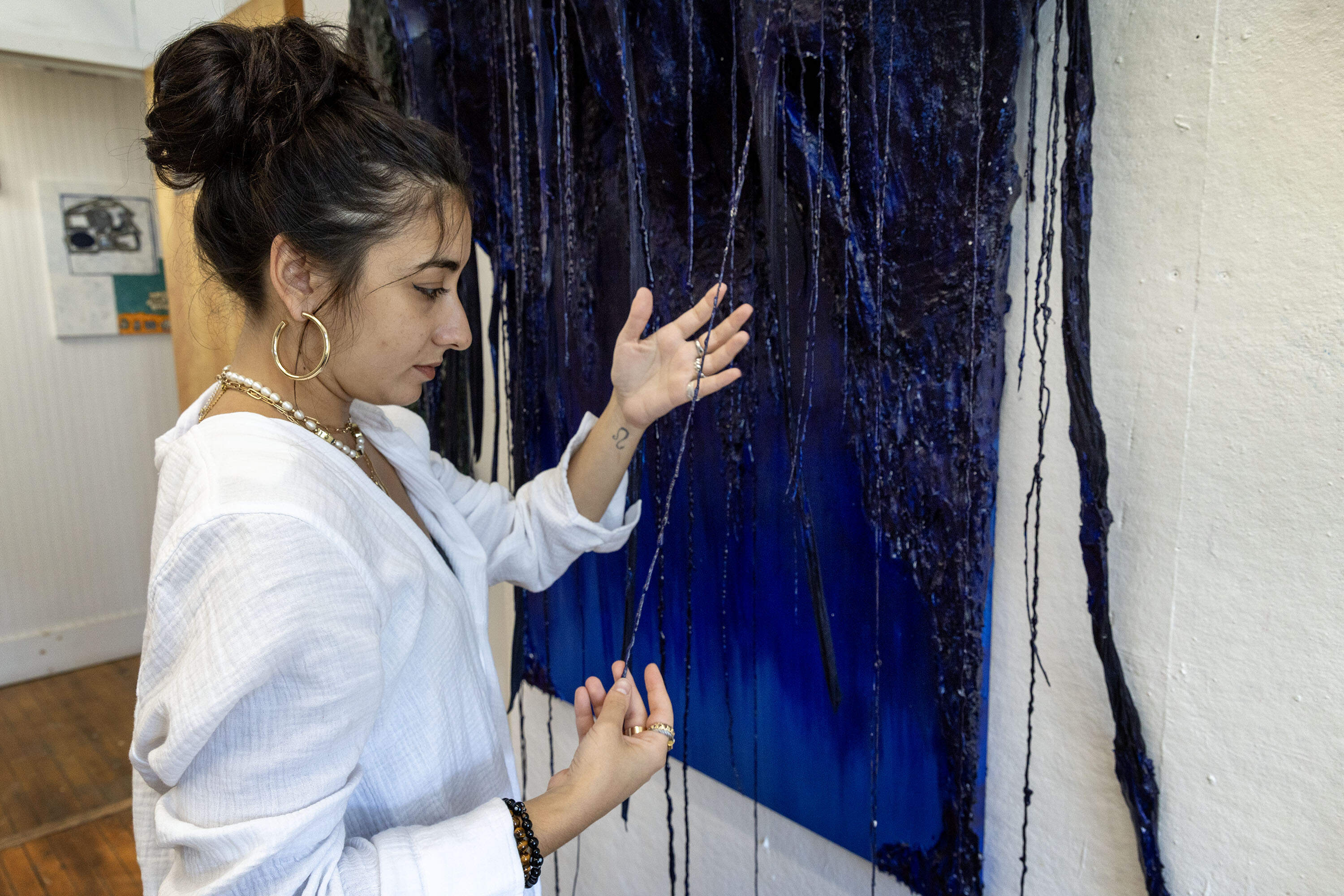
“I’m old enough to remember and to have [had] a life,” Nanajian said. She has strong memories of Lebanon’s nature — the smell of fresh jasmine flowers or the saltiness of ocean breezes. Most of all, she remembers the sunsets.
“They’re just very vibrant and strong and red and beautiful,” she said. “It’s not an experience we get here at all.”
Nanajian said she adjusted to American life and culture quickly. But she said there are still feelings of loss and nostalgia that change the more she ages. It’s clearer during rare trips back home, like this past summer.
“Years have gone by, so the place has transformed into something new and I've transformed into something new, which is what my artwork is about: erosion and things changing,” she said.
But the intercontinental move didn’t change Nanajian’s aspirations of becoming an artist. “Since I was little, I was saying I wanted to be an artist,” she recalled. “There was no other thought in my brain.”
Nanajian attended the Maryland Institute College of Art to become a medical illustrator, in part because she grew up surrounded by family members working in the sciences. But after graduating, she decided to go a different route and explore sculpting.
“ I realized I have so much imagination. I have so much technique that I think it would be a shame to not share that,” Nanajian said.
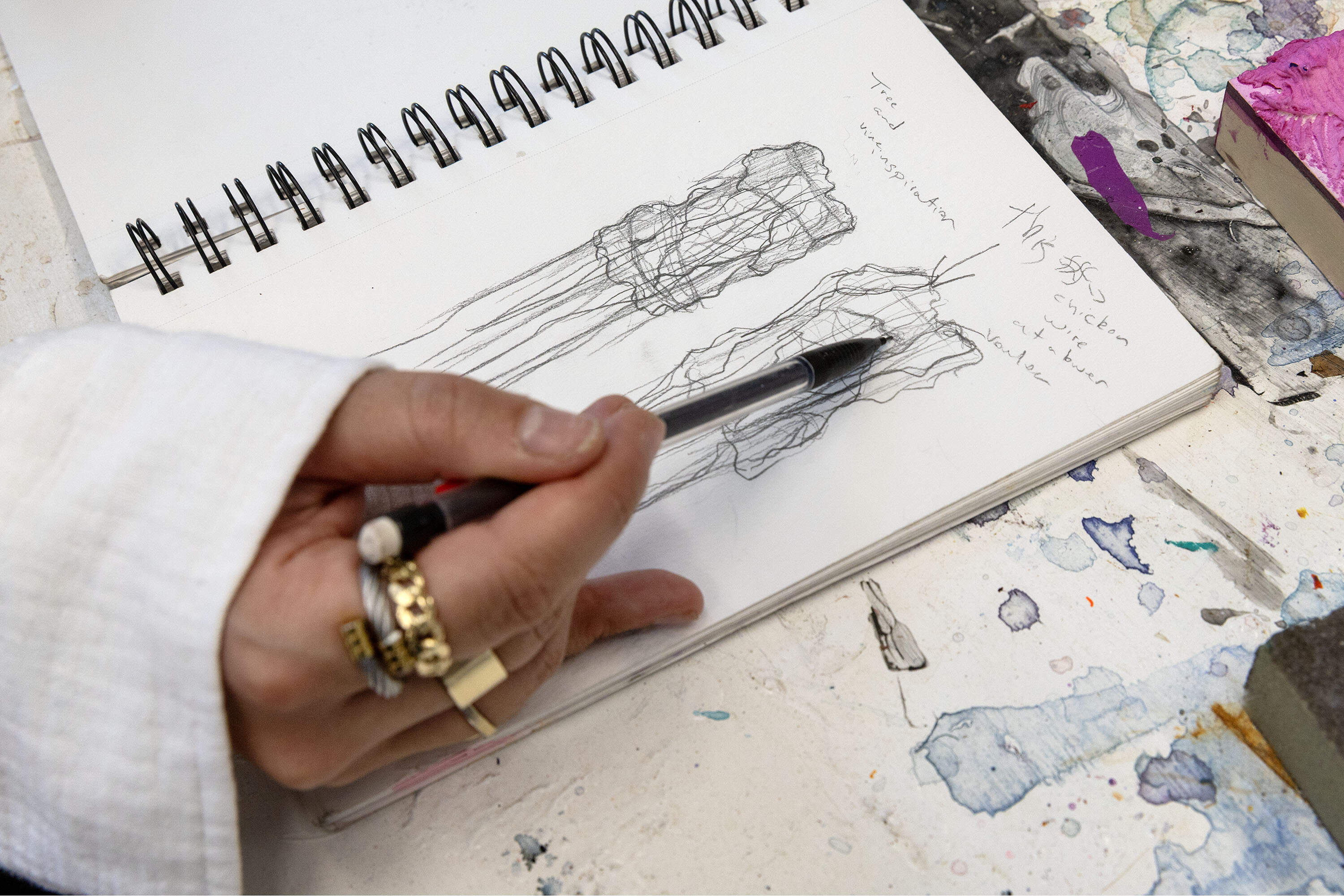
Her sculptures often start with a moldable chicken wire base, which she covers in plaster. After drying, the work of layering textures and colors begins. Over the years, she’s experimented with different materials like ceramic dust, granulated quartz and glass flakes.
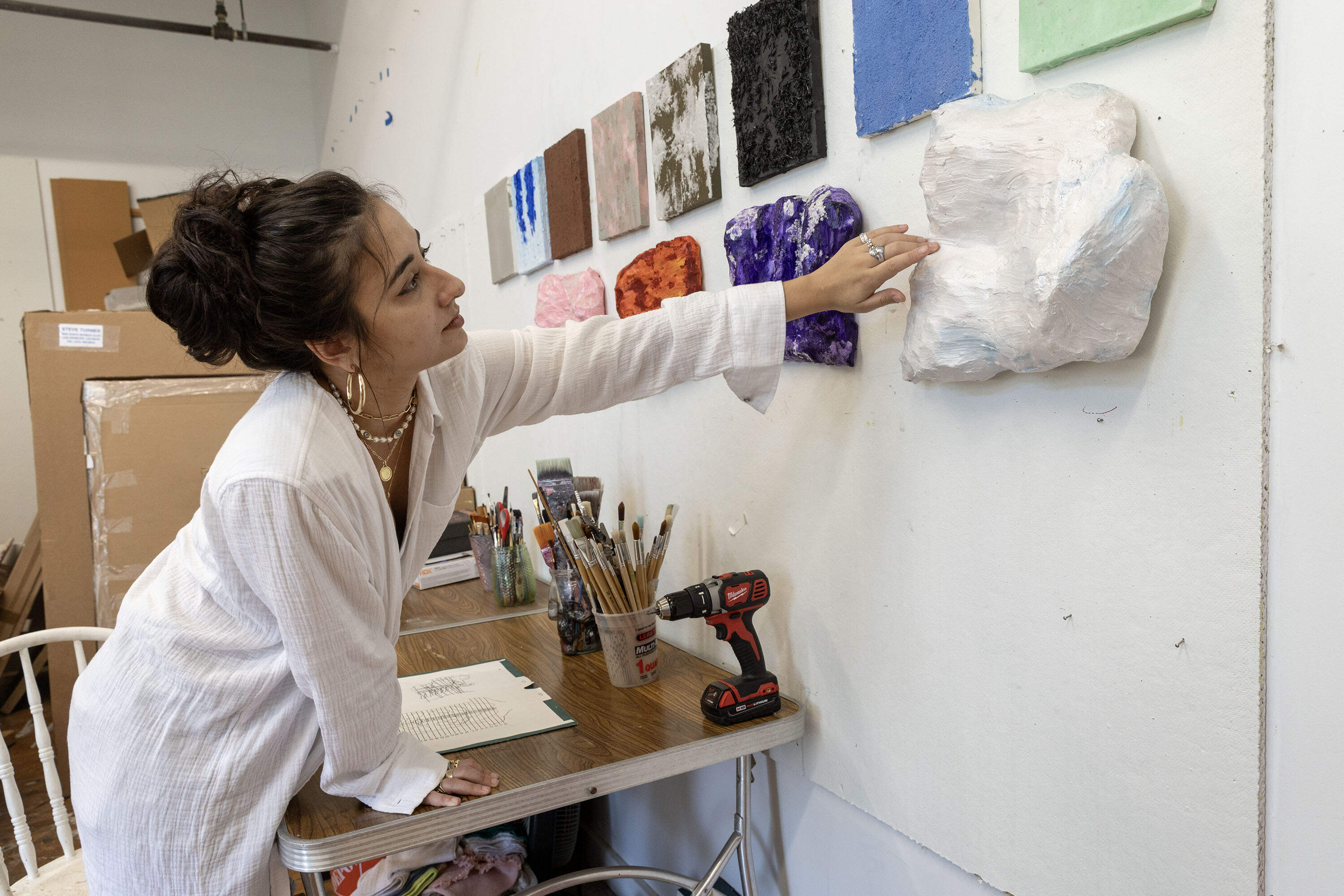
Nanajian’s work has been shown in exhibits in Boston, New York and Tokyo. And she’s been awarded residencies at the Boston Center for the Arts, MASS MoCA and Fountainhead in Miami.
Almitra Stanley, director of the Boston Sculptors Gallery, said Nanajian’s work makes people want to lean in both physically and emotionally.
“ I find myself thinking sometimes of stories of my childhood or something where I'm not really sure that it actually happened that way,” said Stanley, who is also Nanajian’s mentor. “And I think she knows that about people and just is so interested in what part of memory is constructed.”
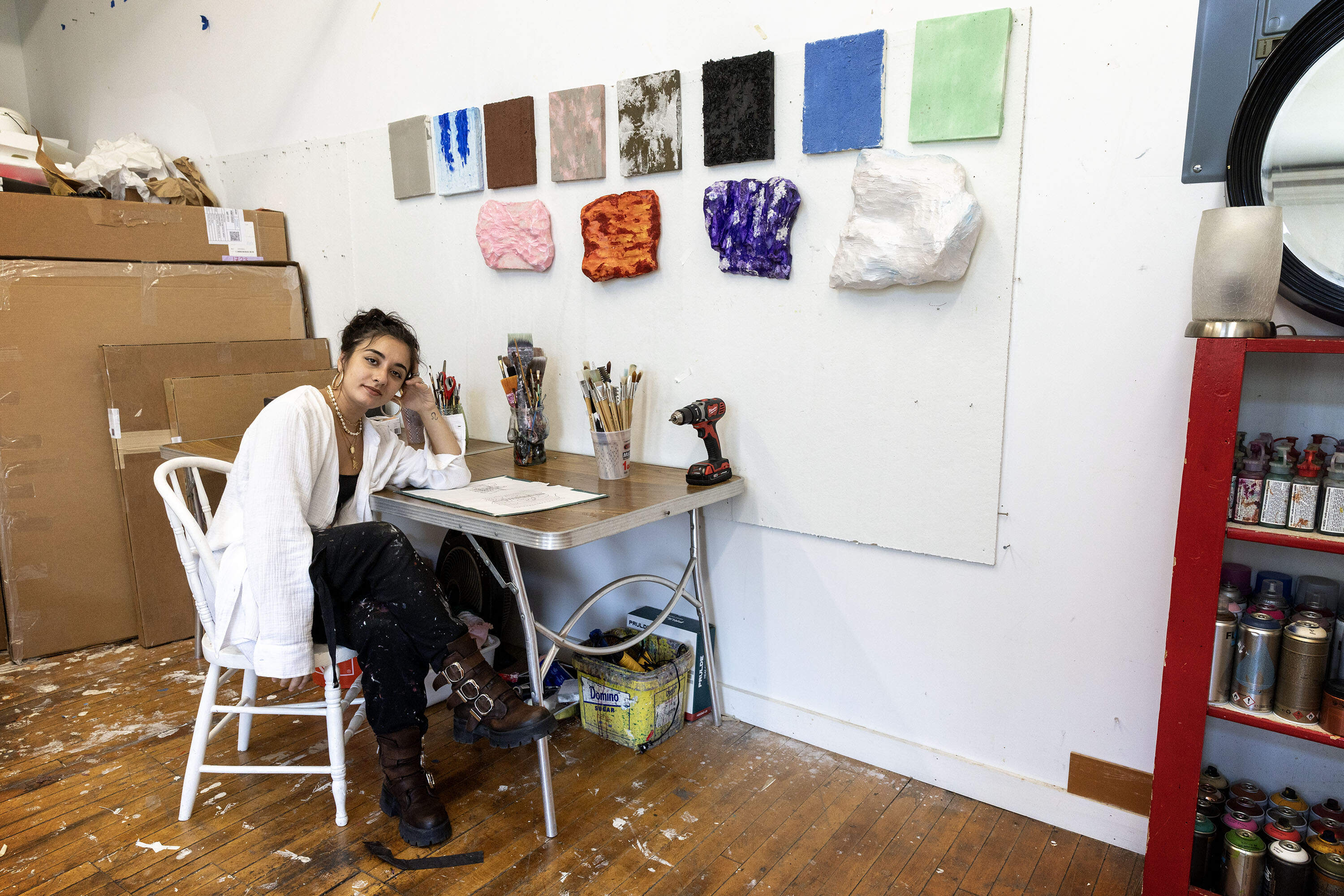
On an August evening, Nanajian was celebrating the end of a summer residency at Gallery 263 in Cambridge. She displayed work made over the past year, arranged by series.
Earthy tones dominated the sculptures representing debris on one wall, while the bright pinks and blues of crystals popped out on another. Nanajian said her recent work tries to represent memories happening without her. One depicts drippy, dark stalagmites.
“Things keep changing, whether you see it or not. I have not sat down and watched these rock formations. But they still happen,” she said.
"I question what it means to hold onto something that is always slipping away."
Jo Nanajian
Boston artist Andrew Fish was drawn to a wall with pieces that he said remind him of “molten metal being tossed around.” Shiny bubbles and webbing fan out from the center of these sculptures, called “Crown” and “Pendant.”
Looking across the whole body of work in the gallery, Fish said her progression as an artist is clear. “There’s an indication of growth and exploration and experimentation. I love it,” he said.
Nanajian recognizes this, too. But she also doesn’t want to confine herself to just being a sculptor — her first artistic love is drawing.
“ All these pieces are an extension of myself and my concept, and I want that to always be an ongoing conversation,” she said. “Right now, I say I’m a sculptor, but at the end of the day I’m an artist.”
This segment aired on October 6, 2025.