Artist Lani Asunción confronts the injustice of climate change
On a busy street corner at the Rose Kennedy Greenway, where Milk Street meets Atlantic Avenue, it’s impossible to find a quiet moment. Supply trucks whoosh by, a fountain burbles, and every so often the sweet, clear sound of a bell rings out.
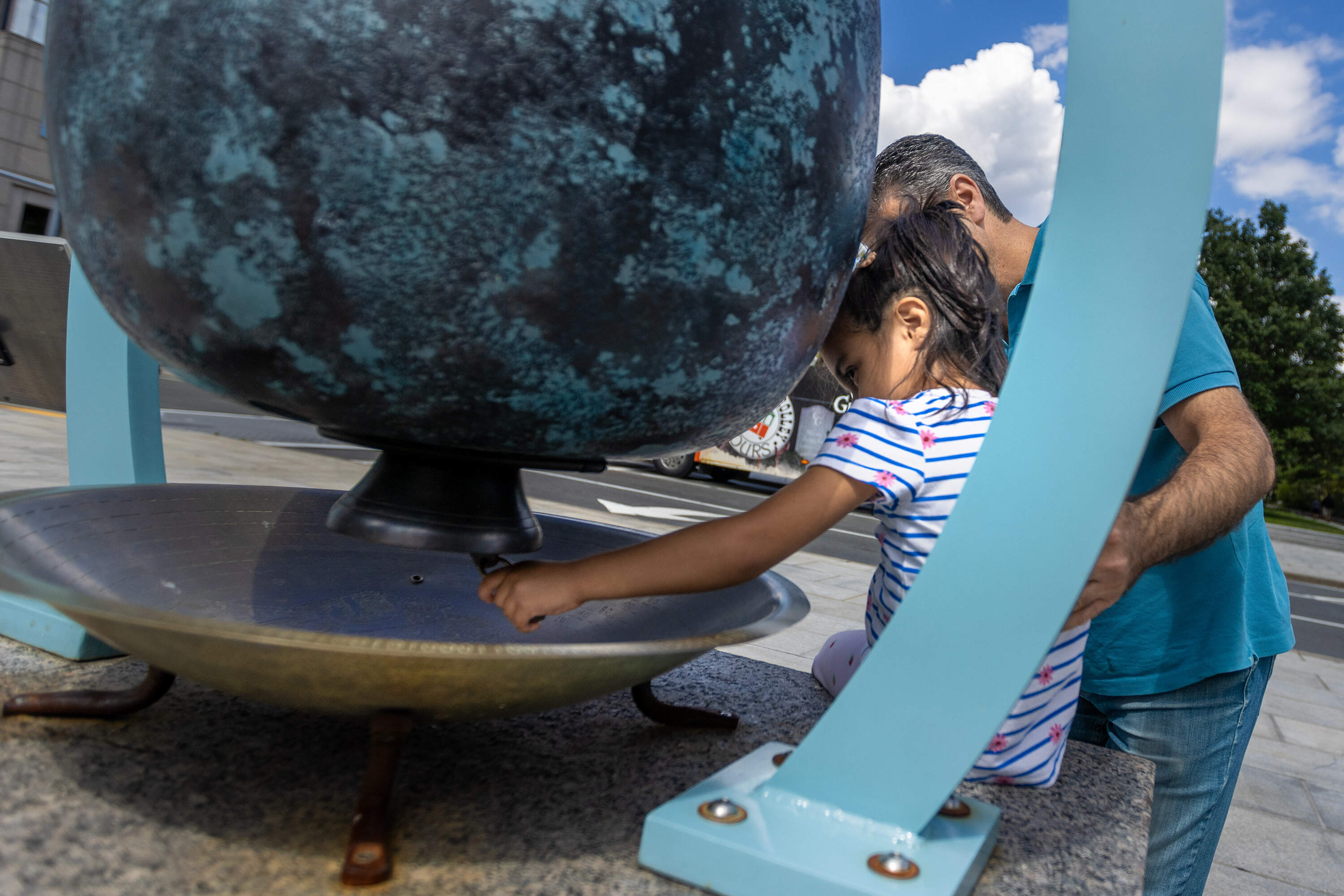
The bell is part of Boston multimedia artist Lani Asunción’s public installation “SONG/LAND/SEA: WAI Water Warning,” which confronts the unequal impacts of climate change.
The installation is visually striking, featuring a large mottled blue cement sculpture, shaped like a water drop, that dangles over a brass bowl.
Inside the bowl? A 2016 map of Boston’s flooding coastline in 2070 should sea levels continue to rise. For Asunción, 42, the piece is a way to sound the alarm about climate change.
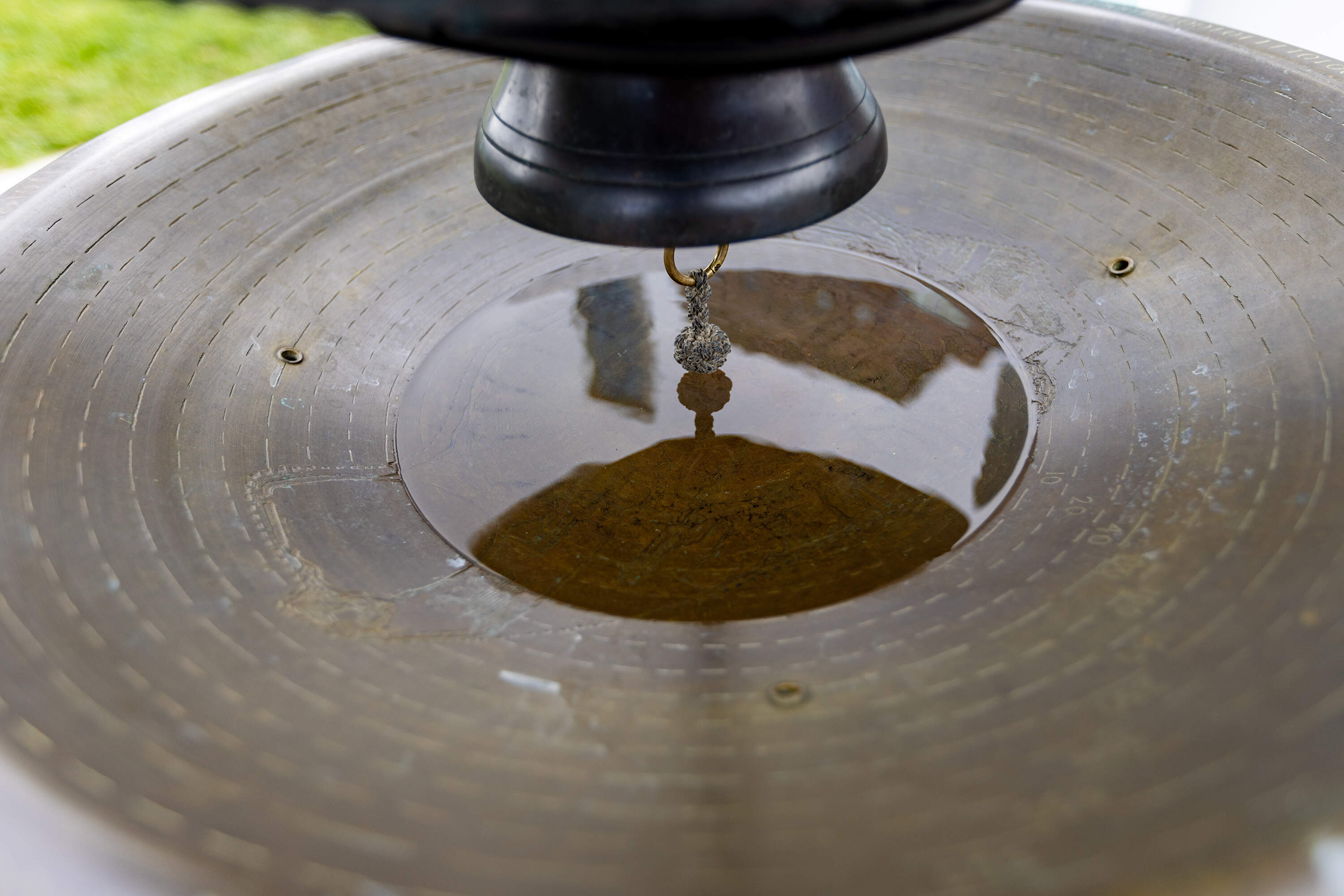
“This is the water clock, which is a sculpture that represents a number of different things connected to coastal flooding and climate change in the Boston coastline,” Asunción said.
In a bustling city like Boston, it’s easy to forget how close we are to the water and how closely the danger of flooding lurks, but it’s always top of mind to Asunción.
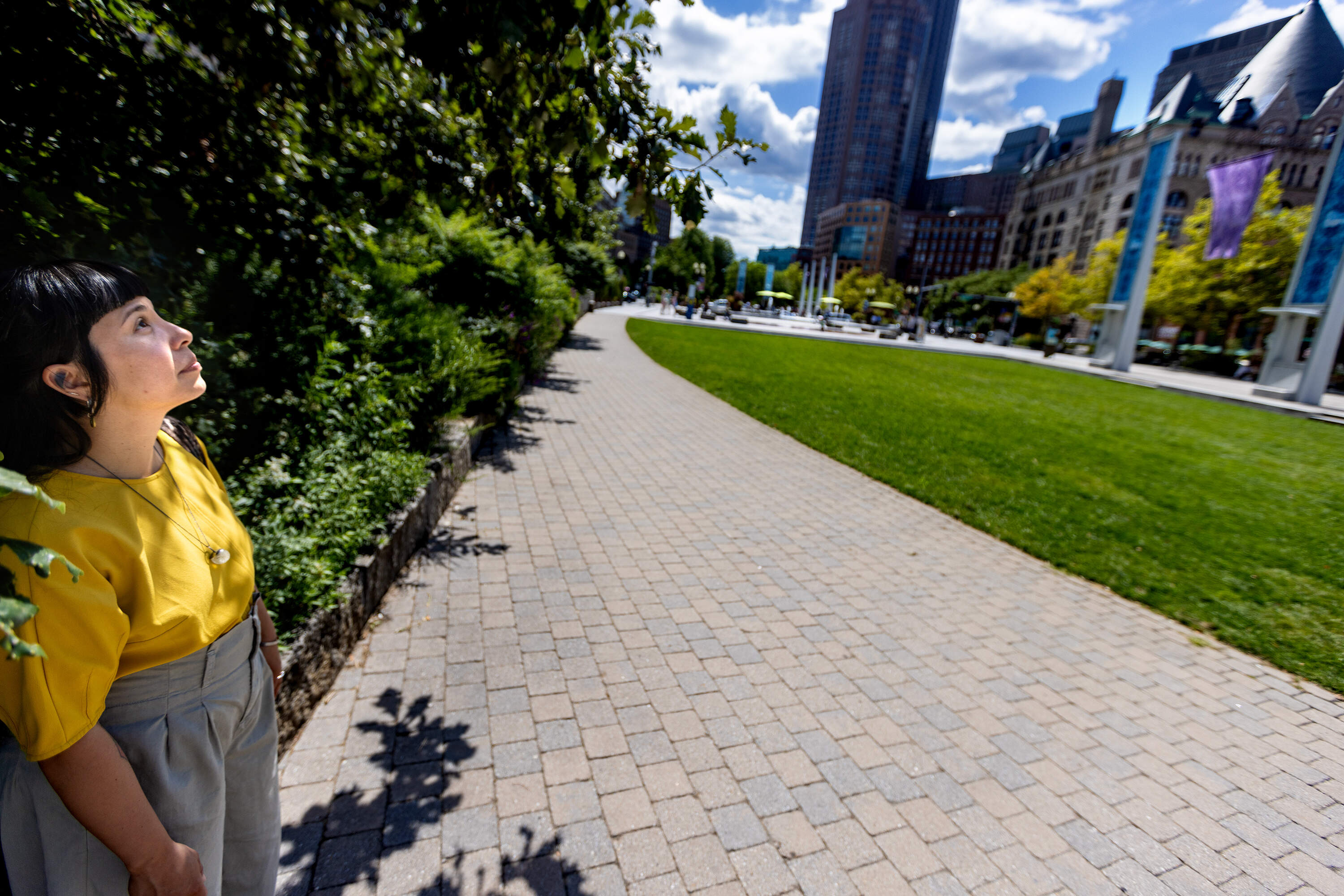
“As a Filipino person, the land is not separate from our ancestors,” they said. “It's natural to look to the water to recognize and realize what is actually happening inside these waters or inside the environment.”
The location of “SONG/LAND/SEA” was critical. It lives at the intersection of many of the city’s neighborhoods: Seaport, North Boston and Chinatown.
It’s a spot Asunción chose deliberately.
“It's a very hot base point for gentrification,” they said. “Thus why the Big Dig came through the middle of where housing for Armenian people and folks in Chinatown lived and where it displaced a lot of people right in this area.”
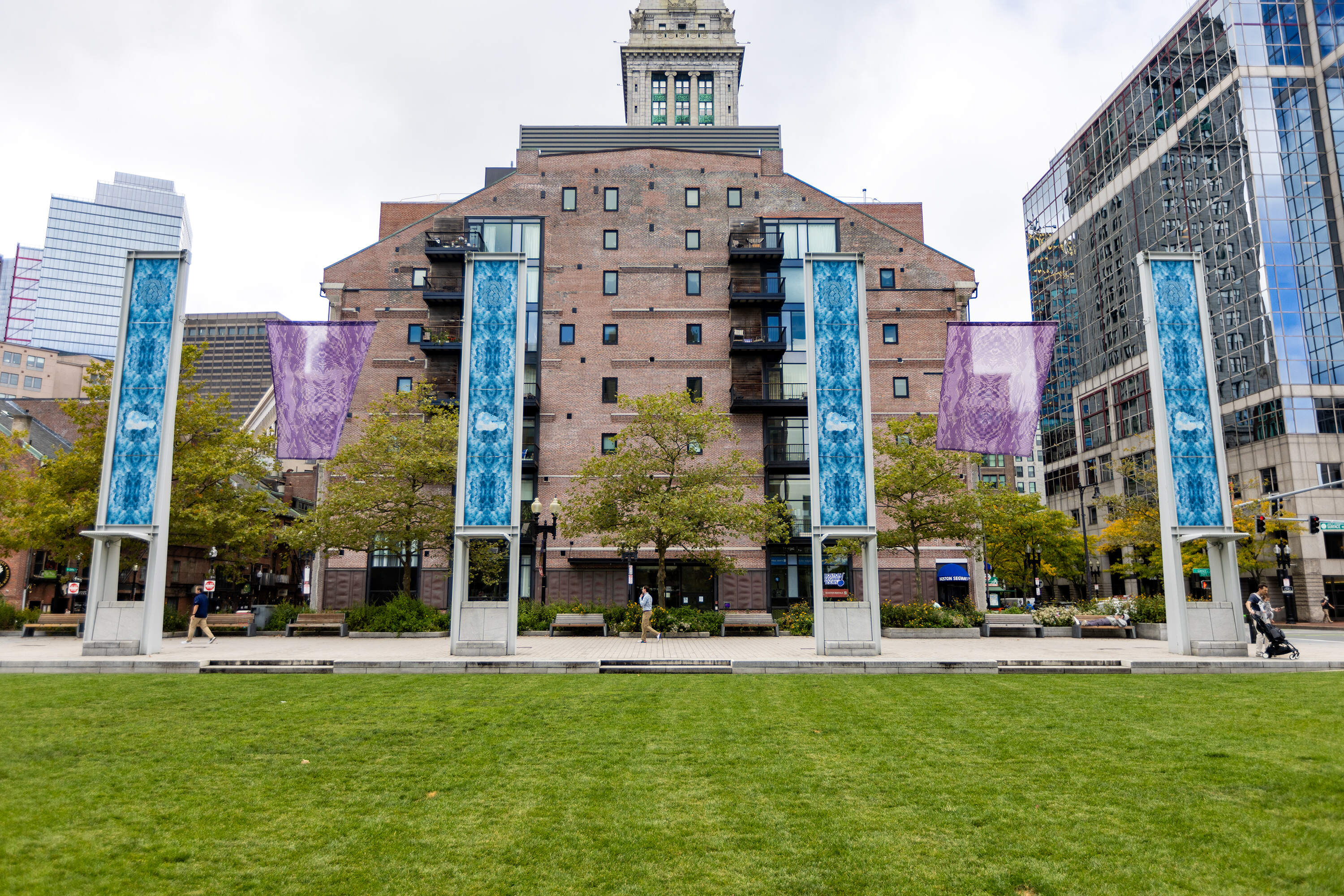
For Asunción, Boston’s history is a critical part of understanding how environmental racism might impact its climate future.
“A big question in my piece here on the Greenway is who gets to survive climate change. Is that class-based? Is that race-based?” they asked. “All these questions bring up conversations that are hard, but it's very important to come to so we can all survive.”
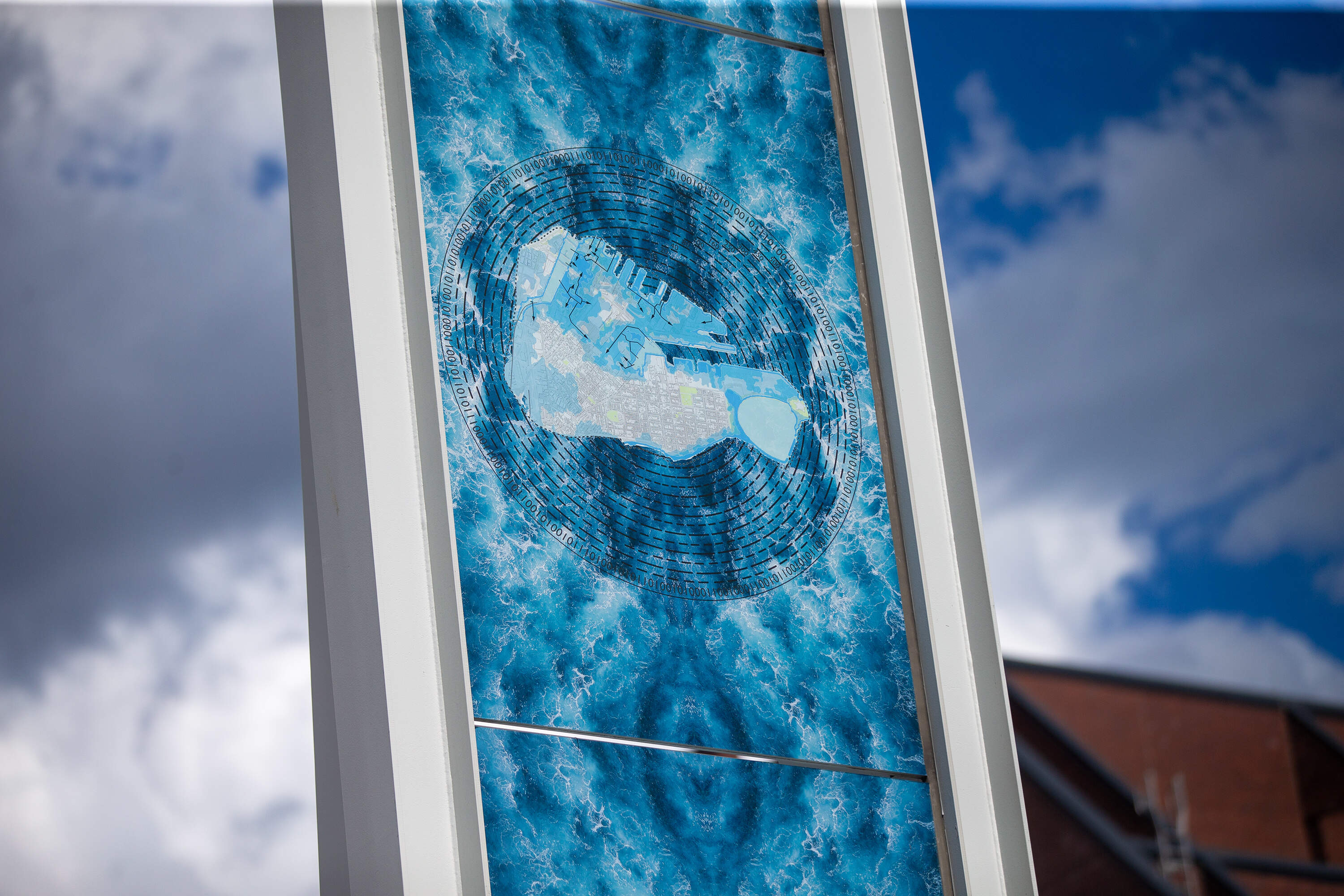
As a visiting lecturer at Massachusetts College of Art and Design, Asunción is deeply enmeshed in Boston’s art community. Their installation at the Rose Kennedy Greenway is the latest example of how they’re working to craft Boston’s story, according to Audrey Lopez, the director and curator of public art at the Greenway.
“Lani is not just making paintings. Lani is not just doing performances, but they're really working across different formats, mediums and sites to weave this really cohesive, legible text about Boston, its histories and the current challenges that we face,” Lopez said.
Those challenges are great. In 45 years, Boston could see an estimated 2 to 4 feet of sea level rise compared to the levels at the start of the century, according to the state’s Bureau of Climate and Environmental Health.
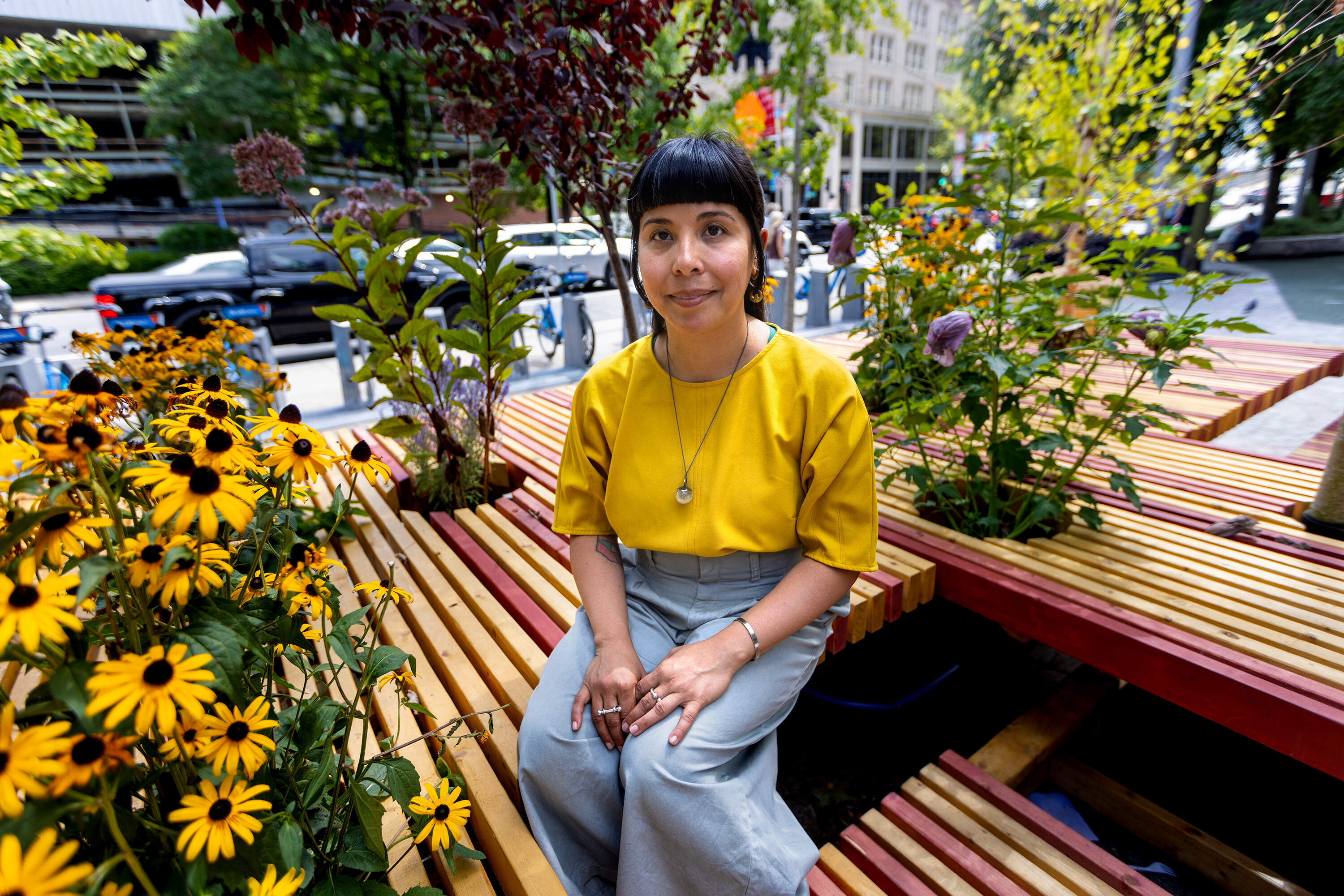
And like many cities across the world, Boston will also have to deal with rising heat levels as climate change intensifies. That’s the subject of “PlanTable,” an installation Asunción worked on as the 2024-2025 curator and project manager at the Pao Arts Center as part of the city’s program Un-monument | Re-monument | De-Monument.
Located in Chinatown’s Chin Park, the piece is an eye-catching yellow and red table and bench where Bostonians can enjoy a quick lunch or a moment of quiet, surrounded by trees and various pollinator-friendly plants and flowers.
The red stripes on the bench also serve as something of a climate timeline — drawing attention to how temperatures have risen since the neighborhood was established in the 1870s. Each red plank marks a year where temperatures exceeded historical averages.
To Asunción, this piece and “SONG/LAND/SEA: WAI Water Warning” are in conversation with one another. “PlanTable” looks backward through history and “SONG/LAND/SEA” looks forward to the future. Both are timelines of how climate change has and will reshape our world.
"It's really important for folks to be thinking about not just what has happened in climate change, but where is it going. We already are at the point where there's no return," Asunción said. “So I think it's really important to think both past and present because that is what has brought us here.”
But while climate defeatism may be tempting, Asunción believes the work and the art still matter.
“Even if I can't change all of the future, we at least can be in dialogue of what can we do now, how can we change things now,” they said. “And I just think there's something very beautiful about that.”
This segment aired on October 7, 2025.