Dancer Marissa Molinar combines movement with activism
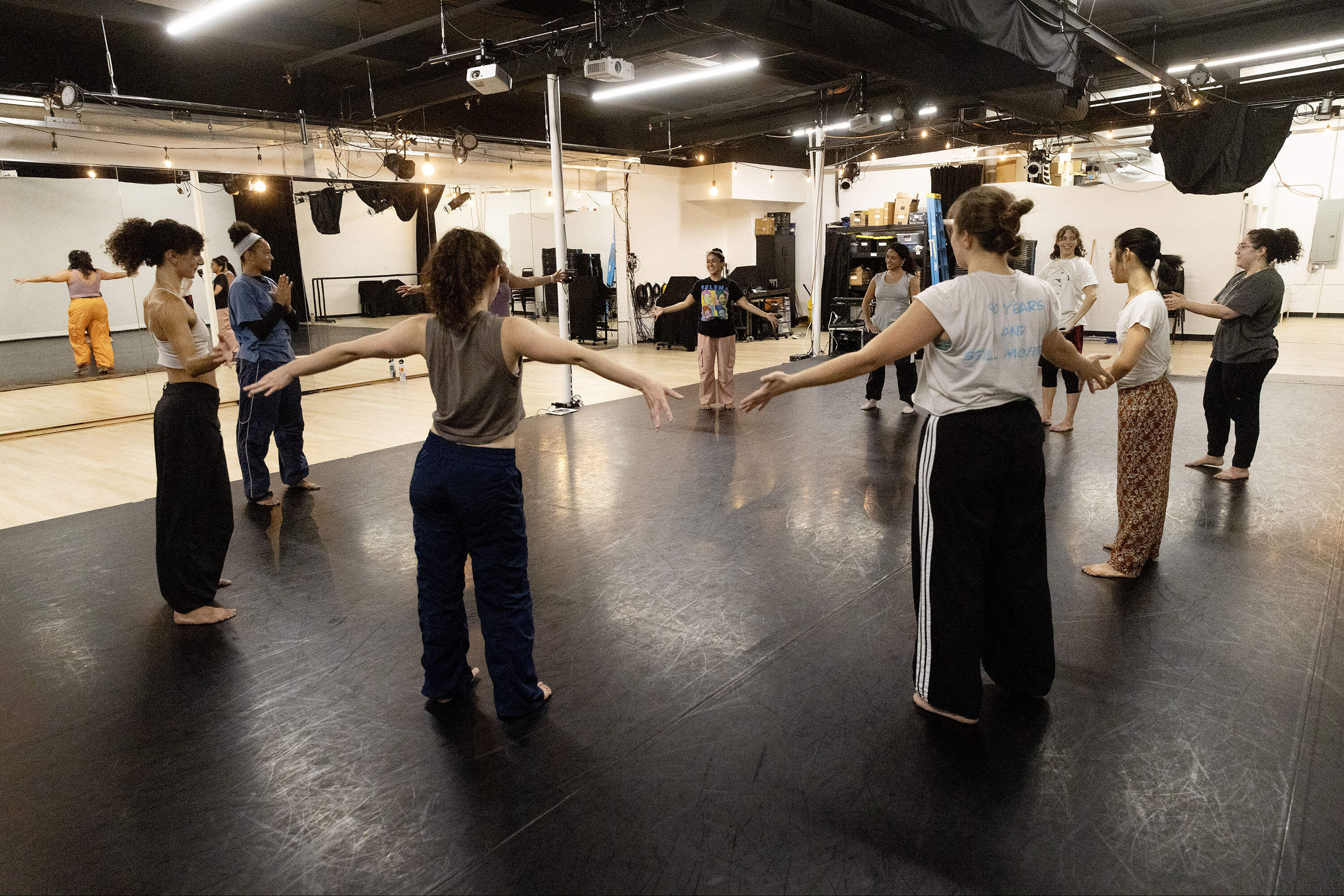
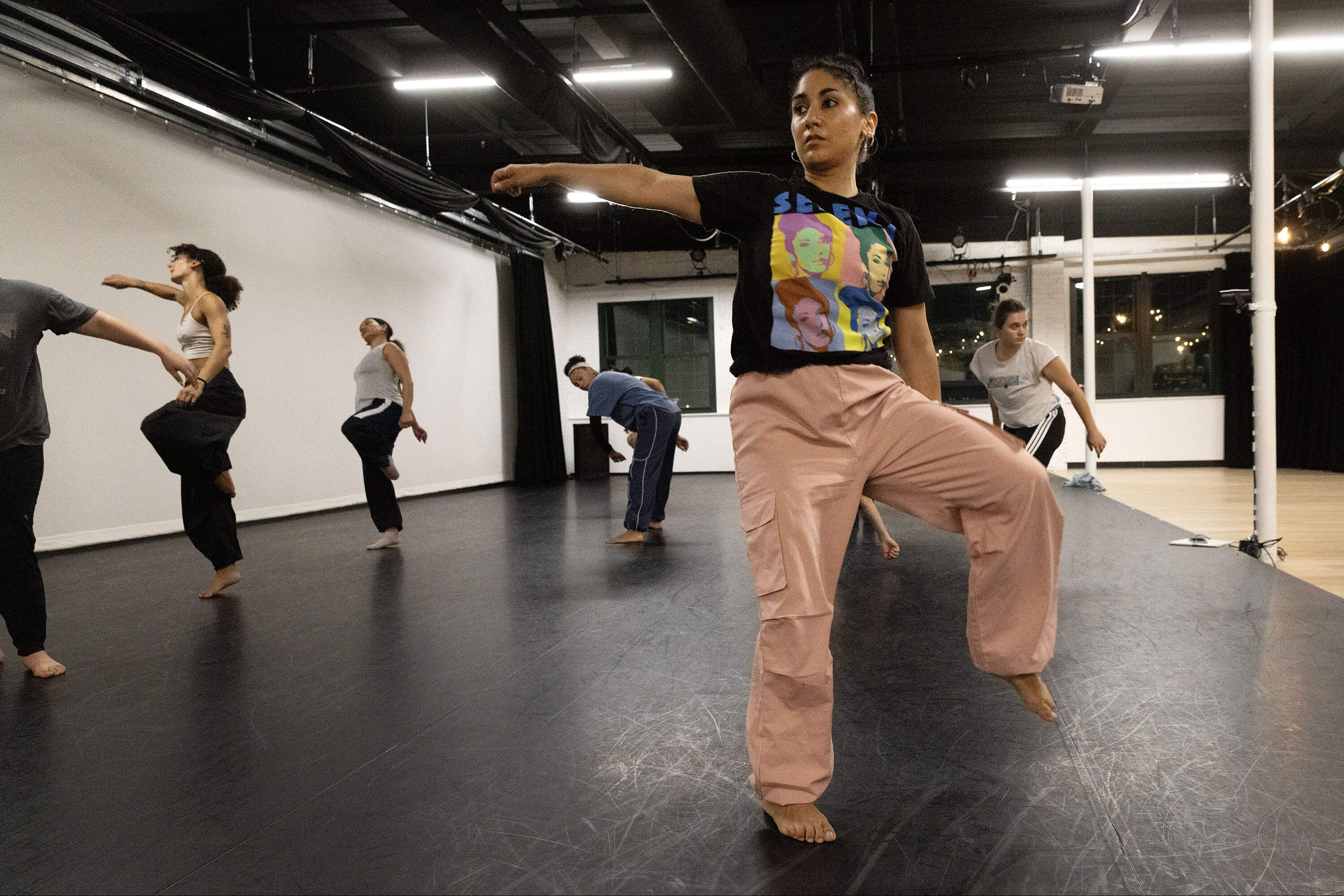
Dancers lined up in pairs to improvise their way from one end of the studio to the other at SomArt Space at the Hive in Somerville. It was the first month of workshop classes after summer break, and there was a faint smell of chocolate in the air from a nearby factory.
Boston dancer and activist Marissa Molinar crossed the floor with a series of isolations, balances on one leg, turns, back bends, pliés and floor work.
On its surface, the class focuses on improvisation, but there are also deeper lessons in self-awareness and balancing the freedom of movement with in-the-moment decision-making.
Skills that overlap between dance and leadership are the focus of MIDDAY Movement Series, a program dedicated to training and advocating for professional dancers in Boston. Molinar founded the organization 10 years ago and described it as “a grassroots initiative cultivating a new generation of dance leaders.”
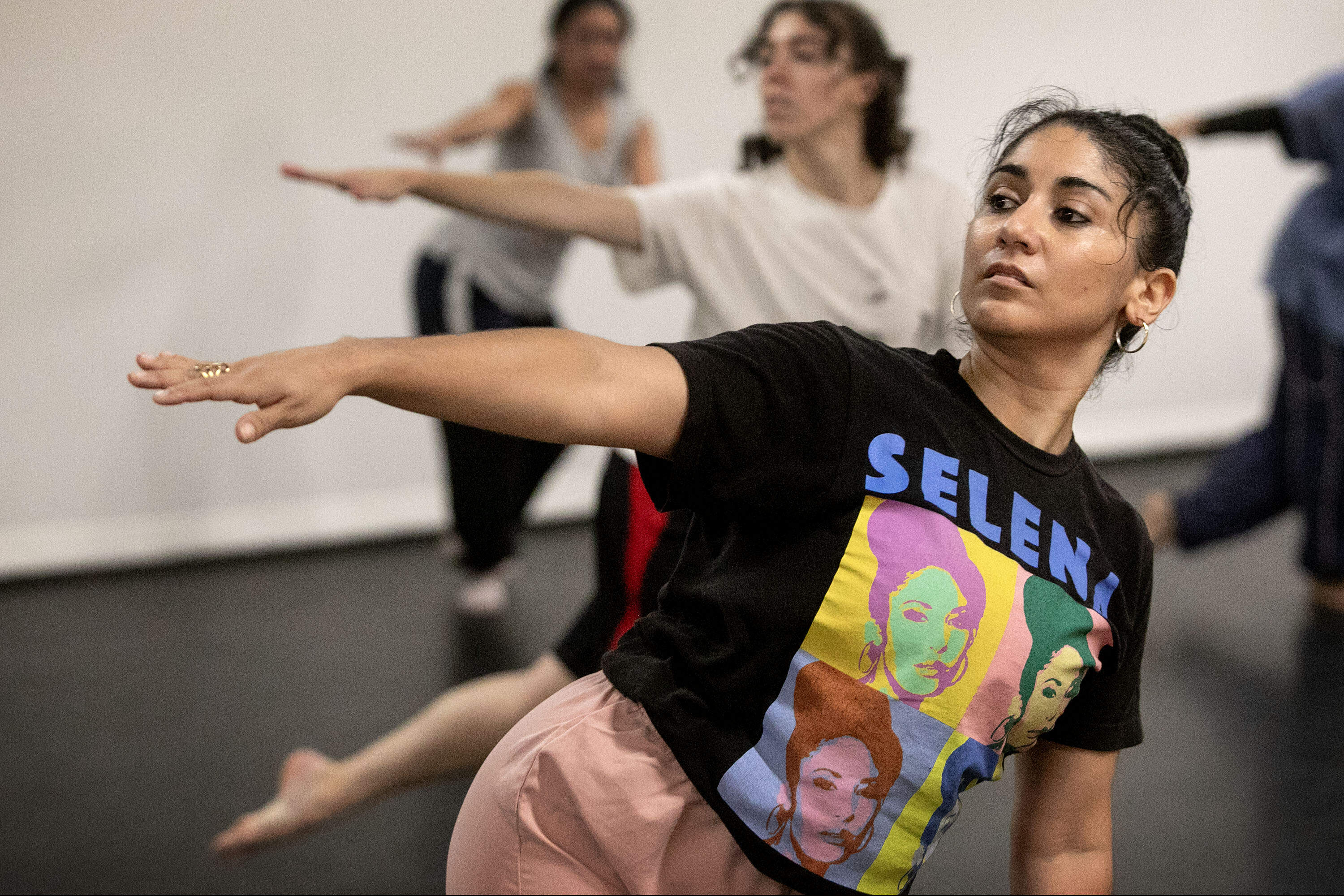
“ I come from a family of Mexican folkloric dancers,” said Molinar. “And so from my upbringing, I was always raised to understand that dance is an integral part of our culture, and culture is really an integral part of resiliency and survival.”
Molinar, who declined to give her age, calls herself an arts administrative activist. She uses her programs in contemporary dance to help make the Greater Boston dance scene more welcoming for early-career dancers and more sustainable as a long-term career path. "We want to see contemporary dance taken out of the ivory tower and put into everyday life," she said.
The program has elements of technical training as well as professional development, with workshops on addressing racism in dance and mentorships specifically designed for dancers of color.
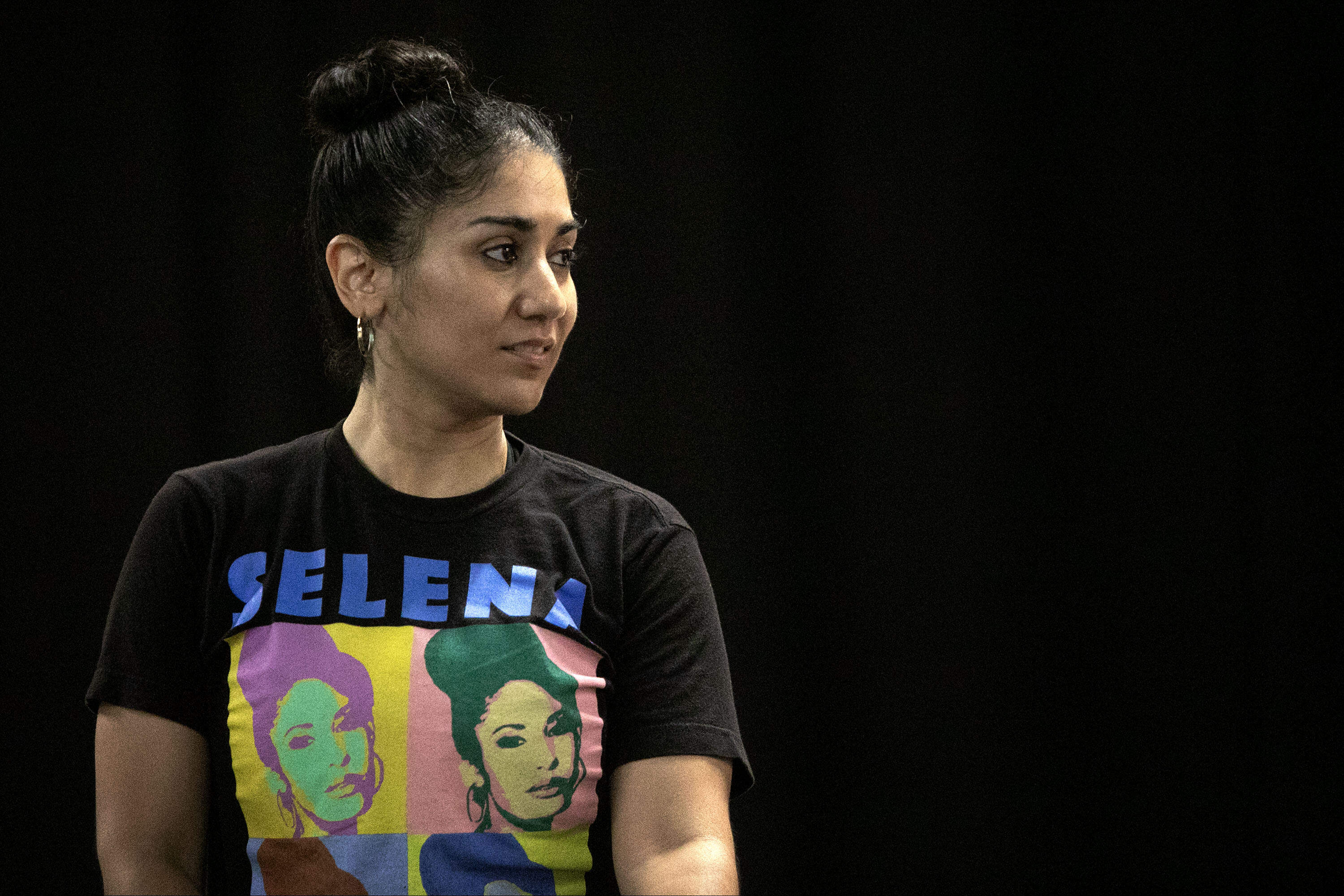
“I think that you can't make contemporary dance unless you're awake and alive to the contemporary moment,” Molinar said. “So just by its very nature, it feels like contemporary dance has to include some type of activism.”
But her work doesn’t only blend dance and activism.
“I’m a former ecologist,” said Molinar, who studied heavy metal contamination in stormwater runoff while a student at Brown University. “ But then I realized I don't handle bugs very well.”
Environmental science was one of many interests for Molinar, who also felt pulled into activism, liberation work and especially dance. Molinar recalled a conversation with her mother, also a dancer, that played a pivotal role in her life. “ She said, ‘You know, you can dance at any age. But the way that you dance at this age will be different than the way that you dance at other ages. And so it's really just a question of how you want to dance.’”
In her 20s, Molinar moved to Boston and committed herself to dance. She took 15 classes a week for two years and founded MIDDDAY in part to help serve her own drive to attend classes. She worked with teachers Michael Figueroa, Callie Chapman and Irene Hsi to establish the community-led program.
Although Molinar shifted her focus away from environmental sciences, she never let it go entirely. “I thought I was leaving ecology behind, but I actually brought it with me,” she said. Molinar’s scientific background informs her work. She uses environmental terminology to describe her philosophical approach to dance and bring about change in the industry.
“Keystone species are the species that have a disproportionately large impact on their ecosystem, proportionate to the number of individuals of those species,” she said, giving the example of elephants. “ They have a big impact on their ecosystem just by doing their elephant thing: they will eat a whole lot and then disperse all of those seeds far and wide.”
" Just by the nature of them doing their work, teaching, rehearsing, hiring collaborators, performing, et cetera — they are creating change in the ecosystem."
Marissa Molinar
Molinar sees teachers and choreographers in dance as the keystone artists of their ecosystems. “ Just by the nature of them doing their work, teaching, rehearsing, hiring collaborators, performing, et cetera,” she said. “They are creating change in the ecosystem.”
Molinar has been a keystone artist in her Boston habitat, leading MIDDAY and mentoring other dancers, including Isabelle King.
King recalled a time in their dance career when they were experiencing imposter syndrome. “ I feel like everybody experiences like, ‘Oh, is this good enough? Is this revolutionary? Is this better than the last thing I did?’” Molinar and MIDDAY helped them change that perception. And after years of participating in the program, they were recently hired as an events coordinator.
“ I really focused in my mentorship on rooting my movement practice in joy,” they shared. “Because that’s what dance brought me when I was needing it and when it was an extracurricular and just a fun thing.”
King is one of many people who said that Molinar’s work has helped them find joy in being in their body. For Molinar, these lessons don’t only apply to being a dancer — they’re part of being an activist and a human.
“There’s a feeling that dance doesn’t have anything to do with everyday life, but all throughout history, people have danced. Dance is about our capacity to process, to celebrate, and to connect,” said Molinar. “I would wish for everyone to lean into movement in whatever way they're able, rhythm in whatever way they're able, and connection.”
This segment aired on October 2, 2025.