Support WBUR
Why all eyes are on the race for the fourth and final at-large Boston City Council seat
Editor's Note: This is an excerpt from WBUR's politics newsletter, Mass. Politics. If you like what you read and want it in your inbox, sign up here.
Ever since Josh Kraft dropped out of the Boston mayor’s race, and no other candidate got enough votes to move forward, Mayor Michelle Wu has been turning her attention to the down-ballot City Council races. She has good reason to: while the city’s power structure is based on a strong-mayor system, the Council’s 13 members hold significant power to help her achieve her agenda – or become a major thorn in her side.
Today, we’re giving one race in particular a closer look.
In the preliminary election on Sept. 9, the top three vote getters for the Council’s four citywide at-large seats were unsurprising. Current Council President Ruthzee Louijeune topped the ticket, followed by popular incumbents Julia Mejia and Erin Murphy.
But everyone wanted to see how first-term Councilor Henry Santana would perform – specifically against a familiar face to Boston politics.
After 12 years representing District 3 on the council, Dorchester’s Frank Baker took two years off following a health battle. But now, he’s trying to make his comeback with a bid for an at-large seat. In the prelim, he came in fifth, trailing Santana by 4,400 votes for the fourth spot – not an insignificant margin, but certainly not an insurmountable one either. (Fun fact: There are 163 distinct ways voters could cast their ballots for at-large councilors in November, given that they could support anywhere from one to four of the eight candidates in any combination.)
So who are these two? What do they offer?
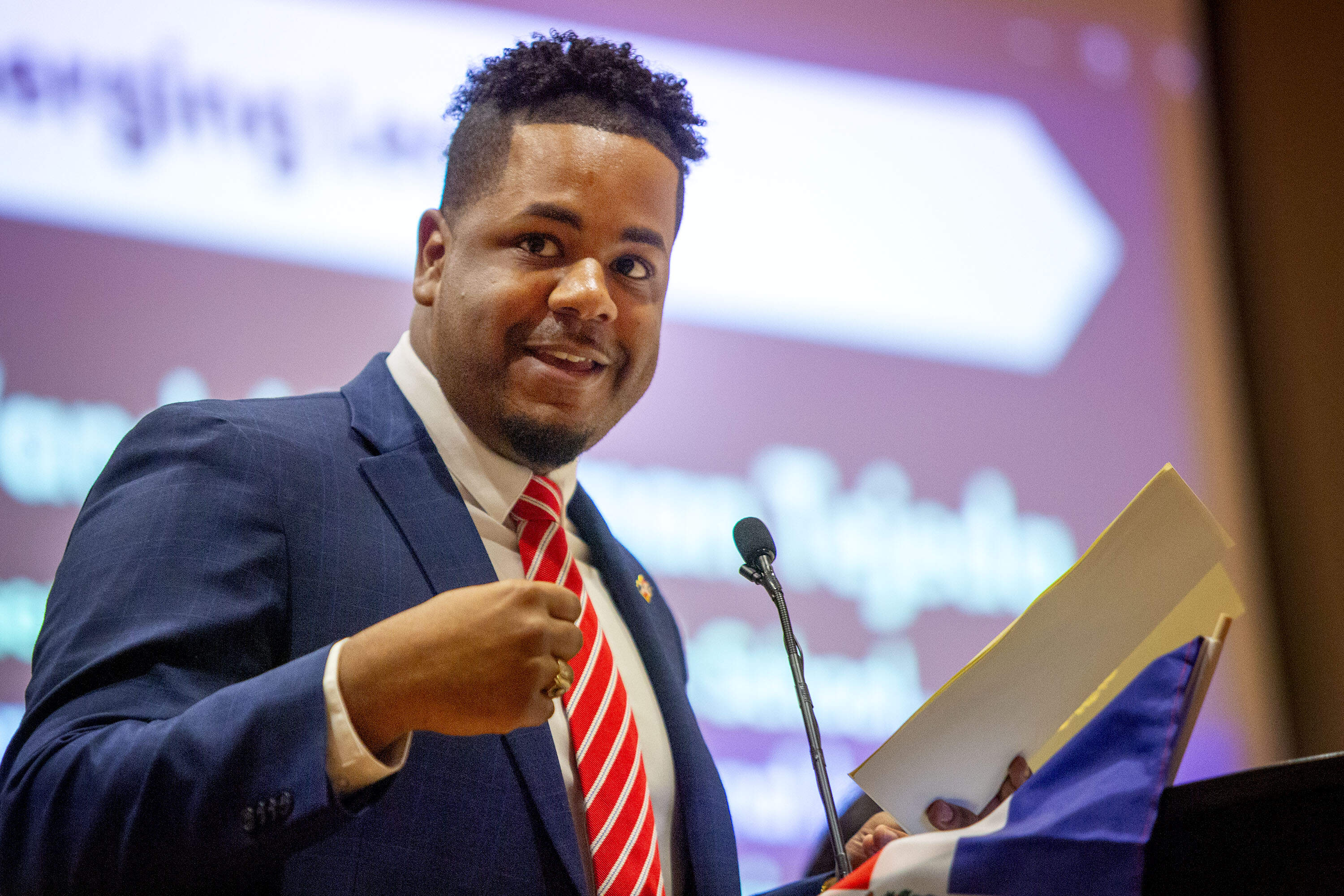
Santana, a Dominican immigrant who grew up in Boston public housing, has prioritized support for the city’s youth and LGBTQIA+ community, including organizing a June rally, titled “Be Visible, Be Loud!”
In his first term on the council, the 30-year-old from Mission Hill has fallen closely in line with the progressive voting bloc. In fact, Santana has mainly faced criticism for blending too deeply into the crowd. But he continues to benefit from aligning with the mayor, often getting mayoral shoutouts at campaign and public events. It follows a notable moment in May, when the Wu campaign reportedly mobilized to help him collect enough signatures just to get on the preliminary ballot before the deadline. (Santana later told The Boston Globe that he’s been struggling with personal issues, primarily his mother’s ongoing cancer battle.)
Wu has told supporters that she’s voting for Santana, Louijeune and another at-large candidate: Alexandra Valdez, a 33-year-old Hyde Park resident who serves as the director of the city’s Office of Cultural Affairs and came in sixth in the preliminary. She trailed Baker by 7,300 votes. (Business owner Marvin Mathelier and longtime city employee Will Onuoha finished seventh and eighth in the preliminary, respectively.)
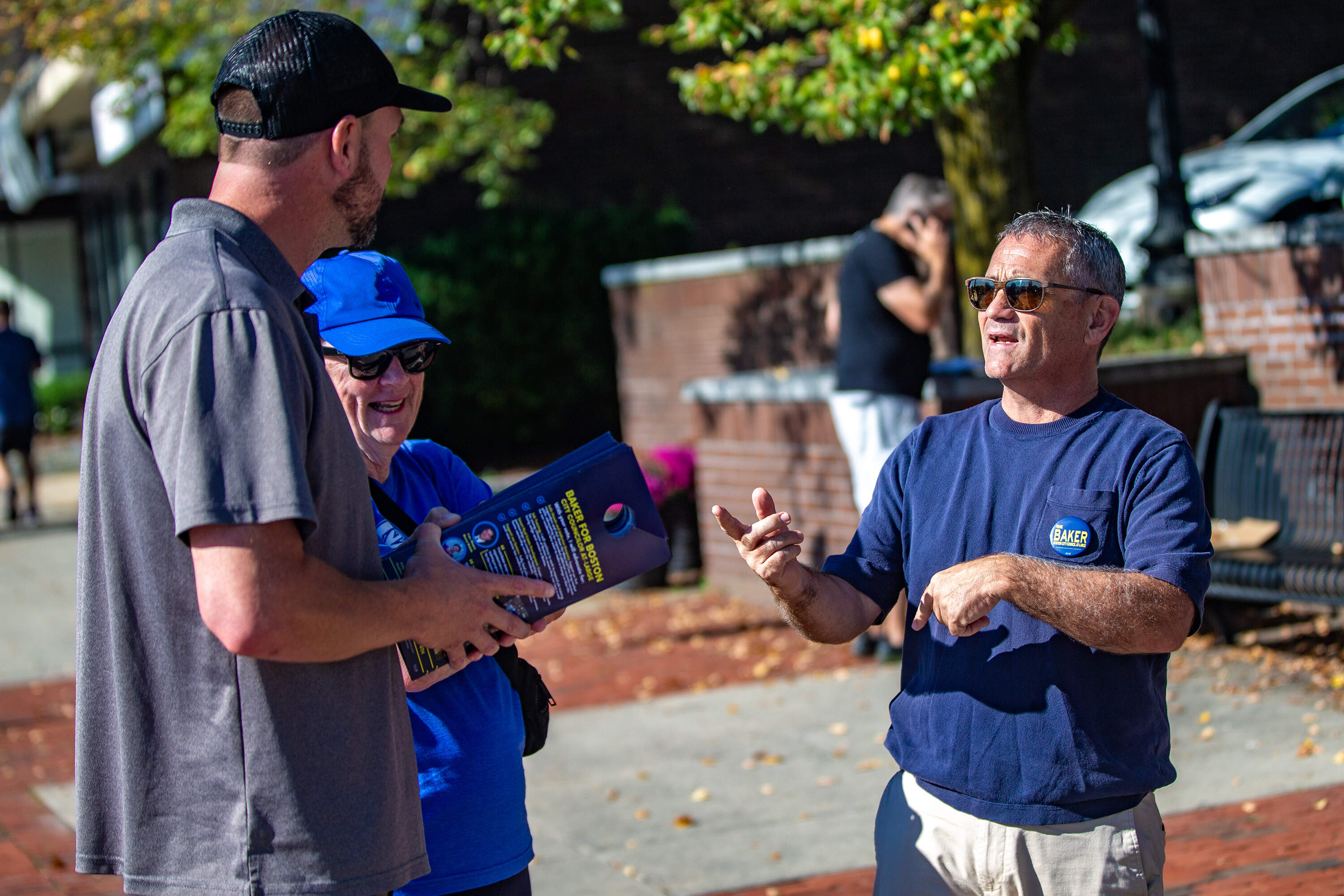
Baker, on the other hand, describes himself as a “lunch-bucket” Democrat. If elected, the Savin Hill native, who was the 12th of 13 children, would likely be one of the most conservative voices on the council— if not the most. On the subject of Mass. and Cass, he has criticized the mayor’s handling of the area, and pushes for more involuntary commitments for people with drug addiction and mental illness issues. And he says his top priority for the council is job training programs.
While Wu – who he overlapped with on the council – has made standing up to the Trump administration over immigration enforcement a top priority, Baker thinks Boston police could work with federal immigration agents more. He wouldn’t go so far as to use the word cooperate, (“ I mean, is cooperation a bad word?,” he posed to me on a drive around the city), but thinks police could "liaison" with federal officials to avoid having agents in communities. Currently, Boston's Trust Act limits local police cooperation with ICE to only certain serious criminal cases.
When asked directly about Trump, Baker said local leaders don’t need to work with the president, but they should do more to “worry about Boston.”
“ Eighty percent of third graders are not reading at a grade level. That's got nothing to do with Donald Trump. Our streets are in difficult shape. That's got nothing to do with Donald Trump. Our budget is upside down. That has a little bit to do with Donald Trump, but we were heading down that road before Donald Trump got here,” he said.
While Boston voters overwhelmingly backed Wu in the preliminary, former Boston City Councilor Larry DiCara told me that residents historically have favored balance on the council. The Baker versus Santana race may show how much they want it amid the current national backdrop.
Read my full feature about the at-large Council race and Baker's attempted comeback here.