Support WBUR
Underwater robot departs Mass. on 5-year mission to circle the globe
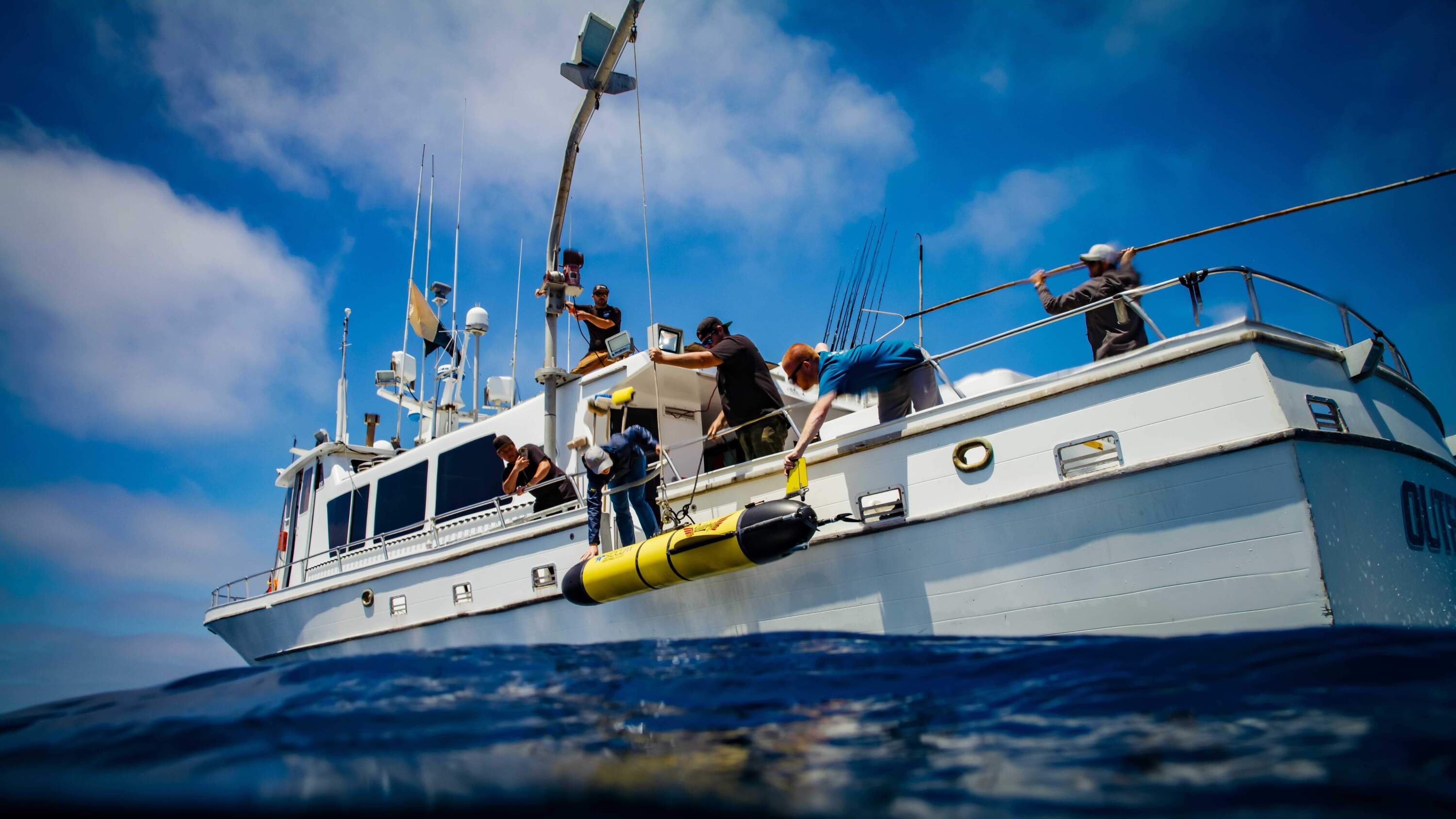
An underwater robot launched from Woods Hole Friday, embarking on a scientific quest to become the first autonomous vehicle to circumnavigate the globe.
If successful, the five-year journey could open new opportunities for long-term ocean research.
Leslie Ann McGee, chief innovation officer at Woods Hole Oceanographic Institution, said the technology could be most useful for studying under-sampled areas, like the Southern Ocean.
"The most exciting for us is to prove that you can send an autonomous vehicle almost anywhere you want under the ocean," McGee said. "It's really amazing."
The torpedo-shaped glider named “Redwing” will measure water depth, temperature and salinity, and send data back in near-real time. It will also carry a device to detect tagged fish in the open ocean, which could shed light on migration patterns of marine animals.
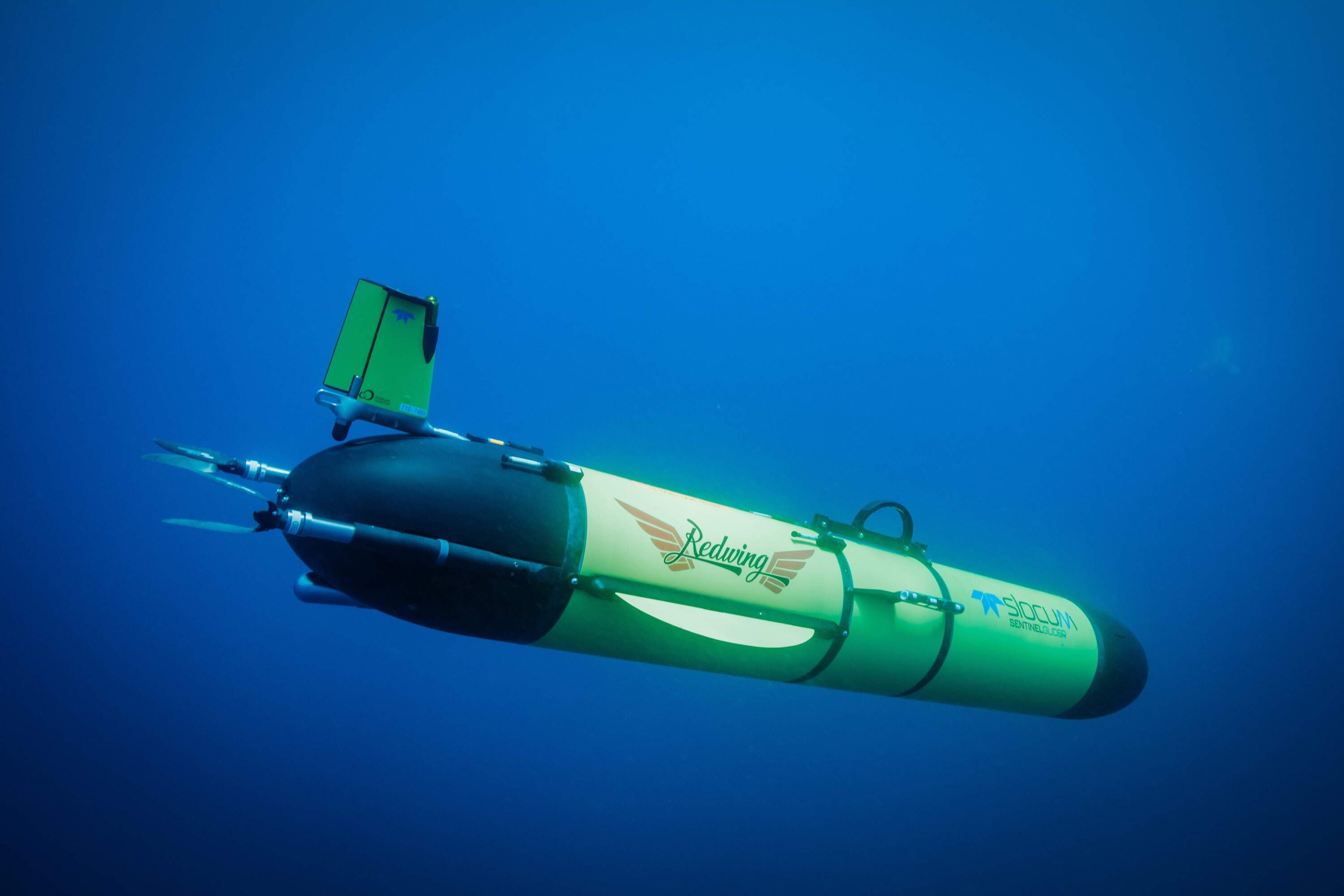
Autonomous underwater robots are widely used by ocean scientists, and technological advances have increased the robots’ endurance in recent years. The first to cross an ocean was in 2009, when a Rutgers University vehicle traveled more than 7,000 miles from New Jersey to Spain.
Redwing will attempt an even greater distance on the longest leg of its trip, when it traverses more than 9,000 miles from New Zealand to South America.
“We just haven't had a vehicle that can travel that far,” said Shea Quinn, a product manager at Teledyne Marine, the company that designed and built the glider in cooperation with researchers at Rutgers University.
Quinn called the mission a “proof of technology,” to determine if “we can send this thing not just across an ocean like we've done with vehicles in the past, but really the entire way around the world.”
If the robot can avoid fishing nets, ship strikes and other hazards, it is expected to return to Woods Hole in 2030.