Support WBUR
Survey: Debt and discrimination head up American concerns for higher ed
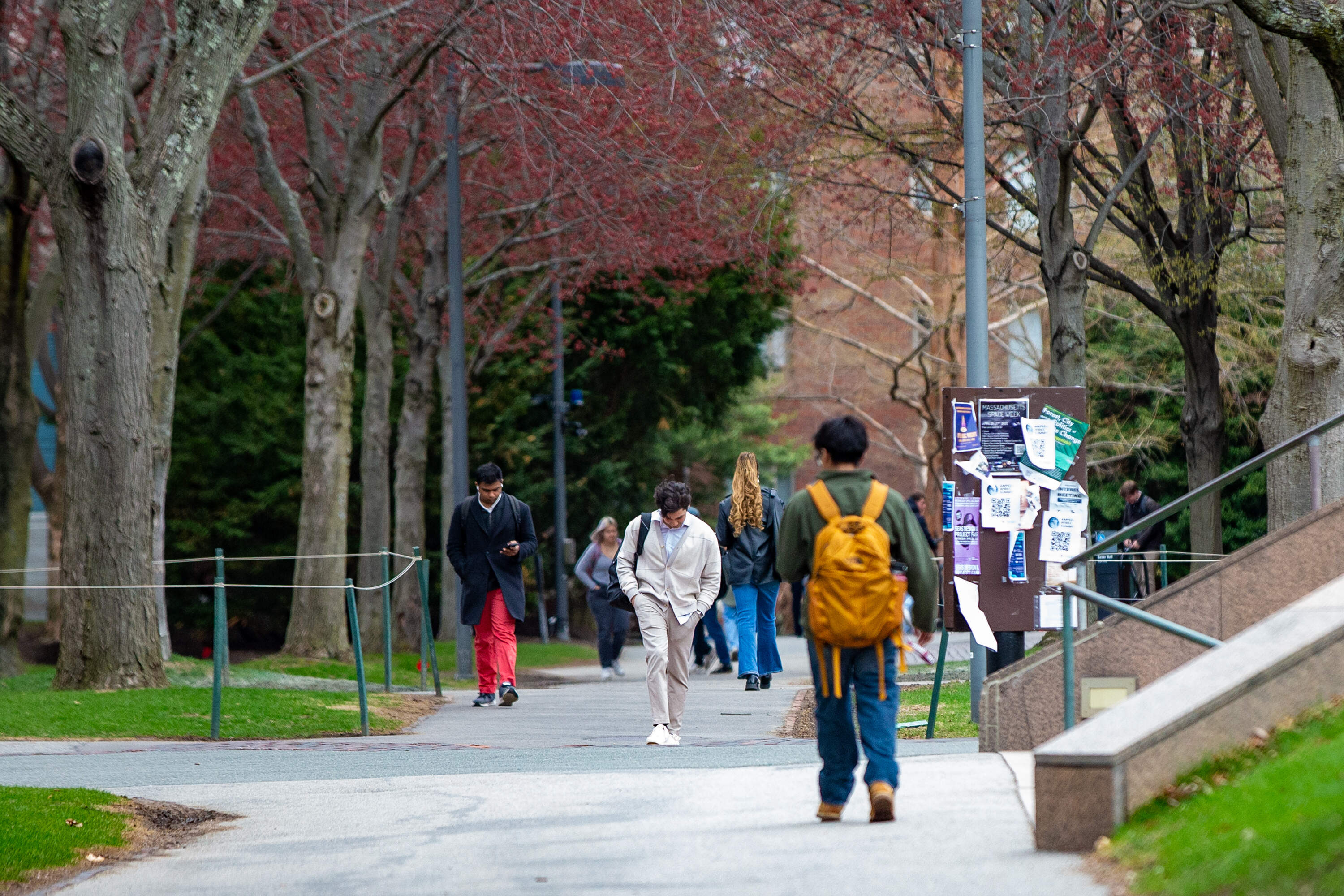
Affordability and discrimination rank high among Americans' concerns about higher education, according to a public opinion analysis by researchers at Harvard, Northeastern and other universities.
Over the summer, the “American Higher Education Barometer” surveyed about 32,000 adults across the U.S. to dig into views of higher education, particularly as institutions face policy shifts and increased financial and political pressures from the Trump administration.
Overall, 87% of respondents said tuition costs and student debt topped their concerns, followed closely by racism on campus (86%), antisemitism (85%) and Islamophobia (78%). The survey results were released Wednesday.
Most people said they valued the role universities play in research, with 9 in 10 saying universities are important for science and technological advancement. Meanwhile, 54% said they disapproved of efforts by the Trump administration to freeze federal research funds.
“The value proposition that people see in universities remains remarkably strong,” Matthew Baum, one of the researchers and a Harvard public policy professor, said. “Everything from contributions to the local economy to public health to medical research.”
Baum said the study sought to gauge public opinion as many universities and colleges decide how to respond to fresh demands from the federal government or cope with its accusations of antisemitism, stifling conservative speech or prioritizing diversity and equity.
“You have an administration that's come in and had some very clear criticisms and has taken very strong measures to try and rein in what it perceived to be abuses in higher education,” he said. “Where do the people actually fall out on these questions? I think these are really important questions to try and answer.”
Among other issues, the report asked about the federal government's moves to restrict international student visas, as well as interfere with student admissions and faculty hiring. It asked questions about how people view free speech issues on campus.
Support tended to rise and fall along party affiliations.
When asked about their overall approval of "universities in the United States," 73% of Democrats expressed approval, compared to 52% of Republicans and 54% of independents. The voters self-identified their party ties.
More than three-quarters of respondents identified "liberal bias" as a worry. Predictably, the report found this was of greater concern for Republicans (84%) than Democrats (72%).
Some other questions received mixed support. For example, nearly half of those polled said they disapprove of restrictions to international student visas, while a quarter approved. That means some didn’t feel strongly enough to say where they stood.
The White House has offered nine schools, including MIT,, preferential funding if they agree to a slew of proposals, from freezing tuition rates for five years to capping the percentage of enrollment for international undergrads.
In recent years, several local universities have moved to offer free tuition for students from households that meet certain income requirements.
David Lazer, another study researcher and a Northeastern political science and computer sciences professor, highlighted that while half the survey population disapproved of Trump's threats to universities' tax-exempt statuses, roughly 25% of people neither agreed nor disagreed.
“These are somewhat esoteric issues to most people," he said.
Lazer said the team would like to eventually survey college students alone on issues like free speech on campus. He said those results might be more telling than mixing their voices in with opinions from “60-plus year olds who are very distant" and perhaps getting information "transmitted through mass media, social media and so on.”