Support WBUR
Local life on the big screen
Editor's note: This story is an excerpt from WBUR's weekly arts and culture newsletter, The ARTery. If you like what you read and want it in your inbox, sign up here.
As a kid, I loved the cranky characters in Edgar Lee Masters’ “Spoon River Anthology.” Short, poetic and often funny, their monologues reveal a fictional town with a mix of intertwined dramas, often told from the afterlife. You can read and enjoy them one by one. But the more you take in, the more an entire people coalesce.
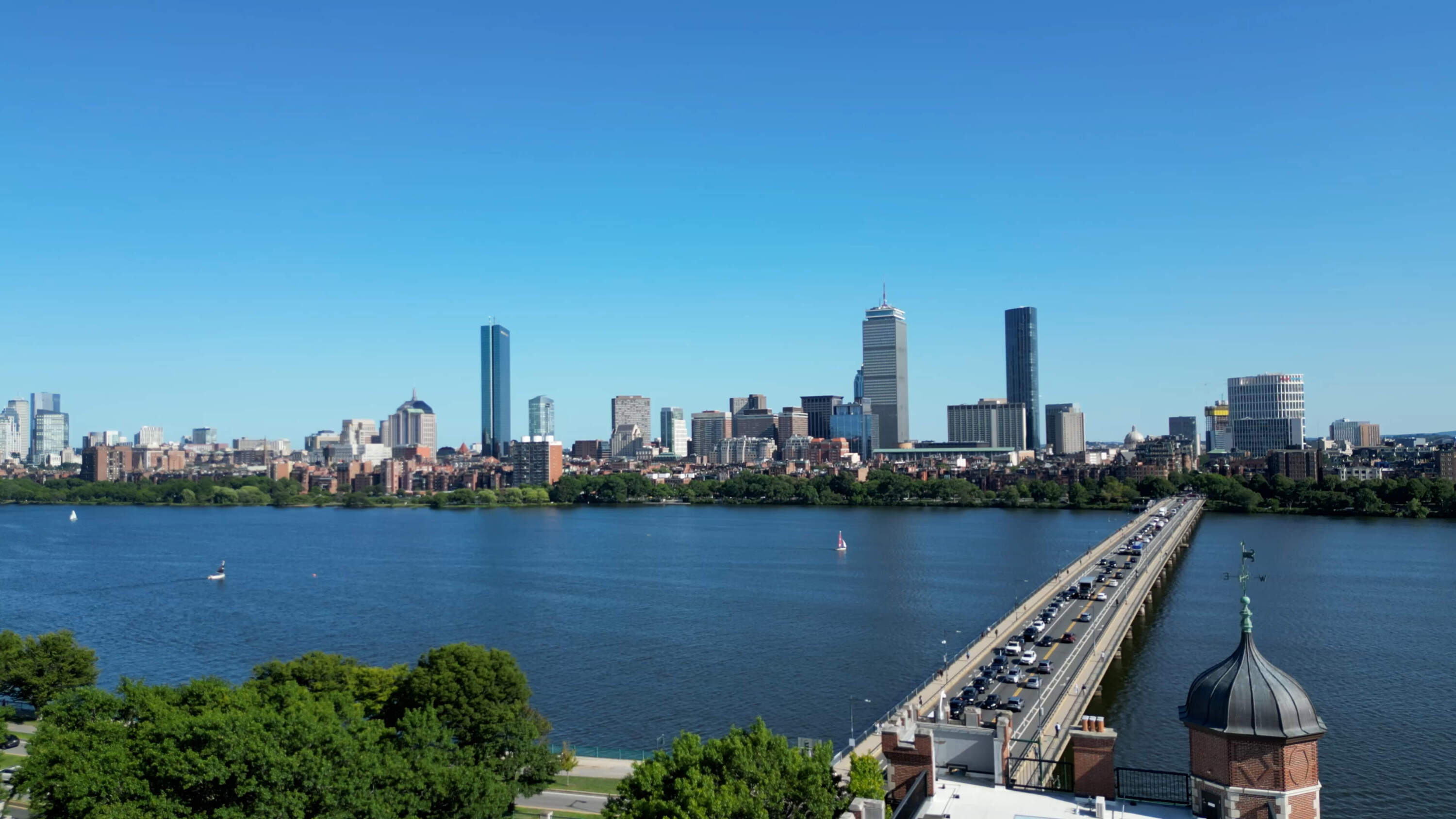
That might explain why I’m drawn to anthology-style documentaries like “Massachusetts Avenue: Life Along Cambridge’s Main Artery” by Cambridge filmmaker Federico Muchnik. His almost entirely one-man production catches real-life characters along the avenue between Alewife Station and MIT over the last year or so. Muchnik shot on an iPhone and edited the project himself. It premieres at the Brattle Theatre at noon on Saturday, Oct. 18.

Moved to investigate “location, locales, specificity, community,” Muchnik has made similarly “localist” films in Cambridge (“Open Space: Life at Cambridge’s Danehy Park” in 2024; “Touching History: Harvard Square, The Bank & the Tasty Diner” in 2005) and far beyond. His approach gives viewers a chance to meet unforgettable people, like bus driver “Lunchbox Tony” who appears in the opening scene of “Massachusetts Avenue.”
You’d think Tony buzzed over from central casting. While driving his route up and down Mass. Ave., he talks as much sense (“keep your hands on the wheel and your eyes on the road”) as nonsense (he calls his wedding ring “the world’s smallest handcuff”). Jokes aside, Tony welcomes all aboard his bus and this film.
From there, Muchnik’s scenes don’t neatly march down the street, ticking off addresses. Because that’s not how people live. Instead, he bops in and out of places where regulars know him, like at Andy’s Diner in Porter Square, and places he’s passed for years without going in, like Leavitt & Peirce tobacconist in Harvard Square. Overhead footage, sometimes dizzily disorienting, knits the scenes together.
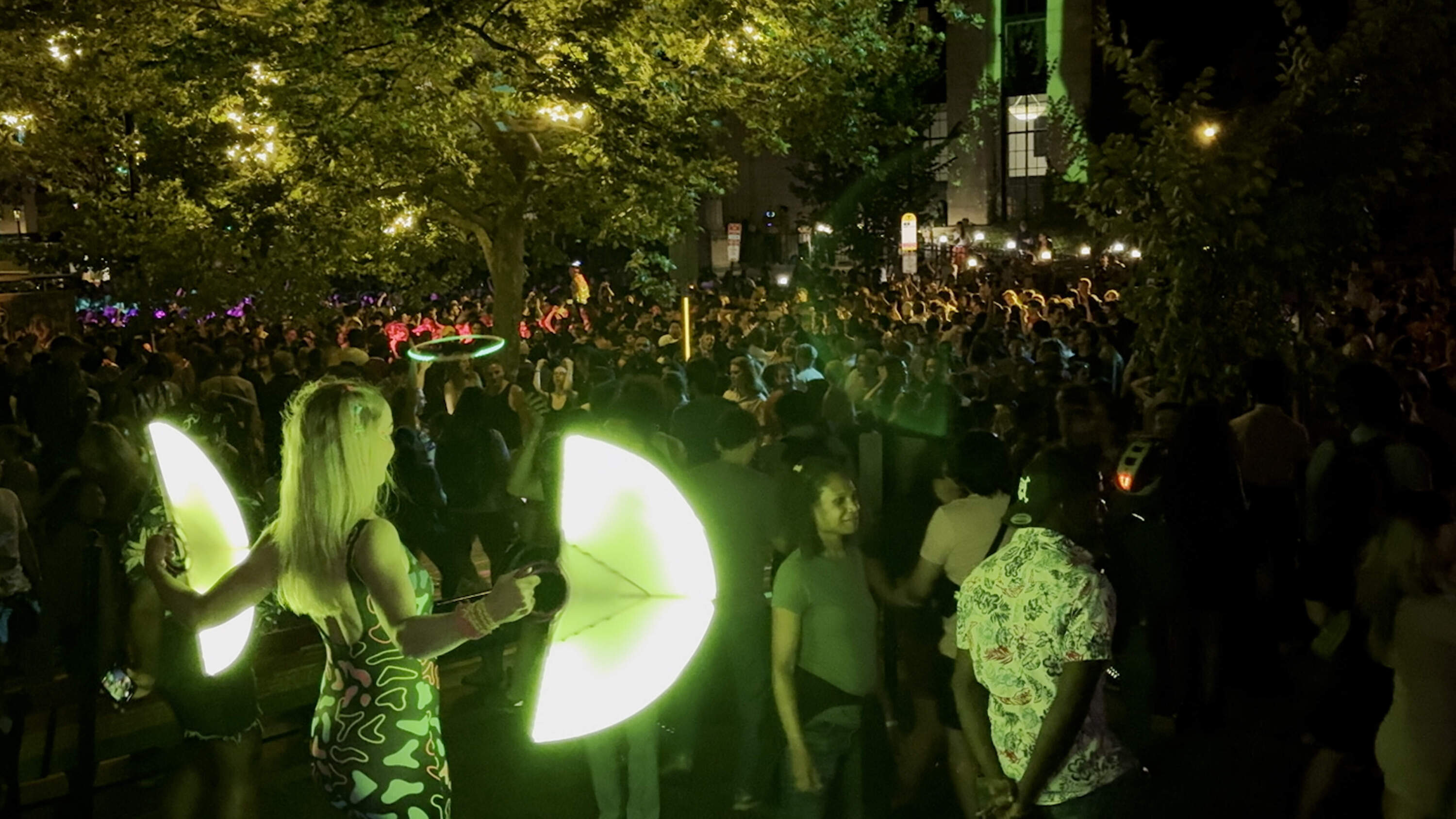
For Muchnik, filming helps him “step into the town square,” something he began doing with gusto during an unsuccessful run for Cambridge City Council in 2023. Though he doesn’t see it that way. “I’m glad I lost, otherwise I wouldn’t be making films,” he said. The multihyphenate talent also acts and told me he’d soon board a plane for a job in Toronto.
But he’ll be back with plenty of time to welcome viewers to the Brattle. In fact, he’s already working on his comedic preamble: “If you don’t like something, stick around, and in three minutes there'll be a brand-new scene.” Then he improvised his own movie tagline, “At its very worst, you will be mildly entertained.” I laughed in disagreement and told him I’d like to see copies filed with the Cambridge Public Library as a record of history.
Another library-worthy portrait takes place across the river in Boston’s Chinatown. The sumptuously shot short documentary with a history lesson folded into the center, “Love, Chinatown” screens twice as part of the Boston Asian American Film Festival at ArtsEmerson Friday, Oct. 17, at 6 p.m. and Saturday, Oct. 18, at 4:30 p.m. with director and film subjects present, as well as virtually Oct. 17-26. In the short, Chinatown activist and chronicler Cynthia Yee takes center stage as an ambassador to her childhood home. “If you want to know the real story of Chinatown just look up,” she says in the film. “The real life of Chinatown is above the restaurants.”
At age 75, she recounts idylls and hardships while growing up, including losing her family home to Boston’s Central Artery. “How do you forgive a highway?” she asks in the film. She also talks with tai chi classmate Gwen Liu, 50 years her junior, about their shared experiences in Chinatown then and now.
Director Lukas Dong said he became interested in Yee after reading her blog, Hudson Street Chronicles. “If you've looked at it, you know that it's pretty beautiful writing, and she has so many stories to tell,” he said.
Dong said his favorite scene came about organically. He had been shooting all day but then Cynthia and Gwen started dancing in a huge empty hall, a Chinese song playing in the background. He got the camera out again. “They sort of let loose… it felt like I was capturing real life,” he said.
BAAFF director Susan Chinsen appreciated the film’s humanity, which deeply moved her, adding that too often, depictions of Chinatown can be limited to “a commercial district where transactions happen.” For her, that’s why the film festival exists. “We want to put a spotlight on stories not often told in this way.”
As I see it, the more real-life characters you meet in documentaries made in Boston, the more an entire people coalesce.