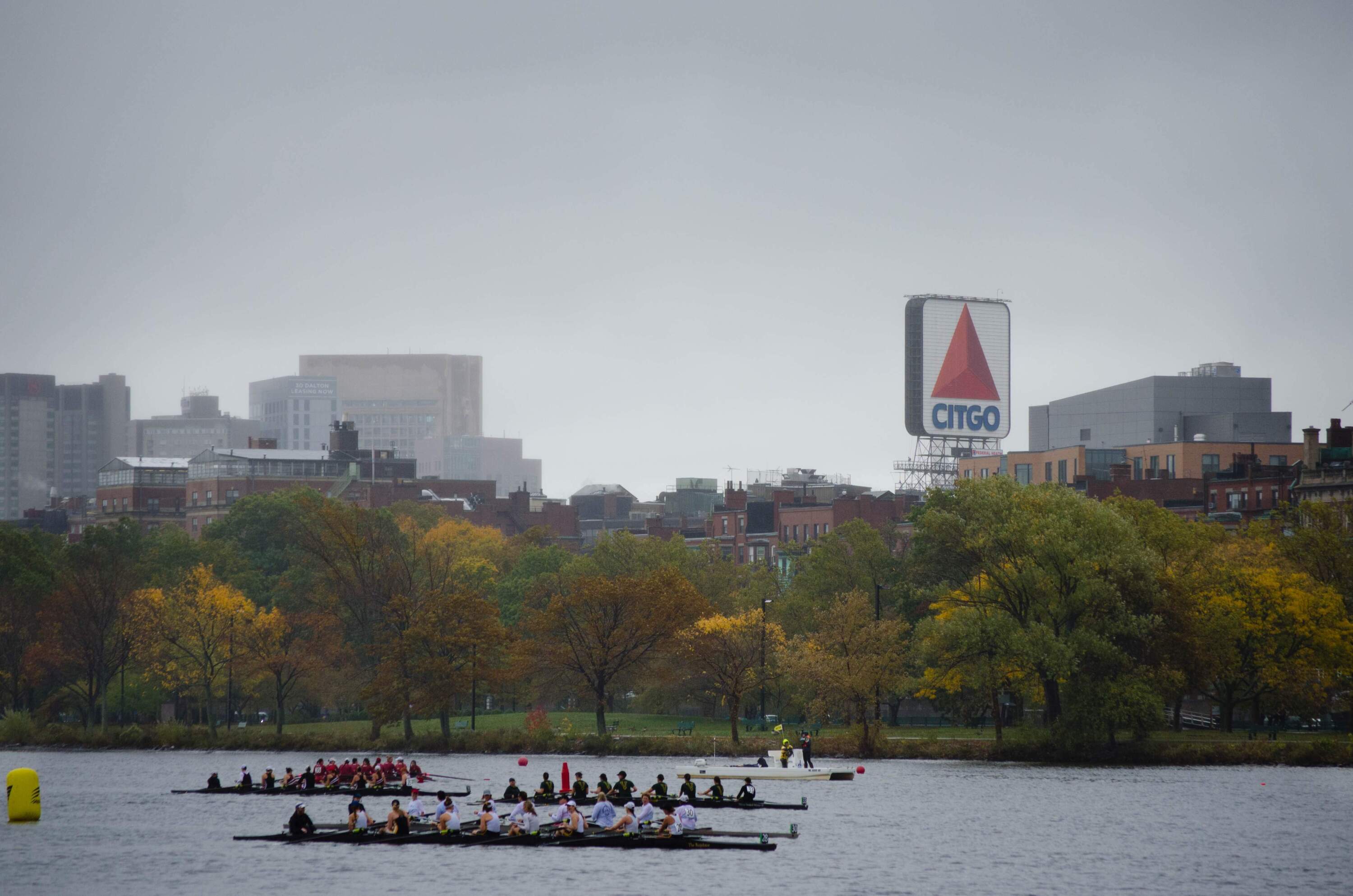
Coxswain? Scull? Crab? What Head of the Charles rowers are yelling about
Each year, on one magical day, Bostonians are seemingly transformed into the foremost experts in long distance running. Somehow, we watch the Boston Marathon and become clear about the signs of fatigue, the names of the real contenders and a slew of other details for a sport we don't follow for 364 days of the year.
What about this town's other big international sporting event? For whatever reason, locals aren't as hip to the lingo that gets tossed around every October for the Head of the Charles Regatta.
Maybe you, like some people, wrote the sport off as something rich kids with lots of time on their hands do. But anyone who buys into those stereotypes should put them aside. These are top athletes from all backgrounds absolutely smoking a race course in your backyard. It's gripping to watch.
If you need crib notes to help you keep up with the rowers, you've come to the right place.
What's in a name?
Before we get into the mini-glossary below, let's diagram the name of the event.
In plain English, the Head of the Charles Regatta means "the three-mile boat race on the Charles River."
A head is a type of rowing race. Heads are typically three miles long, according to U.S. Rowing. In our case, that means these athletes are cranking those oars over and over from the BU Boathouse on Memorial Drive to Herter Park on the shores of Allston. Phew. Heads also have staggered starts, which means you won't see a bunch of boats lined up on the river like marathoners in Hopkinton. Instead, each team records a time, and the best time wins.
The Charles is the Charles River, which snakes northwest for 80 miles from its headwaters in Hopkinton — that's right, where the marathon starts. For our purposes, however, we're focused on a stretch of the waterway that divides Boston and Cambridge.
And a Regatta is what you call a boat race. Easy enough.
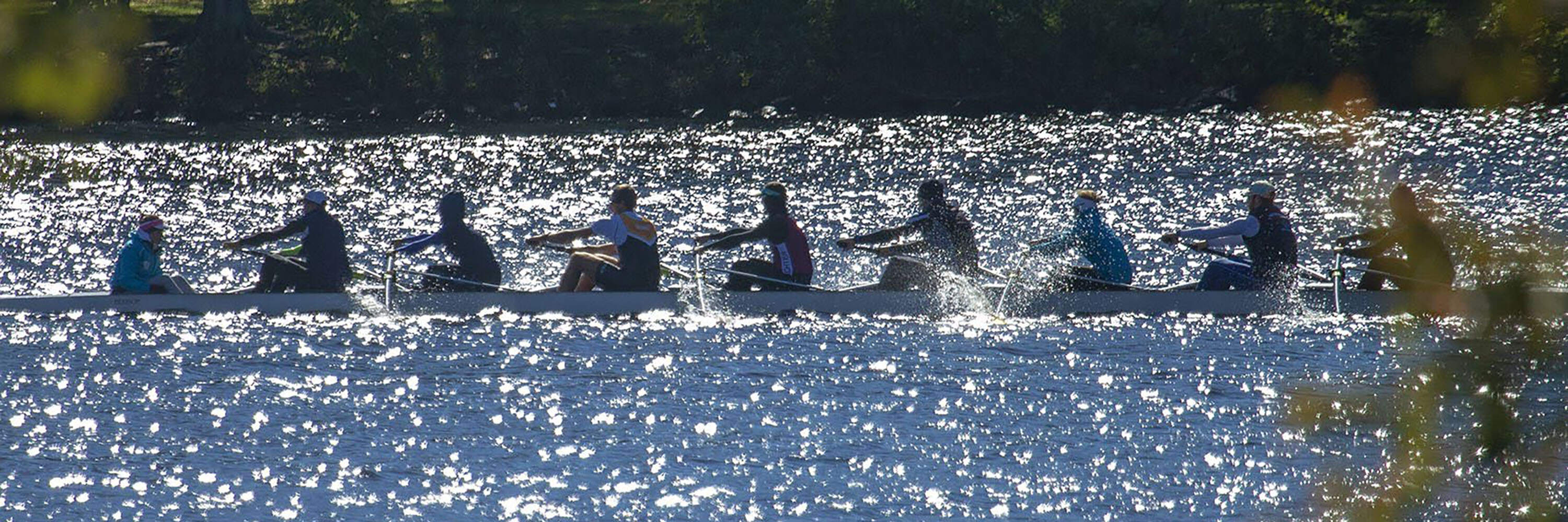
The Boat
- Sweep: This is a boat where the people inside row with one oar.
- Scull: On a scull, you row with two oars with one in each hand.
- Bow: That's the front of the boat.
- Bow ball: It's exactly what it sounds like: This is a little ball that sticks out from the bow. The bow ball does two things: It's a safety element in case the boat bumps into something (like a bridge or God forbid another boat or person), and it's used to see who actually won in a close race.
- Stern: That's the back of the boat.
- Oars: Honestly, if we have to explain what an oar is to you, maybe rowing isn't a sport you should watch.
- Port: The left side of the boat. So named because in ye olden times, a boat would tie up to shore along its left side.
- Starboard: The right side of the boat. Starboard evolved from the term "steer board," basically the ancient version of a rudder, which was usually found on the right side of the boat. By the way, that's why they parked the vessel on its left (port) side. Port and starboard are proof that, despite its long-held reputation, etymology can be fun.
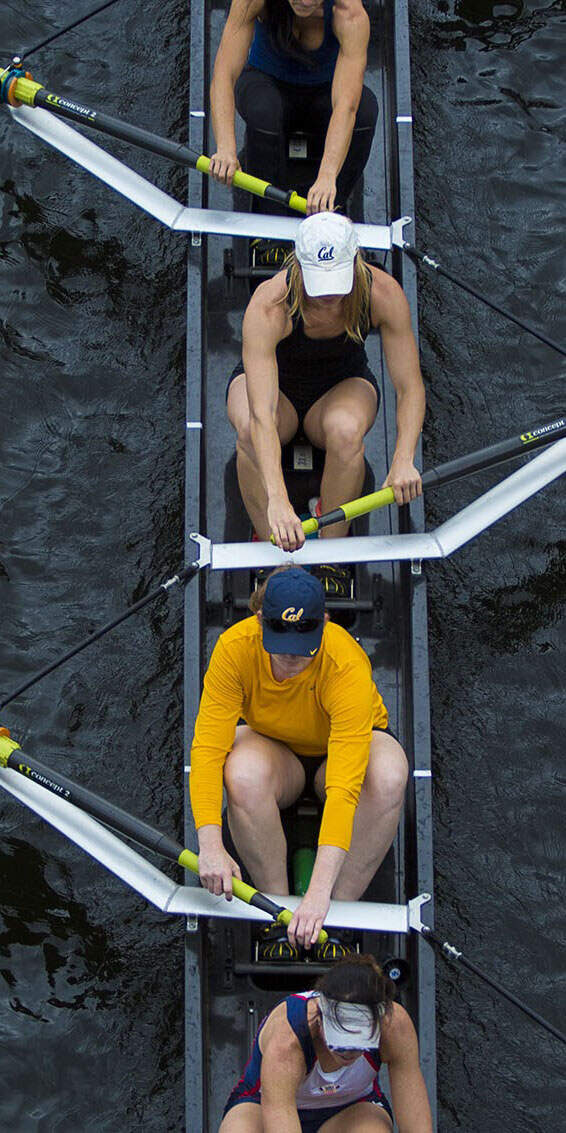
The People
- Crew: This is what you call all the people on the boat. Crews can be as small as two people or as large as eight. And each member of the crew has their own job to do during the race.
- Bow: This is the first rower closest to the front of the boat. They have a lot of the steering duties, as does the person in the stroke position.
- The "engine room": These are the rowers in the middle of the boat. Generally beefier than the rowers at either end of the vessel, their whole gig is delivering as much power as possible.
- Stroke: The last rower on the boat, like the bow they have a lot of the steering responsibilities during the race.
- Regardless of position, port and starboard rowers use oars that go to the left or right of sweep boats, respectively.
- Coxswain: This is the person who sits in the stern and barks orders at all the rowers doing the actual work. OK, that's unfair; while they aren't rowing, the coxswain is the one who has to make all the decisions when it comes to directing the boat toward victory. Remember, the rowers have their backs to the bow, which means they can't see where they're going. They have to trust the coxswain.
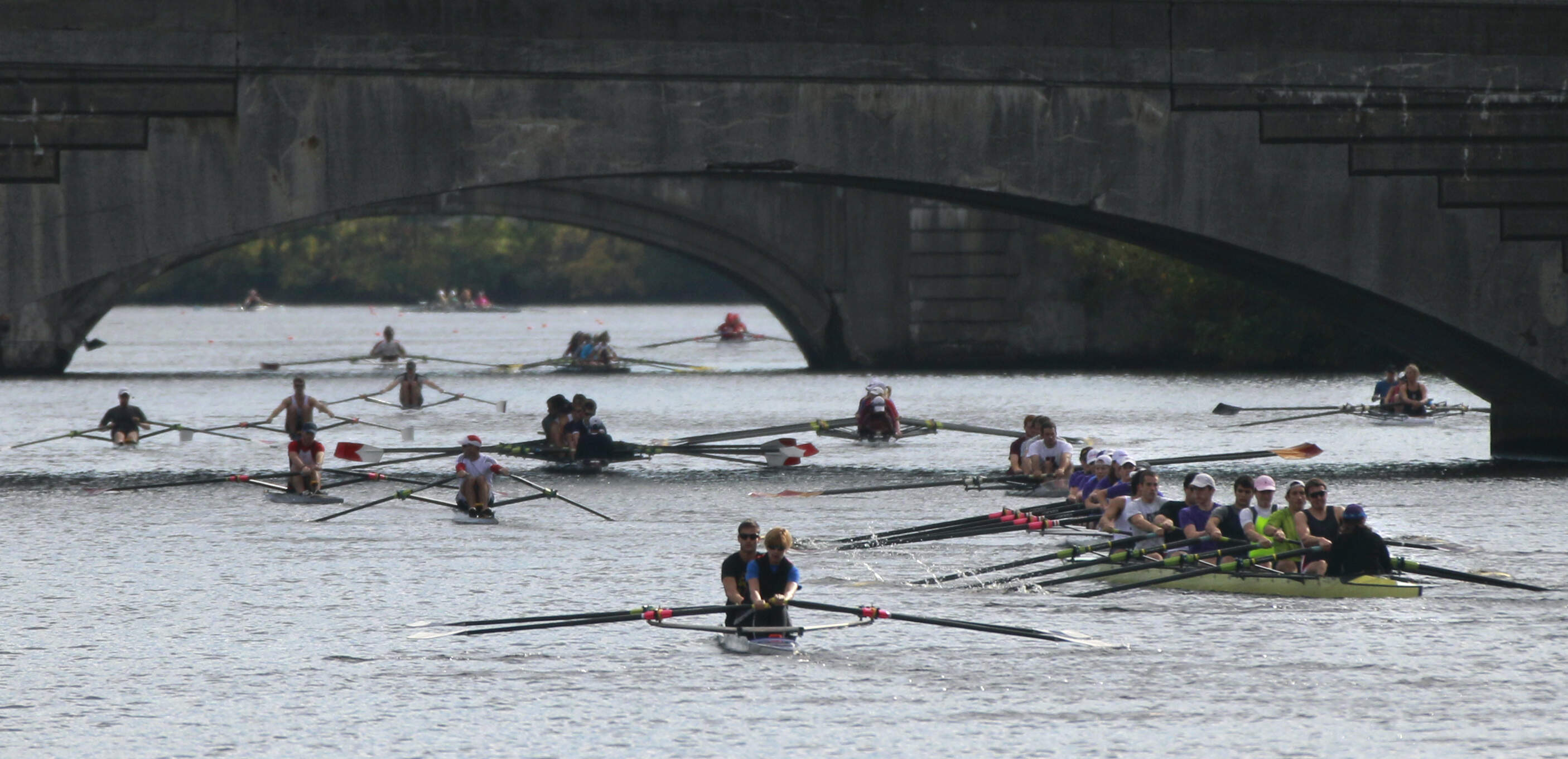
The Course
- BU Boathouse: The race kicks off here. Officially, it's the DeWolfe Boathouse, if you need to find it on Google Maps, but no one calls it that.
- BU Bridge: This is the first bridge the rowers pass under. It's really two bridges stacked over each other, with the road bridge on top and a railway bridge just under.
- River Street and Western Avenue bridges: These two spans sandwich the one-mile marker of the three-mile race. They both carry roads that lead directly to the same spot: Central Square in Cambridge, because Boston isn't the only city around here whose roads were seemingly laid out on a dare.
- Weeks Bridge: This is the first of the brick-built bridges along the course. It's a footbridge that leads to Harvard and is endlessly photographed in the school's marketing materials.
- Anderson Bridge: Built in 1915, this pretty overpass marks the spot of the first bridge built by colonial settlers to cross the Charles River. That was called the Great Bridge, which throws a little shade on its replacement. The two-mile marker comes soon after this spot.
- Eliot Bridge: This is the last of the bridges the rowers pass under. It's also in the middle of an S-curve in the river. Navigating both the turn and the bridge's arches can be tricky for rowers, and even results in the occasional crash. Not coincidentally, the Eliot is among the most popular spots for spectators.
- Herter Park: The rowers can finally rest after crossing the finish line in front of this park in Allston.
And that's all you need to get started. Like all sports, there's a ton of jargon that comes with watching it, and part of the joy of learning a new sport is getting steeped in those terms as you go.
But we could not resist sharing a couple final tidbits we learned while researching this post. Catching a crab is when your oar gets caught in the water and its handle comes flying back at you. Ouch! But an ejector crab is when this foul-up sends you hurtling from the boat. And if they didn't want you to giggle about it, they should have picked a less silly name.
Good luck to all the competitors taking to the water for this year's regatta. And happy spectating to the rest of us.