Support WBUR
State legislators pledged efficiency, but critics expected more amid Trump's attacks on Mass.
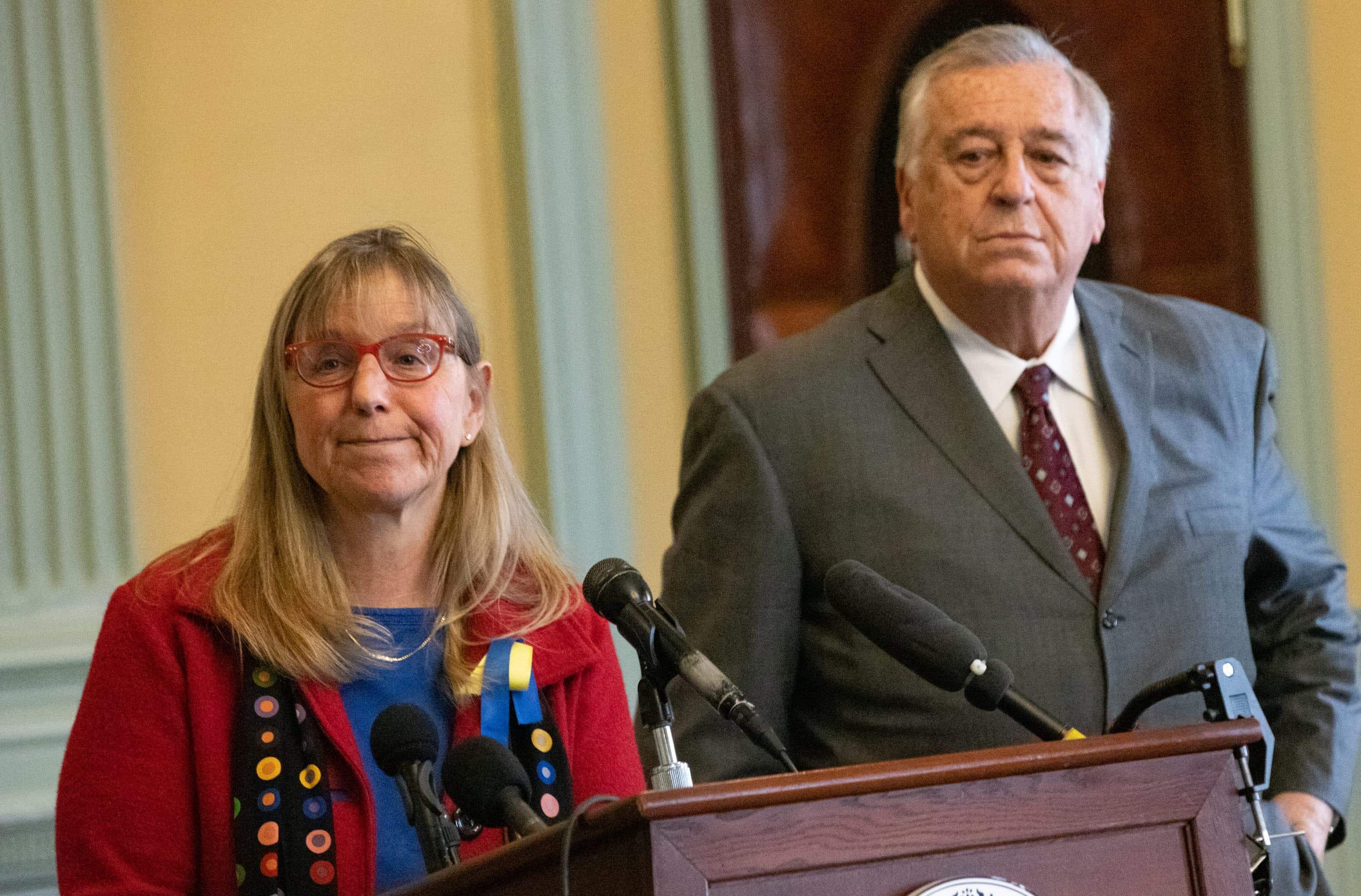
Legislative leaders in Massachusetts kicked off this session with pledges to double down on “efficiency” and get more business done.
But with just weeks left before they close out formal business for the first half of the two-year term, Democrats in charge of the House and Senate have managed to send a brief list of major bills to Gov. Maura Healey's desk.
Meanwhile, critics are calling on Beacon Hill lawmakers to do more to stand up to President Trump’s attacks on Massachusetts. Healey has signed one standalone bill into law that responds to Trump — a proposal that bolsters transgender and reproductive health care rights.
Sen. Jamie Eldridge, a Marlborough Democrat, said efficiency is “still a work in progress.”
Lawmakers have historically used the first year of the session to hold committee hearings and the second year to pass high-profile bills, but Eldridge said he is hopeful the chambers can pass more laws earlier in the session.
Eldridge said in an interview that a key rule change this session is helping the House and Senate each advance bills, without having to get buy-in from the other chamber at the committee level.
That’s allowed separate votes on a suite of proposals, from revamping oversight of the Cannabis Control Commission to data collection laws, rules around cell phones in public schools and tackling human trafficking.
However, a WBUR analysis found that most of the major bills that cleared the House or Senate have sat untouched after arriving in the other chamber.
Even though Democratic supermajorities rule both branches, legislative leaders rarely see eye to eye.
Some progressive Democrats and critics of the Legislature say lawmakers have not done enough this year to counter Trump, who has been slashing federal funding for science, higher education and health care while also revving up immigration enforcement.
Jonathan Cohn, political director at Progressive Mass, said Democrats knew before the 2024 election what the Trump administration planned to do to states like Massachusetts.
“It's striking that in our state, in Massachusetts, where we have, as I often like to point out, the third largest Democratic super majority in the country after Hawaii and Rhode Island, our Legislature isn't doing very much,” Cohn said in an interview.
Advocates like Cohn point to what they say is immense damage inflicted by Trump on Massachusetts, with $3.7 billion in looming cuts, and criticize Democrats on Beacon Hill for failing to act.
Senate President Karen Spilka, an Ashland Democrat, tasked one of her key legislative committees in April with developing policy responses to Trump's actions.
So far, the committee, led by Sen. Cindy Friedman of Arlington, has successfully helped just one bill become law that directly responds to actions from the Trump administration — the measure strengthening reproductive and transgender health care.
Scotia Hille, the executive director of the transparency-focused Act on Mass, said the response from the Senate “felt a little half-hearted.”
“If that's the best they could come up with, I think it's a pretty feeble response, especially from a state that has as much resources and has as much political power among the Democratic establishment as Massachusetts,” Hille said in a statement.
Spilka said she believes the Senate has acted more efficiently during the first half of the 2025-2026 session. She said the chamber has passed eight major bills, including one about data privacy.
"We are trying to be thorough but expedite what's happening," she told reporters last month.
Healey has signed 52 bills into law since the session started in January, but most pertain to a specific city or town or even a single public employee, like a local police officer seeking to work past the mandatory retirement age or public workers contributing sick time to a colleague.
Of the eight statewide proposals that have won approval by both branches of the Legislature and were sent to Healey’s desk, six are spending bills. That includes a $61 billion fiscal 2025 budget that was packed with policy changes like a ban on charging renters broker fees.
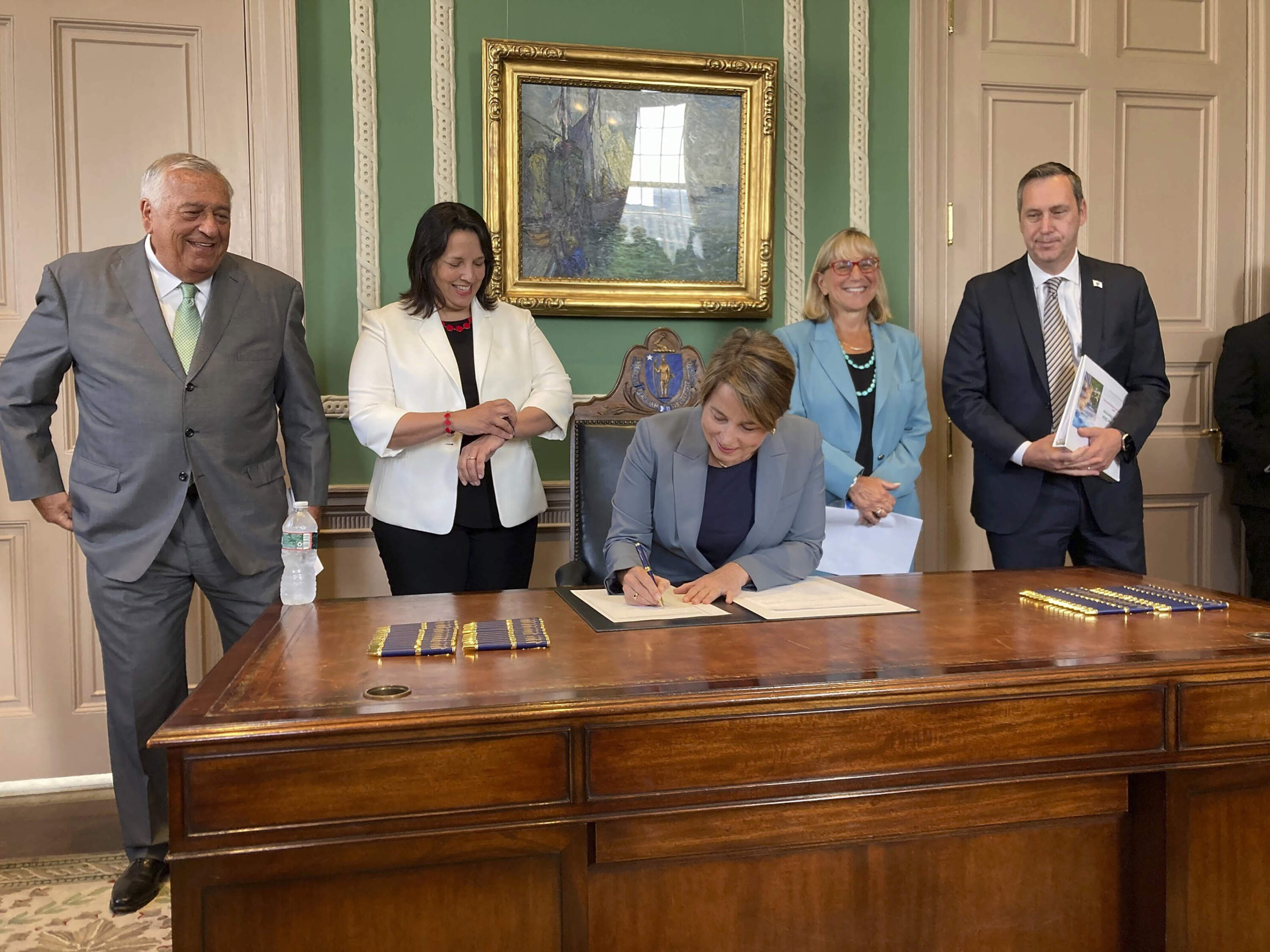
During the first year of the 2023-2024 session, Healey approved 89 bills. Most were hyper-local measures, but she also signed the yearly state budget, a law creating a new cabinet-level housing agency, and a bill allowing for free phone calls for incarcerated individuals.
For comparison, during the first half of the 2021-2022 session, then-Gov. Charlie Baker, a Republican, put his name to 116 bills, including a large number of local policies, a climate law setting greenhouse gas emission limits, multiple COVID-19 measures and a student nutrition bill.
Baker signed 153 bills during the first half of the 2019-2020 session.
Officials in Democratic leadership argue that improved legislative “efficiency” should be measured by how many bills have cleared committees at this point in the term compared to past sessions.
The House Clerk's Office said it does not keep a tally of how many bills have been reported out of committee. The Senate Clerk's Office said roughly 493 out of the more than 2,600 bills filed since January have been reported out of committee.
House Speaker Ron Mariano said more bills “are flying around” this year, including a massive early literacy proposal he argued addresses “troubling” trends among students.
“We have a tough time selecting which ones we want to bring out. But there's enough to keep us very busy,” he told reporters last month. “It's a sign of the fact that we're moving the stuff that's important to us in the House.”
Sen. Ryan Fattman, the ranking Republican on the Legislature's Joint Rules Committee, said the deal the House and Senate struck on their internal rules helps bills filed by Republicans move more quickly through the Senate.
“Being in the minority, my relationships are in the Senate, mostly, and so it allows me to move things a little bit more timely, a little bit more efficiently, and build consensus on my side,” he said. “If you're able to get that through the Senate more efficiently, you can then start doing your advocacy on the House side.”