Support WBUR
Michael Bobbitt wants Massachusetts artists to meet the moment
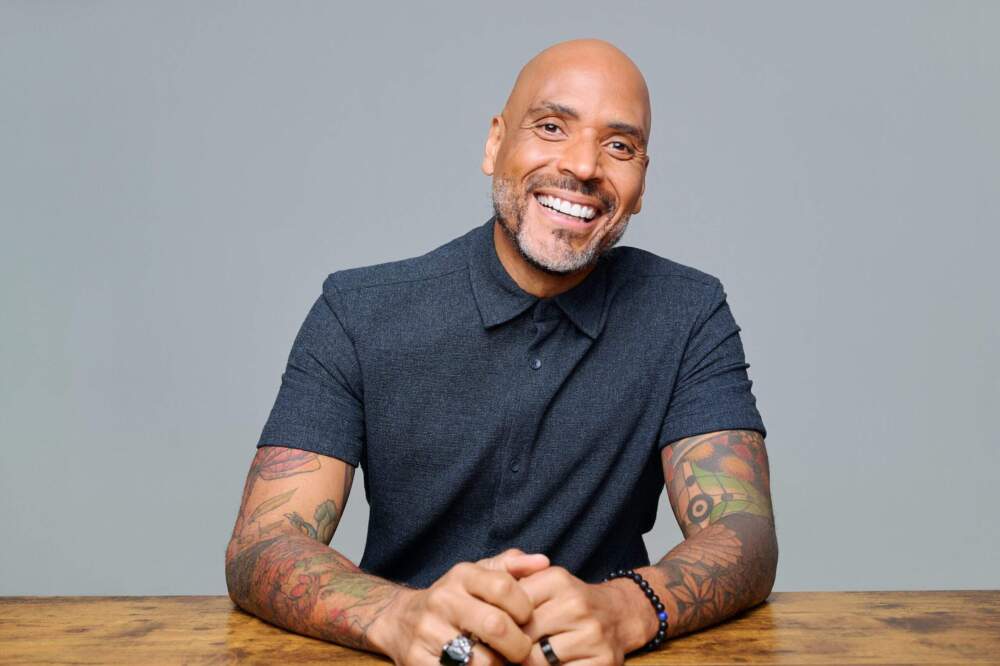
Massachusetts is about to lose a charismatic spokesperson for its arts sector. Michael Bobbitt, the executive director of Mass Cultural Council, is leaving the state agency that funds cultural organizations after nearly five years on the job.
As the state’s highest-ranking public official dedicated to the arts, Bobbitt made equity the centerpiece of his agenda, overseeing the creation of plans to support artists impacted by systemic inequalities. During his tenure with the agency, annual funding from the state budget increased from $18 million to $26.9 million – its highest level in the Commonwealth’s history. The funds are granted to cultural organizations and artists across Massachusetts. Bobbitt also oversaw the distribution of more than $60 million in pandemic relief funds and the establishment of the state’s first poet laureate. Last year, he launched a program that allows healthcare providers to “prescribe” arts and cultural activities to patients.
Bobbitt joined Mass Cultural Council in 2021 after two years as the artistic director of New Repertory Theatre in Watertown. In January, he will begin a new job as president and CEO of OPERA America in New York. Mass Cultural Council Deputy Director David T. Slatery will become acting executive director while the council seeks a permanent replacement.
Bobbitt spoke over the phone about his Mass Cultural Council legacy and what he sees as the greatest challenges and opportunities facing his successor. These are excerpts from that conversation.
What are your proudest accomplishments at Mass Cultural Council?
There are so many arts organizations and individual artists that are getting funding from Mass Cultural Council for the first time, and I think that's just incredible. We have redesigned our grant programs, thinking about equity in mind, and really did a lot of outreach to reach out to those artists that almost never get supported. I think about our fantastic drag queens and our tattoo artists and our DJs, not to mention all of our folk and traditional artists.
We've elevated the visibility and the importance of the art sector in the state. And I also think we've done a lot of things that have been models for other states to consider.
What would you say were the biggest challenges for you in your tenure there?
One of the challenges was that we didn't know who all we had in the sector. We did research and did a whole asset inventory of all the assets we have in Massachusetts. Now we have that information and we can use that as we are figuring out who we have in the state and how that money should be allocated or dispersed.
We have 15,063 arts organizations in Massachusetts and 112,190 full-time artists. That's a large sector, and that number doesn't include the number of professional artists that are part-timers or the people that work in K-12 and collegiate arts education.
One of the things I've been pontificating about lately is the need for the art sector to own its own work. We often believe that business acumen is the antithesis of art, and I think business skills are the amplifier of arts. And so I want the art sector to embrace the skills needed to run businesses and to sell their products and to capitalize and commercialize their work so that they can be more sustainable and they can make more art.
What’s the secret to working with the Massachusetts legislature?
Meeting them where they are. One of the things I love about the arts is that it can pretty much touch any sector. The benefits to health, the benefits to education, the way we can bring communities together, the economic impact, the impact on workforce development.
And so when I would meet with legislators, I would often talk to them about what their priorities are and show them that the arts can help support those things. But I also know that they need to hear from the sector. They need to hear from their voters about what's important to them. And that's where the sector can do more than it does.
In your dealings with government leaders, where did you meet the most resistance – and on the flipside, where do you think you had the most success?
I actually never met resistance. I mean, I had never met a legislator that was not into the arts or didn't love the arts, or didn't see the value in it. What I think we need to do as a sector is give them ideas, legislative policy ideas, for how they can support us more. And then we need to put some pressure on them to do things that can help stabilize us.
How do you view the Trump administration’s attitude toward the arts – how it’s cut funding for the arts, or targeted DEI initiatives in the arts – how do you see that potentially impacting the arts ecosystem in Massachusetts in the next few years?
The arts have always been part of social justice movements, so it's not a surprise that the arts are being targeted. I think my biggest concern is that, now that I have been in government for a very long time, I know that the private sector tends to follow government priorities. By example, when DEI was the hot button topic, government supported it and the private sector followed. There were all these jobs and businesses that popped up.
So as we're watching government, federal government, divest from the arts, we have to consider that the private sector may follow. It’s going to be even more important for the art sector to get more organized and put more pressure on government to keep supporting it and think even more creatively and robustly about how it can support the sector.
We have data already from SMU Data Arts that's showing that revenues all around, both contributed and earned revenue, is down by 25%. Arts organizations across the country are just cutting expenses to meet the times, but that's not sustainable, either.
What does the state need to do to build on your priority of equity in the arts?
Instead of building a massive DEI plan, which we've seen organizations do, we decided to do a suite of plans, because we know that the uniqueness of people's oppression requires expertise. So we built a racial equity plan and we came up with a lot of action steps with measurables. We also launched, last year, a deaf and disability equity plan and a Native American equity plan. So I think the work is continuing to find out which communities are being marginalized and using expertise to work with those communities to design action steps to help improve it.
That approach has helped us to advance rather quickly. The one thing I will say is that we have really operationalized this work. And so I don't have much fear that the work will go away after I'm gone, because I think the staff and the council are all behind it. Even if we call it new things, which is fine by me, because there's other words that mean DEI, like love and belonging and access and freedom and care.
What do you think are the most critical issues facing your successor?
I would say having their own vision. I would say building a movement so that the sector gains more political power. Helping the sector see that strong business skills for individual artists and for organizations is an asset and a really good thing. It will not take away from the quality of your work.
Thank you so much, Michael, for making the time, and I wish you the best in your next adventure.
The last thing I'll say is, I just think the Massachusetts cultural sector is so special. Because of the connection to history and the land and our Native American population, and how diverse the state is and how progressive the state is.
As we're battling the incredible creativity that's coming out of the federal government, we're going to need people who are even more creative so we can combat the difficulties that we're facing. And I think the creative sector can help. Creativity is now being called one of the top skill sets needed by the workforce. So let's double down on this great asset we have. I'll be paying attention and watching and helping out when I can.