Support WBUR
State legislative audit stuck in limbo one year after voters approved ballot initiative
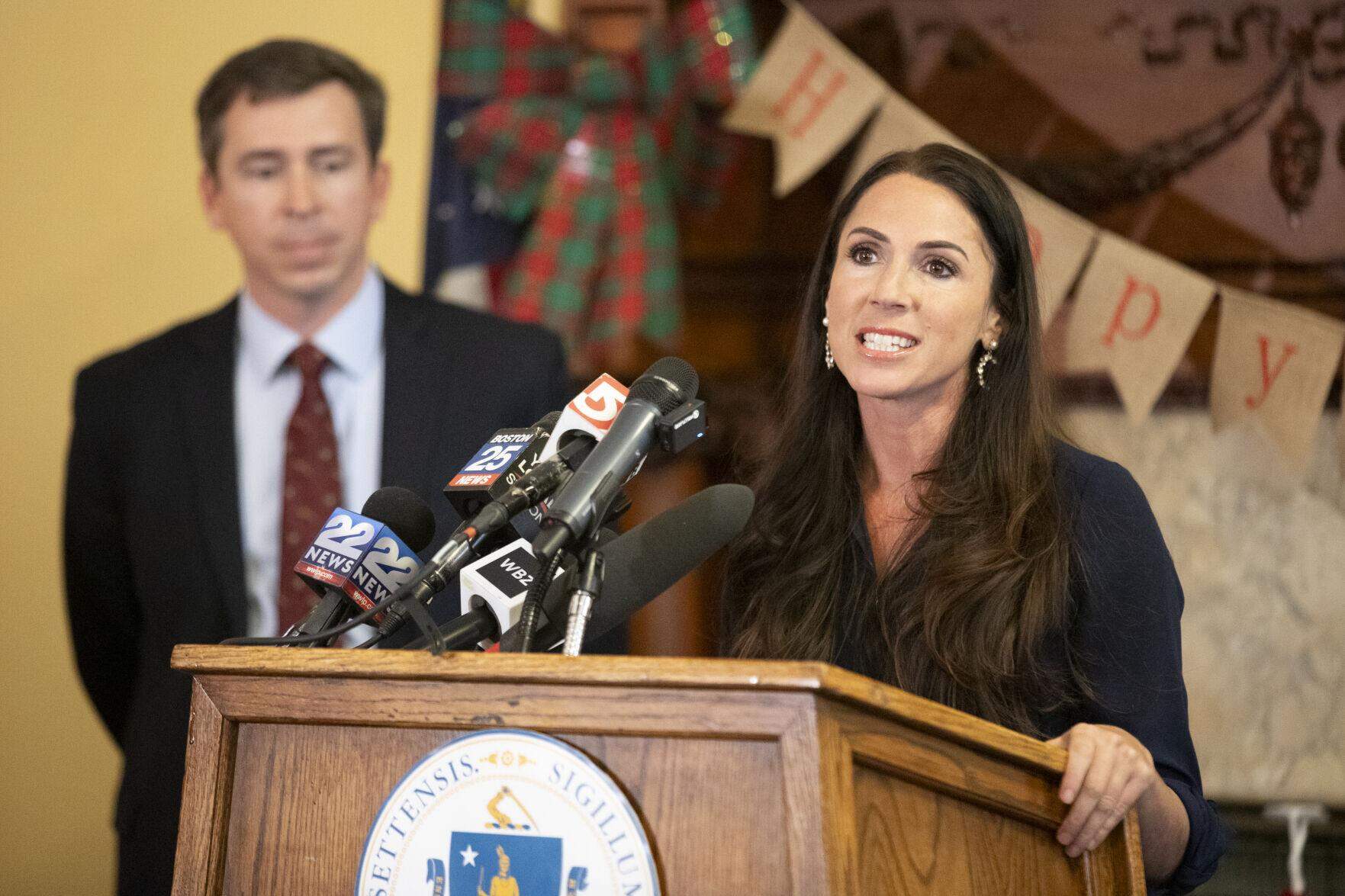
A year after voters gave State Auditor Diana DiZoglio the green light to audit the Legislature, she remains locked in a stalemate with lawmakers who oppose the effort and with the attorney general, who has yet to agree to let DiZoglio file a legal challenge against the legislators.
At the crux of the deadlock is Democratic lawmakers’ refusal to participate in an audit — they argue it violates separation of powers principles. DiZoglio wants to sue them into compliance, but Attorney General Andrea Campbell’s office has yet to take action and says it needs more information from the auditor.
The impasse has frustrated advocates who campaigned in favor of the ballot question last November. They say DiZoglio, a former state lawmaker, was given a mandate to probe the inner workings of Beacon Hill because the measure passed with nearly 72% of the vote.
Massachusetts Fiscal Alliance Executive Director Paul Craney said those results sent “the most powerful message you can to the Legislature.”
“Everywhere you go, you talk to people about this, and it's not a partisan, ideological issue. It's a matter of respect, and it's on people's minds,” he said in an interview.
DiZoglio is trying to break through the standoff. The Methuen Democrat recently turned to an outside law firm to provide legal assistance, and Michael Minogue, a Republican running for governor, publicly pledged to fund an undisclosed portion of the legal bills.
“This legal dispute is ripe for litigation, and litigation is the only means of resolution given the Legislature’s refusal to comply."
Michael Leung-Tat, attorney for state auditor's office
Michael Leung-Tat, head lawyer for the state auditor’s office, in a statement said the attorney general’s office’s “willful abdication and continued failure to faithfully discharge its statutory duty to enforce the law have left our office with no other recourse but to engage outside counsel.”
“This legal dispute is ripe for litigation, and litigation is the only means of resolution given the Legislature’s refusal to comply,” Leung-Tat said.
He declined to make DiZoglio available for an interview, and she did not respond to a text message.
The Office of the Attorney General contends DiZoglio has not fully answered three questions that must be satisfied before the dispute between the auditor and the Legislature can move to court.
That includes detailing the scope of the audit, defining her position on any protections the Legislature may claim from legal action, and who she specifically wants to sue and why.
In a statement to WBUR, the attorney general said her office has asked the auditor the “same straightforward questions” it asks of any state official looking to bring a lawsuit.
“The auditor’s privately funded legal arrangement also raises significant legal and ethical questions," Campbell said. "While the path forward is clear, the auditor’s unwillingness to provide answers has brought her dispute with the Legislature no closer to resolution."
"While the path forward is clear, the auditor’s unwillingness to provide answers has brought her dispute with the Legislature no closer to resolution."
Attorney General Andrea Campbell
Leung-Tat said the auditor’s office wants to investigate the Legislature’s contracting and procurement procedures, use of non-disclosure agreements, and budget information.
DiZoglio has also floated auditing the way lawmakers dole out leadership assignments and how bills make their way through the legislative process, according to Campbell’s office.
But Campbell officials believe investigating those two areas raises concerns around the separation of powers between different branches of government and could infringe on protections lawmakers have from criminal and civil liability for actions they take in the course of their work.
Leung-Tat countered that the auditor’s office has “repeatedly and more than sufficiently answered” questions from the attorney general.
“The auditor recently sent an October 15th letter that again clearly presented the Attorney General’s Office with a legitimate legal issue — the Legislature’s refusal to comply with our statutorily authorized requests for records related to our statutorily mandated audit of the Legislature,” Leung-Tat said.
DiZoglio has already released one audit of the Legislature.
An October 2024 report slammed lawmakers for not participating in the investigation and was issued only weeks before voters were set to decide the ballot question.
The auditor’s office restarted its efforts in January when the ballot initiative officially became law.
“To date, both the House and Senate have refused to cooperate with our audit and failed to respond to our requests for records in violation of the law,” Leung-Tat said.
House Speaker Ron Mariano and Senate President Karen Spilka have long argued that an audit into their practices risks one branch of state government infringing on the work of another.
They have also said financial records of the House and Senate are available to the public on the state comptroller’s website; legislative sessions and committee hearings are live-streamed; and details about roll call votes, amendments, and bills are posted online.
“The auditor has seemed to forget that,” Spilka said at the State House this week.
Mariano said lawmakers “totally disagree” that DiZoglio has the authority to audit the Legislature.
“We changed our rules and invited her to come in and have a discussion with us about creating an audit with an independent auditor. We have yet to hear a response from her,” the Quincy Democrat said.
But Jennifer Nassour, the former chair of the Massachusetts Republican Party and one of the original backers of the ballot question, said Mariano and Spilka are “bucking democracy.”
“They're absolutely being the most undemocratic Democrats that are elected to office,” Nassour said. “This is one of the problems when you live in a one-party ruled state — you have a Democratic AG who's not working with the Democratic auditor, who isn't able to convince the Democratic Legislature that the will of the people was for her to be able to conduct an audit.”