Support WBUR
Some Mass. public universities enroll fewer international students, citing visa restrictions
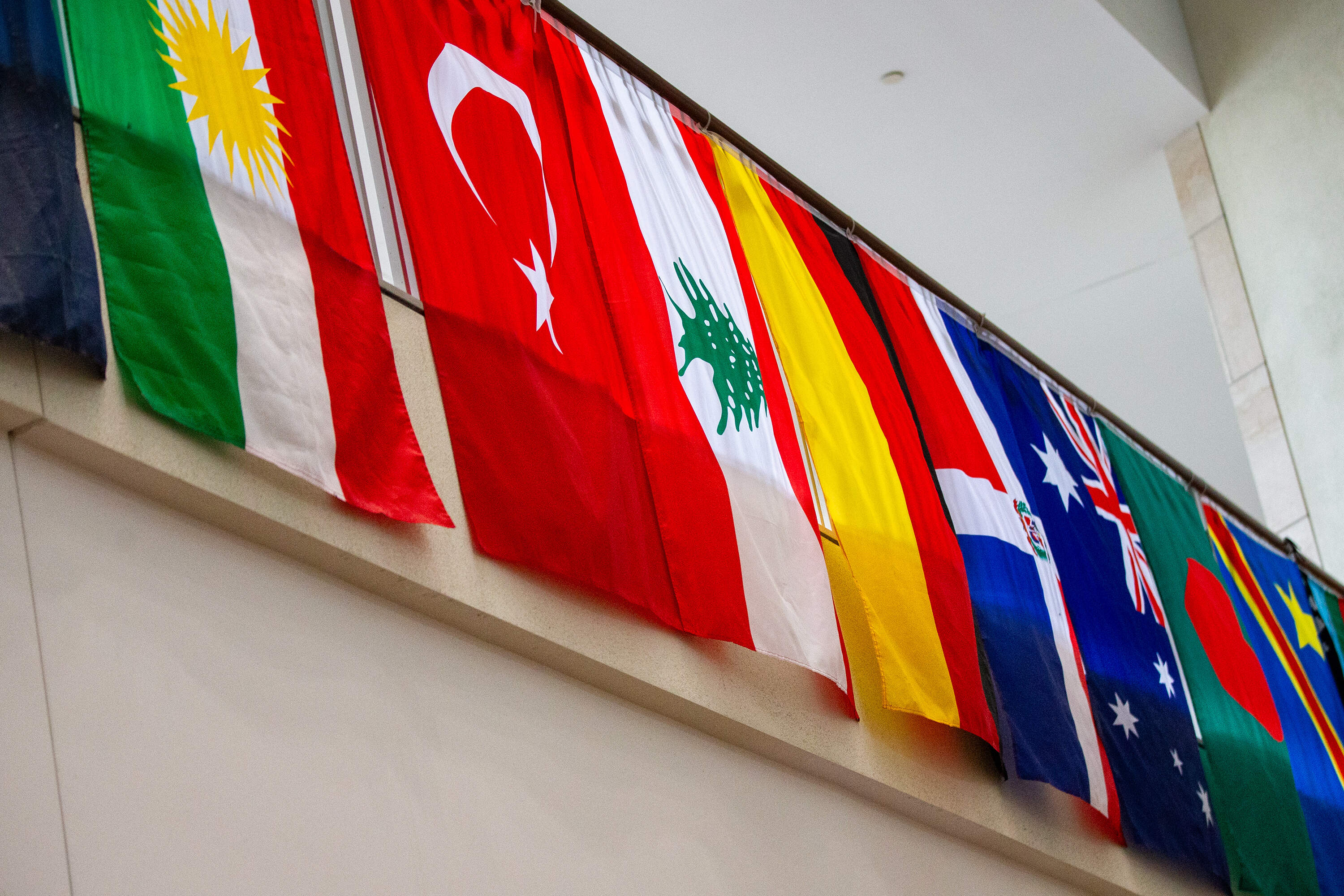
Several public colleges and universities in Massachusetts said fewer international students enrolled this fall. The schools blamed the drop in part on the Trump administration's recent restrictions on travel and visas.
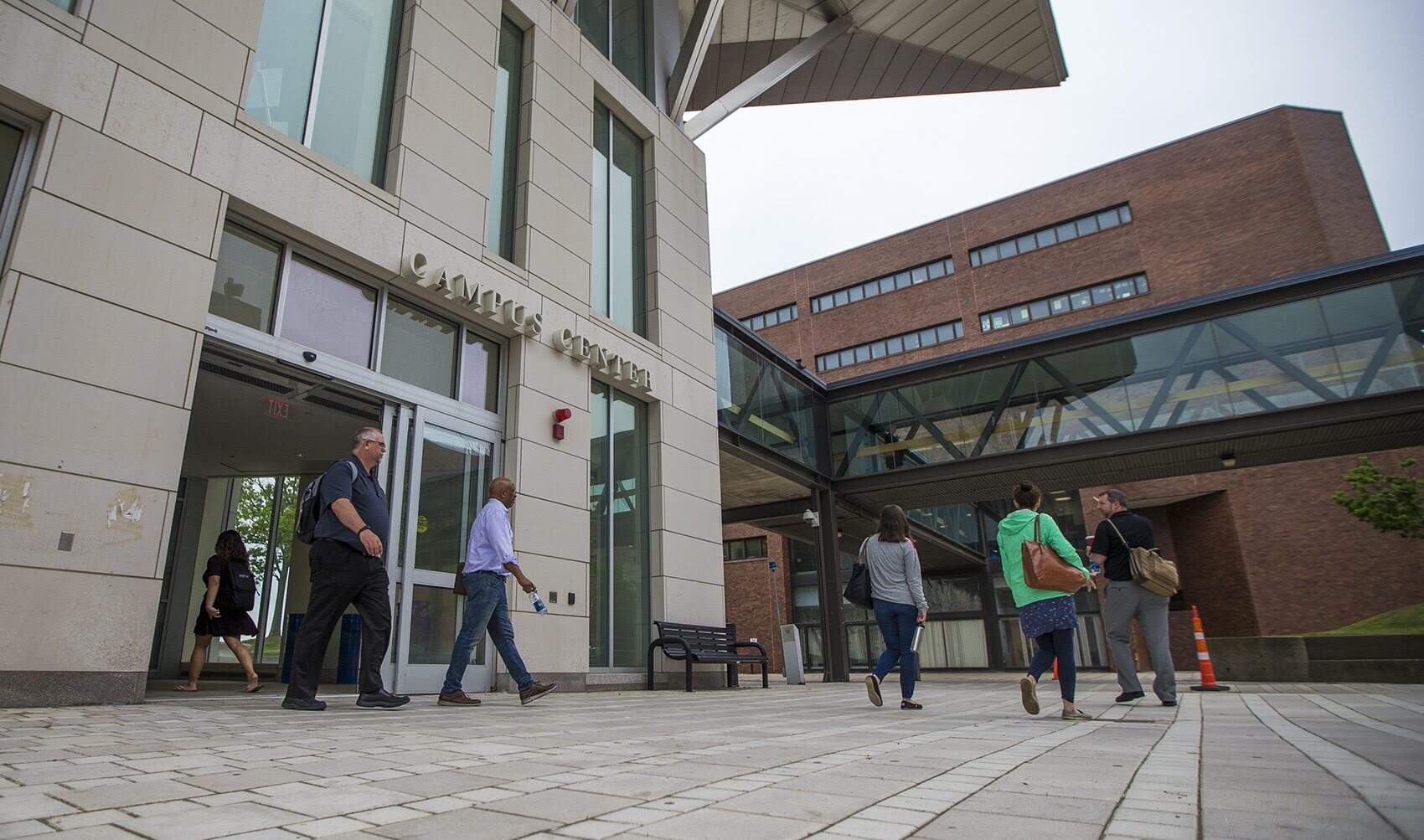
This fall, 1,227 international students attend the University of Massachusetts Boston. That figure is down about 17% — or about 250 students — since a year ago.
“International enrollment always has ebbs and flows, but nothing that was kind of this extreme,” Vice Chancellor for Enrollment Management John Drew said.
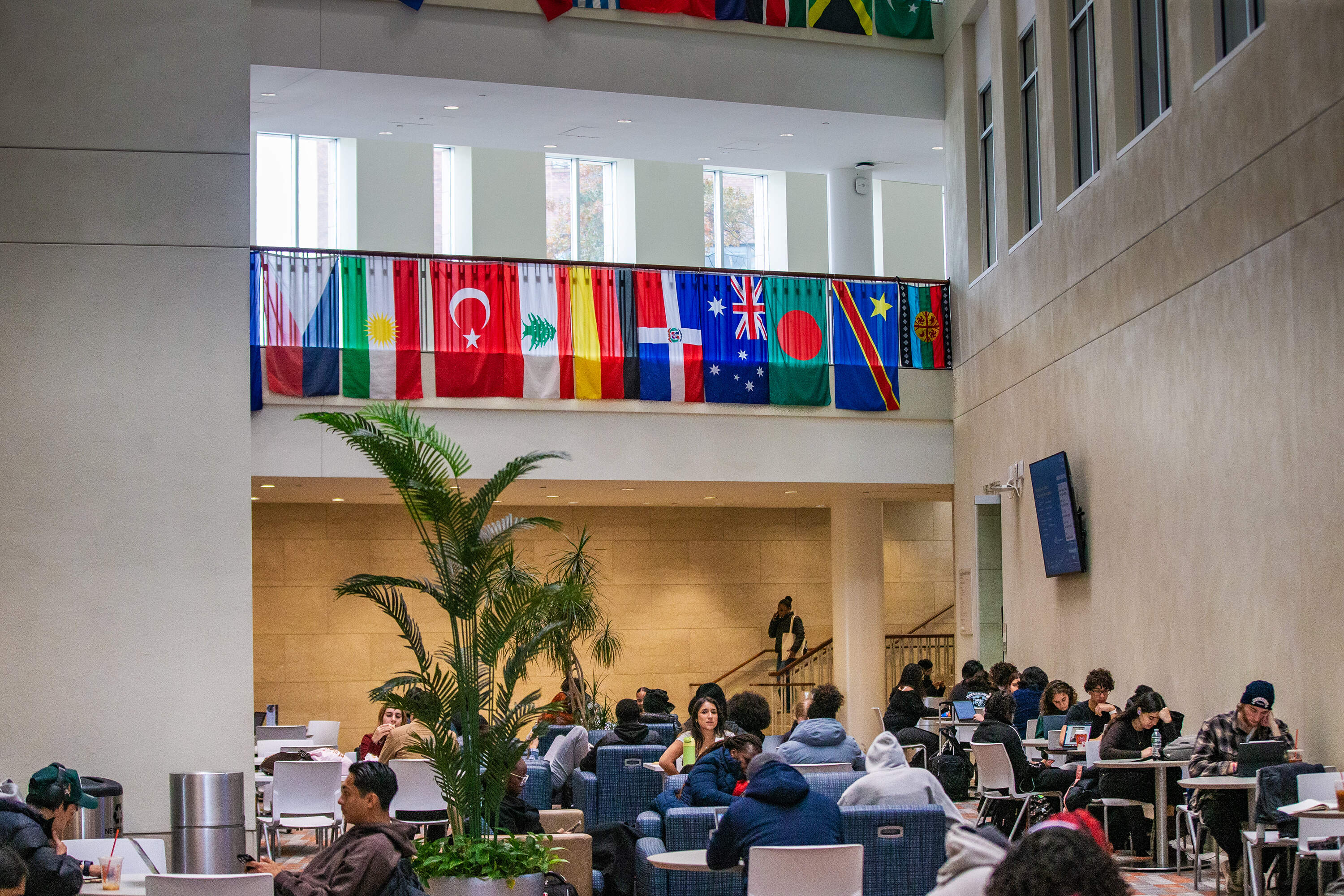
Students from other countries typically make up about 10% of UMass Boston's student body.
“ International enrollment always has ebbs and flows, but nothing that was kind of this extreme.”
John Drew
Leaders at other schools echoed concerns about thinning ranks of students from other countries, including at public colleges with far smaller populations of foreign students.
At Massachusetts College of Art and Design, 12 of this fall's 68-graduate student cohort are international. Seven other admitted graduate students were unable to come to the U.S., according to Erica Puccio O'Brien, MassArt’s director of international education. She said the school lost "about a third" of its foreign enrollees "as a result of the travel ban."
In June, the Trump administration announced visa restrictions against nationals of 19 countries, most of which are located in Africa and the Middle East.
“The international students on our campus are an extremely vibrant and active group,” O’Brien said. “I worry as their numbers diminish. I worry about the loss of their thoughts and perspective, as they are leaders on our campus.”
Impact across institutions
Last month, the Trump administration proposed a new "compact" with nine schools across the U.S. — including MIT — that included a 15% cap on undergraduate international student enrollment in exchange for favorable funding. Nearly all schools refused to sign.
Other recent federal policies also targeted a broader swath of foreign students, from a temporarily pause on visa appointments last spring to the adoption of stricter vetting of their social media accounts.
More than 82,000 international students attend college in Massachusetts. That total is the fourth-highest in the nation, behind California, New York and Texas, according to Open Doors, a data resource compiled by the Institute for International Education, a group that promotes international education.
So far, the impact at several private colleges that shared their enrollment data has been mixed.
MIT saw minimal change to international enrollees, while Boston University reported a 10% drop in graduate students from overseas. A BU spokesman declined to comment further.
Private research universities enroll the state's highest percentages of international students, such as Northeastern (40%) and Boston University (30%).
At the state’s 29 public institutions, international students comprise a smaller share of the student body but still have a noticeable impact. They also pay higher tuition than in-state students and, in most cases, aren't eligible for federal financial aid.
Fitchburg State University, one of nine medium-sized public universities with roughly 6,000 students, reported a 19% drop in visa holders since last fall, from 183 to 148.
According to Vice President of Enrollment Management and Student Success Pamela McCafferty, the federal policies hurt the school's rebound in international enrollees since the COVID pandemic.
“Post-pandemic we had recovered and had stronger numbers than we ever had," she said. "And now we’re starting to see that decline because of the difficulties in getting F-1 [student] visas."
Fitchburg State President Donna Hodge described the impact of this loss at a trustees meeting last month.
Local students "want to come to a campus … that feels like a college campus,” Hodge said. “Our international student population is absolutely a critical part of that mix, and something we don’t want to lose sight of.”
Fewer student-led cultural activities
UMass Boston junior Tyrese Battle said the school's shrinking international student population is noticeable.
“ I feel like my first year here was a lot more vibrant with a lot more different people than compared to now,” he said. He added there seemed to be fewer student-led cultural events and activities happening.
The environmental sciences major said he’s valued the perspectives the international students have brought to his classes.
“When we talk about what's happening around the world and what's happening globally in climate, we get a lot of students that are able to add more input,” he said. "We're able to get ... broader answers of what's happening around the world."
The Dorchester Bay-facing campus boasts a heavy focus on STEM education and business. Drew, the vice chancellor overseeing student enrollment, said international student applications were up this year, but the pause on visa appointments last May waylaid interested students.
Applicants living in India, the top country of origin for the school's international students "experienced longer delays for visa appointments” during the temporary pause, he said, adding some students say they're still struggling to secure one in time for the January semester.
At the state’s flagship institution, UMass Amherst, total international student headcount dipped 5%, from 4,542 students to 4,304. But the change in graduate students from India showed a starker dip, of 20%, since last year.
NAFSA, a nonprofit of international educators, predicted this summer that federal policies could cause as much as a 40% drop in new international student enrollment across the U.S. and a 15% fall in overall enrollment. The Institute for International Education is expected to issue an up-to-date snapshot later this month.
Gerardo Blanco, academic director of the Center for International Higher Education at Boston College, said other indirect factors kept students overseas away.
He pointed to broader economic uncertainty fueled by U.S.-imposed tariffs and jitters over the nation's new $100,000 fee for highly skilled worker visas — though the administration last month clarified the fee would not apply to current student-visa holders transitioning to a job in the U.S.
“ What we don't know … is how much each one of these policies is having an effect,” Blanco said. “It's very likely that they're resulting [in] a significant drop of international students this year, and likely in coming years, too.”
For now, Drew said UMass Boston is broadening its recruitment strategy to connect with prospective students from places like Greece, Jordan and Saudi Arabia.
“International students are a huge part of our community,” he said. “And we pride ourselves that when you sit in a classroom at UMass Boston, you are interacting with all types of students.”
WBUR's Lynn Jolicoeur contributed to this report.
This segment aired on November 7, 2025.