Support WBUR
South Asian theater festival showcases multilingual plays
Ten plays that illuminate the South Asian diaspora will be staged in various languages, including Hindi, Marathi and Bengali, in Watertown during the South Asian-American Theater Festival.
Now in its fourth year, the festival kicks off Friday, Nov. 21 and runs through Sunday, Nov. 23 at the Mosesian Center for the Arts. SAATh is organized by Off-Kendrik, a Boston theater collective established in 2008 to celebrate South Asian culture through art and storytelling.
“‘Saath’ — in Hindi or Sanskrit — it means together,” explained Sankha Bhowmick, Off-Kendrik’s co-founder and artistic director. “We are trying to build this collaboration of good theater, powerful theater… Some experiences are socio-political, some are deeply personal, and some are directly about the immigrant experience.”
The ten new works are each approximately an hour in length. Five are original plays produced by artists from the Greater Boston area, the other productions come from artists and companies outside of Massachusetts.
The festival stands out for offering plays in multiple languages. Some of the productions are performed in a blend of South Asian languages and English. Organizers have taken great care to promote accessibility for all attendees; they secured a grant from the Massachusetts Cultural Council to provide supertitles in English for each performance.
The eclectic range of stories and styles for this year’s festival include an original bilingual musical reinterpreting a classic Punjabi text, and another story of a 65-year-old man during his last day in India before emigrating to America. A verbatim theater piece explores generational struggles with mental health within the South Asian community, and a two-person drama delves into the relationship between artists Paul Gaugin and Vincent Van Gogh during their 1888 retreat, which resulted in some of their most celebrated works and Van Gogh cutting off his ear.
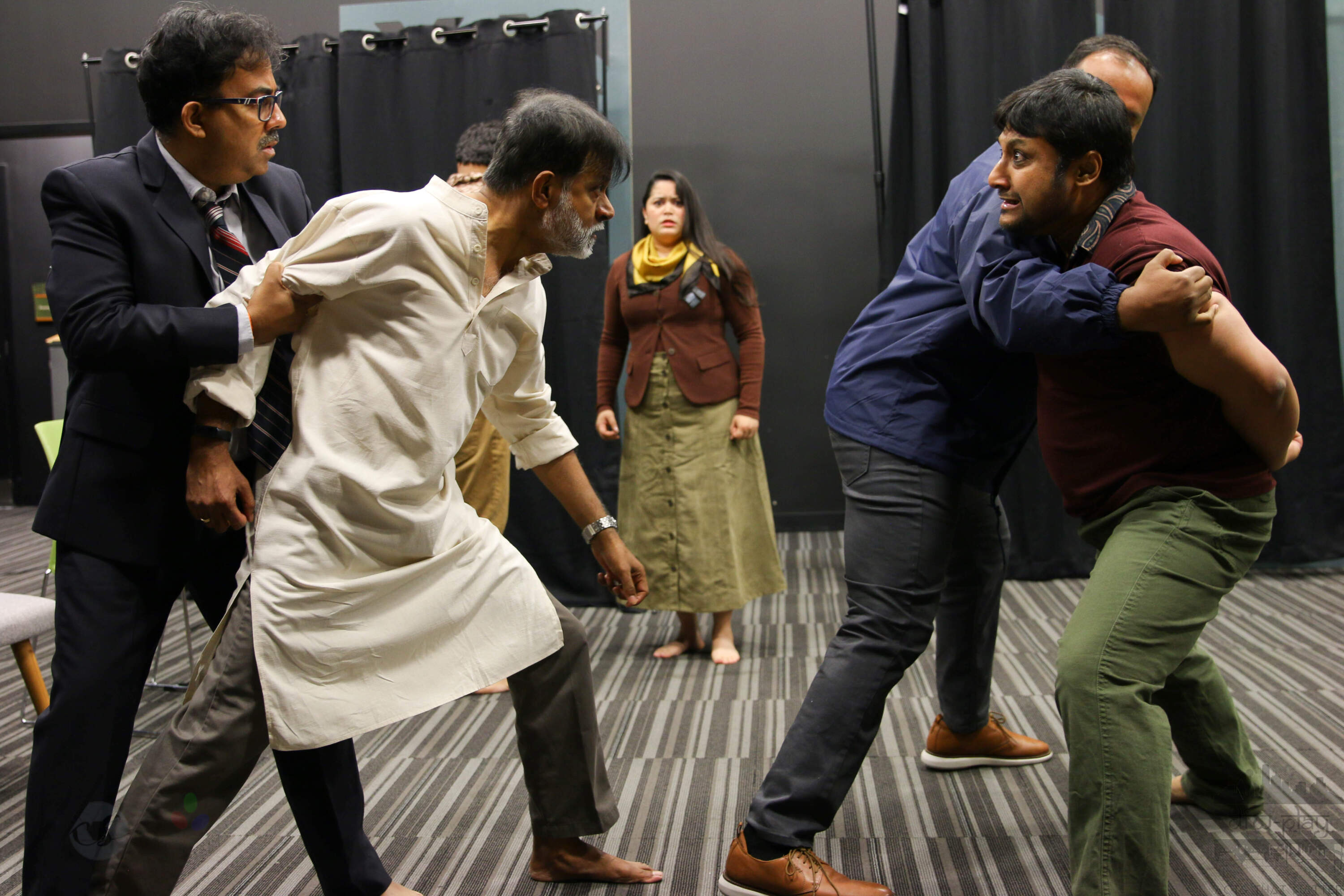
DFW Play, a multilingual theater company from Dallas, Texas, will bring a new adaptation of “Gotroheen” by Rudraprasad Sengupta, a renowned Bengali theater-maker.
The script reimagines Arthur Miller’s play “A View from the Bridge.” The story centers on a pair of undocumented migrants from Chittagong seeking shelter with an immigrant family living in the Jackson Heights neighborhood of Queens, New York.
“’Gotroheen’ means rootless, without lineage,” said Rajarshi Bhattacharyya, DFW Play’s artistic director. "Authenticity is important to us. This play is in Bengali but also has the added challenge of a very specific dialect, because of the region the characters are from, and we want to be authentic when portraying those characters.”
DFW Play, much like Off-Kendrik, puts their efforts towards building community around accessible cultural exchange that celebrates identity and belonging.
Both companies draw inspiration from the work of famed Indian actor, playwright and activist Utpal Dutt, who in the 20th century rose to prominence after writing and producing many politically charged plays, one of which resulted in him being arrested and jailed for seven months by the Indian National Congress in 1965.
In this tradition of activism and storytelling, Bhattacharyya similarly strives to produce art that speaks to the politics of the moment. “Acts that matter,” he explained. “We have stories to tell; a desire, a need to tell them.”
Another artist presenting at this year’s festival is Dipali Trivedi, an MIT graduate and tech entrepreneur working in artificial intelligence. Her play “White Linen Red Dot” is devised from a novel she is presently writing.
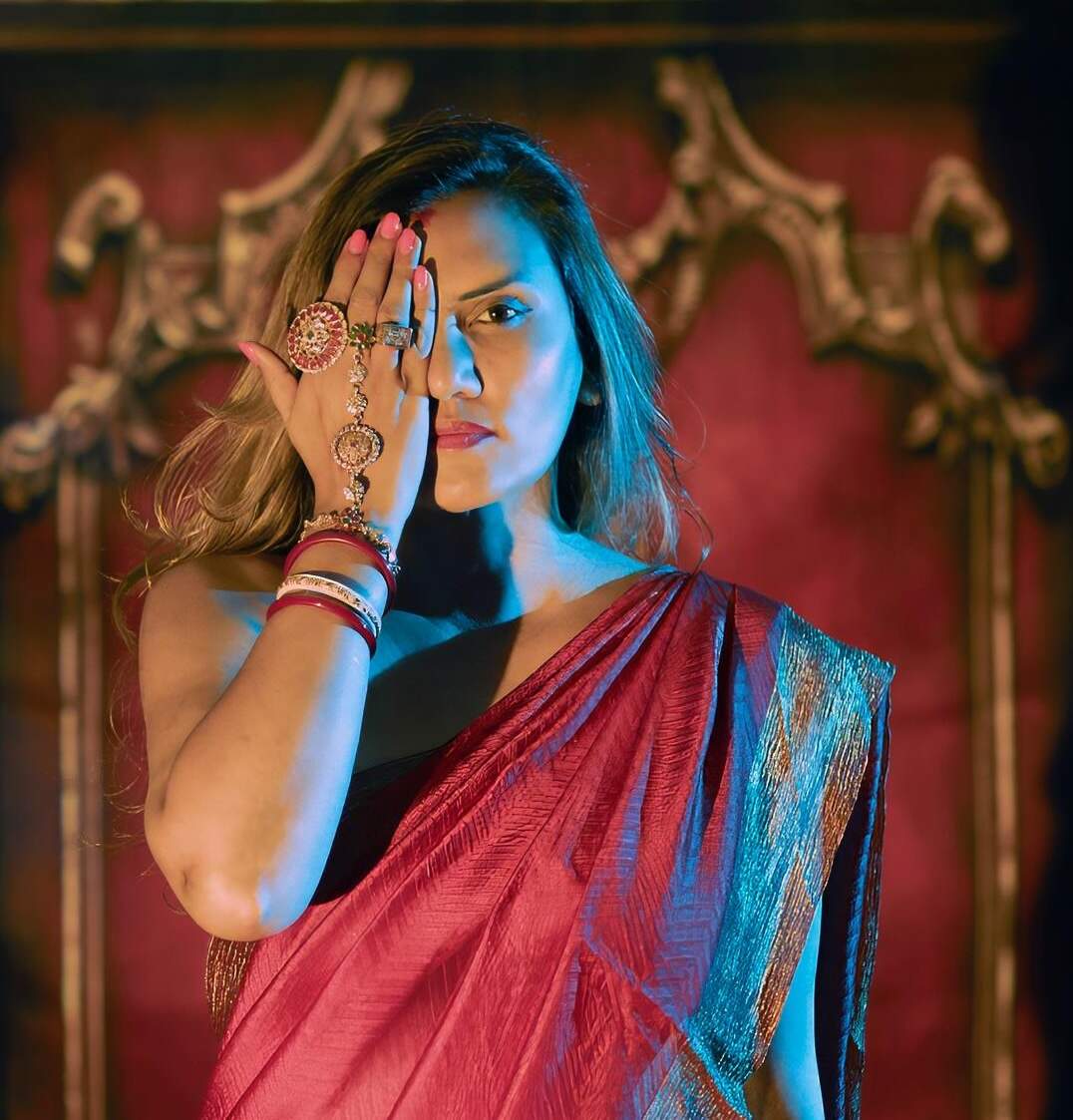
Trivedi has transformed the text from her manuscript into a series of soliloquies, working with the actors to translate and perform in their native languages. Taking a cue from Eve Ensler’s “The Vagina Monologues,” this new play explores themes that may shock more conservative audiences, while primarily being used as a dramaturgical vehicle to combat othering and instill pride in an individual’s identity.
The play is a deconstruction of the Indian female perspective, where taboo topics are scrutinized, and a range of characters try to make peace with how they are perceived. An interesting group of identities help to examine the play’s ideas, including a trans woman, a burqa wearing Muslim and both sides of an online dating situation that is seven dates in and not progressing.
Trivedi sought to cast a diverse group that could authentically span a wide range of age, culture and gender. She is quick to find inspiration in the potential of others. “I also like casting new people that have maybe not done much and giving them opportunities — having a mix of experience in the room.”
Trevdi has spent the last 13 years working as an actor with a variety of local theater groups. Earlier this year she wrote and directed her first play “AIsolation,” which explored that the downside of artificial intelligence “isn’t about machines taking over, it's about making people more machine-like.”
As a director and writer, Trivedi is hoping to inspire other women in the theater community to seize roles in production.
“I want there to be more women directors. Not just them being comfortable in the helper role. I want them to be comfortable to see themselves as leaders, as the director,” she said.
To launch the festival, author Manjula Padmanabhan and CHUANG Stage’s Executive Director Alison Yueming Qu, will join a panel discussion on the opportunities and challenges women face working in the arts. The two opening night plays that follow the discussion are both produced and directed by women. The second play, titled “Not So Black and White” from celebrated Boston-based theater troupe Natyaranga, is performed in English and Hindi. Madhu Nene, Natayaranga’s founder, directed the production and will also join the panel, moderated by writer Chandreyee Lahiri.
“You cannot do it alone,” said Sankha Bhowmick. He envisions a future where both Off-Kendrik and SAATh continue to expand notions of inclusivity to reflect the art and expression of marginalized communities regardless of cultural or geographical boundaries.
“SAATh is for that, to show everyone that we are not alone. Let’s do it all together.”
Correction: A previous version of this story misspelled Madhu Nene's name. We regret the error.