Support WBUR
Boston's Weekly Health Newsletter
This Thanksgiving season, a note of gratitude to the army of Mass. volunteers fighting hunger
Editor's Note: This is an excerpt from WBUR's weekly health newsletter, CommonHealth. If you like what you read and want it in your inbox, sign up here.
In a few days, many of us will gather with friends and family, eat more than we should, and complain because we don’t have room for dessert. It would be wonderful if all of our friends and neighbors had that problem on Thursday. But many won’t, and that's where the heroic efforts of people like Cheryl Vaugh come in.
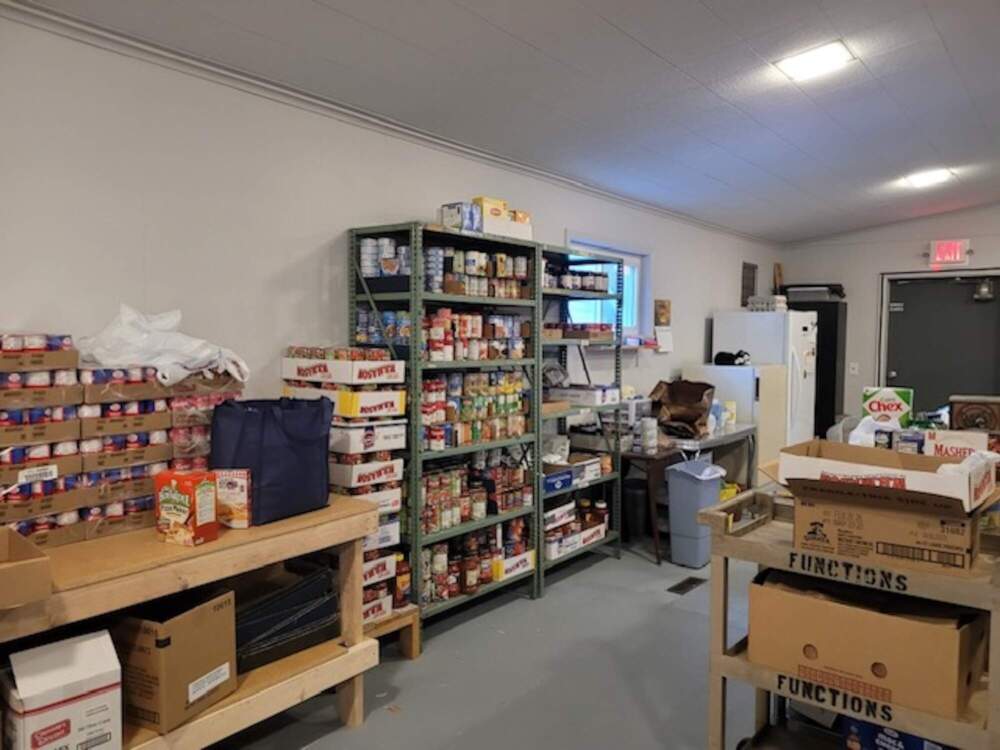
Vaugh directs the Jubilee Food Cupboard in Ware, a town of 10,000 located between Springfield and Worcester. She started volunteering at the food pantry about 30 years ago, soon after she joined the church that runs it, Trinity Episcopal. For the last 22 years, Vaugh has been its director, squeezing in 10 to 18 hours of volunteer work around her paid job at a nonprofit that helps kids who have cancer. Between three and five other women help Vaugh most weeks.
During quiet weeks, Jubilee gives 25 to 35 families two or more bags of groceries, depending on the number of kids. Jubilee is supposed to be an emergency food option — it’s only open on Thursday mornings. But Vaugh has lots of regular clients. And sometimes the emergency needs surge.
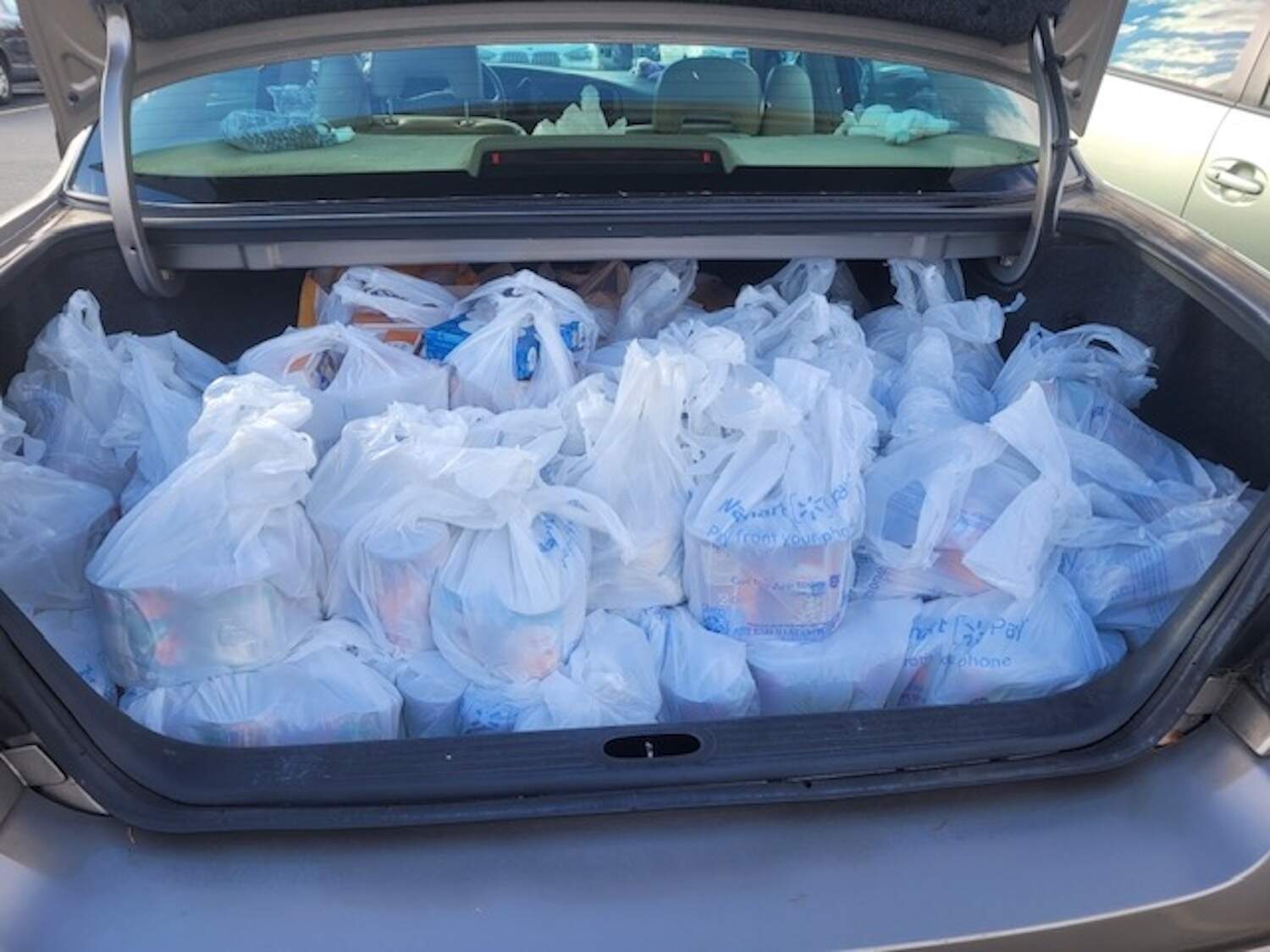
Two weeks ago, after funding for SNAP, the federal Supplemental Nutrition Assistance Program, lapsed, Vaugh and her small team of fellow volunteers packed groceries for 100 families. That second Thursday in November, Vaugh filled up her cart three times at the Walmart in Ware, stuffed every space in her car and returned to Jubilee to restock the shelves.
“I love my huge trunk,” Vaugh texted me that day with a picture of her car. “My poor girl gets a workout on shopping days.”
Last week, after SNAP funding resumed, the food pantry was still busy, although the number of families dropped to 75. Jubilee will be closed this Thursday, one of only two Thursdays it will not open this year. The other is Christmas.
Most of the 61,000 pounds Jubilee distributed last year came from the Food Bank of Western Massachusetts. Vaugh relies on donations to buy anything she runs out of, as well as special items for her clients who are gluten-free or have diabetes or various allergies.
“The bags and boxes seem heavier lately,” said Vaugh, with a chuckle about her advancing age, “but I look forward to Thursdays because we can help so many people.”
I deliver groceries to people who can’t get out every week through my local food pantry. But until very recently, I had no idea about the size of the army of volunteers across Massachusetts who help stave off hunger. While covering the impact of the SNAP freeze, I learned how many nonprofits, whose focus is unrelated to food assistance, have turned office closets into mini-pantries for their clients, and about the hundreds of neighborhood groups that stock community fridges, and about those who deliver food to immigrants who are afraid to stand in line at pantries.
Food pantries could never replace SNAP. Food bank leaders in Massachusetts said they’d have to supply an extra 56 million meals in November if SNAP benefits were not restored — more than four times what they currently distribute monthly. But food pantries are still critical.
Vaugh has seen that many times. She told me about an older woman who came in just once, many years ago. The woman said she’d never asked for food before, but things had gotten really tough. Don’t worry, Vaugh told her, that's why we're here.
“She started crying, so I came out from behind the desk and gave her a hug,” Vaugh said.
As the woman clung to her, weeping, Vaugh told her, “I know it’s hard to come in, but we’re so glad you did.”
May we all know the joy of giving and receiving kindness from strangers this week.