Support WBUR
83 years after deadly Cocoanut Grove fire, descendants of those killed remember who they lost
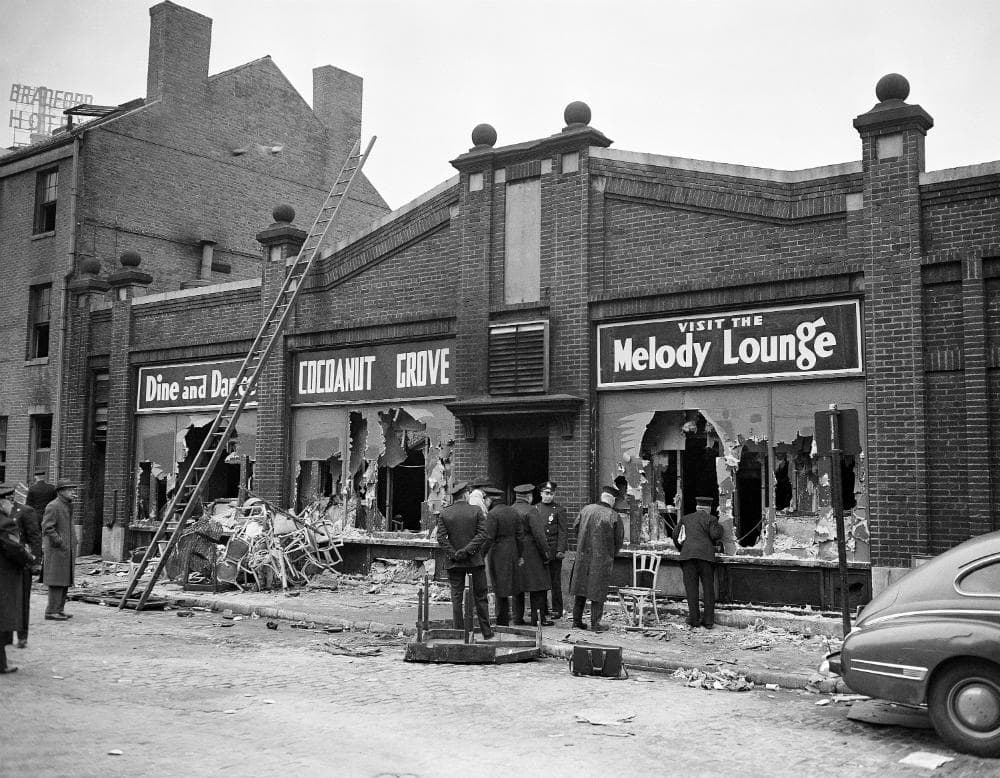
The weekend after Thanksgiving in 1942, a teenage Ina Fay Cutler was glued to her radio. There was news of a terrible fire that broke out at a nightclub in Boston where her mother, Jeannette Zall had spent her evening.
“You held your breath to hear your mother's name” listed among the injured, Cutler remembered. “It was such a shock.”
But she wouldn't hear her mother's name. The 35-year-old Jeannette Zall had tagged along with a group of people to the Cocoanut Grove nightclub, an “it” spot in Boston at the time. She’d never been to a nightclub before. The decision would be a deadly one.
Fire ripped through the club, killing nearly 500 people and injuring over a hundred more. It remains the deadliest fire in Boston history, and the deadliest nightclub fire in U.S. history.
For those left behind, their losses remain raw, even 83 years later.
“I just felt such sorrow, such sorrow. Why was she there?” Cutler, now 95, said. “It's just something that never, never should have happened.”
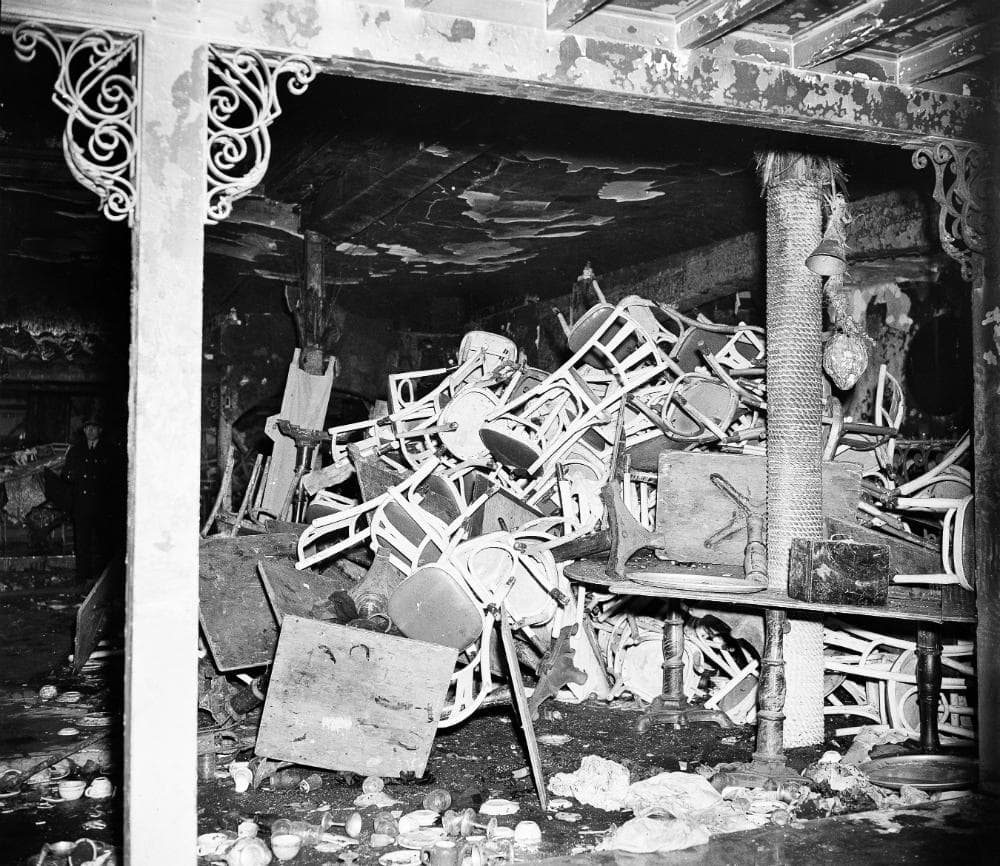
Zall and her sister, Ethel, were among those killed. More than 1,000 people were believed to be at the Cocoanut Grove that night, though the club was only licensed to serve half of that. The Boston Fire Department could not determine the official cause of the fire. The multi-level building was decorated with flammable fake palm trees and fabric. Reports say within 15 minutes, the building was consumed by flames. Frantic patrons tried to escape
“They pressed against the exit door that led to Piedmont Street, the door with the panic bar. It did not open,” is how Stephanie Schorow described the scene in her book, “The Cocoanut Grove Nightclub Fire: A Boston Tragedy.” “Dozens piled against it, beating on it with all their strength. It refused to budge. It was later found to be locked shut.”
The majority of the club’s exits were locked, likely to stop people from leaving without paying, Schorow wrote. The club — once a party — became a nightmare.
Decades later that night still brings back painful memories for Peter Coffey and his family.
Coffey was five years old when his cousin, Mary Ellen McCormack, was killed in the fire. From his home in Watertown, he could hear the blare of fire trucks the night of the blaze. When he woke up the next morning, his father and other family members went to the city to find McCormack. His father would return later that day with grim news.
“ I do remember ... my father coming home white faced and saying to my mother, ‘We found her,’ ” Coffey said.
MaeMae, as the family called her, is believed to have died at one of the club’s locked doors. To memorialize her, the family decided to name their new baby sister Mary Ellen. Coffey said his sister, who has since died, lived a good life, earning degrees in physics from MIT and Harvard.
“ I really think in some ways MaeMae would have liked that,” Coffey said.
The last known survivor of the fire died earlier this year. Robert Shumway, then a teenager, escaped, but not before helping people out of the building to safety. His children, Jackie Sexton and Curt Shumway, said their dad rarely talked about what happened that night. But they believe his trauma stayed with him.
“ We used to go to the movies or functions together, and he would always look to sit next to an exit,” Curt Shumway said.
Sexton first learned about her father’s attempt to save people from the fire from others. She said she wants her dad, a World War II veteran, to be known as an honorable man
“ He was just a good, solid human being and didn't need a lot of accolades or recognition for certain things,” Sexton said. “He just did what was right.”
In the wake of the Cocoanut Grove fire, major changes were made in both burn treatment, and fire and building codes. Now, a revolving door can’t be the only or primary exit without an adjacent door that opens out.
But all of those improvements came with great sacrifice for those directly affected by the fire. Ina Fay Cutler said her mother’s death robbed her of her childhood. Cutler was the oldest of her siblings, so she had to help run her father’s wholesale candy and tobacco shop.
“ I would have to rush home so that I could stay in the store and my father could deliver orders.” Cutler said. “Frankly, a lot of responsibility did fall on me because there was no one else.”
Even though the Cocoanut Grove nightclub fire was nearly a lifetime ago, Cutler wants future generations to remember it. She’s glad there’s a permanent memorial under construction with support from the city of Boston.
The memorial at Statler Park is set to be finished and formally dedicated next spring. It will feature three archways, just like the Cocoanut Grove had. Visitors will be able to walk around the arches and read the names of the people who died at the nightclub.

“How could you not keep that a sacred place?” Cutler said. “How could you not commemorate almost 500 people's deaths?”
This segment aired on December 1, 2025.