Support WBUR
A new exhibit celebrates Massachusetts’ hidden Arab histories
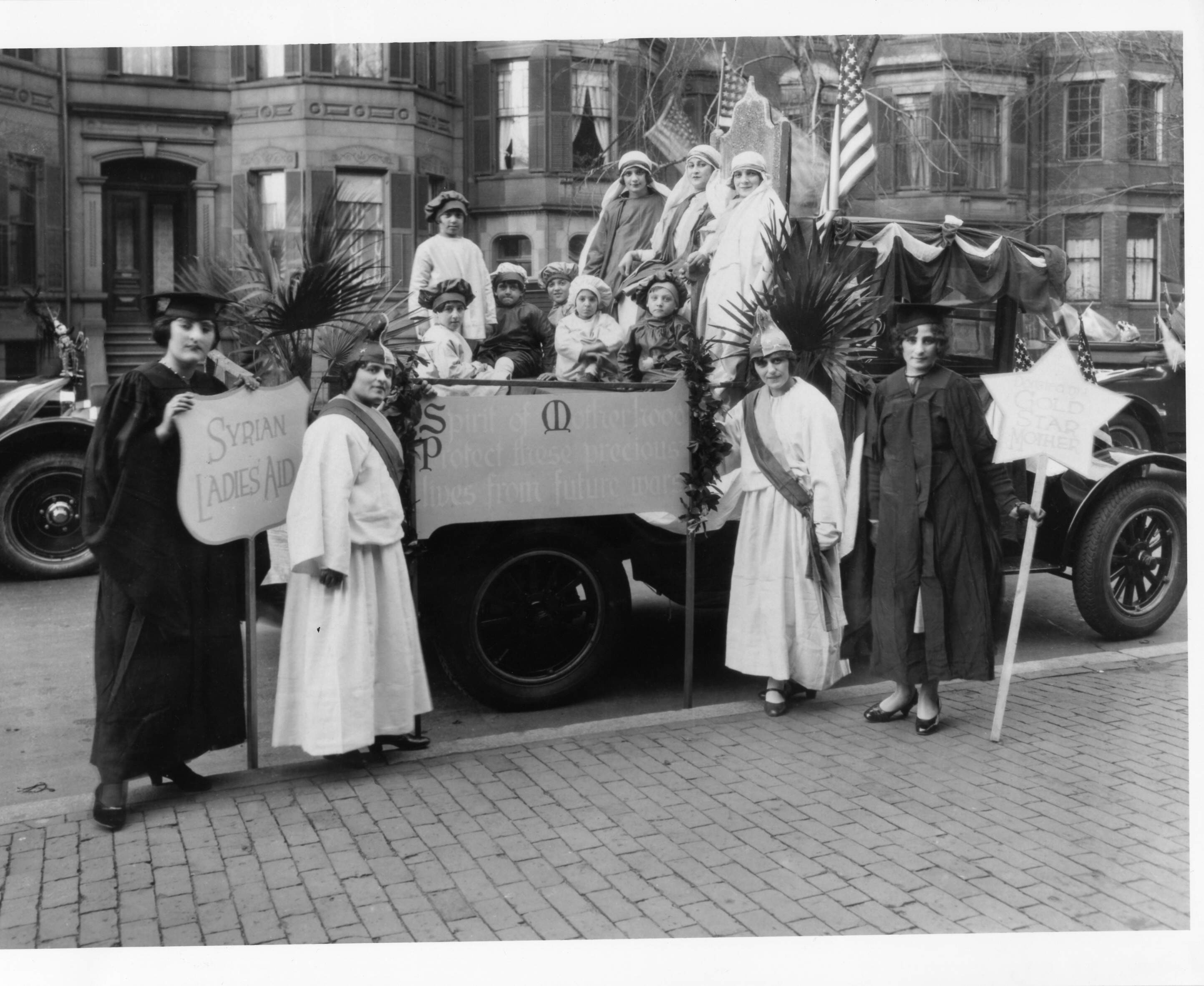
From the late 1800s through the 1950s, Boston was home to Little Syria, an Arab enclave in what is now Chinatown and the South End. Immigrants from Lebanon and Syria lived side by side with other new arrivals – Chinese, Italian, Jewish – in a flourishing Arab community that lasted for decades.
This and other little-known Arab histories are the subject of a new exhibit at the Pao Arts Center in Chinatown, “Arab Massachusetts: Building Community in the Commonwealth.”
“A lot of people don't know about Arab history in Massachusetts and that it plays quite a significant role in our state's history,” said historian Lydia Harrington, the co-founder of Boston Little Syria Project, a public history initiative that contributed to the exhibition.
“Arab Massachusetts,” which is presented by the Arab American National Museum, tells the stories of Boston as well as Quincy, Worcester and Lawrence, where Muslim and Christian Arab communities found work in the shipyards and mills.
“They contributed so much to things like the garment district, labor history,” Harrington said of the Arabs who settled in Massachusetts in the late 19th and early 20th century, pushed by sectarian violence and the decline of the silk industry and pulled by greater economic and academic opportunity in America. “There were Syrians who died in the Bread and Roses strike in Lawrence in 1912.”
The exhibition aims to bring attention to a Massachusetts demographic group rarely celebrated in the media.
“ Books, movies tend to focus on longer established, more well-known groups, especially in Boston,” Harrington said. “We know about Italian Boston and Irish Boston and there's, you know, how many movies about that.”
The result, she said, is “a picture of New England in Massachusetts that isn't really accurate.”
“Arab Massachusetts” is on display at the Pao Arts Center through mid-February and then travels to locations in Quincy, Lawrence and Worcester.